
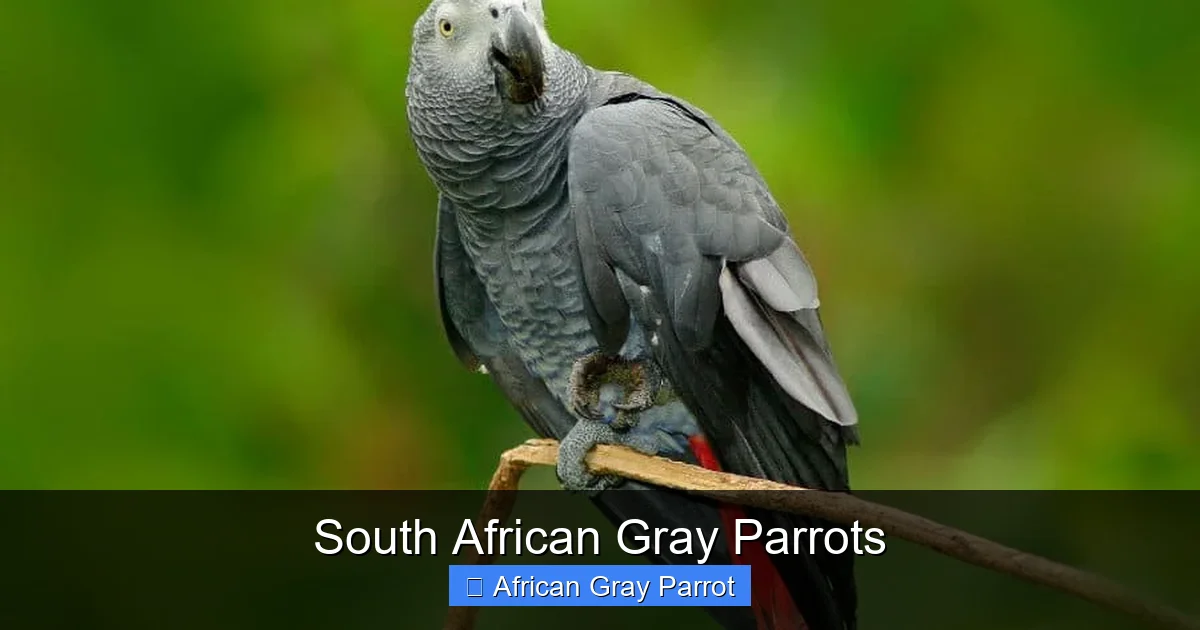
South African Gray Parrots are renowned for their exceptional intelligence, remarkable talking ability, and deep emotional bonds with their caregivers. These medium-sized parrots require dedicated care, mental stimulation, and a specialized diet to thrive in captivity for their 40-60 year lifespan.
If you’ve ever dreamed of sharing your home with a feathered companion who can hold a conversation, crack jokes at the perfect moment, and genuinely understand your moods, a South African Gray Parrot might have already captured your imagination. These remarkable birds have earned their reputation as the Einsteins of the parrot world, and for good reason. Their cognitive abilities continue to astonish researchers and bird lovers alike, with famous individuals like Alex the African Gray demonstrating skills once thought exclusive to primates.
But here’s the thing—bringing a South African Gray Parrot into your life isn’t like adopting a dog or cat. These are complex, long-lived, emotionally demanding beings who will challenge you, surprise you, and quite possibly outlive you. They’re not pets in the traditional sense; they’re more like feathered toddlers who never grow up but develop sophisticated vocabularies and distinct personalities. Whether you’re seriously considering adding one to your family or simply fascinated by these extraordinary creatures, this comprehensive guide will walk you through everything you need to know about South African Gray Parrots.
Key Takeaways
- Exceptional Intelligence: South African Gray Parrots possess cognitive abilities comparable to a 5-year-old child, making them one of the smartest bird species.
- Two Distinct Subspecies: The Congo African Gray (larger, bright red tail) and Timneh African Gray (smaller, maroon tail) have different care needs and personalities.
- Lifelong Commitment: With lifespans of 40-60 years, these parrots often outlive their owners and require long-term care planning.
- Complex Emotional Needs: These sensitive birds form deep bonds and can develop behavioral issues like feather plucking without adequate social interaction.
- Specialized Diet Requirements: A balanced diet of high-quality pellets, fresh vegetables, fruits, and limited seeds is essential for preventing nutritional deficiencies.
- Advanced Talking Ability: Grays don’t just mimic—they can use words contextually, understand concepts, and develop vocabularies of 1,000+ words.
- Conservation Concerns: Both subspecies face threats from habitat loss and illegal pet trade, making ethical sourcing from reputable breeders crucial.
Quick Answers to Common Questions
How long do South African Gray Parrots live?
South African Gray Parrots typically live 40-60 years in captivity with proper care, and some individuals reach 70+ years. This makes them a multi-generational commitment that requires estate planning.
What’s the difference between Congo and Timneh African Grays?
Congo African Grays are larger (13-16 inches, 400-650g) with bright red tails and all-black beaks. Timneh African Grays are smaller (9-11 inches, 275-400g) with maroon tails and horn-colored upper mandible patches. Timnehs often have slightly calmer temperaments.
Can South African Gray Parrots really talk and understand language?
Yes. These parrots are exceptional mimics with vocabularies often exceeding 1,000 words. Research shows they can use words contextually, understand concepts like categories and numbers, and combine words creatively—not just rote repetition.
What should I feed my South African Gray Parrot?
A balanced diet consists of 60-70% high-quality pellets, 20-30% fresh vegetables and fruits (emphasizing dark leafy greens and orange vegetables), and 5-10% healthy fats like raw nuts and seeds. Avoid seeds as a staple diet.
How much does a South African Gray Parrot cost?
Expect $2,000-5,000+ for a well-raised baby from an ethical breeder. Lifetime costs (cage, toys, food, veterinary care) typically exceed $30,000-60,000 over 50 years. Adoption from rescues is often $500-1,500.
📑 Table of Contents
- Understanding the Two Subspecies: Congo vs. Timneh
- The Remarkable Intelligence of South African Gray Parrots
- Creating the Ideal Home Environment
- Nutrition: Fueling a Brilliant Mind and Body
- Training, Socialization, and Behavioral Health
- Health Care and Veterinary Needs
- The Lifelong Journey: Aging and End-of-Life Considerations
- Conservation and Ethical Considerations
- Conclusion: Is a South African Gray Parrot Right for You?
Understanding the Two Subspecies: Congo vs. Timneh
When people talk about South African Gray Parrots, they’re actually referring to two distinct subspecies that share the scientific name Psittacus erithacus but have notable differences. Understanding these distinctions is crucial because they affect everything from housing requirements to personality tendencies.
Congo African Gray Parrot (Psittacus erithacus erithacus)
The Congo African Gray is what most people picture when they think of a “gray parrot.” These are the larger of the two subspecies, typically weighing between 400-650 grams and measuring 13-16 inches from beak to tail tip. Their plumage is a beautiful, uniform slate gray with a striking bright red tail that provides a stunning contrast. The skin around their eyes and beak is bare and white, giving them an expressive, almost human-like face.
Congo Grays originate from a vast range across Central and West Africa, including countries like Congo, Cameroon, Ghana, and Ivory Coast. In the wild, they inhabit dense rainforests, forest edges, and clearings, often forming large, noisy flocks that can number in the hundreds. Their natural diet consists of palm nuts, seeds, fruits, and leafy vegetation, with a particular fondness for oil palm fruits.
Personality-wise, Congo Grays tend to be a bit more high-strung and sensitive than their Timneh cousins. They’re often described as “one-person birds” who form an intensely strong bond with their chosen human while remaining wary of strangers. This doesn’t mean they can’t be socialized—many Congo Grays become wonderful family birds with proper exposure—but their default setting is cautious observation before engagement.
Timneh African Gray Parrot (Psittacus erithacus timneh)
The Timneh African Gray is the smaller, darker, and often overlooked cousin. Weighing in at 275-400 grams and measuring 9-11 inches, they’re noticeably more compact. Their plumage is a deeper, charcoal gray—almost dusky—and their tail feathers are a rich maroon or dark reddish-brown rather than bright red. The upper mandible (top beak) has a distinctive horn-colored patch on a dark background, whereas the Congo’s beak is entirely black.
Timnehs hail from a more restricted range in West Africa, primarily Guinea-Bissau, Sierra Leone, Liberia, and parts of Ivory Coast. They prefer similar habitats but are often found in slightly drier forest areas and mangroves. Historically, Timnehs were less common in the pet trade, which meant they retained more “wild” behaviors and were sometimes considered more challenging. However, modern hand-raised Timnehs have proven to be equally delightful companions.
Many experienced parrot owners actually prefer Timnehs for their slightly more relaxed temperament. They tend to be a bit more adaptable, less prone to phobic behaviors, and often start talking at a younger age. Their smaller size also means slightly lower housing and feeding costs, though the difference is modest. Both subspecies share the same incredible intelligence and emotional depth—it’s largely a matter of personal preference and lifestyle fit.
Key Differences at a Glance
Here’s a quick comparison to help you visualize the distinctions:
- Size: Congo (13-16 inches, 400-650g) vs. Timneh (9-11 inches, 275-400g)
- Color: Congo (slate gray, bright red tail) vs. Timneh (charcoal gray, maroon tail)
- Beak: Congo (all black) vs. Timneh (horn-colored upper mandible patch)
- Temperament: Congo (more sensitive, cautious) vs. Timneh (more adaptable, steady)
- Talking onset: Congo (often 12-18 months) vs. Timneh (often 6-12 months)
- Price: Congo (typically higher) vs. Timneh (typically slightly lower)
The Remarkable Intelligence of South African Gray Parrots
Let’s talk about what makes these birds truly extraordinary—their minds. South African Gray Parrots don’t just mimic sounds; they demonstrate genuine cognitive processing that has rewritten our understanding of avian intelligence. Dr. Irene Pepperberg’s groundbreaking work with Alex, a Congo African Gray, showed that these birds can understand concepts like same/different, bigger/smaller, categories, and even the concept of zero—a mathematical abstraction that human children typically don’t grasp until age 3 or 4.
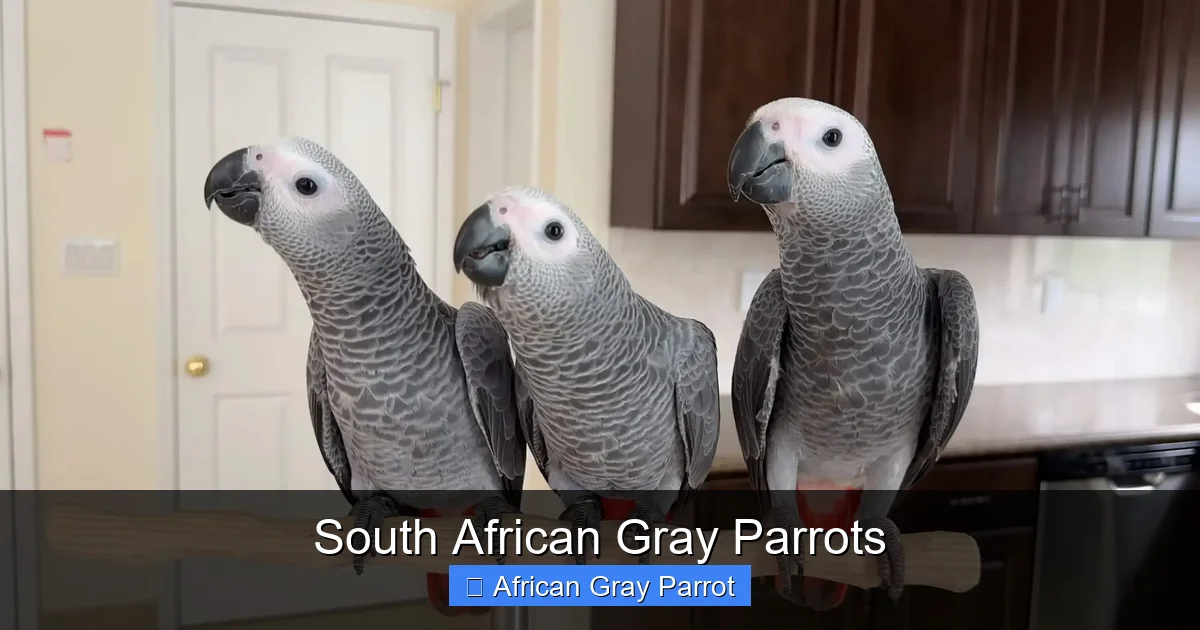
Visual guide about South African Gray Parrots
Image source: apfisn.net
Beyond Mimicry: True Language Comprehension
When a South African Gray Parrot says “want nut” or “go night-night,” they’re not just playing back a recording. Research has demonstrated that these birds can:
- Use words contextually and appropriately
- Combine words to create novel phrases for new situations
- Understand categories (color, shape, material)
- Count small quantities (up to 6-8 items reliably)
- Demonstrate object permanence (knowing something exists even when hidden)
- Show evidence of reasoning by exclusion (figuring out an answer by eliminating options)
One famous example: when Alex was presented with a tray of objects and asked “What color bigger?” he could identify the larger of two objects and name its color. When shown two identical objects and asked “What same?” he’d respond “color” or “shape” or “material.” This isn’t rote memorization—it’s conceptual thinking.
Problem-Solving and Tool Use
In the wild, South African Gray Parrots have been observed using tools—holding a twig in their beak to scratch hard-to-reach places, or using pieces of bark to manipulate food. In captivity, they regularly solve complex puzzles, manipulate locks, and figure out how to open “bird-proof” containers. I’ve known Grays who learned to unscrew bolts on their cage bars, turn doorknobs, and even operate touchscreen devices designed for children.
This intelligence comes with a catch: a bored South African Gray Parrot is a destructive South African Gray Parrot. Their problem-solving abilities mean they need constant mental stimulation. Without it, they’ll create their own entertainment—often at the expense of your furniture, baseboards, or emotional well-being.
Emotional Intelligence and Empathy
Perhaps most remarkably, South African Gray Parrots display what appears to be genuine empathy. Many owners report their birds offering comfort during illness or grief—preening tears away, making soft soothing sounds, or simply sitting quietly on a shoulder. They seem to read human emotional states with uncanny accuracy, adjusting their behavior accordingly. A Gray who’s normally loud and playful may become quiet and gentle when their person is sad.
This emotional sensitivity is a double-edged sword. It makes them incredibly rewarding companions, but it also means they’re deeply affected by household stress, arguments, or changes in routine. They’re not birds who can be left alone for long hours while you work a 12-hour shift—they need genuine interaction and emotional connection.
Creating the Ideal Home Environment
Setting up proper housing for a South African Gray Parrot is one of the most important investments you’ll make. These birds spend a significant portion of their lives in their cage, so it needs to be spacious, safe, and enriching. Think of it as their bedroom—a place they should feel secure, not confined.
Cage Size and Specifications
Minimum cage dimensions for a Congo African Gray should be 36 inches wide × 24 inches deep × 48 inches high (91 × 61 × 122 cm). For a Timneh, you can go slightly smaller at 32 × 22 × 40 inches, but bigger is always better. The bar spacing should be 3/4 to 1 inch—any wider and they might get their head stuck; any narrower and they can’t climb comfortably.
Horizontal bars on at least two sides are essential because South African Gray Parrots are avid climbers. They use their beaks as a “third foot” and need to be able to scale the cage walls. Powder-coated or stainless steel cages are ideal—avoid galvanized wire (zinc toxicity risk) and painted cages that may contain lead. The cage should have a large front door for easy access and a smaller side door for food/water changes without full escape risk.
Perch Variety: The Foundation of Foot Health
This is non-negotiable: you need a minimum of 5-7 perches of varying diameters, textures, and materials. South African Gray Parrots spend 24/7 on their feet, and improper perching leads to bumblefoot (pododermatitis), arthritis, and pressure sores. Include:
- Natural wood branches (manzanita, dragonwood, java wood) with varying diameters
- Rope perches for comfort and grip variety
- Cement or sandy perches (one only, placed near food) for nail maintenance
- Platform perches for flat-footed resting
- Swings and boings for dynamic movement and balance
Position perches strategically: highest for sleeping, near food/water but not directly above (to prevent contamination), and spaced to encourage movement. Avoid placing perches directly over each other—droppings from above are a health hazard.
Toy Rotation: Keeping a Genius Entertained
A South African Gray Parrot needs a minimum of 10-15 toys available at any time, rotated weekly. Categories should include:
- Foraging toys: Puzzle feeders, hidden treat containers, shreddable boxes
- Destructible toys: Pine blocks, balsa wood, palm leaves, paper rolls
- Manipulative toys: Nuts and bolts, acrylic puzzles, linking toys
- Noise-makers: Bells, rattles, musical toys (some Grays love making music)
- Foot toys: Small items they can hold and manipulate with one foot
- Preening toys: Rope, fleece strips, or feather dusters for self-soothing
Rotate toys every 7-10 days. Introduce new ones gradually—some Grays are neophobic (afraid of new things) and need to observe from a distance before engaging. DIY toys are fantastic and cost-effective: phone books for shredding, cardboard boxes with hidden treats, paper cups strung on leather cord, or pine cones stuffed with nut pieces.
Environmental Considerations
Place the cage in a social area where the family spends time, but not in the center of chaos. A corner with two walls provides security. Avoid: direct sunlight (overheating), drafts, kitchen fumes (Teflon/non-stick cookware fumes are fatal), air fresheners, candles, and smoke. South African Gray Parrots have incredibly sensitive respiratory systems—what’s a mild irritant to us can kill them.
Lighting is crucial. These equatorial birds need 10-12 hours of darkness for sleep and benefit enormously from full-spectrum UVB lighting (specifically designed for birds) for 8-10 hours daily. This supports vitamin D3 synthesis, calcium metabolism, feather quality, and hormonal regulation. A timer ensures consistency—irregular light cycles trigger hormonal behaviors and stress.
Nutrition: Fueling a Brilliant Mind and Body
If there’s one area where well-meaning owners inadvertently harm their South African Gray Parrots, it’s diet. The old “seed and water” model is woefully inadequate and leads to malnutrition, obesity, fatty liver disease, and shortened lifespans. These birds have specific nutritional requirements that must be met through a varied, thoughtful diet.
The Foundation: High-Quality Pellets (60-70% of Diet)
Pellets should form the backbone of nutrition because they’re formulated to be nutritionally complete—every bite contains balanced vitamins, minerals, amino acids, and fatty acids. Look for brands that are:
- Organic or non-GMO
- Free from artificial colors, flavors, and preservatives
- Appropriately sized (small/medium for Grays)
- From reputable manufacturers with avian nutritionists on staff
Top brands include Harrison’s, Roudybush, TOPS, and Zupreem Natural. Avoid colorful “fruit blend” pellets—the dyes serve no nutritional purpose and some birds develop sensitivities. Transition from seeds to pellets gradually over 4-8 weeks, monitoring weight daily. Never starve a bird into eating pellets—South African Gray Parrots can develop hepatic lipidosis (fatty liver disease) within 24-48 hours of not eating.
Fresh Foods: The Daily Rainbow (20-30% of Diet)
Fresh vegetables and fruits provide phytonutrients, enzymes, and hydration that pellets can’t replicate. Aim for 70% vegetables, 30% fruits. Daily staples should include:
- Dark leafy greens: Kale, collard greens, mustard greens, dandelion greens, Swiss chard
- Orange vegetables: Sweet potato (cooked), carrots, butternut squash, pumpkin—rich in beta-carotene (vitamin A precursor)
- Cruciferous vegetables: Broccoli, cauliflower, Brussels sprouts (lightly steamed for digestibility)
- Other vegetables: Bell peppers (all colors), snap peas, green beans, zucchini, cucumber
- Fruits: Berries (antioxidant powerhouses), papaya, mango, pomegranate, apple (no seeds), melon
Chop everything into bite-sized pieces. Many South African Gray Parrots prefer “chop”—a finely diced mix of 10+ vegetables and fruits that prevents selective eating. Prepare batches and freeze in daily portions. Offer fresh food in the morning when they’re hungriest, remove after 2-4 hours to prevent spoilage.
Healthy Fats and Protein (5-10% of Diet)
South African Gray Parrots need essential fatty acids for brain function, feather quality, and hormone production. Offer:
- Raw nuts: Almonds, walnuts, pecans, pistachios, Brazil nuts (1-2 daily, size-appropriate)
- Seeds: Hemp, chia, flax, pumpkin—sprinkled on chop or offered as treats
- Healthy oils: A few drops of red palm oil or coconut oil on food 2-3 times weekly
- Legumes: Cooked lentils, chickpeas, mung beans (protein + fiber)
- Egg: Scrambled or hard-boiled with shell (calcium), once weekly
Limit high-fat treats—obesity is a major health crisis in captive Grays. A “chunky” Gray isn’t cute; it’s at risk for atherosclerosis, joint problems, and reproductive disorders.
Foods to Absolutely Avoid
These are toxic or dangerous for South African Gray Parrots:
- Avocado (persin toxin—cardiac arrest risk)
- Chocolate (theobromine—seizures, death)
- Caffeine (cardiac arrhythmia)
- Alcohol (liver failure, respiratory depression)
- Onions/garlic (hemolytic anemia)
- Rhubarb leaves (oxalic acid)
- Fruit pits/seeds (apple, cherry, peach—cyanide compounds)
- Salt (kidney failure—birds can’t process excess sodium)
- Xylitol (hypoglycemia, liver failure)
- Mushrooms (some varieties toxic)
- Raw beans (lectins—digestive distress)
Supplements: When and What
A bird on a 70% pellet + 30% fresh food diet typically doesn’t need supplements. Exceptions:
- Calcium + D3: If diet is seed-heavy, during egg-laying, or for birds without UVB lighting
- Probiotics: After antibiotics, during stress, or for digestive issues
- Omega-3: If feather quality is poor or for cognitive support in seniors
- Vitamin A: Only under veterinary guidance—hypervitaminosis A is dangerous
Always consult an avian veterinarian before supplementing. More is not better—fat-soluble vitamins (A, D, E, K) accumulate to toxic levels.
Water: The Forgotten Nutrient
Fresh, clean water must be available 24/7. Change at least twice daily—more if your Gray dunks food, bathes in it, or defecates in it (they will). Stainless steel or ceramic bowls are best; plastic harbors bacteria. Some Grays prefer water bottles, but these must be checked daily for blockages. A separate bathing dish or misting session 3-4 times weekly encourages feather health and natural preening behavior.
Training, Socialization, and Behavioral Health
Training a South African Gray Parrot isn’t about teaching tricks—it’s about communication, trust-building, and providing the mental structure these intelligent beings crave. Positive reinforcement training (clicker training) is the gold standard, and it transforms the human-bird relationship from “owner/pet” to “partners in learning.”
Foundation Behaviors: The “Must-Haves”
Every South African Gray Parrot should reliably perform these behaviors for their own safety and your sanity:
- Step up/step down: Moving onto and off your hand on cue
- Target training: Touching a target stick (foundation for all other training)
- Recall: Flying to you on cue (critical for safety if they escape)
- Crate/carrier entry: Voluntary loading for vet visits and emergencies
- Stationing: Staying on a designated perch while you clean, cook, etc.
- Accepting medication: From a syringe (train with juice first!)
- Nail presentation: Offering a foot for voluntary nail trims
Train in 3-5 minute sessions, 2-3 times daily. Use high-value treats (slivers of almond, sunflower kernel, grape half). End on a success. Keep it fun—if either of you is frustrated, stop.
Harness Training: Safe Outdoor Adventures
A properly fitted avian harness (Aviator Harness is the gold standard) allows safe outdoor time, which provides UV exposure, mental stimulation, and confidence-building. Start indoors with just the harness material, then the harness unclipped, then clipped but loose, then fitted. This takes weeks to months—rush it and you’ll create a phobia. Never take a harnessed bird outside until they’re 100% comfortable indoors.
Socialization: Preventing the “One-Person Bird” Trap
South African Gray Parrots naturally bond intensely with one person. Without deliberate socialization, they’ll defend their “chosen one” aggressively toward others. From day one:
- Have multiple family members feed, train, and interact daily
- Practice “pass the bird” games with positive reinforcement
- Ensure no single person is the sole source of all good things
- Expose to visitors, different ages/genders/appearances (hats, glasses, beards)
- Take to safe, controlled environments (friend’s house, vet for happy visits)
If your Gray already shows preference, the non-preferred people should become the source of *the best* treats and most fun activities. The preferred person temporarily steps back from high-value interactions.
Common Behavioral Challenges and Solutions
Screaming: Grays are loud. Unacceptable screaming (not contact calls, not play vocalizations) usually serves a function: attention, boredom, fear, or hormonal drive. Identify the trigger. Never reinforce screaming—even negative attention (yelling “quiet!”) is attention. Instead, heavily reward quiet moments, provide foraging enrichment, and teach an alternative communication (like ringing a bell for attention).
Biting: Biting is communication: “I’m uncomfortable,” “I’m scared,” “Stop that,” or “I’m hormonal.” Learn to read body language (pinned eyes, flared tail, raised nape feathers, leaning away) and respect it. Never punish biting—it destroys trust. Instead, avoid situations that trigger it, teach consent-based handling, and address underlying causes (fear, pain, hormones).
Feather Destructive Behavior (FDB): This is the heartbreaker. Feather plucking/barbering has medical, nutritional, environmental, and psychological causes. Always start with a full avian veterinary workup (blood panel, X-rays, skin biopsy, heavy metal testing). Common triggers: insufficient humidity, poor diet, lack of foraging, sleep deprivation, hormonal stimulation (petting on back/under wings), boredom, anxiety, or trauma. Treatment is multi-faceted and requires patience—feathers only regrow during molt cycles.
Phobic Episodes: Some Grays (especially Congos) develop sudden, intense fear of previously familiar things—their cage, a toy, a room, even their favorite person. This is a panic response, not stubbornness. Never force interaction. Remove the trigger if possible, provide safe spaces, use calming supplements (under vet guidance), and rebuild confidence slowly with counter-conditioning.
Health Care and Veterinary Needs
South African Gray Parrots are masters at hiding illness—a survival instinct from the wild where showing weakness means becoming prey. By the time you see obvious symptoms, they’re often critically ill. Proactive, preventive care is non-negotiable.
Finding an Avian Veterinarian
This is step one before you even bring your bird home. A dog/cat vet is not sufficient—birds have unique anatomy, physiology, and metabolism. Look for:
- Board-certified avian specialist (ABVP-Avian) or extensive avian experience
- Clinic with proper equipment (gram scale, incubator, endoscopy, digital radiography)
- Emergency protocols or referral relationships
- Comfortable handling parrots (observe a visit if possible)
- Willingness to consult with specialists for complex cases
Join local bird clubs or online communities for recommendations. Drive an hour if needed—a good avian vet is worth their weight in gold.
Preventive Care Schedule
- New bird exam: Within 72 hours of arrival (CBC, chemistry panel, fecal gram stain, chlamydia/psittacosis test, PBFD test, polyomavirus test, heavy metal screen)
- Annual wellness exams: Physical exam, weight check, CBC/chemistry, fecal exam
- Senior birds (15+ years): Biannual exams, more comprehensive bloodwork, cardiac evaluation
- Vaccinations: Polyomavirus vaccine (discuss with vet—risk/benefit varies)
Daily Health Monitoring at Home
You are your bird’s first line of defense. Track daily:
- Weight: Weigh every morning before breakfast on a gram scale. A 5-10% drop is an emergency; 10%+ is critical. Know your bird’s healthy baseline.
- Droppings: Three components—feces (formed, green/brown), urates (white/cream), urine (clear). Changes in color, consistency, volume, or frequency signal problems.
- Appetite and water consumption: Know normal amounts.
- Activity level, vocalizations, posture: Subtle changes matter.
- Breathing: Should be silent and effortless. Tail bobbing, open-mouth breathing, wheezing, or clicking sounds need immediate vet attention.
Common Health Issues in South African Gray Parrots
Hypocalcemia (Calcium Deficiency): Grays have higher calcium requirements than other parrots. Signs: tremors, seizures, weakness, egg-binding. Prevention: UVB lighting, calcium-rich foods (dark greens, almonds), pellets with adequate D3/calcium ratio.
Psittacine Beak and Feather Disease (PBFD): Circovirus causing feather abnormalities, beak deformities, immune suppression. No cure. Testing essential for new birds. Highly contagious.
Psittacosis (Chlamydia psittaci): Bacterial infection, zoonotic (transmissible to humans). Respiratory signs, lethargy, green urates. Treatable with doxycycline. Test new birds.
Aspergillosis: Fungal respiratory infection. Risk factors: stress, poor ventilation, moldy food, immunosuppression. Difficult to treat—prevention via hygiene, ventilation, immune support.
Atherosclerosis: Alarmingly common in captive Grays due to high-fat diets and sedentary lifestyle. Leads to heart disease, strokes, sudden death. Prevention: diet, exercise, weight management.
Heavy Metal Toxicity: Zinc (galvanized cages, hardware) and lead (old paint, weights, stained glass, curtain weights). Neurological signs, GI upset, anemia. Chelation therapy if caught early.
Emergency Preparedness
Have a bird-specific first aid kit and know the location of your nearest 24-hour avian emergency clinic. Kit should include: styptic powder, gauze, vet wrap, syringes, feeding tubes, heating pad, carrier, emergency vet numbers, and a copy of medical records. Practice emergency evacuation with your bird in the carrier.
The Lifelong Journey: Aging and End-of-Life Considerations
With proper care, South African Gray Parrots routinely live 40-60 years, and some reach 70+. This means your Gray may outlive you—a reality that requires planning. But it also means decades of companionship, growth, and shared history that few other pets can offer.
Life Stages and Changing Needs
Baby/Juvenile (0-2 years): High energy, rapid learning, developing personality. Need extensive socialization, training foundations, and patience through “terrible twos” (hormonal testing of boundaries).
Young Adult (2-8 years): Peak physical condition, hormonal maturity (sexual behaviors may emerge), vocabulary explosion. Channel energy into advanced training, foraging, and exercise.
Prime Adult (8-20 years): Settled personality, deep bond, reliable behaviors. Maintain routine, continue enrichment, monitor weight and health proactively.
Senior (20+ years): Gradual slowing, possible arthritis, cataracts, reduced organ function. Adapt environment: lower perches, padded platforms, easier food access, more frequent vet checks. Cognitive decline (avian dementia) can occur—maintain routine, simplify environment, be patient.
Estate Planning for Your Feathered Family Member
This is uncomfortable but essential. Your South African Gray Parrot needs:
- Named caregiver(s): Primary and backup, with written agreement
- Care fund: Trust or designated funds for food, vet care, housing (estimate $2,000-4,000/year)
- Detailed care guide: Diet, medications, vet contacts, routines, preferences, behavioral quirks
- Legal documentation: Pet trust or provision in will (birds are property legally)
- Sanctuary/rescue backup: Reputable organization as last resort
Discuss this with your chosen caregivers while you’re healthy. Visit potential homes together. Ensure they understand the commitment—they’re not just inheriting a bird; they’re inheriting a family member with complex needs.
Quality of Life Assessment
As your Gray ages, you’ll face difficult decisions. Use a quality of life scale (adapted from veterinary medicine) considering: pain control, appetite, hydration, hygiene, mobility, mental engagement, and more good days than bad. Your avian vet is your partner in these decisions. Euthanasia, when the time comes, should be performed by an avian vet using isoflurane anesthesia followed by injectable euthanasia solution—peaceful and painless.
Conservation and Ethical Considerations
Both subspecies of South African Gray Parrot face serious threats in the wild. The Congo African Gray is listed as Endangered on the IUCN Red List, and the Timneh as Endangered as well. Population declines of 50-79% over three generations have been documented, driven by:
- Habitat loss: Deforestation for agriculture, logging, mining, and urbanization
- Illegal trapping for pet trade: Despite CITES Appendix I protection (since 2017), poaching continues
- Climate change: Altering forest ecosystems and food availability
- Hunting for bushmeat and traditional medicine: Local consumption pressures
What This Means for Potential Owners
Never buy a South African Gray Parrot from a pet store, flea market, online classified, or anyone who cannot provide:
- Documentation of captive breeding (closed band or microchip with breeder records)
- Health guarantees and veterinary records
- Parent bird information and facility visit opportunity
- Ongoing support and willingness to take the bird back if needed
Adopt from a reputable parrot rescue if possible—thousands of Grays need homes due to owner death, illness, or inability to meet their needs. If buying from a breeder, choose one who:
- Band babies with closed, traceable bands
- Allows parents to raise chicks for 2-3 weeks (critical for immune system and behavioral development)
- Hand-feeds with proper technique and weans abundantly (not force-weaned by age)
- Socializes extensively with multiple people
- Tests for PBFD, polyomavirus, psittacosis
- Provides lifetime support contract
Expect to pay $2,000-5,000+ for a well-raised baby from an ethical breeder. “Cheap” Grays ($500-1,000) are red flags—likely wild-caught, smuggled, or from mills with terrible conditions. The initial cost is a fraction of lifetime expenses (cage, toys, food, vet care = $30,000-60,000+ over 50 years).
Supporting Conservation
Even if you never own a Gray, you can help:
- Support organizations like World Parrot Trust, African Grey Parrot Project, or local rescues
- Never share social media content that promotes wild-caught birds or inappropriate care
- Educate others about the reality of parrot ownership
- Advocate for stronger wildlife trade enforcement
- Choose sustainable palm oil products (habitat preservation)
Conclusion: Is a South African Gray Parrot Right for You?
After everything we’ve covered, let’s be honest: South African Gray Parrots are not for everyone. They’re not for people who work long hours, travel frequently, want a quiet home, have limited budgets, or expect a decorative pet that looks pretty in a cage. They’re not for first-time bird owners unless you’ve done extensive research and have a mentor.
But for the right person—the one who wakes up excited to see what their feathered genius will say today, who finds joy in chopping 15 vegetables at 6 AM, who celebrates when their bird finally masters “I love you” in context, who accepts that their furniture will have beak marks and their shirts will have shoulder-poop stains—a South African Gray Parrot offers a relationship unlike any other. They’ll challenge you, humble you, make you laugh until you cry, and love you with a fierce, complex devotion that transcends species boundaries.
If you’re ready for a 50-year adventure with a brilliant, sensitive, hilarious, sometimes exasperating companion who will quite literally talk your ear off—then welcome to the flock. Your South African Gray Parrot is waiting to meet you.
Frequently Asked Questions
Are South African Gray Parrots good for beginners?
Generally no. Their high intelligence, emotional sensitivity, long lifespan, and complex care needs make them challenging for first-time bird owners. They’re better suited for experienced parrot people or dedicated beginners with extensive research and mentor support.
Do South African Gray Parrots scream a lot?
They can be loud, especially at dawn and dusk (natural contact calls). Excessive screaming usually indicates boredom, loneliness, or learned behavior. Proper enrichment, training, and meeting their social needs significantly reduce problem vocalizations.
Can South African Gray Parrots live with other pets?
With careful supervision and proper introductions, yes. However, cats and dogs pose predatory risks—even playful interactions can be fatal. Never leave a Gray unsupervised with other pets. Bird-to-bird introductions require quarantine and slow, supervised integration.
How do I know if my South African Gray Parrot is sick?
Watch for: weight loss (weigh daily), changes in droppings, fluffed feathers, lethargy, reduced appetite, breathing changes, discharge from eyes/nares, balance issues, or personality changes. Birds hide illness well—any subtle change warrants a vet call.
What size cage does a South African Gray Parrot need?
Minimum 36″W × 24″D × 48″H for Congo, 32″W × 22″D × 40″H for Timneh. Bar spacing 3/4-1″. Horizontal bars for climbing. Bigger is always better—these birds need room to flap, climb, and play. Out-of-cage time daily is essential regardless of cage size.
Is it legal to own a South African Gray Parrot?
Yes, but only captive-bred birds with proper documentation. Both subspecies are CITES Appendix I (since 2017), banning international commercial trade of wild-caught birds. Ensure your bird has a closed band or microchip linking to breeder records. Check local/state laws for additional restrictions.