
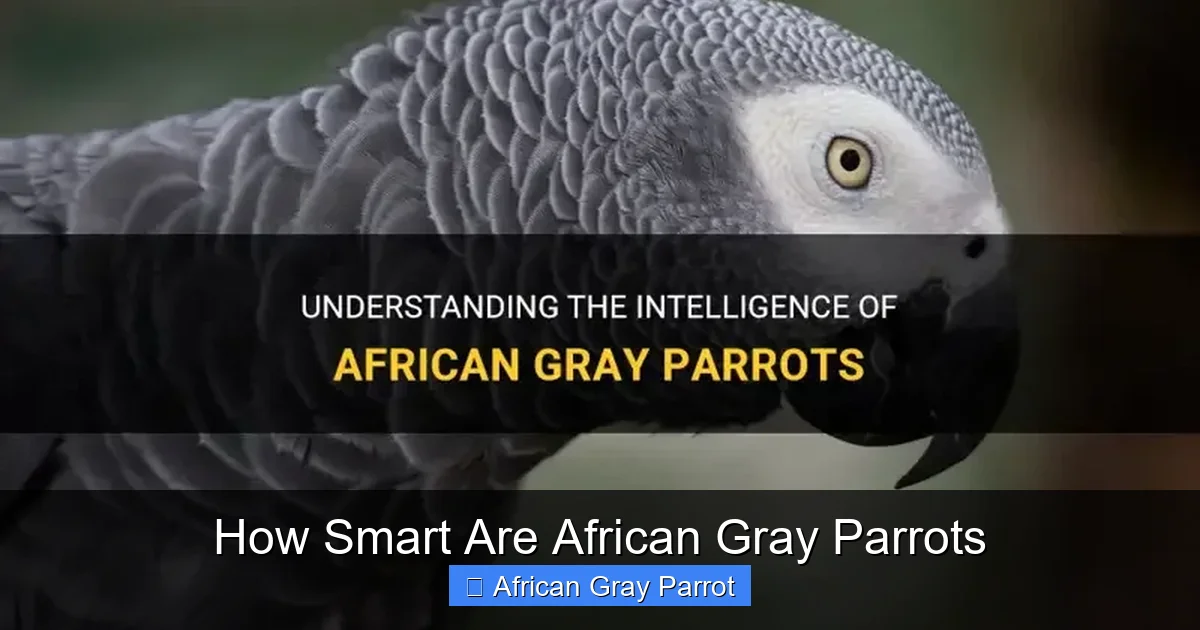
African Gray Parrots rank among the most intelligent birds on Earth, with cognitive abilities comparable to a 5-year-old child. They can learn hundreds of words, solve complex puzzles, understand concepts like shape and color, and even show empathy and humor.
If you have ever spent time around an African Gray Parrot, you already know something special is happening behind those bright eyes. These birds do not just repeat words. They seem to understand them. They solve puzzles. They comfort you when you are sad. They even make jokes. But just how smart are African Gray Parrots really? Scientists have been asking this question for decades. The answers might surprise you.
African Gray Parrots are widely considered the smartest birds in the world. Some researchers put their intelligence on par with great apes, dolphins, and young human children. This is not just anecdotal. It comes from rigorous studies, famous research subjects like Alex the parrot, and countless observations from dedicated owners. In this guide, we will explore the science, the stories, and the practical reality of living with one of nature’s most brilliant minds.
Key Takeaways
- Exceptional vocabulary: African Grays can learn 100-1000+ words and use them in context, not just mimicry.
- Problem-solving masters: They solve multi-step puzzles, use tools, and understand cause-and-effect relationships.
- Concept comprehension: These parrots grasp abstract ideas like same/different, bigger/smaller, and zero.
- Emotional intelligence: They show empathy, form deep bonds, and can sense human moods.
- Long-term memory: African Grays remember people, words, and routines for decades.
- Social learning: They learn by watching others, including humans and fellow parrots.
- Mental stimulation is critical: Without enrichment, their intelligence leads to boredom and behavioral issues.
Quick Answers to Common Questions
How many words can an African Gray Parrot learn?
Most African Grays learn 50 to 200 words, but exceptional individuals can master 500 to over 1000 words with consistent training and social interaction.
Do African Gray Parrots understand what they are saying?
Yes, research shows they use words contextually to label objects, request items, express emotions, and combine words creatively, indicating genuine comprehension beyond mimicry.
Are African Gray Parrots smarter than dogs?
In many cognitive tests, African Grays outperform dogs on tasks involving language, abstract concepts, tool use, and numerical reasoning, though dogs excel at social cooperation with humans.
How long does it take to teach an African Gray to talk?
African Grays typically start mimicking around 6 to 12 months, but meaningful speech develops over years with daily interaction, modeling, and positive reinforcement.
Can African Gray Parrots solve puzzles?
Absolutely. They excel at multi-step puzzle toys, string-pulling tasks, and cause-effect problems, often solving them faster than primates and remembering solutions for months.
📑 Table of Contents
The Science Behind African Gray Intelligence
Brain Structure and Cognitive Capacity
Bird brains are structured differently than mammal brains. For a long time, scientists thought this meant birds were less intelligent. We now know that is wrong. Birds pack neurons much more densely than mammals do. An African Gray Parrot has a brain about the size of a walnut. But that walnut contains roughly 1.5 to 3 billion neurons. Many of these neurons are concentrated in the pallium, the bird equivalent of the cerebral cortex. This is where higher thinking happens.
This dense neural packing allows for incredible processing power in a small package. It explains how a bird can perform complex cognitive tasks with a brain fraction the size of a primate’s. When we ask how smart are African Gray Parrots, the answer starts with this remarkable neural architecture.
The Alex Studies: Landmark Research
No discussion of African Gray intelligence is complete without Dr. Irene Pepperberg and her famous subject, Alex. Alex stood for Avian Learning Experiment. For 30 years, until his death in 2007, Alex worked with Dr. Pepperberg at Harvard and Brandeis. The results revolutionized our understanding of bird cognition.
Alex could identify over 50 objects by name. He understood seven colors and five shapes. He could count up to six. He grasped the concept of zero, a milestone human children typically reach around age three or four. He understood categories. Show him a blue wooden triangle and a blue woolen triangle. He could tell you what was same (color, shape) and what was different (material). He combined labels creatively. He called an apple a “banerry” because it looked like a banana and tasted like a cherry.
Alex did not just mimic. He answered questions. He asked for things. He corrected other parrots in the lab. He even seemed to manipulate his trainers. Once, when tired of testing, he said “Want a nut” repeatedly until the session ended. This was not rote learning. This was communication.
Modern Research Continues
Since Alex, other African Grays have shown similar abilities. Griffin and Athena, also studied by Dr. Pepperberg, demonstrate inference by exclusion. They can figure out the name of a new object by eliminating known options. Studies at the University of Vienna show African Grays can delay gratification. They will wait for a better treat rather than take an immediate lesser one. This self-control is a hallmark of advanced cognition.
Research from the Max Planck Institute reveals these parrots understand probability. They make choices based on statistical likelihood. They also show prosocial behavior. They will help another parrot get a reward even when there is no immediate benefit to themselves. This suggests a level of social cognition once thought unique to primates.
Language and Communication Abilities
Vocabulary Size and Usage
How many words can an African Gray learn? The range is staggering. Most pet Grays learn 50 to 200 words. Exceptional individuals reach 500 to 1000 or more. The Guinness World Record holder, a parrot named Prudle, had a documented vocabulary of over 800 words. But raw numbers only tell part of the story.
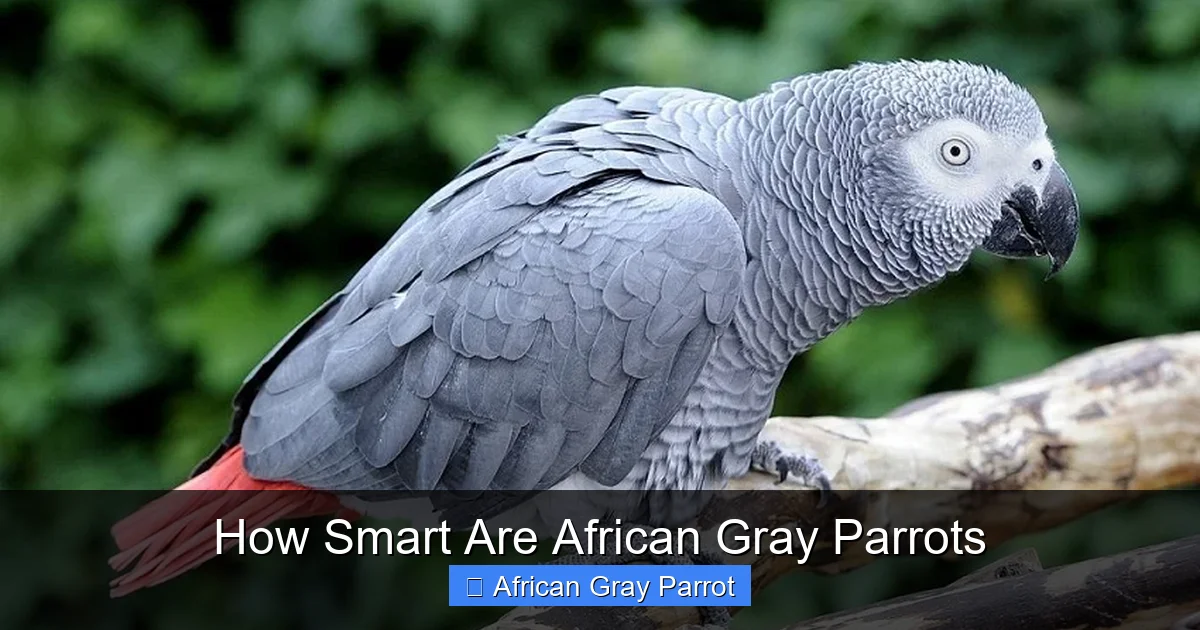
Visual guide about How Smart Are African Gray Parrots
Image source: singing-wings-aviary.com
What matters is how they use those words. African Grays do not just repeat. They label. They request. They comment. They combine words into novel phrases. A parrot might say “Want corn” when hungry. “Hello” when the phone rings. “Bye bye” when you put on your coat. They pick up on context. They learn the names of family members, other pets, and favorite toys. They use words functionally, not just as sounds.
Understanding Context and Syntax
Contextual use is a key indicator of intelligence. An African Gray does not say “Good morning” at night unless confused or joking. They say it when the sun comes up or when you first appear. They learn routines. “Time for bed” means something specific. “Shower time” triggers excitement or avoidance depending on the bird.
Some Grays show rudimentary syntax understanding. They might say “Tickle me” rather than “Me tickle.” They adjust phrasing based on what works. If “Want nut” gets results but “Nut want” does not, they stick with the effective order. This suggests they are not just parroting. They are communicating with intention.
Mimicry vs. Meaningful Speech
Critics often dismiss parrot speech as mimicry. There is a difference. Mimicry is reproducing a sound. Meaningful speech is using a sound to convey information. African Grays do both. They mimic microwave beeps, phone ringtones, and laughter perfectly. But they also use human language to express needs, desires, and observations.
The line blurs. A parrot saying “I love you” may have learned the phrase gets a positive reaction. But many owners report the phrase appears at appropriate moments. When the owner is sad. When leaving for work. At bedtime. This contextual appropriateness suggests at least some semantic understanding.
Problem-Solving and Tool Use
Multi-Step Puzzle Solving
Give an African Gray a puzzle toy designed for primates. They often solve it faster. They understand sequences. Unlock latch one. Remove bolt two. Slide door three. Retrieve treat. They remember solutions. Show them once, they remember for months. They also innovate. If the standard solution fails, they try new approaches.
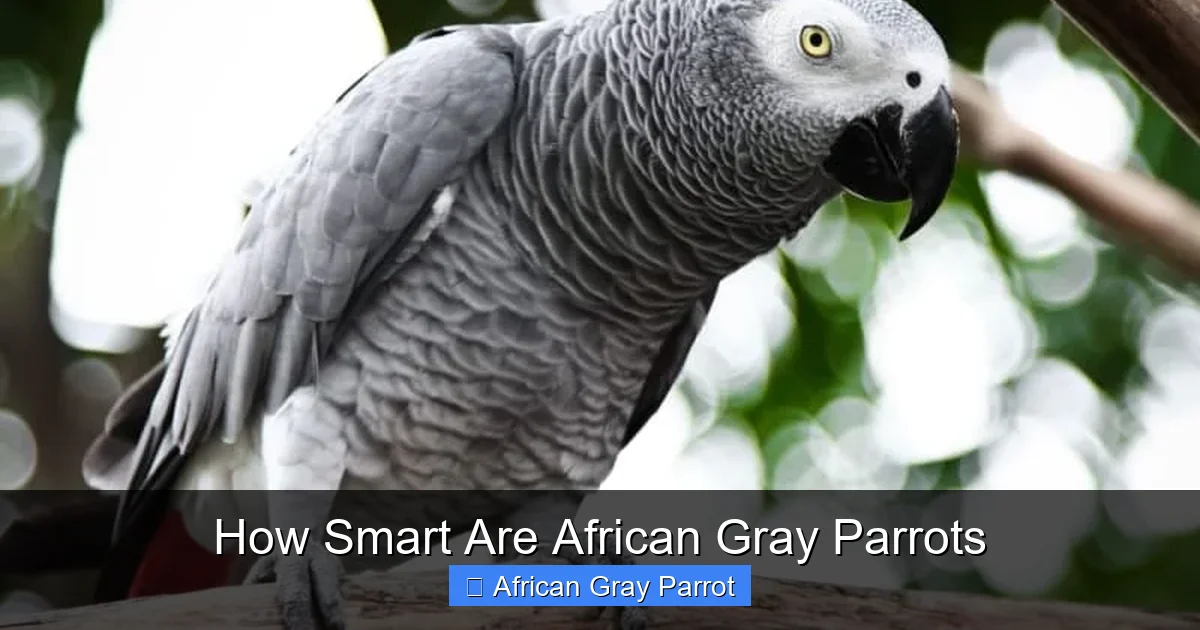
Visual guide about How Smart Are African Gray Parrots
Image source: d2zp5xs5cp8zlg.cloudfront.net
In laboratory settings, African Grays solve string-pulling tasks. They understand that pulling a string brings a treat closer. They choose the correct string when multiple are present but only one is connected to the reward. They avoid broken strings. They understand connectivity. This is causal reasoning, not trial and error.
Tool Use in Captivity and the Wild
Tool use was once considered uniquely human. Then primates. Then corvids. Now parrots. In captivity, African Grays use sticks to retrieve food outside the cage. They use feathers to scratch hard-to-reach spots. They use bottle caps as scoops. One famous pet Gray used a feather to tickle his owner’s nose, then laughed at the reaction.
Wild African Grays have been observed using tools less frequently, but this may be due to observation difficulty. They manipulate objects to access food. They strip bark to probe crevices. They hold nuts against perches to crack them. This is borderline tool use. The cognitive foundation is clearly present.
Innovation and Flexibility
Intelligence shows in flexibility. When faced with a novel problem, African Grays do not just repeat old behaviors. They experiment. They combine known behaviors in new ways. They watch others and imitate successful strategies. This social learning accelerates problem-solving. A parrot who sees another solve a puzzle often solves it immediately on their first try.
Conceptual Understanding
Same/Different and Categorization
Understanding “same” and “different” is a major cognitive milestone. Alex the parrot mastered this. He could look at two objects and say “Color” if they shared color but not shape. “Shape” if they shared shape but not color. “Material” if they shared material. “None” if they shared nothing. This requires abstract representation. The parrot must hold concepts in mind, compare them, and label the relationship.
Categorization goes further. African Grays group objects by type. All balls are “ball” regardless of color or size. All keys are “key.” They understand hierarchical categories. A “toy” can be a “ball” or a “block.” This conceptual flexibility mirrors early childhood development.
Numerical Competence
African Grays can count. Not just recite numbers. Actually count. Alex could look at a tray of objects, count them, and say the correct number up to six. He understood ordinality. Three comes after two. He understood the zero concept. When asked “How many?” about an empty tray, he said “None.” This is remarkable. Zero is an abstract concept. Many ancient human cultures lacked a zero symbol.
Recent studies show they can add small quantities. They choose the larger of two hidden sets. They track additions and subtractions. This numerical sense is approximate for larger numbers but exact for small sets. It parallels human and primate number sense.
Object Permanence and Spatial Reasoning
Object permanence is knowing things exist when out of sight. Human babies develop this around 8 months. African Grays have it fully. They track hidden objects through complex displacements. Watch a treat go under cup A. Move cup A to position B. The parrot knows it is under cup A, not position B. They pass invisible displacement tasks. The treat moves inside a container. The container moves behind a screen. The treat is secretly removed. The container emerges empty. The parrot searches the screen, not the container. They tracked the invisible movement.
Spatial reasoning extends to navigation. African Grays remember locations of food caches, nesting sites, and safe perches over large territories. In homes, they remember which cabinet holds treats. Which room has the best view. Where the “scary” vacuum is stored.
Emotional and Social Intelligence
Empathy and Emotional Contagion
Many African Gray owners report their birds comforting them. You cry. The bird comes close. Preens your hair. Makes soft sounds. Says “It’s okay” or “I love you.” Is this empathy? Scientists are cautious. But emotional contagion is documented. Parrots react to human emotional states. They become agitated when owners argue. Relaxed when owners are calm. Excited when owners are happy.
In flock settings, African Grays console each other. After a conflict, they preen the victim. They share food. They synchronize behaviors. This prosocial behavior suggests emotional awareness. They recognize distress in others and act to alleviate it.
Bonding and Relationship Management
African Grays form intense pair bonds. In the wild, they mate for life. In captivity, they bond deeply with one person. This “chosen person” gets preferential treatment. The parrot seeks them out. Defends them. Gets jealous when they pay attention to others. This jealousy is not anthropomorphism. It is observable. The parrot inserts themselves between the owner and a rival. Vocalizes loudly. Sometimes bites the rival.
They also manage relationships strategically. They behave differently with different family members. Gentle with the primary caregiver. Rough with the sibling who teased them. Polite with the grandparent who brings treats. They track social dynamics and adjust behavior accordingly.
Humor and Play
Play is a sign of intelligence. African Grays play constantly. They hang upside down. Toss toys. Play peekaboo. They invent games. Drop a toy. Watch you pick it up. Drop it again. Laugh. They understand the game structure. They initiate it. They vary it.
Humor appears in teasing. A parrot says “Step up” then bites gently. Says “Ouch” when they bite you. Mimics the microwave right after you put food in. Makes the phone ring sound when you are far from the phone. They wait for your reaction. They seem to enjoy the surprise. This requires theory of mind. Understanding you have expectations. Then violating them for effect.
Memory and Learning Capacity
Long-Term Memory
African Grays live 50 to 80 years. Their memory spans decades. They remember people they have not seen in years. Words they have not heard in years. Routines from previous homes. Rescue parrots often recognize former owners after long separations. They remember traumatic events. A bird who was grabbed by a towel may fear towels forever. A bird who was bitten by a dog may panic at dog sounds.
This long-term memory is adaptive. In the wild, remembering fruiting trees, water sources, and predator territories across seasons is survival. In captivity, it means they remember every slight. Every kindness. Every broken promise. They do not forget.
Social Learning and Imitation
African Grays are consummate observational learners. They watch. They process. They replicate. This applies to speech, foraging techniques, tool use, and social behaviors. A young Gray learns by watching parents and flock mates. In homes, they learn by watching humans. They learn to open doors by watching handles turn. They learn to use the microwave by watching buttons pressed.
This imitation is selective. They copy successful behaviors. They ignore failed ones. They copy high-status individuals. The “flock leader” gets more attention. In human terms, they copy the person they bond with most. This selective imitation shows evaluation, not blind copying.
Training and Cognitive Enrichment
Because they are so smart, African Grays need training. Not just for tricks. For mental health. Training provides structure. Communication. Bonding. Problem-solving. Positive reinforcement works best. Clicker training. Target training. Shape recognition. Color sorting. Puzzle toys. Foraging setups. Novel objects. Rotated regularly.
An untrained, unstimulated African Gray develops problems. Feather plucking. Screaming. Aggression. Stereotypies. These are repetitive movements. Their intelligence demands outlet. A bored genius destroys their environment. A stimulated genius thrives.
Comparing African Gray Intelligence
Versus Other Parrot Species
How smart are African Gray Parrots compared to other parrots? They consistently rank at the top. Macaws are intelligent but often more impulsive. Cockatoos are emotionally complex but less verbal. Amazons are good talkers but less conceptual. Eclectus are observant but less experimental. Budgies can learn huge vocabularies but lack the conceptual depth. African Grays combine verbal ability, conceptual reasoning, problem-solving, and emotional sensitivity in a unique package.
That said, individual variation is huge. A stimulated Amazon may outperform a neglected Gray. Species tendencies are not individual destinies. But the Gray’s cognitive ceiling appears highest.
Versus Corvids: Crows and Ravens
Corvids are the other avian geniuses. New Caledonian crows make tools. Ravens plan for the future. Jays remember thousands of cache locations. African Grays match them in many domains. Corvids excel at physical cognition. Tool use. Spatial memory. Causal reasoning. Grays excel at social cognition. Communication. Imitation. Emotional intelligence. Both groups show flexible problem-solving. Both understand cause and effect. Both plan. The convergence is striking. Different evolutionary paths. Similar cognitive peaks.
Versus Primates and Young Children
Comparisons to primates are inevitable. Alex performed on par with chimpanzees on many tasks. Better on some. African Grays understand categories, numbers, and zero at levels matching 3 to 5 year old humans. Their vocabulary comprehension exceeds most non-human primates. Their vocal production is unique. No primate speaks human words.
But differences exist. Primates have better manual dexterity. Better tool manipulation. Longer developmental periods. More complex social politics. African Grays process information faster in some domains. Their neural density allows rapid learning. The comparison is not about “smarter.” It is about different cognitive specializations.
Practical Implications for Owners
Mental Stimulation Requirements
If you want an African Gray, prepare for a lifestyle change. This is not a decoration. This is a dependent intelligent being. They need 3 to 5 hours of active engagement daily. Out of cage time. Training sessions. Conversation. Puzzle toys. Foraging opportunities. Social interaction. TV or radio when alone. Variety. Novelty. Challenge.
Rotate toys weekly. Introduce new puzzles monthly. Teach new words regularly. Change foraging setups daily. Take them new places. Meet new people. Learn new tricks. The mental diet must be as varied as the physical diet.
Communication Strategies
Talk to your Gray. Narrate your day. Label objects. Label actions. Label emotions. “I am cutting an apple. This is a knife. Knife is sharp. Be careful.” Use consistent phrases. “Time for dinner.” “Good job.” “Gentle beak.” Ask questions. “What color?” “How many?” “Where is the ball?” Wait for answers. Reward attempts. Model correct responses.
Use the Model-Rival technique from the Alex studies. Two humans interact. One asks. One answers. The parrot watches. Then the parrot gets a turn. This leverages social learning. It is highly effective.
Preventing Behavioral Issues
Most African Gray “behavior problems” are intelligence problems. Screaming? Boredom or learned attention-getting. Biting? Fear, overstimulation, or boundary testing. Feather plucking? Anxiety, boredom, or medical issue. Phobias? Lack of early exposure or traumatic memory.
Prevention beats cure. Socialize extensively as babies. Expose to varied people, objects, sounds, situations. Teach independence. Allow choices. Respect “no.” Build trust. Provide autonomy within safety. A confident, stimulated Gray is a joy. A frustrated, bored Gray is a crisis.
The Lifetime Commitment
African Grays live 50 to 80 years. This is a multi-generational commitment. They bond intensely. Rehoming is traumatic. They grieve. They remember. They may never fully bond again. Plan for their care beyond your lifetime. Include them in your will. Designate a guardian. Ensure financial provision. This is responsible ownership of a sentient being with the mind of a child who never grows up.
Conclusion
So how smart are African Gray Parrots? The evidence is overwhelming. They possess language comprehension, conceptual reasoning, problem-solving, tool use, numerical competence, self-awareness, empathy, humor, and long-term memory. Their cognitive abilities rival great apes and young children in many domains. They are not “bird brains.” They are feathered geniuses.
But intelligence is not a party trick. It is a responsibility. An African Gray’s mind needs nourishment as much as their body. They need challenge, companionship, respect, and love. In return, they offer something rare. A genuine interspecies relationship. A being who knows you. Who communicates with you. Who comforts you. Who makes you laugh. Who grows with you across decades.
If you are ready for that commitment, an African Gray will change your life. They will expand your understanding of what a bird can be. What intelligence looks like without hands. Without a cortex. With a walnut-sized brain packed with billions of neurons and a heart the size of your own.
The question is not just how smart are African Gray Parrots. The question is are you smart enough to meet their needs? If yes, welcome to one of the most rewarding relationships possible between human and animal.
Frequently Asked Questions
At what age do African Gray Parrots start talking?
African Grays typically begin mimicking sounds around 6 months, but clear words usually emerge between 12 and 18 months. Full sentence use and contextual speech develop over several years with consistent interaction.
Do African Gray Parrots get bored easily?
Yes, their high intelligence makes them extremely prone to boredom. Without 3-5 hours of daily mental stimulation through toys, training, foraging, and social interaction, they develop destructive behaviors like feather plucking and screaming.
Can African Gray Parrots recognize themselves in a mirror?
Current research suggests African Grays do not pass the standard mirror self-recognition test. They typically react to their reflection as another bird, though they can learn to use mirrors as tools to see hidden objects.
How do African Gray Parrots show affection?
They preen their favorite person, regurgitate food (a courtship behavior), mimic affectionate phrases, seek physical contact, and show distress when separated. Each bird has unique affection signals.
What is the smartest thing an African Gray Parrot can do?
Alex the parrot demonstrated the highest documented achievements: understanding zero, categorizing objects by multiple attributes, counting to six, combining labels creatively, and answering complex questions about same/different relationships.
Do male or female African Gray Parrots talk better?
Both sexes talk equally well. Individual personality, early socialization, and training consistency matter far more than gender. There is no significant difference in vocabulary size or cognitive ability between males and females.