
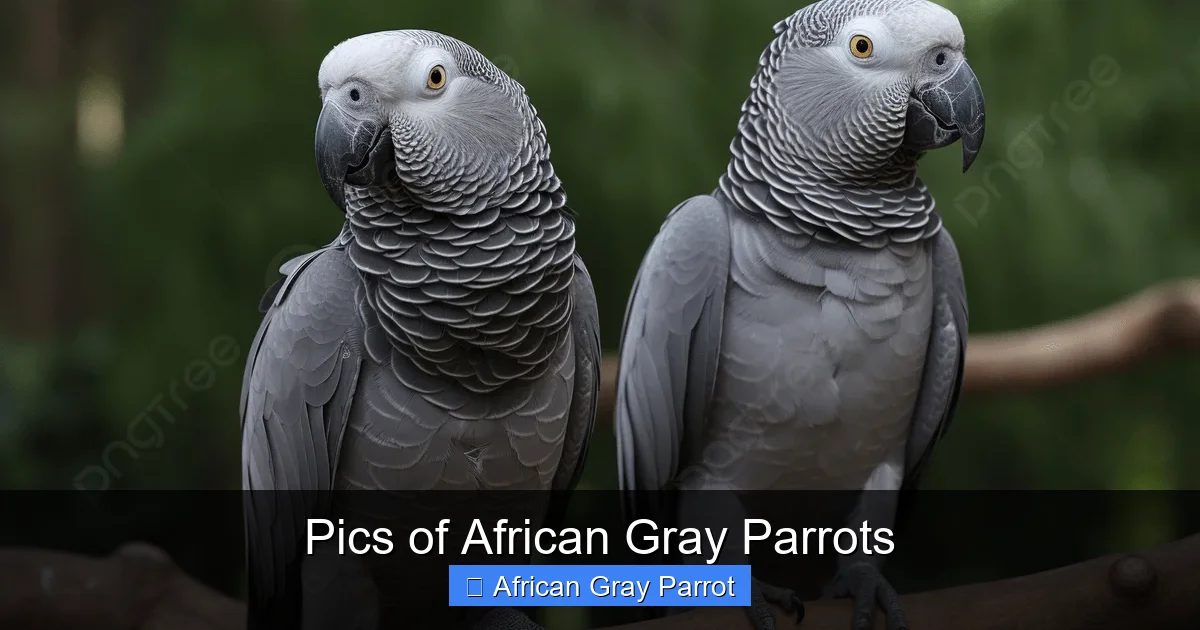
African Gray Parrots are among the most intelligent birds on Earth, famous for their exceptional talking ability and emotional depth. This guide features breathtaking pics of African Gray Parrots while exploring their care needs, behavior traits, and why they make such remarkable companions for dedicated bird lovers.
If you have ever searched for pics of African Gray Parrots online, you already know these birds stop you in your tracks. Their sleek silver feathers, bright red tails, and intelligent eyes create an almost magnetic pull. But there is so much more to these parrots than their stunning appearance. Behind every gorgeous photo lies a complex, sensitive, and remarkably smart creature that has captivated bird lovers for centuries.
In this comprehensive guide, we will explore everything that makes African Gray Parrots extraordinary. We will look at their two distinct subspecies, their jaw-dropping intelligence, what it takes to care for them properly, and why the photos you see only tell part of the story. Whether you are a seasoned parrot owner, considering adoption, or simply love admiring pics of African Gray Parrots, this article will deepen your appreciation for one of nature’s most remarkable birds.
Key Takeaways
- Two distinct subspecies exist: The Congo African Gray is larger with bright red tail feathers, while the Timneh African Gray is smaller with darker, maroon tail feathers.
- Exceptional intelligence rivals young children: These parrots demonstrate cognitive abilities equivalent to a 3-5 year old human, including problem-solving, tool use, and understanding concepts like shape and color.
- Lifespan exceeds 50 years in captivity: With proper care, African Grays become lifelong companions, requiring decades of commitment from their owners.
- High social needs demand daily interaction: These birds form deep bonds and suffer severe psychological distress when neglected, leading to feather plucking and aggression.
- Diet diversity prevents health issues: A balanced mix of pellets, fresh vegetables, fruits, and occasional nuts supports their complex nutritional requirements.
- Talking ability varies by individual: While famous for mimicry, not every bird talks extensively; personality and environment play huge roles in vocal development.
- Legal ownership requires documentation: CITES Appendix I listing means captive-bred birds need proper paperwork, and wild-caught trade is strictly prohibited.
Quick Answers to Common Questions
How long do African Gray Parrots live?
African Gray Parrots typically live 50 to 70 years in captivity with proper care, and some individuals have reached 80 years old. This makes them a multi-generational commitment for owners.
Can all African Gray Parrots talk?
While African Grays are renowned for their talking ability, not every individual becomes a proficient talker. Some may only mimic sounds like microwaves or phone rings, while others develop vocabularies of hundreds of words used in context.
What is the difference between Congo and Timneh African Grays?
Congo African Grays are larger (13-14 inches) with bright red tail feathers and solid black beaks. Timneh African Grays are smaller (9-11 inches) with dark maroon tails and two-toned beaks (pale upper mandible, dark lower).
Are African Gray Parrots good for first-time bird owners?
Generally, no. Their high intelligence, complex emotional needs, long lifespan, and tendency toward behavioral issues when misunderstood make them challenging for novice owners. Experience with parrots is strongly recommended.
Why are African Gray Parrots endangered in the wild?
African Gray populations have collapsed due to massive trapping for the international pet trade combined with extensive habitat loss from logging, agriculture, and mining. They are now listed as Endangered by IUCN and protected under CITES Appendix I.
📑 Table of Contents
- Meet the Two Subspecies: Congo and Timneh
- The Mind of a Genius: Understanding African Gray Intelligence
- Creating the Perfect Home Environment
- Nutrition: Fueling a Brilliant Brain and Beautiful Body
- Behavior, Training, and Building Trust
- Health Care and Longevity
- The Ethics of Ownership and Conservation
- Photography Tips for Capturing Stunning Parrot Portraits
- Living with an African Gray: Daily Reality
- Conclusion
Meet the Two Subspecies: Congo and Timneh
When you browse pics of African Gray Parrots, you might notice subtle differences between individuals. These variations are not just individual quirks. They represent two distinct subspecies with unique characteristics.
Congo African Gray Parrot
The Congo African Gray (Psittacus erithacus erithacus) is the larger and more commonly recognized subspecies. Adults typically reach 13 to 14 inches in length and weigh between 400 and 650 grams. Their plumage displays a beautiful gradient of gray shades, lighter on the head and darker across the wings and back. The most striking feature is their vivid, cherry-red tail feathers that flash brilliantly in flight.
Congo Grays originate from a vast range across Central Africa, including countries like Cameroon, Congo, Gabon, and Uganda. They prefer dense lowland rainforests but also inhabit forest edges, gallery forests, and mangroves. In the wild, they form large, noisy flocks that roost together in tall trees at night and disperse during the day to forage.
Timneh African Gray Parrot
The Timneh African Gray (Psittacus erithacus timneh) is noticeably smaller, measuring 9 to 11 inches and weighing 275 to 375 grams. Their feathers are a deeper, charcoal gray with a distinctive pinkish-horn colored upper mandible (beak) rather than the solid black beak of the Congo. Their tail feathers are a dark maroon or burgundy rather than bright red.
Timnehs come from the western parts of the Upper Guinea forests, including Guinea-Bissau, Sierra Leone, Liberia, and Ivory Coast. They tend to be slightly more high-strung than Congos but are equally intelligent. Many owners report Timnehs start talking earlier and have a slightly different vocal quality, often described as more “mechanical” or “robotic” compared to the Congo’s uncanny human-like clarity.
How to Tell Them Apart in Photos
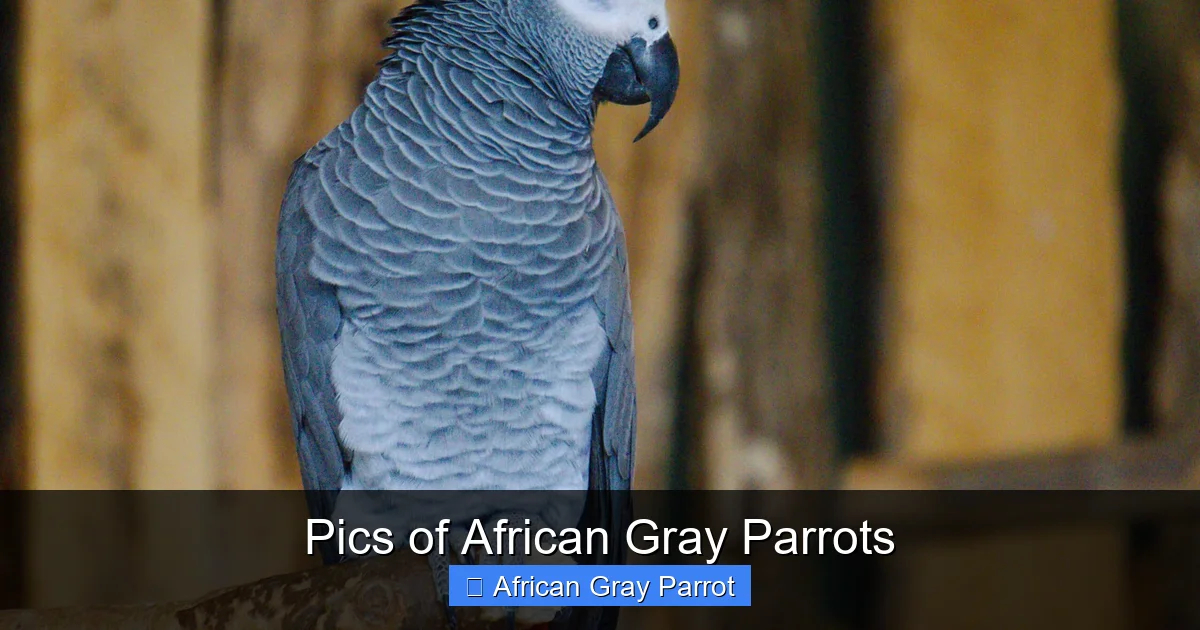
When looking at pics of African Gray Parrots, check these key identifiers. Size difference is obvious when birds are side by side but harder in solo shots. The tail color is your best clue: bright red indicates Congo, while dark maroon points to Timneh. The beak tells the rest of the story. A solid black beak means Congo. A two-toned beak with a pale upper mandible means Timneh. Both subspecies have the same piercing pale yellow eyes and the same scalloped feather pattern on the head and neck that gives them their distinguished, almost regal appearance.
The Mind of a Genius: Understanding African Gray Intelligence
African Gray Parrots do not just mimic sounds. They understand concepts. This distinction places them in a cognitive league of their own among birds.
Visual guide about Pics of African Gray Parrots
Image source: worldbirds.com
Alex the Parrot and the Science of Avian Intelligence
No discussion of African Gray intelligence is complete without mentioning Alex. Dr. Irene Pepperberg worked with Alex for thirty years at Harvard and Brandeis universities. Alex shattered scientific assumptions about bird brains. He learned over one hundred English words, but more importantly, he used them meaningfully. He could identify seven colors, five shapes, and quantities up to six. He understood concepts like “bigger,” “smaller,” “same,” “different,” and even “none” (zero).
When shown a blue wooden triangle and a blue wooden square, Alex could answer “What’s same?” with “Color” and “What’s different?” with “Shape.” He combined labels creatively, calling an apple “banerry” (banana + cherry) because it tasted like both to him. He apologized when he made mistakes and told researchers “I’m sorry” when they seemed upset. Alex proved that parrots possess genuine cognitive processing, not just rote memorization.
Problem Solving and Tool Use
Recent studies show African Grays spontaneously solve multi-step puzzles. In one experiment, birds figured out how to use a short stick to retrieve a longer stick, then use the longer stick to reach food. They plan ahead, inhibit impulses, and learn by observation. Some wild populations have been documented using tools to crack hard palm nuts, a behavior passed down culturally.
Emotional Intelligence and Theory of Mind
African Grays appear to possess a rudimentary theory of mind. They understand that others have different knowledge and perspectives. In sharing experiments, they choose tokens that benefit both themselves and a partner, showing prosocial behavior rare in non-human animals. They recognize human faces, remember people for years, and adjust their behavior based on who is in the room. This emotional depth explains why they form such intense bonds and why neglect devastates them psychologically.
What This Means for Owners
If you want pics of African Gray Parrots doing cute tricks, understand that you are living with a being that needs constant mental stimulation. Boredom leads to destruction. These birds need puzzles, foraging toys, training sessions, and social interaction every single day. They are not decoration. They are feathered toddlers who never grow up and never move out.
Creating the Perfect Home Environment
A cage is not a home. It is a bedroom. Your African Gray needs a life beyond bars.
Cage Requirements and Setup
Minimum cage size for a Congo African Gray is 36 inches wide, 24 inches deep, and 48 inches tall. For a Timneh, 32 by 24 by 40 inches works. Bar spacing must be 3/4 to 1 inch. Horizontal bars on at least two sides allow climbing. Stainless steel is ideal. Powder-coated wrought iron works if high quality. Avoid zinc or lead-based coatings.
Inside, provide multiple perch types. Natural wood branches of varying diameters exercise feet and prevent pressure sores. Rope perches offer comfort. A concrete or sand perch helps nail maintenance but should not be the only option. Place food and water bowls away from perches to prevent contamination. Include a large door for easy access and a play top if possible.
Out-of-Cage Time and Play Areas
African Grays need a minimum of three to four hours outside the cage daily. More is better. Create a dedicated play gym or parrot stand in your main living area. Include hanging toys, foraging stations, and climbing structures. Bird-proof the room. Cover windows. Remove toxic plants. Hide electrical cords. Secure ceiling fans. These birds explore with their beaks. Anything within reach gets investigated.
Lighting and Air Quality
Full-spectrum UVB lighting supports vitamin D synthesis and feather health. Provide 10 to 12 hours of light and 10 to 12 hours of dark for proper sleep cycles. African Grays are extremely sensitive to airborne toxins. No Teflon cookware, scented candles, air fresheners, smoke, or aerosol sprays. Their respiratory systems are incredibly efficient and equally fragile. An air purifier with HEPA filtration is a wise investment.
Temperature and Humidity
Maintain temperatures between 65 and 80 degrees Fahrenheit. Avoid drafts. Humidity around 50 to 60 percent mimics their rainforest origins. Low humidity contributes to dry skin, feather issues, and respiratory problems. A humidifier in dry climates or winter months makes a noticeable difference in feather quality.
Nutrition: Fueling a Brilliant Brain and Beautiful Body
You cannot judge a parrot’s diet by the seed mix on a pet store shelf. African Grays have specific nutritional needs that, when unmet, lead to serious health problems.
The Pellet Foundation
High-quality formulated pellets should comprise 60 to 70 percent of the diet. Look for brands with no artificial colors, flavors, or preservatives. Harrison’s, Roudybush, and TOPS are respected options. Pellets ensure balanced vitamins, minerals, and amino acids in every bite. Transitioning a seed-addicted bird takes patience. Mix pellets with favorite foods. Offer warm. Model eating them yourself. Most birds convert within weeks.
Fresh Foods: The Rainbow Rule
Vegetables and fruits should make up 20 to 30 percent of daily intake. Dark leafy greens (kale, collards, swiss chard) provide calcium and vitamin A. Orange vegetables (sweet potato, carrot, butternut squash) offer beta-carotene. Cruciferous vegetables (broccoli, cauliflower, Brussels sprouts) support liver detoxification. Berries deliver antioxidants. Rotate offerings daily. Variety prevents nutritional gaps and boredom.
Healthy Fats and Protein Sources
Nuts and seeds belong in the diet but as treats, not staples. Almonds, walnuts, pistachios, and pumpkin seeds provide essential fatty acids for brain function and feather quality. Limit to a few pieces daily. Cooked legumes (lentils, chickpeas, black beans), quinoa, and occasional lean cooked chicken or egg supply complete proteins. Sprouted seeds are nutritional powerhouses and excellent for transitioning seed junkies.
Calcium and Vitamin D3: The African Gray Achilles Heel
African Grays are prone to hypocalcemia (low blood calcium). This causes seizures, weakness, and egg-binding in females. Dietary calcium from dark greens, almonds, and fortified pellets helps. But vitamin D3 is essential for absorption. Natural sunlight (not through glass) or UVB lighting enables D3 synthesis. Some birds need supplemental calcium, especially during molting or breeding. Consult an avian veterinarian before supplementing.
Foods to Never Feed
Avocado, chocolate, caffeine, alcohol, onions, garlic, mushrooms, rhubarb, fruit pits (cyanide), and high-salt or high-sugar processed foods are toxic or harmful. When in doubt, leave it out.
Behavior, Training, and Building Trust
The relationship you build with your African Gray determines everything. These birds choose their people. They hold grudges. They remember kindness.
Understanding Body Language
Learn to read your bird. Pinned eyes (rapidly contracting and expanding pupils) indicate excitement, which can mean playfulness or aggression depending on context. Flattened feathers against the body signal fear. Raised nape feathers with a fanned tail and crouched posture mean “back off.” A relaxed bird has smooth feathers, one foot tucked up, and may grind its beak contentedly. Head bobbing often solicits attention or regurgitation (a bonding behavior). Tail wagging usually shows happiness.
Positive Reinforcement Training
Force-free training using a clicker and treats builds communication and trust. Start with target training (touching a stick). Progress to step-up, recall, and stationing. Training sessions should be short (5-10 minutes) and frequent. End on a success. Never punish. Ignore unwanted behavior. Reinforce alternatives. An African Gray trained with respect becomes a willing partner. One trained with force becomes a biter.
Managing Vocalizations
African Grays are loud. They scream at dawn and dusk (contact calls). They mimic microwaves, phones, alarms, and family arguments. You cannot eliminate noise. You can manage it. Do not scream back. That rewards the behavior. Cover the cage briefly for a reset. Reward quiet moments. Teach a “whisper” cue. Accept that some noise is the price of admission.
Feather Destructive Behavior
Feather plucking breaks hearts. It signals medical issues, psychological distress, or both. Rule out disease first (blood work, cultures, radiographs). Then examine environment. Is the bird bored? Lonely? Sleep-deprived? Overstimulated? Nutritionally deficient? Exposed to toxins? Address the root cause. Enrichment, routine, social interaction, and sometimes psychopharmaceuticals help. Never use collars without veterinary guidance. They treat symptoms, not causes.
Health Care and Longevity
With proper care, African Grays live 50 to 70 years. Some reach 80. This is a multi-generational commitment.
Finding an Avian Veterinarian
Dog and cat vets are not enough. You need a board-certified avian specialist or a vet with extensive bird experience. Schedule a wellness exam immediately after adoption. Then annually. Birds hide illness instinctively. By the time symptoms appear, disease is advanced. Regular blood panels catch problems early.
Common Health Concerns
Psittacine Beak and Feather Disease (PBFD) is a viral threat. Proventricular Dilatation Disease (PDD) affects digestion and nerves. Aspergillosis (fungal respiratory infection) thrives in damp, dirty conditions. Hypocalcemia strikes Grays disproportionately. Atherosclerosis and fatty liver disease result from poor diet and inactivity. Beak malocclusion requires regular trims. Annual exams with gram stains, blood work, and fecal exams are non-negotiable.
Grooming Needs
Wing trims are controversial. Many owners choose full flight for exercise and mental health. If you trim, learn proper technique or pay a pro. Nail trims prevent overgrowth and injury. Beak trims are rarely needed if the bird chews appropriate toys. Bathing is essential. Offer a shallow dish, mist with a spray bottle, or share your shower. Most Grays love water. Clean feathers insulate better and look spectacular in photos.
Emergency Preparedness
Have a carrier ready. Know your nearest 24-hour exotic emergency clinic. Keep a first aid kit with styptic powder, gauze, vet wrap, heating pad, and critical care formula. Learn to recognize emergency signs: labored breathing, inability to perch, bleeding, straining, regurgitation (different from vomiting), sudden personality change. Minutes matter.
The Ethics of Ownership and Conservation
Every pic of an African Gray Parrot represents a species in crisis.
Wild Population Collapse
African Gray Parrots have declined catastrophically. Ghana lost 90 to 99 percent of its population since 1992. The species is now Endangered on the IUCN Red List and listed on CITES Appendix I, banning international commercial trade of wild-caught birds. Habitat loss from logging, agriculture, and mining destroys nesting trees. Trapping for the pet trade decimates flocks. Mortality during capture and transport is horrific. For every wild-caught bird that reaches a cage, several die.
Choosing Captive-Bred Birds
Only adopt captive-bred birds from reputable breeders or rescues. Demand CITES paperwork and hatch certificates. Visit the breeder. See the parents. Check band numbers. Avoid pet stores that cannot prove captive origin. “Hand-fed” does not mean “captive-bred.” Some smuggled wild birds are hand-fed after import to appear tame.
Adoption Over Shopping
Rescues overflow with surrendered African Grays. Owners die, divorce, lose jobs, or cannot handle the noise, mess, and demand. Adopted birds often come with behavioral baggage but also known personalities and medical histories. Reputable rescues provide support, education, and take-back guarantees. Adoption saves a life and does not fuel breeding demand.
Supporting Conservation
Donate to organizations protecting wild populations: World Parrot Trust, African Grey Parrot Project, Wildlife Conservation Society. Advocate for stronger enforcement of trade bans. Choose sustainable wood and palm oil products to reduce habitat destruction. Share accurate information. Every person who understands the true cost of a wild-caught parrot becomes a guardian for the species.
Photography Tips for Capturing Stunning Parrot Portraits
Since you love pics of African Gray Parrots, here is how to take your own frame-worthy shots.
Lighting Is Everything
Natural light wins. Position your bird near a large window but out of direct sun. Morning or late afternoon light is soft and golden. Avoid flash. It startles birds and creates harsh reflections on feathers and eyes. If indoors, use continuous LED panels with high CRI (Color Rendering Index) for accurate feather tones. A ring light catches beautiful catchlights in those pale yellow eyes.
Focus on the Eyes
The eyes are the soul of the portrait. Use single-point autofocus locked on the nearest eye. Shoot at eye level. Get down. Lie on the floor. Climb on a chair. Eye-level perspective creates intimacy. A slightly angled head with one eye perfectly sharp makes a powerful image.
Capture Personality, Not Just Poses
Wait for moments. The head tilt when they hear a new sound. The foot raised to hold a treat. The feather ruffle after a preen session. The “conversation” face with beak slightly open. These candid moments reveal character. Use burst mode. Birds move fast. A sequence often yields one magic frame.
Background Simplicity
Clean backgrounds make the subject pop. A solid colored wall, blurred foliage (wide aperture, f/2.8-f/4), or a draped fabric works. Avoid clutter. The gray feathers are subtle. Busy backgrounds swallow detail. If shooting through cage bars, get close, use wide aperture, and focus past the bars. They will blur into invisibility.
Respect Boundaries
Never stress a bird for a photo. No chasing, poking, or forced poses. Let the bird come to you. Use a perch near good light. Offer a high-value treat. Make it a game. The best pics of African Gray Parrots happen when the bird is relaxed and engaged. Your patience shows in the final image.
Living with an African Gray: Daily Reality
Photos capture moments. Life captures years. Here is the unfiltered truth.
The Morning Routine
Dawn breaks. The contact calls begin. Loud, repetitive, insistent. “Hello!” “Whatcha doin’?” The microwave beep. The phone ring. You stumble to the cage. Unlock. Step up. Head scritches. Coffee brews while you chop vegetables. The bird “helps” by stealing a kale stem. You wipe beak prints off your glasses. This is every morning. Forever.
The Mess Factor
Seed hulls on the floor. Vegetable confetti on walls. Feather dust on everything. White powder down coats your furniture, your clothes, your lungs. Daily vacuuming. Weekly deep cleaning. Air purifiers running 24/7. If you need a spotless home, get a fish.
The Financial Commitment
Initial setup: $2,000-$5,000 (cage, play gym, toys, vet exam, bird). Annual costs: $1,000-$3,000 (food, toys, vet, supplements, boarding). Emergency vet visits: $500-$5,000+. Lifetime cost: $50,000-$100,000+. Pet insurance for exotics exists but read the fine print.
The Travel Challenge
Spontaneous weekends away? Gone. You need a trusted bird-sitter who knows your routine, your vet, your emergency plan. Boarding at avian clinics costs $30-$50 per night. Some birds travel well in carriers. Others panic. Plan every trip months ahead.
The Rewards That Outweigh Everything
The first time they say “I love you” in your voice. The way they dance to your favorite song. The gentle preening of your eyelashes. The “peekaboo” game they invented. The comfort of their weight on your shoulder during a hard day. The privilege of being chosen by a wild heart that decided to trust you. No photo captures that. You have to live it.
Conclusion
Pics of African Gray Parrots draw us in with their beauty. But the birds behind those images demand our respect, our knowledge, and our lifelong dedication. They are not pets in the traditional sense. They are complex, long-lived, emotionally profound beings who challenge us to be better caregivers, more patient teachers, and more conscious consumers.
If you are considering sharing your life with an African Gray, do the research. Visit rescues. Talk to owners. Volunteer at a sanctuary. Understand the noise, the mess, the expense, and the decades of daily commitment. But also understand the joy. The laughter. The profound connection that forms when a brilliant mind decides you are its flock.
And if you simply love admiring pics of African Gray Parrots from afar, let that appreciation fuel action. Support conservation. Educate others. Advocate for wild populations. Every share, every donation, every conversation helps ensure these magnificent birds continue to grace both our homes and their native forests for generations to come.
The next time you see a photo of an African Gray Parrot, look past the feathers. See the survivor. See the genius. See the being who deserves a future as bright as its eyes.
Frequently Asked Questions
What size cage does an African Gray Parrot need?
A Congo African Gray needs a minimum cage size of 36 inches wide by 24 inches deep by 48 inches tall. Timnehs can manage with slightly smaller dimensions of 32 by 24 by 40 inches. Bar spacing should be 3/4 to 1 inch with horizontal bars for climbing.
How much does an African Gray Parrot cost?
Expect to pay $2,000 to $4,000 for a captive-bred baby from a reputable breeder. Adoption fees through rescues range from $500 to $1,500. Initial setup with cage, toys, perches, and veterinary exam adds another $1,500 to $3,000.
Do African Gray Parrots bite?
Yes, African Grays can and do bite. Their beaks exert significant pressure and can cause serious injury. Biting usually stems from fear, hormonal changes, territorial behavior, or learned responses. Proper training and respect for body language minimize incidents.
What should I feed my African Gray Parrot daily?
Base diet: 60-70% high-quality pellets. Fresh foods: 20-30% vegetables (dark leafy greens, orange veggies, cruciferous) and fruits (berries, apple, mango). Healthy fats: a few nuts daily. Treats: seeds, cooked grains, occasional lean protein. Fresh water always available.
How much attention does an African Gray need each day?
African Grays need a minimum of 3-4 hours of direct, interactive out-of-cage time daily, plus ambient companionship throughout the day. They are flock animals that suffer severe psychological distress when isolated. This time commitment continues for decades.
Can African Gray Parrots be left alone during work hours?
They can tolerate 8-10 hours alone if provided with enrichment (foraging toys, puzzle feeders, audio/video stimulation) and a substantial interaction session before and after. However, chronic isolation leads to screaming, plucking, and aggression. A compatible second bird or work-from-home arrangement is ideal.