
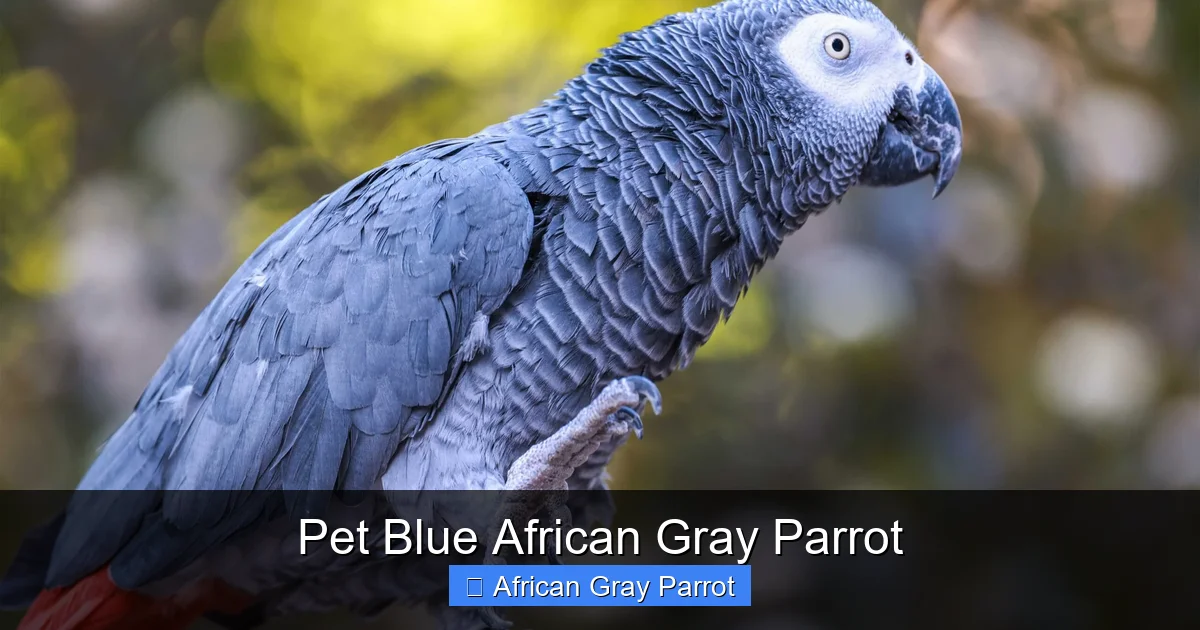
A pet blue african gray parrot is a highly intelligent, social bird that thrives on interaction and mental stimulation. Proper nutrition, a spacious cage, and daily enrichment keep it healthy and happy.
Key Takeaways
- Intelligence: This parrot can learn hundreds of words and solve puzzles.
- Social Needs: Daily interaction prevents boredom and feather plucking.
- Diet: A mix of high‑quality pellets, fresh fruits, and vegetables is essential.
- Housing: A large cage with varied perches and toys supports physical health.
- Health Checks: Annual avian vet visits catch problems early.
- Lifespan: Expect 40 to 60 years of companionship with proper care.
Quick Answers to Common Questions
What size cage does a pet blue african gray parrot need?
At minimum 36 inches wide, 24 inches deep, and 48 inches high, but larger is better.
How often should I feed fresh fruits and vegetables?
Offer a variety daily, about a tablespoon per 100 grams of body weight.
Can this parrot learn to talk?
Yes, it can learn hundreds of words and mimic household sounds with regular interaction.
What are common health problems?
Feather plucking, respiratory infections, and nutritional deficiencies are most common.
How long does a pet blue african gray parrot live?
Typically 40 to 60 years, sometimes longer with excellent care.
📑 Table of Contents
Understanding the Blue African Gray Parrot
The blue african gray parrot is a color mutation of the classic African gray. It shares the same sharp mind and talking ability. Birds of this type come from the rainforests of West and Central Africa. In the wild they live in flocks and forage for nuts, seeds, and fruit. Their natural habitat is warm, humid, and full of tall trees.
Physically the bird measures about 12 to 14 inches from head to tail. Its feathers are a striking slate‑blue with a bright red tail. The beak is strong and curved for cracking hard shells. Eyes are dark and expressive, showing curiosity and alertness.
Personality wise the bird is playful, affectionate, and sometimes demanding. It forms deep bonds with one or two people. It can become jealous if ignored. Early socialization shapes a confident, well‑adjusted companion.
Origin and Natural Habitat
Wild populations inhabit lowland forests and savanna edges. They nest in tree cavities high above the ground. The climate is stable with temperatures between 70 and 85 degrees Fahrenheit. Seasonal rains provide abundant food sources year round.
Physical Characteristics
Adult weight ranges from 400 to 600 grams. The blue hue is a recessive genetic trait. Feather condition reflects overall health. Bright, smooth feathers indicate good nutrition and low stress.
Personality Traits
These parrots are known for problem solving. They can open latches, untie knots, and mimic household sounds. They thrive on routine but also need novelty. A bored bird may develop destructive habits.
Setting Up the Perfect Home
A proper environment is the foundation of a happy pet blue african gray parrot. Start with a cage that allows full wing extension. Minimum dimensions are 36 inches wide, 24 inches deep, and 48 inches high. Larger is always better.
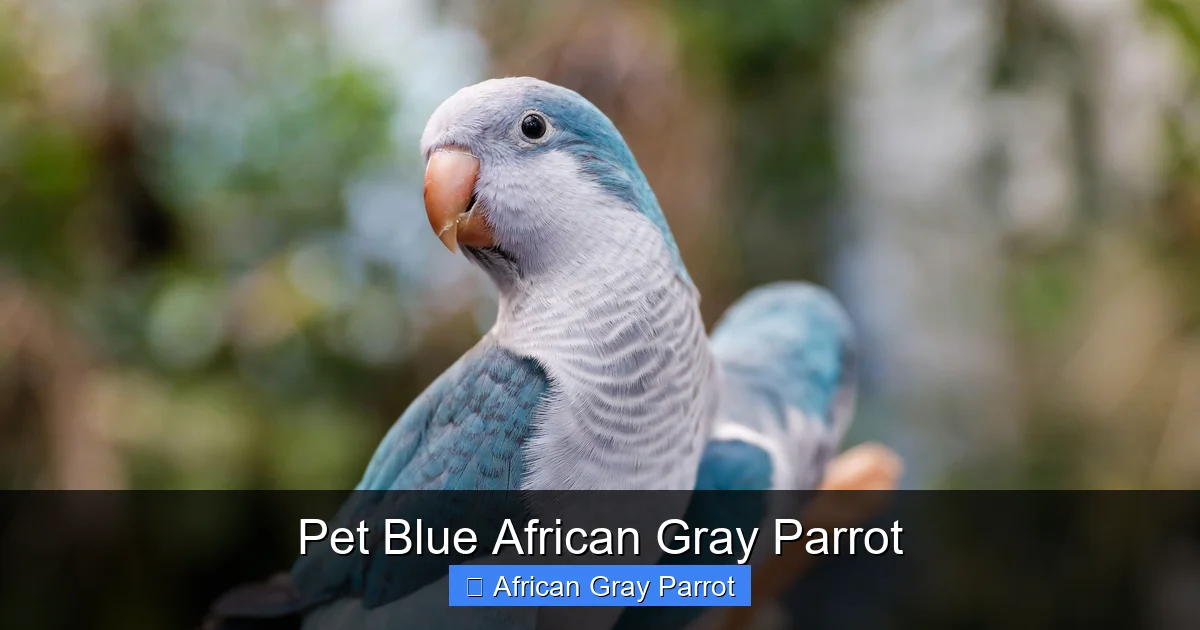
Visual guide about Pet Blue African Gray Parrot
Image source: thesprucepets.com
Place the cage in a family area where the bird can see daily activity. Avoid direct drafts, kitchen fumes, and direct sunlight. A stable temperature between 65 and 80 degrees Fahrenheit works well.
Cage Size and Placement
Choose a powder‑coated or stainless steel cage. Bar spacing of 3/4 inch prevents escape and injury. Include a secure lock because these birds are clever escape artists.
Perches, Toys, and Enrichment
Offer perches of varying diameters and textures. Natural wood, rope, and cement perches keep feet healthy. Rotate toys weekly to maintain interest. Puzzle toys that hide treats encourage foraging behavior.
Lighting and Temperature
Provide 10 to 12 hours of full‑spectrum UV light daily. This supports vitamin D synthesis and feather quality. A ceramic heat emitter can maintain night temperature without light disturbance.
Nutrition and Feeding
Diet directly affects longevity and behavior. A balanced menu prevents obesity, vitamin deficiencies, and feather problems. The core of the diet should be a high‑quality pelleted formula designed for African grays.
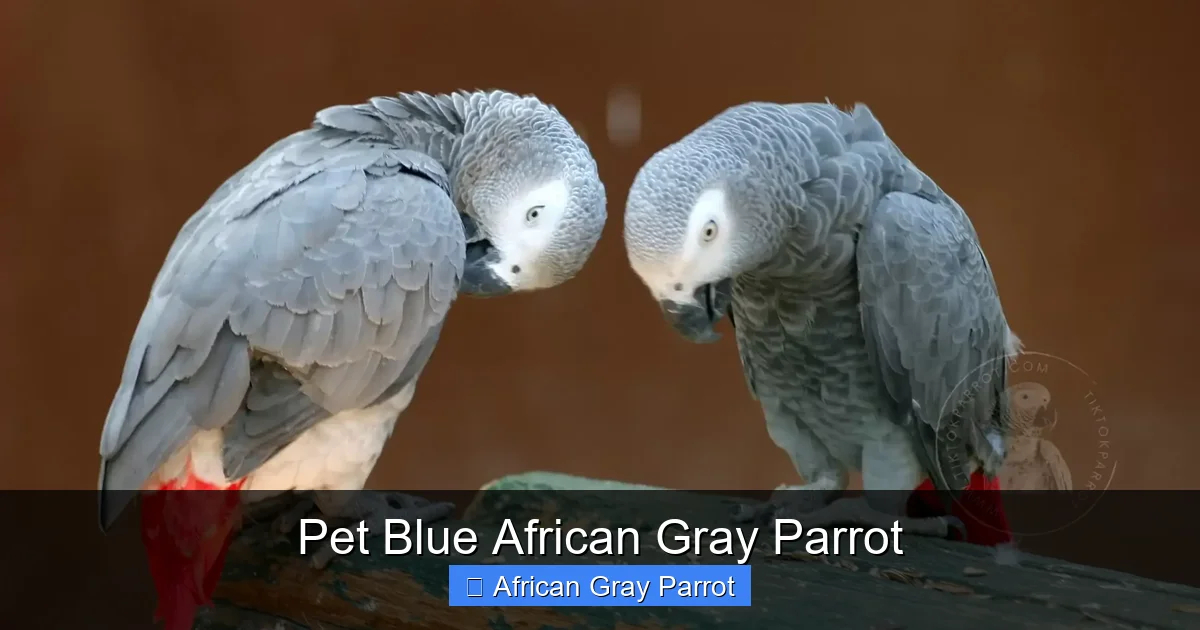
Visual guide about Pet Blue African Gray Parrot
Image source: tiktokparrot.com
Fresh foods add variety and essential nutrients. Offer a colorful mix of vegetables and fruits each day. Clean water must be available at all times.
Core Diet: Pellets and Fresh Foods
Pellets should make up 60 to 70 percent of daily intake. Choose a brand with no artificial colors or added sugar. Supplement with a tablespoon of fresh produce per 100 grams of body weight.
Safe Fruits and Vegetables
Good choices include carrots, broccoli, kale, bell peppers, apples, berries, and mango. Wash thoroughly and remove pits or seeds. Rotate items to cover a broad nutrient spectrum.
Foods to Avoid
Never feed avocado, chocolate, caffeine, alcohol, onions, garlic, or salty snacks. These are toxic or harmful to parrots. Also avoid fruit seeds like apple pips which contain cyanide compounds.
Feeding Schedule
Offer pellets in the morning and fresh foods in the early afternoon. Remove uneaten fresh items after two hours to prevent spoilage. Provide a small evening snack of a nut or seed as a training reward.
Training and Socialization
Training builds trust and channels the bird’s intelligence. Short, positive sessions work best. Use a clicker or a consistent verbal marker like “good.” Reward immediately with a favorite treat.
Socialization starts the day the bird arrives. Speak softly, move slowly, and allow the bird to approach at its own pace. Hand‑feeding a few pellets creates a positive association.
Building Trust
Spend at least 30 minutes each day sitting near the cage. Talk, read aloud, or sing. Gradually offer a hand through the bars. Let the bird step up voluntarily.
Basic Commands and Tricks
Teach “step up,” “step down,” and “target” first. These basics make handling safe. Later add fun tricks like waving, turning around, or retrieving a small object.
Managing Vocalizations
African grays are natural mimics. They can learn words, alarms, and phone rings. Encourage pleasant sounds by rewarding them. Ignore or redirect loud screams to avoid reinforcement.
Preventing Boredom
Rotate foraging toys, introduce new puzzles, and schedule out‑of‑cage time daily. A play gym with ropes and ladders provides exercise. Interaction with family members fulfills social needs.
Health Care and Common Issues
Preventive care keeps a pet blue african gray parrot thriving for decades. Find an avian veterinarian before an emergency arises. Schedule a wellness exam within the first two weeks of adoption.
Watch for subtle changes in behavior, droppings, or feather condition. Early detection improves outcomes dramatically.
Routine Vet Visits
Annual check‑ups include weight monitoring, blood work, and fecal analysis. Vaccinations are not standard for parrots but discuss any regional disease risks with your vet.
Signs of Illness
Fluffed feathers, reduced appetite, tail bobbing, and changes in vocal tone are red flags. Watery or discolored droppings merit immediate attention. Lethargy or difficulty breathing requires urgent care.
Feather Plucking and Stress
Plucking often signals boredom, anxiety, or medical pain. Address environmental enrichment first. If behavior persists, a vet can rule out skin infections or hormonal imbalances.
Preventive Care
Provide>Keep the cage clean with daily spot cleaning and weekly deep cleaning. Provide a shallow bath or misting several times a week. Trim nails and beak only when necessary, preferably by a professional.
Long‑Term Commitment and Lifestyle Fit
Owning a pet blue african gray parrot is a multi‑decade responsibility. These birds can live 40 to 60 years with proper care. Plan for life changes such as moves, new jobs, or family additions.
Time investment includes daily interaction, training, and cleaning. Financial costs cover quality food, toys, vet care, and a suitable cage. Budget for unexpected medical expenses.
Lifespan Expectations
Average lifespan in captivity is 50 years. Some individuals reach 70 with optimal care. Longevity means the bird may outlive its original owner. Include the bird in estate planning.
Time and Financial Investment
Expect to spend at least two hours each day on direct interaction. Monthly food and toy costs range from 50 to 100 dollars. Annual vet visits add another 200 to 400 dollars.
Travel and Boarding Options
Bird‑friendly boarding facilities exist but book early. A trusted friend or family member can also provide in‑home care. Bring the bird’s cage, toys, and a supply of familiar food to reduce stress.
Making the Decision
Ask yourself if you can provide consistent companionship, mental stimulation, and medical care for decades. If the answer is yes, a blue african gray parrot can become a remarkable, talking family member. If not, consider a species with lower demands.
Conclusion
A pet blue african gray parrot offers unmatched intelligence, affection, and entertainment. Success hinges on a spacious home, a varied diet, daily training, and proactive health care. Commit to the long journey and you will gain a loyal feathered friend for life. Remember that every bird is an individual; observe, adapt, and enjoy the unique personality that unfolds.
Frequently Asked Questions
What is the best diet for a pet blue african gray parrot?
A high‑quality pelleted diet should make up 60 to 70 percent of intake, supplemented with fresh vegetables, fruits, and occasional nuts.
How much daily out‑of‑cage time is recommended?
At least two to three hours of supervised playtime outside the cage each day.
Do blue african gray parrots need UV lighting?
Yes, 10 to 12 hours of full‑spectrum UV light supports vitamin D production and feather health.
Can they be kept with other birds?
They can coexist with calm, similarly sized parrots if introduced slowly, but they often prefer human companionship.
What toys are best for mental stimulation?
Puzzle feeders, shredding toys, and foraging boxes that hide treats work well.
Is it normal for the bird to scream loudly?
Occasional loud calls are normal, but constant screaming usually signals boredom or a need for attention.