
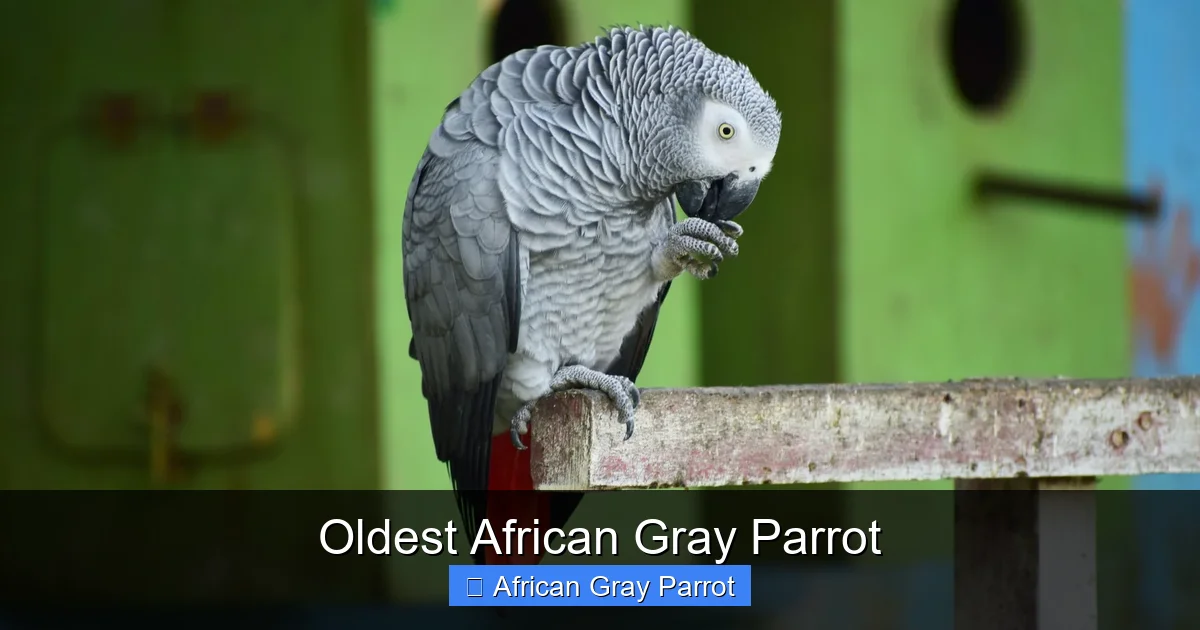
The oldest African Gray Parrot on record lived to be 55 years old. Famous birds like Alex and Tarbu showed us just how smart and long-lived these parrots can be. With proper care, your feathered friend could be a lifelong companion.
Have you ever wondered just how long an African Gray Parrot can live? These remarkable birds are famous for their intelligence. They can mimic human speech with stunning accuracy. They can solve puzzles that would stump a toddler. But their longevity might be their most surprising trait. Some African Greys have lived longer than many dogs and cats. A few have even outlived their owners. Today we are going to explore the stories of the oldest African Gray Parrot legends. We will look at the science behind their long lives. And we will share practical tips to help your own feathered friend thrive for decades.
When people ask about the oldest African Gray Parrot, they usually hear about two superstars. Alex changed science forever. Tarbu holds the official age record. Their stories are different but equally inspiring. Alex proved these birds have cognitive abilities we never imagined. Tarbu proved that with love and proper care, an African Grey can be a companion for more than half a century. Let’s dive into their worlds and learn what they can teach us about parrot care.
Key Takeaways
- Record lifespan: The oldest documented African Gray Parrot reached 55 years in captivity.
- Alex the genius: Alex lived to 31 and revolutionized our understanding of avian intelligence.
- Tarbu the senior: Tarbu holds the verified record at 55 years old, living in the UK.
- Diet matters most: A varied diet of pellets, fresh vegetables, and limited seeds extends lifespan significantly.
- Mental stimulation is critical: Boredom shortens lives; puzzles, training, and social time are essential.
- Veterinary care catches problems early: Annual checkups with an avian vet add years to your bird’s life.
- Genetics play a role: Some birds are simply born with better longevity genes, but care makes the difference.
Quick Answers to Common Questions
What is the verified record for the oldest African Gray Parrot?
The verified record is 55 years, held by a bird named Tarbu who lived in the UK from 1957 to 2012.
How long did Alex the African Grey live?
Alex lived to be 31 years old before passing away suddenly in 2007 from arteriosclerosis.
What is the average lifespan of a pet African Grey?
With good care, pet African Greys typically live 40 to 50 years, though many unfortunately die younger due to poor diet and lack of veterinary care.
Do Congo and Timneh African Greys have different lifespans?
No significant difference exists; both subspecies can reach 50+ years with proper care, though Timnehs are sometimes considered slightly hardier.
What is the single most important factor for African Grey longevity?
Nutrition is the foundation—a pelleted diet with fresh vegetables comprising 60-70% of intake is the single biggest determinant of lifespan.
📑 Table of Contents
- Meet the Record Holders: Famous Long-Lived African Greys
- How Long Do African Gray Parrots Actually Live?
- What Makes Some African Greys Live Longer Than Others?
- The Science Behind Parrot Longevity
- Caring for an African Grey Through Every Life Stage
- Lessons from the Oldest African Greys
- Common Myths About African Grey Longevity
- Creating a Legacy Plan for Your African Grey
- Conclusion
Meet the Record Holders: Famous Long-Lived African Greys
The world of long-lived African Greys has a few shining stars. These birds didn’t just survive. They thrived. They captured hearts. They changed how we see animal intelligence. Let’s meet the most famous ones.
Alex: The Einstein of Parrots
Alex is arguably the most famous African Grey in history. Dr. Irene Pepperberg bought him from a pet store in Chicago in 1977. He was just one year old. No one expected him to change science. But over the next 30 years, Alex did exactly that. He learned to identify over 100 objects. He understood concepts like bigger, smaller, same, and different. He could count up to six. He even grasped the concept of zero, a skill human children don’t master until age three or four.
Alex didn’t just mimic words. He used them with intention. If he wanted a nut, he asked for a nut. If he was tired of testing, he would say, “Wanna go back.” He once corrected younger parrots in the lab when they made mistakes. He would tell them, “Say better” or “Talk clearly.” Alex passed away suddenly in 2007 at age 31. His death shocked the scientific community. He had a normal checkup just days before. A post-mortem showed arteriosclerosis. This is a hardening of the arteries. It can happen even with great care. Alex’s legacy lives on in the Pepperberg Lab and in every African Grey owner who talks to their bird like a thinking being.
Tarbu: The Official Record Holder
While Alex is famous for his brain, Tarbu is famous for his years. Tarbu holds the Guinness World Record for the oldest African Gray Parrot ever documented. He lived to be 55 years old. Tarbu hatched in Tanzania in 1957. He was imported to the UK as a young bird. He spent his life with a devoted owner named Nina Morgan in Gloucestershire, England. Nina cared for him through decades of change. Tarbu saw the moon landing. He saw the fall of the Berlin Wall. He saw the rise of the internet.
What was Tarbu’s secret? Nina credited a simple routine. Fresh food every day. Plenty of out-of-cage time. Lots of conversation. And a stable, loving home. Tarbu never went to a lab. He never learned to count. But he lived 24 years longer than Alex. He passed away in 2012. His record still stands today. Tarbu reminds us that longevity isn’t about fame. It’s about daily care. It’s about consistency. It’s about love.
Other Notable Seniors
Alex and Tarbu aren’t alone. There are other remarkable stories. A bird named Cookie lived to 42 at a zoo in the UK. Another named Arthur reached 50 in a private home. There are unverified reports of birds reaching 60 or even 70. But without hatch certificates and veterinary records, these can’t be confirmed. What we know for sure is this. With excellent care, 40 to 50 years is a reasonable expectation. 55 is the verified ceiling. And every year, better nutrition and veterinary medicine push that ceiling a little higher.
How Long Do African Gray Parrots Actually Live?
Let’s talk numbers. The lifespan of an African Gray Parrot varies wildly. It depends on where they live. It depends on how they live. And it depends on a bit of luck.
Wild vs. Captive Lifespan
In the wild, African Greys face brutal odds. Predators hunt them. Disease spreads fast. Habitat loss destroys their food sources. The illegal pet trade traps them. Most wild Greys don’t make it past 15 to 20 years. Some estimates put the average even lower, around 10 to 12 years. It’s a tough life. But in captivity? The numbers flip completely. A well-cared-for captive African Grey routinely lives 40 to 50 years. Many reach 55. Some push past 60. The difference is staggering. It shows just how much environment matters.
Congo vs. Timneh: Is There a Difference?
There are two main subspecies. The Congo African Grey is larger. It has a bright red tail. The Timneh African Grey is smaller. It has a darker, maroon tail. Does one live longer? The data is thin. But most experts say no significant difference exists. Both can reach 50-plus years with proper care. The Timneh is sometimes called “hardier” because it comes from a harsher natural range. But in a home, their needs are nearly identical. Don’t choose based on lifespan myths. Choose based on personality fit.
What the Statistics Really Tell Us
Here is a hard truth. The average pet African Grey doesn’t live to 50. Many die in their 20s or 30s. Why? Poor diet. Lack of exercise. Chronic stress. Preventable accidents. Missed veterinary care. The 50-year lifespan is a potential, not a guarantee. It’s like saying humans can live to 100. Some do. Most don’t. The gap between potential and reality is almost entirely determined by the owner. That’s empowering. It means you have control. Your choices write your bird’s story.
What Makes Some African Greys Live Longer Than Others?
We’ve looked at the stars. We’ve looked at the averages. Now let’s look at the factors. What separates the 55-year birds from the 20-year birds? It comes down to a handful of critical pillars.
Nutrition: The Foundation of Everything
If you do one thing right, make it diet. This is the single biggest factor. For decades, people fed parrots seed mixes. Seeds are high in fat. They are low in vitamins. They are deficient in calcium and vitamin A. A seed-only diet causes obesity. It causes fatty liver disease. It causes feather plucking. It shortens life dramatically. The modern standard is a high-quality pelleted diet. Pellets should make up 60 to 70 percent of the food. The rest? Fresh vegetables. Dark leafy greens. Orange vegetables rich in beta-carotene. Some fruit. A few nuts as treats. Seeds? Only as occasional training rewards. This isn’t optional. It’s the difference between 20 years and 50.
Exercise and Flight: Use It or Lose It
African Greys are built to fly. In the wild, they fly miles every day. In a cage, they climb bars. That’s not enough. Obesity is a silent killer. It leads to atherosclerosis. It leads to heart failure. It leads to joint problems. Your bird needs daily out-of-cage time. At least three to four hours. Ideally more. Flight is best. If you can’t allow free flight, a large flight cage or aviary is essential. Harness training for outdoor time is a game-changer. Movement keeps the heart strong. It keeps the lungs clear. It keeps the mind sharp. A sedentary Grey is a sick Grey waiting to happen.
Mental Stimulation: Boredom Kills
This is unique to parrots. A bored dog chews shoes. A bored parrot destroys itself. Feather plucking. Self-mutilation. Screaming. Aggression. These are often symptoms of an under-stimulated brain. African Greys have the intelligence of a 3 to 5-year-old child. They need puzzles. They need foraging. They need training. They need social interaction. Rotate toys weekly. Hide food in foraging toys. Teach new words or tricks. Talk to them. Include them in your day. A mentally engaged bird has lower stress hormones. Lower stress means a stronger immune system. A stronger immune system means a longer life. It’s that simple.
Sleep and Routine: The Overlooked Essentials
African Greys need 10 to 12 hours of solid, dark, quiet sleep every night. Not “the TV is on but it’s dim.” Not “I’m in the room reading.” Dark. Quiet. Uninterrupted. Chronic sleep deprivation causes hormonal imbalances. It causes irritability. It weakens immunity. It shortens lifespan. Cover the cage at the same time every night. Uncover at the same time every morning. Consistency regulates their circadian rhythm. It regulates their hormones. It keeps them calm. It keeps them healthy. Treat sleep like nutrition. Non-negotiable.
Veterinary Care: The Safety Net
Birds hide illness. It’s a survival instinct. In the wild, a sick bird gets eaten. So your Grey will act normal until they crash. Annual exams with a board-certified avian veterinarian are mandatory. Not a dog and cat vet. An avian specialist. Blood work. Fecal exams. Weight checks. These catch problems early. Liver issues. Kidney issues. Infections. Nutritional deficiencies. Caught early, they’re treatable. Caught late, they’re fatal. Budget for this. It’s not optional. It’s the cost of admission for a 50-year pet.
The Science Behind Parrot Longevity
Why do parrots live so long anyway? It’s a fascinating question. Mice live two years. Parrots live 50. They’re both small. They both have fast metabolisms. The answer lies in evolutionary biology.
Oxidative Stress and Mitochondria
Aging is largely driven by oxidative stress. Free radicals damage cells. Mitochondria produce energy but also produce free radicals. Birds have incredibly efficient mitochondria. They produce more energy with fewer free radicals. They also have higher levels of natural antioxidants. Their cells are just better at cleaning up the mess. This is why a bird with a heart rate of 500 beats per minute can outlive a human with 70. It’s not about speed. It’s about efficiency.
Telomeres and DNA Repair
Telomeres are the protective caps on chromosomes. They shorten with age. When they’re gone, cells die. Parrots have longer telomeres than mammals of similar size. They also have superior DNA repair mechanisms. Their cells fix damage faster and more accurately. This delays aging at the cellular level. It’s a genetic gift. But environment still matters. Stress shortens telomeres. Good care preserves them.
Flight and Metabolic Adaptation
Flight is the most energetically demanding form of locomotion. Birds evolved to handle extreme metabolic output. Their cardiovascular systems are over-engineered. Their respiratory systems are uniquely efficient with air sacs and unidirectional flow. This excess capacity protects them at rest. Their organs don’t wear out as fast because they’re built for much harder work. But this only works if they actually fly. A clipped, sedentary bird loses this advantage.
Social Brains and Stress Resilience
Parrots are intensely social. Their brains are wired for complex relationships. In a good home, this means a bonded, secure bird. Low chronic stress. Low cortisol. This protects the heart, the brain, and the immune system. In a bad home? Isolation is toxic. Chronic stress accelerates aging in parrots just like in humans. The social brain is a double-edged sword. It demands connection. But when met, it confers resilience.
Caring for an African Grey Through Every Life Stage
Your bird’s needs change as they age. A 2-year-old is not a 20-year-old. A 20-year-old is not a 40-year-old. Understanding life stages helps you adapt care proactively.
Baby and Juvenile (0-2 Years)
This is the foundation. Weaning onto a healthy diet is critical. Never wean onto seeds. Socialization is paramount. Expose them to new people, sounds, objects, and situations. Gentle handling. Positive reinforcement training. Harness training. Carrier training. Vet visits for fun (just weigh-ins and treats). This builds a confident, adaptable adult. Bad habits formed now last decades. Good habits formed now last decades. Choose wisely.
Young Adult (2-10 Years)
This is the prime. High energy. High curiosity. High destruction potential. Channel it. Foraging toys. Puzzle feeders. Training sessions. Flight time. This is when you build the “behavioral savings account” for later. A bird who learns to play independently at 5 will still do it at 40. A bird who only screams for attention at 5 will still do it at 40. Annual vet checks. Blood work baselines. Watch for hormonal surges around sexual maturity around 4 to 7 years. Manage with routine, not punishment.
Middle Age (10-25 Years)
Things settle. The chaos calms. Routines solidify. This is the longest phase. Maintain the standards. Don’t get lazy with diet. Don’t skip vet visits. Watch weight closely. Metabolism slows slightly. Adjust portions. Keep exercise high. Mental stimulation remains vital. This is when early organ changes can start. Blood work catches them. Dental care (beak health) matters. Provide hard woods and nuts for natural wear. Enjoy the deep bond. This is the sweet spot.
Senior (25-40 Years)
Now you see changes. Greys get grey. Feathers around the face may whiten. Eyes may develop cataracts. Arthritis appears. They may move less. Sleep more. Perches need to be wider, softer, lower. Rope perches. Platform perches. Heated perches in winter. Diet may need more digestible protein. Supplements like glucosamine or omega-3s can help (vet guidance only). More frequent vet visits. Every 6 months. Blood work every year. Cognitive decline is possible. Keep the brain active. Simple puzzles. Familiar routines. Patience. They earned it.
Geriatric (40+ Years)
This is rare territory. Tarbu territory. Every day is a gift. Mobility is limited. Vision may be poor. Hearing may fade. The cage becomes a single-level suite. Food and water at beak level. Soft foods if beak strength fades. Pain management for arthritis. Quality of life assessments with your vet. The bond is profound. They know you. You know them. Communication transcends words. It’s in the glance. The lean. The quiet whistle. Honor them. Comfort them. Love them.
Lessons from the Oldest African Greys
What do Alex and Tarbu and the other seniors teach us? They teach us that longevity isn’t luck. It’s a recipe. And we have the ingredients.
Consistency Beats Intensity
You don’t need to be perfect. You need to be consistent. A perfect diet for a week then seeds for a month fails. A good diet every day wins. An hour of play once a week fails. Fifteen minutes every day wins. Annual vet visits every year win. The birds who hit 50 had owners who showed up. Day after day. Year after year. Boring? Maybe. Effective? Absolutely.
Relationship Is the Core
Alex had Irene. Tarbu had Nina. Every long-lived Grey had a person. Or a family. The bond isn’t sentimental fluff. It’s biological regulation. A bonded bird has lower stress hormones. Better immune function. Better appetite. Better sleep. More activity. The relationship is the delivery system for every other aspect of care. If the relationship is broken, the diet doesn’t matter. The toys don’t matter. The vet visits don’t matter. Nurture the bond first.
Adaptability Saves Lives
Nina Morgan adapted for Tarbu. As he aged, she changed perches. She changed food textures. She changed her schedule. She watched him closely. She caught changes early. Rigid care fails aging birds. Flexible care succeeds. Learn to read your bird. Subtle changes in droppings. In posture. In voice. In appetite. In sleep. These are the language of aging. Fluency saves lives.
Joy Is a Health Metric
This sounds soft. It’s not. A playing bird is a healthy bird. A singing bird is a healthy bird. A curious bird is a healthy bird. If the joy disappears, health follows. Prioritize joy. Not as a luxury. As a vital sign. If your Grey stops playing, investigate. If they stop talking, investigate. If they stop engaging, investigate. Joy is the canary in the coal mine. Except the canary is a Grey. And the mine is your living room.
Common Myths About African Grey Longevity
Let’s bust some myths. They’re everywhere. And they hurt birds.
Myth: “They Live 80 Years”
You hear this constantly. “African Greys live 80 years.” “They live 100 years.” No. They don’t. The verified record is 55. Unverified claims of 70 or 80 lack documentation. Parrots don’t have birth certificates from the wild. “He was an adult when I got him 60 years ago” means nothing. An adult could be 3. Or 20. The 80-year myth creates unrealistic expectations. It leads to impulse buys. It leads to rehoming when reality hits. 40 to 50 is real. 55 is exceptional. Plan for 50. Hope for more. Don’t believe the fairy tales.
Myth: “Seeds Are Natural So They’re Fine”
Wild birds eat seeds. True. But wild birds eat dozens of seed types. At different ripeness stages. With different nutrient profiles. They fly miles burning the fat. They eat clay for minerals. They eat insects for protein. Your seed mix? Four types. All ripe. High fat. Low nutrition. In a cage. It’s not the same. Not even close. “Natural” doesn’t mean “appropriate in captivity.” Pellets exist for a reason. They replicate the wild nutrient profile without the wild calorie burn. Use them.
Myth: “Clipping Wings Keeps Them Safe”
Clipping prevents flight. It doesn’t prevent injury. Clipped birds crash harder. They can’t catch themselves. They develop muscle atrophy. They develop respiratory weakness. They develop behavioral issues from frustration. Flighted birds are safer in a bird-proofed home. They have better muscle tone. Better lung capacity. Better confidence. Better mental health. If you can’t provide a safe flight environment, that’s a housing problem. Not a bird problem. Solve the environment. Don’t mutilate the bird.
Myth: “They Don’t Need a Vet Unless They’re Sick”
This is the most dangerous myth. Birds hide sickness. By the time you see symptoms, it’s often advanced. Annual exams find problems before symptoms. Blood work trends catch organ decline early. Weight trends catch metabolic shifts early. Fecal exams catch parasites early. Preventive care is 10 times cheaper than emergency care. And 100 times more effective. Find an avian vet. Go yearly. No excuses.
Myth: “Old Birds Can’t Learn”
Neuroplasticity persists throughout life. Old birds learn. They learn slower. They learn differently. But they learn. Tarbu learned new routines in his 50s. Senior birds benefit enormously from training. It keeps the brain sharp. It maintains the bond. It gives them agency. Never stop teaching. Never stop asking. The day you stop is the day decline accelerates.
Creating a Legacy Plan for Your African Grey
This is uncomfortable. But it’s responsible. An African Grey will likely outlive you. Or outlive your ability to care for them. You need a plan.
Identify a Successor Guardian
Who takes your bird? Not “my kids will.” Name a specific person. Talk to them. Ensure they want it. Ensure they can do it. Ensure they know the bird. Write it in your will. Fund it. A trust for the bird’s care is ideal. $500 to $1000 per year for 20 to 30 years. That’s $10,000 to $30,000. Life insurance can fund it. If you can’t fund it, find a reputable sanctuary with an endowment program. Don’t leave it to chance. Rehoming a senior Grey is traumatic. Often fatal.
Document Everything
Create a care manual. Diet details. Medication instructions. Vet contact. Daily routine. Favorite toys. Fear triggers. Comfort cues. Language quirks. Bath preferences. Sleep schedule. Emergency contacts. Update it yearly. Give a copy to your successor. Keep a copy with your will. This document saves lives. It prevents the “I didn’t know he hates men in hats” disasters. It prevents the “I fed him avocado” tragedies.
Build a Community
Your bird needs a village. Avian vet. Trusted bird-sitter. Experienced parrot friends. Online support groups. Local bird club. The more people who know your bird, the safer they are. If you get sick. If you have an emergency. If you pass suddenly. The village activates. Don’t isolate. Parrots are social. So are good parrot owners.
Conclusion
The oldest African Gray Parrot lived to 55. His name was Tarbu. He didn’t do math. He didn’t count. He just lived. Day by day. Year by year. In a loving home. With fresh food. With conversation. With routine. With a person who showed up. Alex lived to 31. He changed science. He showed us what these birds can do. He showed us they think. They feel. They understand. Together, these two birds bookend the possibilities. One shows the ceiling of cognition. The other shows the ceiling of time.
Your African Grey has both ceilings within reach. Not guaranteed. But possible. The path is clear. Feed them right. Move them daily. Challenge their brain. Protect their sleep. Vet them yearly. Love them deeply. Plan for their future. Adapt as they age. Show up. Every day. That’s the secret. That’s the whole secret. There is no magic. There is only consistency. And love. And the willingness to learn.
If you’re reading this, you already care. That’s the first step. The next step is action. Look at your bird’s diet today. Look at their cage setup. Look at their toy rotation. Look at your calendar for the last vet visit. Pick one thing. Improve it today. Then another tomorrow. That’s how you get to 50. One good day at a time. Your Grey is watching. They’re listening. They’re counting on you. Be the person Tarbu had. Be the person Alex had. Be the reason your bird beats the odds. The oldest African Gray Parrot record is waiting. Maybe your bird will break it. But even if they don’t, a life well-lived is the real victory. And that’s entirely up to you.
Frequently Asked Questions
What was the name of the oldest African Gray Parrot on record?
The oldest verified African Gray Parrot was named Tarbu. He lived to be 55 years old in Gloucestershire, England, from 1957 to 2012.
How old was Alex the African Grey when he died?
Alex was 31 years old when he passed away in 2007. He was famous for his cognitive abilities and work with Dr. Irene Pepperberg.
Can African Grey Parrots live to be 80 years old?
No verified African Grey has reached 80. The confirmed record is 55 years. Claims of 80+ years lack documentation and are considered anecdotal.
What diet helps an African Grey live the longest?
A diet of 60-70% high-quality pellets, 20-30% fresh vegetables (especially dark leafy greens and orange vegetables), limited fruit, and seeds only as occasional treats promotes longevity.
How often should I take my African Grey to the vet?
Annual wellness exams with a board-certified avian veterinarian are essential. Senior birds over 25 should go every 6 months for early disease detection.
Do African Greys need to fly to live longer?
Yes, flight provides essential cardiovascular exercise, respiratory health, muscle tone, and mental well-being. Flighted birds in safe environments live longer, healthier lives.