
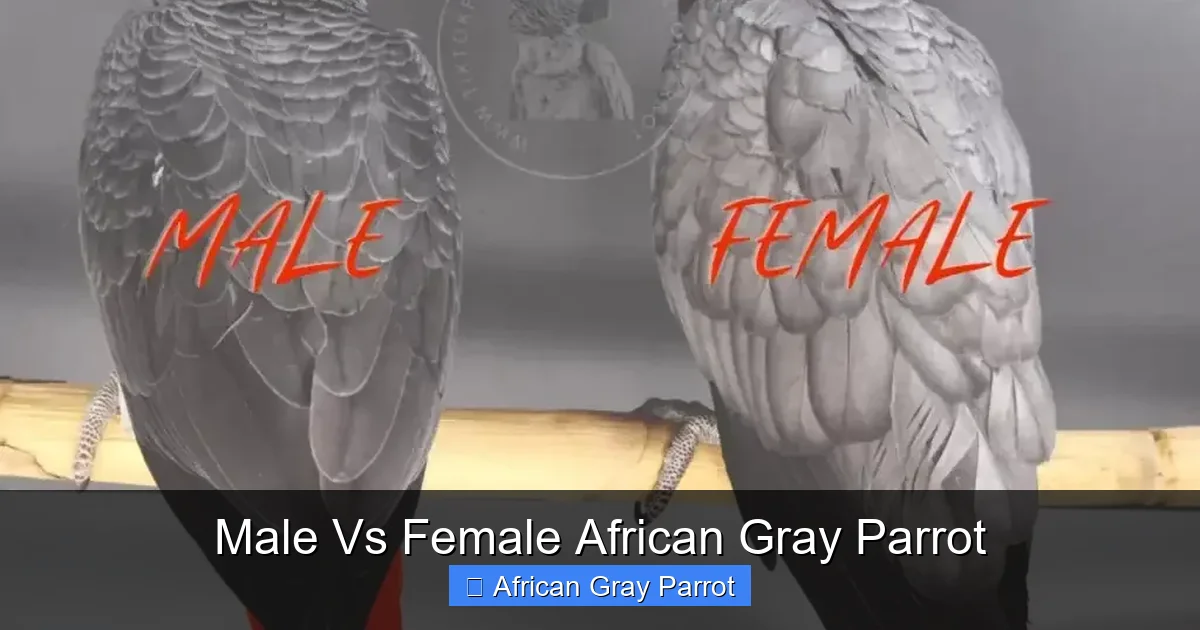
Male and female African Gray Parrots look nearly identical, making visual sexing impossible without DNA testing. While both sexes make exceptional companions with remarkable talking abilities, subtle behavioral differences exist—males may be slightly more territorial during breeding season, while females can be more independent. Ultimately, individual personality matters far more than gender when choosing your feathered friend.
Key Takeaways
- Visual identification is impossible: Male and female African Grays share identical plumage, requiring DNA testing or surgical sexing for accurate gender determination.
- Talking ability is equal: Both sexes possess the same remarkable capacity for mimicry and vocabulary development—gender does not determine speaking talent.
- Behavioral differences are subtle: Males may show increased territoriality during breeding season; females can display more nesting behaviors and independence.
- Health considerations differ: Females face unique risks like egg binding and calcium depletion, even without a male present.
- Personality trumps gender: Individual temperament, early socialization, and environment shape your bird’s character far more than biological sex.
- Cost is typically the same: Reputable breeders price males and females equally since both make equally wonderful companions.
- Bonding varies by individual: Some owners report males bond more intensely with one person, while females may distribute affection more evenly—but exceptions abound.
Quick Answers to Common Questions
Can you tell male and female African Grays apart by looking at them?
No, African Grays are monomorphic—males and females look identical. Visual sexing is impossible; DNA testing or surgical sexing is required for accurate determination.
Do male African Grays talk better than females?
No, both sexes have equal talking ability. African Grays are considered the best talking parrots regardless of gender. Individual personality and early socialization determine vocabulary, not sex.
Are female African Grays more prone to health issues?
Females face unique risks like egg binding, calcium depletion, and reproductive tumors—even without a male present. Males avoid these but share all other health vulnerabilities equally.
Is one gender more affectionate or cuddly?
Individual personality varies wildly. Some owners report males bond intensely to one person while females are more independent, but countless exceptions exist. Early socialization matters far more than gender.
Should I pay more for a specific gender?
No. Reputable breeders price males and females equally. Avoid sellers charging premiums for “talking males” or “breeding females”—babies cannot be proven talkers or breeders.
📑 Table of Contents
- Introduction: The Great Gender Mystery
- Why You Cannot Tell Them Apart By Sight
- Talking Ability: The Great Equalizer
- Behavioral Differences: Nuance Over Rules
- Health Considerations: The Female Factor
- Cost and Availability: Equal on Paper
- Making Your Choice: What Actually Matters
- Real Owner Stories: The Gender Surprise
- Expert Insights: What Vets and Behaviorists Say
- Common Questions Answered
- Conclusion: The Heart Knows What the Chart Doesn’t
Introduction: The Great Gender Mystery
You walk into a bird store or browse a breeder’s website. Your heart is set on an African Gray Parrot. Then comes the question: do you want a male or a female? You pause. You realize you have no idea how to tell them apart. You are not alone. This is one of the most common questions new parrot owners ask. The answer might surprise you.
Unlike many bird species where males flaunt bright colors and females wear camouflage, African Grays are monomorphic. This is a fancy scientific word. It simply means males and females look exactly the same. They have the same charcoal feathers. They have the same brilliant red tail. They have the same intelligent yellow eyes. You cannot tell them apart by looking. Not even experts can. This article dives deep into the male vs female African Gray Parrot discussion. We will explore what science says, what owners experience, and what actually matters when bringing one of these brilliant birds home.
Why You Cannot Tell Them Apart By Sight
The Science of Monomorphism
In the bird world, sexual dimorphism is common. Think of a peacock and a peahen. Think of a cardinal. The male is bright red. The female is brown. This helps with survival. Bright males attract mates. Dull females hide on nests. African Grays evolved differently. They live in dense Central and West African rainforests. They nest in tree cavities high up. Both parents share incubation duties. Both need to be camouflaged. Bright colors would attract predators. So evolution kept them looking the same.
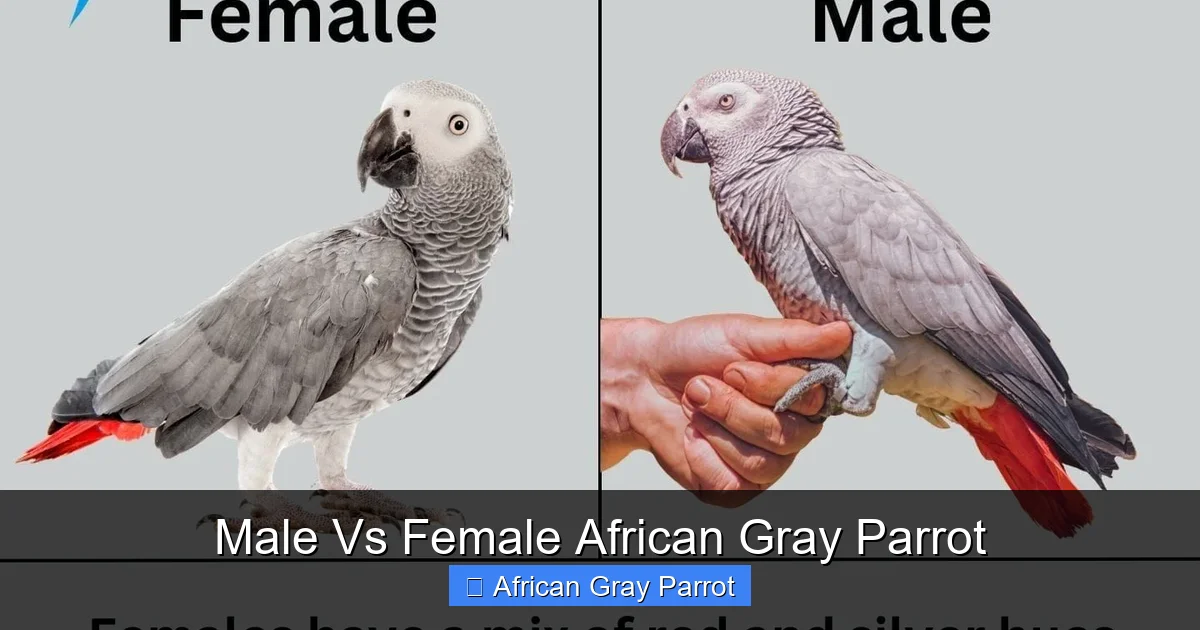
Visual guide about Male Vs Female African Gray Parrot
Image source: i.pinimg.com
Old Wives’ Tales Debunked
You will hear many “tricks” to sex Grays visually. People claim males have broader heads. People claim females have rounder eyes. Some say the red tail feathers differ in shade. Some say the beak shape gives it away. None of these methods work reliably. I have seen breeders with thirty years of experience guess wrong. The variation within each sex is greater than the variation between sexes. A large female can have a broader head than a small male. Lighting changes feather color perception. Do not trust visual guesses. They are accurate about fifty percent of the time. That is a coin flip.
The Only Reliable Methods
If you absolutely must know the sex, you have two options. DNA testing is the gold standard. It is non-invasive. It uses a drop of blood or a few plucked feathers. Results come back in days. It costs twenty to fifty dollars. It is ninety-nine point nine percent accurate. Surgical sexing is the old method. A vet uses an endoscope to view internal organs. It requires anesthesia. It carries surgical risk. It is rarely done now. Most breeders DNA test babies before sale. Ask for the certificate. If a seller cannot provide one, they do not know the sex either.
Talking Ability: The Great Equalizer
No Gender Advantage in Vocabulary
Let us address the biggest myth. Many people believe male parrots talk better. This is true for some species. Male budgies often out-talk females. Male cockatiels often whistle more. African Grays break this rule completely. Both sexes are widely considered the best talking parrots on earth. Their cognitive ability is comparable to a five-year-old human. Their mimicry is uncanny. They copy voices, phones, microwaves, and laughter. Gender plays zero role in this talent. I know a female named Pepper with a vocabulary of over three hundred words. I know a male named Einstein who prefers sound effects to speech. Individual variation is massive. Gender prediction is zero.
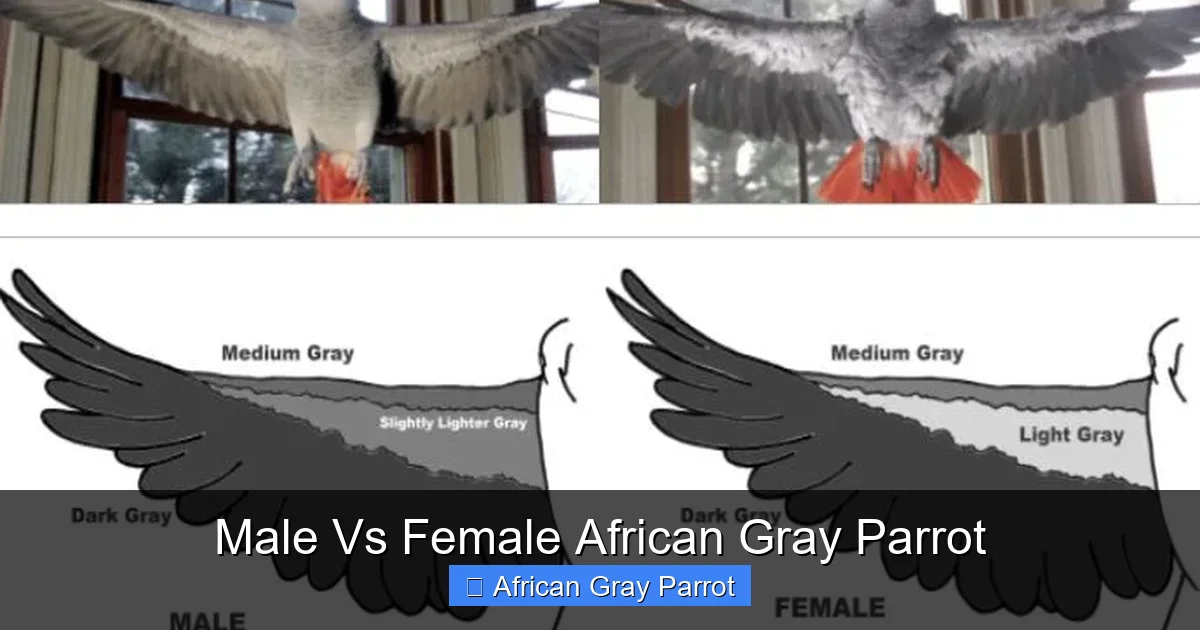
Visual guide about Male Vs Female African Gray Parrot
Image source: i.pinimg.com
What Actually Drives Talking Skill
If gender does not matter, what does? Three things. First, early exposure. Birds hand-raised in chatty homes talk more. Second, interaction quality. Birds spoken to directly learn faster than birds left near a radio. Third, personality. Some Grays are chatterboxes. Some are stoic observers. My friend has a male who says “I love you” fifty times a day. She has a female who has never said a word in ten years—but solves puzzle toys in seconds. The silent female is not “broken.” She just expresses intelligence differently. Do not choose a sex based on talking hopes. Choose a bird whose personality clicks with yours.
Behavioral Differences: Nuance Over Rules
Breeding Season Changes
Here is where biology creates real differences. African Grays reach sexual maturity around four to seven years old. Hormones surge. Behavior shifts. This happens in spring usually. Males may become more territorial. They may defend their cage aggressively. They may regurgitate for toys or people. They may scream more. Females may become nesty. They seek dark corners. They shred paper obsessively. They may lay eggs—even without a male. Egg laying drains calcium. It risks egg binding. This is a life-threatening emergency. Both sexes can get “hormonal.” Both can bite. Both can scream. The flavor of the behavior differs slightly. The intensity depends on the individual bird, diet, light cycle, and how you handle it.
Pair Bonding Styles
Many owners report a pattern. Males often form an intense bond with one person. They become “one-person birds.” They may attack other family members. Females often bond more loosely with the whole flock. They may be more independent. They may tolerate handling from multiple people. But treat this as a loose tendency, not a rule. I know a female who draws blood if anyone but her mom touches her. I know a male who lets the mail carrier scratch his head. Early socialization matters infinitely more. A bird handled by many people from weaning stays social. A bird isolated with one person becomes possessive. This applies to both sexes.
Play and Intelligence
Both sexes are problem-solving geniuses. They need constant mental stimulation. Males might destroy toys faster during hormonal surges. Females might manipulate puzzle toys more methodically. These are generalizations from owner forums. Scientific studies on Gray play styles by sex are scarce. What we know for sure: a bored Gray of either sex becomes a destructive Gray. Feather plucking. Screaming. Biting. Furniture demolition. Provide foraging toys. Rotate them weekly. Teach tricks. Talk to them. This prevents problems better than picking the “right” sex.
Health Considerations: The Female Factor
Egg Binding: A Female-Only Risk
This is the most significant medical difference. Female African Grays can lay eggs without a male. It is triggered by light, diet, touch, and nesting materials. Egg binding happens when an egg gets stuck. The bird strains. She sits fluffed on the cage floor. Her tail pumps. She cannot pass droppings. This kills quickly. It requires immediate vet care. Calcium deficiency is the main cause. Females need extra calcium year-round. Cuttlebone. Calcium supplements. Pelleted diet. Leafy greens. Even with perfect care, some hens lay chronically. Hormone implants or surgery may be needed. Males never face this risk.
Calcium Metabolism Differences
Females pull calcium from bones for eggshells. This happens even with infertile eggs. Chronic laying leads to osteoporosis. Bones fracture easily. Seizures can occur from low blood calcium. Males maintain stable calcium easier. But males get nutritional deficiencies too if fed poorly. Both sexes need vitamin D3 from sunlight or full-spectrum lighting. Both need balanced pellets, not seed-only diets. The female just has a higher baseline requirement and higher stakes if it fails.
Reproductive Cancers
Older female Grays develop ovarian and oviduct tumors. Males develop testicular tumors. Both are serious. Spaying a bird is high-risk surgery. Neutering is rarely done. Prevention focuses on suppressing hormones. Limit daylight to ten to twelve hours. Remove nest-like spaces. Avoid petting the back and tail base. Feed a non-stimulating diet. This helps both sexes live longer, healthier lives.
Cost and Availability: Equal on Paper
Breeder Pricing
Reputable breeders charge the same for males and females. The cost to raise them is identical. DNA testing adds a small fee. Some unscrupulous sellers charge more for “proven talking males.” This is a red flag. No baby parrot is a proven talker. Talking develops over years. A breeder claiming a three-month-old male “will definitely talk” is lying. Or they are guessing. Pay for health guarantees. Pay for socialization. Pay for genetic testing for PBFD and polyoma. Do not pay for gender promises.
Rescue and Adoption
Rescues are full of African Grays. Most are adults. Most are surrendered for screaming, biting, or life changes. The sex ratio in rescue is roughly even. Adoption fees are the same. The advantage of adopting an adult? You know the personality. You know if they talk. You know if they prefer men or women. You know if they are pluckers. A baby is a mystery. An adult is a known quantity. Many rescuers will tell you: “Don’t shop for sex. Shop for connection.”
Making Your Choice: What Actually Matters
Match Energy Levels
African Grays are high-maintenance. They need hours of daily interaction. They need a large cage. They need expensive toys destroyed weekly. They need vet bills that make you weep. They live fifty to seventy years. They will outlive you. Plan for their future. If you work twelve-hour shifts, a Gray will suffer. If you travel constantly, a Gray will suffer. This is true for males and females equally. Be honest about your lifestyle first.
Meet the Bird
If buying from a breeder, visit. Spend time with the babies. See which one steps up. See which one makes eye contact. See which one seems curious, not fearful. If adopting, do multiple visits. Bring family members. Watch how the bird reacts to each person. A bird that lunges at your husband but steps up for you? That is a management challenge. A bird that is nervous but takes a treat from everyone? That is potential. Trust your gut over the DNA certificate.
Prepare Your Home First
Before you bring any Gray home, have the cage set up. Have a play stand. Have a travel carrier. Have a relationship with an avian vet. Have a month of savings for emergencies. Have a will that names a guardian for the bird. This preparation matters more than the bird’s chromosomes. A prepared home makes a happy bird. A happy bird makes a happy owner. The sex becomes a footnote in a thirty-year story.
Real Owner Stories: The Gender Surprise
“I Was Sure I Wanted a Male”
Sarah from Ohio researched for a year. She read males talk better. She read males bond harder. She wanted that intense connection. She put a deposit on a “male” baby from a breeder who guessed by head shape. At six months, the bird started laying eggs. Surprise! It was a female. Sarah was devastated. She felt tricked. She almost rehomed the bird. Then the bird said “Hi Mom” in Sarah’s exact voice. Then the bird learned to fetch. Then the bird comforted Sarah during a divorce. Fifteen years later, Sarah says: “I can’t imagine life without her. The ‘male’ I wanted would have been a stranger. This female is my soul.”
“The Male Who Changed Everything”
Marcus in Texas adopted a ten-year-old male named Grey. The previous owner said Grey hated men. Grey bit Marcus the first week. Marcus almost gave up. An avian behaviorist suggested changing the routine. More foraging. Less shoulder time. Consistent training. Six months later, Grey preens Marcus’s beard. Grey says “Good boy” when Marcus does dishes. Grey screams when Marcus leaves the room. Marcus laughs: “He’s a velcro bird. A total drama queen. I wanted an independent female. I got a clingy male. I wouldn’t trade him for the world.”
The Pattern in Stories
Notice the theme? The gender expectation was wrong. The bird’s individual personality won. The owner adapted. The bond deepened. This happens over and over in the parrot community. The male vs female African Gray Parrot debate fades fast when you live with one. You stop thinking “he” or “she.” You start thinking “my bird.” That is the only label that matters.
Expert Insights: What Vets and Behaviorists Say
Dr. Susan Friedman on Behavior
Dr. Friedman is a legend in applied behavior analysis for parrots. She says: “Sex is a biological variable. Behavior is a function of environment. We modify behavior by changing antecedents and consequences. We do not modify behavior by wishing for a different sex.” Her point: if a male screams, you fix the screaming. If a female plucks, you fix the plucking. The protocol is identical. The sex is irrelevant to the solution.
Avian Vet Perspectives
Dr. Brian Speer, co-author of “Birds for Dummies,” notes: “The only time sex changes my medical plan is reproductive disease. Otherwise, I treat the patient, not the chromosomes.” He emphasizes that both sexes need annual exams. Both need blood work. Both need gram stains. Both need nutritional counseling. The wellness plan is the same. The emergency plan differs only for egg-related crises.
Breeder Wisdom
Jean Pattison, known as “The African Queen” for her decades breeding Grays, says: “I stop guessing sex by looks after my first hundred babies. I DNA test everything. I price them the same. I tell buyers: pick the baby that picks you. The ones that hide in the corner? They need a very experienced home. The ones that climb the cage bars to meet you? They’ll likely be bold pets. Sex doesn’t enter the equation.”
Common Questions Answered
Do Males Talkative Males a Myth?
Yes, for African Grays. The myth comes from other species. In budgies, cockatiels, and ringnecks, males often vocalize more. People generalize to all parrots. Grays are different. Their talking ability is linked to intelligence and social drive, not testosterone. Studies show no significant difference in vocabulary size or clarity between sexes. Anecdotal “evidence” suffers from confirmation bias. People hear what they expect to hear.
Can Two Females Live Together?
Can two males? Can a pair? African Grays are not colony birds. They pair bond deeply. Two birds of any sex combination may bond to each other and ignore you. Or they may hate each other and fight violently. Introducing a second Gray is high-risk. It works sometimes. It fails often. If you want two birds, get them as babies together. Even then, maturity changes everything. Most experts advise: one Gray per home. Give that one bird your full attention.
Does Sex Affect Lifespan?
Not directly. Both sexes routinely reach fifty to sixty years in captivity. Some reach seventy or eighty. The oldest documented Gray was a male named Tarbu at fifty-five. But records are spotty. Females die younger if chronic egg laying is mismanaged. Males die younger if aggression leads to rehoming and neglect. The biggest lifespan factor is owner knowledge and commitment. A well-cared female outlives a neglected male every time.
Conclusion: The Heart Knows What the Chart Doesn’t
We have covered biology. We have covered behavior. We have covered health. We have covered cost. We have debunked myths. We have shared stories. Here is the truth: the male vs female African Gray Parrot comparison is a fun intellectual exercise. But it is a terrible decision-making tool. You are not buying a car. You are not picking a paint color. You are inviting a sentient, complex, long-lived being into your family. That being has a personality shaped by genetics, early experience, and your future care. Their sex is a footnote.
If you DNA test and get a male, love him. If you DNA test and get a female, love her. If you adopt and never know the sex, love them anyway. The talking, the cuddles, the bites, the mess, the laughter, the tears—none of it checks a gender box first. It all flows from the unique spark between you and this specific bird. So stop searching for the “right” sex. Start preparing for the right life. Your Gray is waiting. They don’t care about your chromosome preferences. They just want a home that understands them.
Welcome to the flock. It’s going to be a wild, wonderful ride.
Frequently Asked Questions
How much does DNA sexing cost for an African Gray?
DNA sexing typically costs $20-$50 through avian labs. It requires a drop of blood or a few chest feathers and provides 99.9% accuracy within a few business days.
At what age do African Grays reach sexual maturity?
African Grays typically reach sexual maturity between 4-7 years old. Hormonal behaviors like territoriality, nesting, or egg-laying usually begin around this time.
Can a female African Gray lay eggs without a male?
Yes, female African Grays can and do lay infertile eggs without a male present. This is triggered by environmental factors like increased daylight, warm temperatures, and access to nesting materials.
Do male and female African Grays need different diets?
Both sexes thrive on the same high-quality pelleted diet with fresh vegetables and limited seeds. Females may need additional calcium supplementation, especially during breeding season or if they lay eggs.
Which gender makes a better pet for a first-time owner?
Neither gender is inherently better for beginners. Success depends on the owner’s research, commitment, and ability to meet the bird’s complex needs. Choose based on individual bird personality, not sex.
Can two African Grays of the same sex live together peacefully?
Same-sex pairs can bond but may also fight viciously. African Grays form intense pair bonds and often become aggressive toward cage mates. Most experts recommend keeping a single Gray per household.