
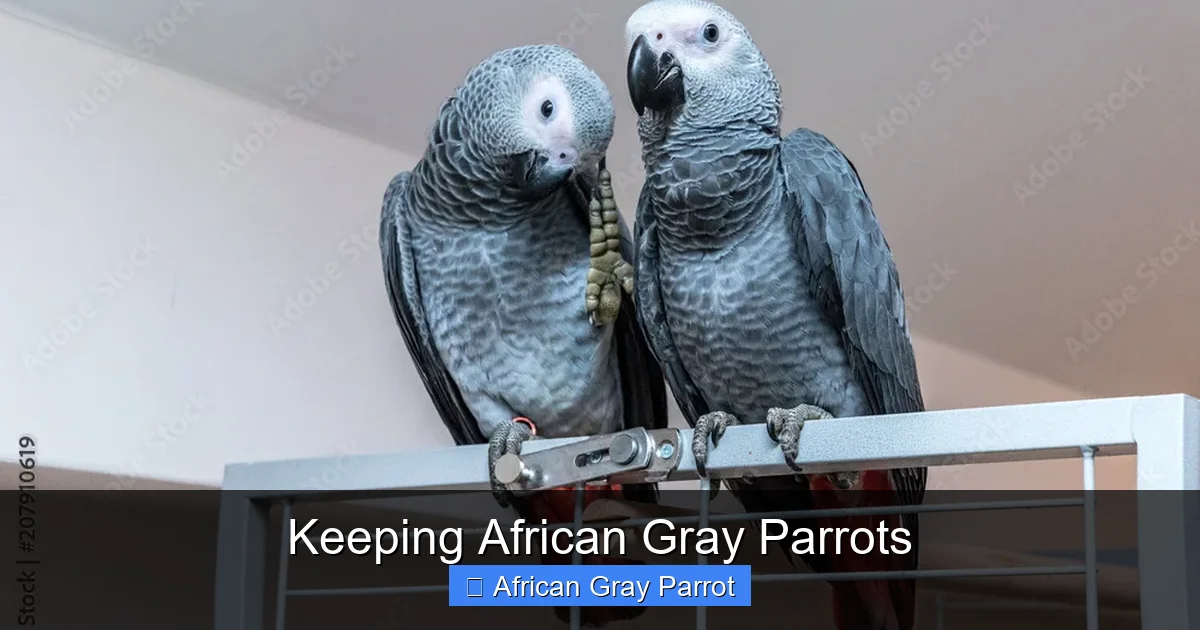
Keeping African Gray Parrots requires dedication, knowledge, and a lifelong commitment to these intelligent companions. This comprehensive guide covers everything from proper nutrition and housing to training techniques and health care, ensuring your feathered friend thrives for decades.
Bringing an African Gray Parrot into your life is like adopting a brilliant, feathered toddler who never grows up but lives for half a century. These remarkable birds captivate owners with their uncanny ability to mimic human speech, solve complex puzzles, and form deep emotional bonds. But keeping African Gray Parrots successfully demands far more than a cage and some seed. It requires understanding their wild origins, respecting their cognitive needs, and committing to a daily routine that nurtures both body and mind.
Many first-time owners underestimate the complexity of these parrots. They see viral videos of talking birds and imagine a charming companion who chats on command. The reality involves 5 AM wake-up calls, destroyed furniture, hormonal mood swings, and a creature who remembers every slight and kindness for decades. This guide walks you through every aspect of responsible ownership, from setting up the perfect environment to navigating the challenges that arise across a 50-year partnership.
Key Takeaways
- Lifespan Commitment: African Grays live 50-60 years, requiring multi-generational planning and consistent care routines
- Mental Stimulation Is Non-Negotiable: These birds possess toddler-level intelligence and need daily enrichment to prevent behavioral issues
- Specialized Diet Requirements: A balanced diet of pellets, fresh vegetables, fruits, and limited seeds prevents nutritional deficiencies common in captive birds
- Environmental Sensitivity: African Grays are prone to respiratory issues and stress, requiring stable temperatures, humidity, and toxin-free air
- Social Needs Are Complex: They bond deeply with chosen humans but need independence training to prevent separation anxiety and screaming
- Regular Veterinary Care Is Essential: Annual checkups with avian specialists catch hidden illnesses early, as birds mask symptoms instinctively
- Training Uses Positive Reinforcement: Clicker training and reward-based methods build trust while teaching essential behaviors and tricks
Quick Answers to Common Questions
How long do African Gray Parrots live?
African Gray Parrots typically live 50-60 years in captivity with proper care, and some reach 70+. This requires multi-generational planning and lifelong commitment.
What is the best diet for an African Gray?
60-70% high-quality organic pellets, 20-30% fresh vegetables and fruits, and 10% healthy nuts, seeds, and protein sources. Avoid seed-only diets which cause malnutrition.
Do all African Grays talk?
Most African Grays learn to speak, typically starting at 12-18 months, but talking ability varies by individual. Some never speak but communicate through sounds and body language.
How much out-of-cage time do they need daily?
Minimum 3-4 hours of supervised out-of-cage time daily for exercise, foraging, and social interaction. More is better for mental health.
Can African Grays be left alone during work hours?
They can tolerate 8-9 hours alone if provided foraging toys, enrichment, and audio stimulation, but they thrive with midday check-ins or a compatible bird companion.
📑 Table of Contents
Understanding the African Gray Parrot
Two Subspecies: Congo and Timneh
Before diving into care specifics, you should know which African Gray you have or plan to get. The Congo African Gray (Psittacus erithacus erithacus) is larger, reaching 13-14 inches with bright red tail feathers and a black beak. The Timneh African Gray (Psittacus erithacus timneh) is smaller at 9-11 inches, sports a darker charcoal plumage, maroon tail feathers, and a horn-colored upper mandible. Both share similar care needs, though Timnehs often mature slightly faster and may be less prone to feather plucking.
Wild populations inhabit the rainforests of West and Central Africa, from Ivory Coast to Kenya. They live in flocks of 10-30 birds, foraging in the canopy for palm nuts, seeds, fruits, and leaf buds. This social, arboreal lifestyle shapes every aspect of their captive needs. They are not domesticated animals like dogs or cats. They are wild animals born in captivity, retaining all instincts of their ancestors.
Intelligence and Emotional Depth
Research by Dr. Irene Pepperberg with her famous subject Alex demonstrated that African Grays possess cognitive abilities comparable to a 3-5 year old human child. They understand concepts like same/different, bigger/smaller, and can count to six. They use words contextually, not just mimicking. This intelligence means they get bored easily. A bored Gray becomes a destructive, screaming, feather-plucking Gray.
Emotionally, they form intense pair bonds. In the wild, they mate for life. In captivity, they often choose one favorite person and may become aggressive toward others. They experience grief, jealousy, joy, and anxiety. They remember people who mistreated them years later. They also remember kindness. Building trust takes months. Breaking it takes minutes.
Vocal Abilities and Noise Levels
African Grays are widely considered the best talkers of all parrots. They don’t just repeat words. They mimic voices, tones, and household sounds with eerie accuracy. The microwave beep. The phone ring. Your laugh. Your partner’s laugh. A crying baby. A barking dog. They typically start talking around 12-18 months, though some begin earlier and others never speak. Talking ability varies by individual, not just training.
But talking is only part of their vocal repertoire. They also scream, whistle, growl, and make flock calls. Flock calls are loud, repetitive contact calls used to locate flock members. In a home, this translates to screaming when you leave the room. This is instinctual, not misbehavior. You can manage it but rarely eliminate it entirely. Apartment dwellers should think carefully before committing.
Preparing Your Home for an African Gray
Choosing the Right Cage
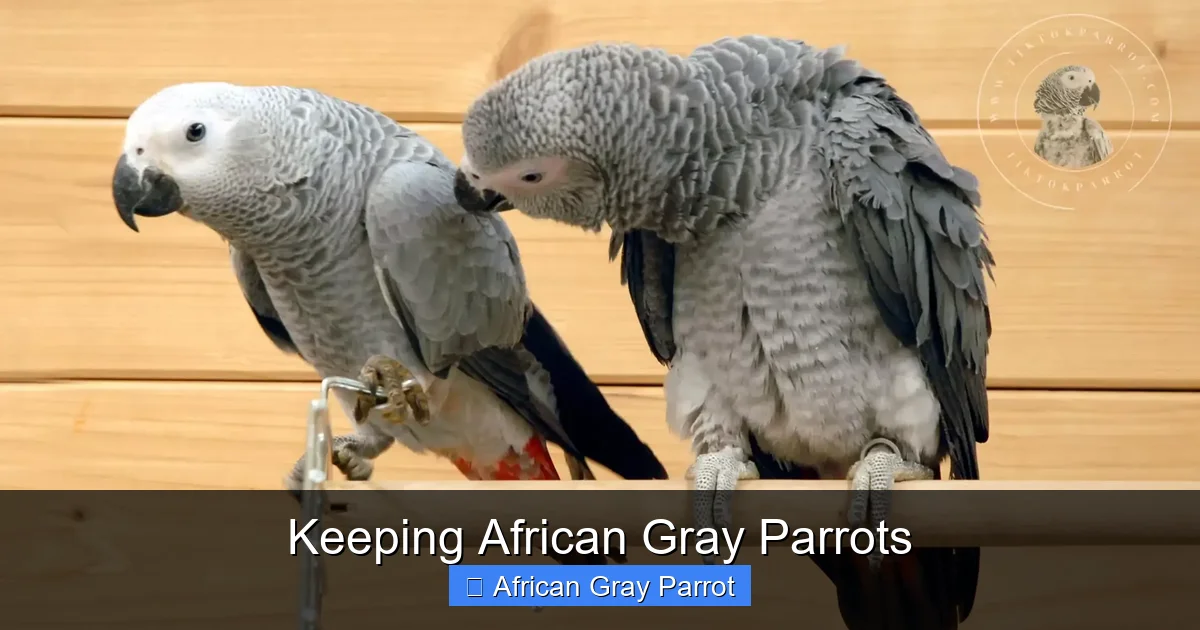
The cage is your bird’s bedroom, safe zone, and primary territory. Minimum dimensions for a single African Gray: 36 inches wide, 24 inches deep, 48 inches tall. Bar spacing should be 3/4 to 1 inch. Horizontal bars on at least two sides allow climbing. Powder-coated or stainless steel construction withstands powerful beaks. Avoid painted cages with lead or zinc. The door must lock securely. Grays are escape artists.
Visual guide about Keeping African Gray Parrots
Image source: tiktokparrot.com
Place the cage in a social area where family activity happens, but not in the direct path of traffic. Against a wall provides security. Avoid drafts, direct sunlight, kitchen fumes, and air freshener spray zones. The cage needs multiple perches of varying diameters and textures. Natural wood branches (manzanita, dragonwood, java wood) exercise feet and prevent pressure sores. Rope perches add variety. Cement or sand perches help trim nails but should not be the only perch type.
Setting Up Play Areas and Foraging Stations
Your Gray needs out-of-cage time daily. Minimum 3-4 hours. A play stand or gym in the main living area gives them a place to be part of the flock without being on you constantly. Equip it with toys, foraging opportunities, and a water dish. Rotate toys weekly. Novelty prevents boredom. Foraging toys that hide food mimic natural feeding behavior and occupy them for hours.
Create a “foraging tree” by attaching multiple foraging toys to a large branch secured in a heavy base. Hide pellets, nuts, and treats inside paper cups, cardboard tubes, and commercial puzzle toys. Start easy. Increase difficulty as they learn. This single addition transforms their day from passive waiting to active problem-solving.
Bird-Proofing Your Home
Before your Gray arrives, walk through every room they might access. Remove or secure: ceiling fans (deadly), open toilets, hot cookware, toxic plants (avocado, philodendron, pothos), electrical cords, lead/zinc items, scented candles, air fresheners, Teflon cookware (fumes kill birds instantly), cleaning chemicals, essential oil diffusers, and small objects they could swallow. Install window screens. Cover mirrors. Secure bookshelves. Think like a curious toddler with a can opener for a face.
Air Quality and Environmental Controls
African Grays have incredibly sensitive respiratory systems. They lack a diaphragm and have air sacs throughout their bodies. Airborne toxins affect them before humans notice. No smoking in the house. No scented products. No self-cleaning oven cycles. Use HEPA air purifiers in the bird room. Maintain humidity around 40-60%. Temperature range 65-80°F. Avoid sudden changes. A humidifier in winter prevents dry skin and respiratory irritation.
Nutrition and Diet Essentials
The Foundation: High-Quality Pellets
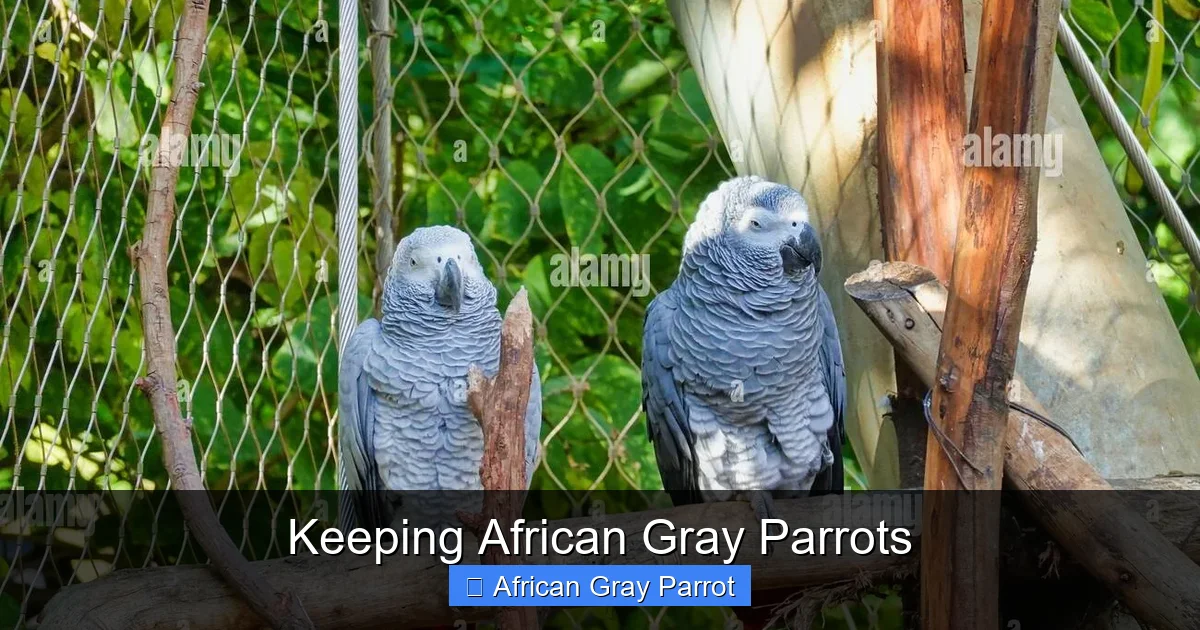
Pellets should comprise 60-70% of the daily diet. Not seeds. Seeds are high in fat, low in calcium and vitamin A, and birds pick favorites, creating nutritional gaps. Choose organic, dye-free pellets formulated for African Grays or large parrots. Brands like Harrison’s, Roudybush, and TOPS meet veterinary standards. Transition slowly from seeds over 4-6 weeks. Mix increasing pellet ratios. Monitor weight daily during transition.
Visual guide about Keeping African Gray Parrots
Image source: c8.alamy.com
Fresh Foods: The Daily Rainbow
Fresh vegetables and fruits make up 20-30% of the diet. Dark leafy greens (kale, collards, swiss chard) provide calcium and vitamin A. Orange vegetables (sweet potato, carrot, pumpkin) offer beta-carotene. Cruciferous vegetables (broccoli, cauliflower, Brussels sprouts) support liver health. Fruits are treats due to sugar content. Berries, papaya, mango, and pomegranate are excellent choices. Wash everything thoroughly. Organic preferred. Remove pits and apple seeds (cyanide).
Chop fresh foods into “chop” – a fine mixture that prevents selective eating. Make large batches, freeze in daily portions. Offer fresh chop each morning. Remove after 2-4 hours to prevent spoilage. Introduce new foods repeatedly. It may take 20+ exposures before they try something. Eat it yourself in front of them. Flock behavior encourages trying.
Healthy Fats and Protein Sources
African Grays need more fat than some parrots due to their natural palm nut diet. Offer raw, unsalted nuts daily: almonds, walnuts, pecans, macadamia, Brazil nuts. One or two nuts per day. Hide them in foraging toys. Sprouted seeds and legumes (mung beans, lentils, chickpeas) provide bioavailable protein and enzymes. Cooked eggs (with shell crushed) once weekly supply complete protein and calcium. Occasional cooked chicken or fish is acceptable.
Supplements and Water
If feeding 70% pellets and varied fresh foods, supplements are rarely needed. Calcium supplements (calcivet, cuttlebone) benefit breeding hens or birds on seed-heavy diets. Vitamin D3 requires UVB exposure. Full-spectrum avian lights (Arcadia, Zoo Med) 12 hours daily support synthesis. Never add vitamins to water. It promotes bacterial growth and you can’t monitor intake. Change water twice daily. Use stainless steel or ceramic bowls. Clean thoroughly.
Foods to Avoid Completely
Avocado (persin toxin), chocolate (theobromine), caffeine, alcohol, onions/garlic (anemia risk), rhubarb leaves, fruit pits/seeds (cyanide), salt, sugar, fried foods, dairy (lactose intolerance), mushrooms, and any moldy or spoiled food. When in doubt, leave it out. One mistake can be fatal.
Training, Socialization, and Mental Stimulation
Building Trust: The First Weeks
New birds need decompression time. Week one: sit near the cage, talk softly, read aloud. No handling. Offer treats through bars. Let them approach. Week two: open door, offer treat on hand inside cage. Week three: target training with a chopstick. Touch target, click, treat. This teaches “action equals reward” without pressure. Move at their pace. Some Grays warm up in days. Others take months. Patience builds a foundation that lasts decades.
Clicker Training Basics
Clicker training uses a distinct sound to mark desired behavior, followed by a reward. Charge the clicker: click, treat. Repeat 10 times. Now the click predicts food. Teach “step up” by holding a hand at belly level, saying “step up,” clicking when one foot lifts, treating. Progress to both feet. Teach “step down” similarly. Target training (touch stick) enables moving them without hands. Teach “go to cage,” “recall,” and “drop it” for safety.
Keep sessions 5 minutes, 2-3 times daily. End on success. Use high-value treats: slivered almond, sunflower seed, grape half. Vary rewards. Fade the clicker once behaviors are reliable. Training isn’t just tricks. It’s communication. It gives them agency. It prevents bites by teaching alternatives.
Socialization with Family and Guests
African Grays often bond to one person. Prevent over-bonding by having everyone participate in care. Rotate who feeds, trains, and cleans. Teach guests to ignore the bird initially. No staring. No reaching. Let the bird observe. Offer treats tossed into bowl, not from hand. Supervise all interactions. Children must be calm and gentle. Never force interaction. A Gray who chooses to engage is a willing partner.
Enrichment: Beyond Toys
Toys are essential but insufficient alone. Rotate 10-15 toys weekly. Categories: shreddable (paper, palm, balsa), puzzle (foraging), foot toys (small manipulables), preening (rope, fleece), noise makers (bells, acrylic), and destroyable (wood, leather). But enrichment also includes: training sessions, foraging for meals, bath time, music, audiobooks, video calls with other birds, safe outdoor time in carrier or aviary, and simply being included in your activities.
Create a “busy box” – a cardboard box filled with shredded paper, foot toys, and hidden treats. Change contents daily. Offer browse: safe branches with leaves (eucalyptus, bottlebrush, apple) for chewing and preening. Provide a shallow bath pan or mist spray daily. Many Grays prefer misting. Some join you in the shower on a suction perch. Bathing maintains feather health and provides sensory enrichment.
Managing Problem Behaviors
Screaming: Identify the trigger. Attention? Boredom? Flock call? Fear? Never yell back. That reinforces. Teach an alternative: whistle a specific tune, reward quiet moments, provide foraging before known trigger times. Cover cage briefly for reset. Biting: Usually fear or overstimulation. Learn body language: pinned eyes, flared tail, raised nape feathers, leaning away. Respect “no.” Redirect to target. Never punish. Feather plucking: Medical first (vet workup). Then environmental: humidity, baths, UV light, diet, enrichment, routine, stress reduction. It’s rarely one cause.
Health Care and Common Issues
Finding an Avian Veterinarian
Before you bring your bird home, locate a board-certified avian veterinarian. Dog and cat vets lack specialized training. Birds hide illness until critical. Annual exams include: physical exam, weight check, fecal gram stain, blood work (CBC/chemistry), and possibly chlamydia testing. Establish baseline values. Know the nearest 24-hour exotic emergency clinic. Save both numbers in your phone. A sick bird needs a vet within hours, not days.
Recognizing Signs of Illness
Subtle changes signal trouble: fluffed feathers, sleeping on both feet, decreased appetite, changed droppings (color, consistency, volume), tail bobbing, open-mouth breathing, sneezing, nasal discharge, voice change, reduced talking, less activity, sitting on cage bottom, balance issues. Weigh weekly at same time. A 10% weight loss is emergency territory. Keep a health journal. Track weight, droppings, behavior, molt cycles. Patterns reveal problems early.
Common Health Concerns in African Grays
Hypocalcemia: Low blood calcium causes seizures, weakness, egg-binding. Linked to seed diets, lack of UVB, chronic egg-laying. Psittacine Beak and Feather Disease (PBFD): Viral, immunosuppressive, feather abnormalities, beak deformities. No cure. Testing essential for new birds. Proventricular Dilatation Disease (PDD): Bornavirus-linked, neurological and digestive signs, weight loss despite eating. Aspergillosis: Fungal respiratory infection from mold spores. Prevent with hygiene, ventilation, no damp seeds. Atherosclerosis: High-fat diets, sedentary lifestyle cause arterial plaque. Leading cause of sudden death in older Grays. Feather Destructive Behavior: Medical, psychological, or both. Requires systematic investigation.
Grooming and Maintenance
Nail trims: Every 4-8 weeks. Learn from your vet or use a grooming perch. Wing trims: Controversial. Many owners keep birds fully flighted for exercise and mental health. If trimming, conservative clip by professional. Allow gliding descent, not dropping. Beak trims: Rarely needed if chewing opportunities adequate. Overgrown beak signals liver disease or malocclusion. Bathing: Offer daily. Mist, shower, or shallow pan. No soap. Preening gland at tail base secretes oil for waterproofing. Don’t interfere.
Emergency Preparedness
Assemble a bird first aid kit: styptic powder, gauze, vet wrap, syringes, heating pad, carrier, towel, electrolyte solution, critical care formula, vet and emergency numbers. Practice towel restraint monthly. Know how to safely capture and transport. Have a “go bag” for evacuations: 7 days food, meds, medical records, carrier, perch, bowls, toys, sheet for cover. Microchip your bird. Register the chip. Take clear photos of unique markings.
Long-Term Commitment and Lifestyle Considerations
Life Stages: Baby to Senior
Baby (0-12 months): Hand-feeding, weaning, socialization windows, fear periods, rapid learning. Juvenile (1-3 years): Testing boundaries, developing vocabulary, puberty begins, personality solidifies. Adult (3-20 years): Prime talking years, strong pair bonds, hormonal seasons, peak intelligence. Senior (20+ years): Arthritis, cataracts, organ decline, reduced activity, dietary adjustments, more vet visits. Each stage brings joys and challenges. Adapt care accordingly.
Hormonal Seasons and Breeding Behavior
African Grays experience hormonal surges, typically spring. Signs: regurgitation, nesting behavior (shredding paper, seeking dark spaces), aggression, territoriality, egg-laying (females, even without males). Manage by: limiting daylight to 10-11 hours, removing nest-like spaces, avoiding back/stroke petting (stimulates), reducing warm mushy foods, increasing exercise, ignoring mating displays. Never provide a nest box unless intentionally breeding. Chronic egg-laying depletes calcium dangerously.
Travel and Vacation Planning
Birds dislike change. For short trips: trusted house-sitter who knows routine. Video call to check. For travel with bird: airline-approved carrier, health certificate (within 10 days), destination vet researched, familiar toys/perches, own food supply. Car travel: secure carrier, temperature control, frequent stops for water. Never leave in parked car. Boarding: avian-only facility, tour first, bring own food/toys, trial overnight before longer stay.
Estate Planning for Your Parrot
Your Gray will likely outlive you. Include them in your will. Designate a caregiver who knows them. Fund a trust for their care. Document: diet, medications, vet contacts, routine, likes/dislikes, fears, vocabulary, behavioral quirks. Introduce potential caregivers now. Visit avian sanctuaries as backup. Some offer lifetime care programs. Planning ensures your feathered family member never suffers from your absence.
The Financial Reality
Initial setup: $2,000-5,000 (bird, cage, toys, perches, play stand, carrier, air purifier, light, vet exam). Annual costs: $1,000-2,000 (food, toys, vet, supplements). Emergency fund: $3,000-5,000. Lifetime cost (50 years): $50,000-100,000+. Pet insurance for exotics exists but varies. Budget honestly. Financial stress leads to compromised care.
Is an African Gray Right for You?
Ask yourself honestly: Can I provide 3-4 hours daily interaction for 50 years? Can I tolerate noise, mess, and destruction? Can I afford lifelong specialized care? Will my lifestyle accommodate a bird (moves, partners, children, jobs)? Do I have support system for vacations/emergencies? Am I willing to learn constantly? If you hesitated, consider volunteering at a rescue first. Many Grays need homes because owners didn’t ask these questions.
Conclusion
Keeping African Gray Parrots is not a hobby. It’s a lifestyle. It’s waking up to “good morning” in your voice. It’s finding shredded tax returns. It’s rushing to the vet at midnight because something seemed off. It’s the pride when they use a new word in context. It’s the humility when they outsmart you. Again. It’s a relationship built on mutual respect, daily effort, and love that transcends species.
These birds give back exponentially what you invest. They teach patience. They reveal the complexity of non-human minds. They become family in the truest sense. But they deserve owners who enter this journey with eyes open, knowledge ready, and commitment unwavering. If you’re that person, welcome to the flock. Your Gray is waiting.
Start today by finding an avian vet. Research species-specific nutrition. Join reputable online communities. Visit rescues. Learn from experienced owners. The preparation phase is your first act of love. Every step brings you closer to a partnership unlike any other. One that lasts decades. One that changes you. One that makes the challenges worth every moment.
Frequently Asked Questions
What size cage does an African Gray Parrot need?
Minimum cage dimensions are 36 inches wide, 24 inches deep, and 48 inches tall with 3/4 to 1 inch bar spacing. Larger is always better. The cage must have horizontal bars for climbing and secure locks since Grays are skilled escape artists.
How do I stop my African Gray from screaming?
Identify the trigger first – attention, boredom, flock calling, or fear. Never yell back as this reinforces screaming. Teach an alternative contact call, reward quiet moments, provide foraging before known trigger times, and ensure adequate sleep (10-12 hours).
Why is my African Gray plucking feathers?
Feather plucking has medical, psychological, or environmental causes. Start with a full avian veterinary workup. Then evaluate: humidity, bathing, UV lighting, diet, enrichment, routine stability, and stress factors. It’s rarely a single cause and requires systematic investigation.
Can African Grays eat human food?
Some human foods are safe and healthy: cooked eggs, lean meats, whole grains, most vegetables and fruits. But avoid avocado, chocolate, caffeine, alcohol, onions, garlic, salt, sugar, dairy, fruit pits, and any processed or fried foods. When in doubt, don’t share.
How often should I take my African Gray to the vet?
Annual wellness exams with a board-certified avian veterinarian are essential. Birds hide illness instinctively. Annual exams include physical exam, weight check, fecal analysis, blood work, and baseline establishment. Senior birds (20+) may need biannual visits.
Do African Grays need a companion bird?
Not necessarily. Many thrive as single birds with sufficient human interaction. However, a compatible second bird can provide companionship during work hours. Introduce slowly with quarantine. Same species preferred. Never force pairing – they choose their own flock mates.