
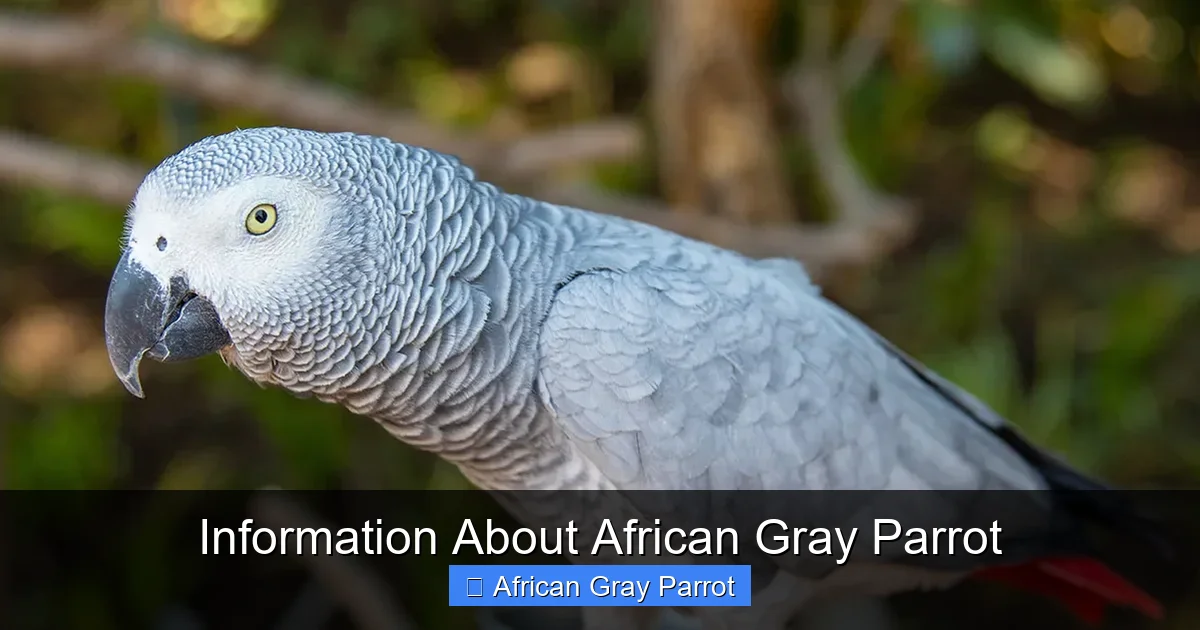
African Gray Parrots are widely considered the most intelligent talking birds in the world, capable of learning hundreds of words and understanding context. These remarkable companions require significant mental stimulation, specialized nutrition, and decades of dedicated care to thrive in captivity.
Key Takeaways
- Exceptional Intelligence: African Grays possess cognitive abilities comparable to a 5-year-old human child, including problem-solving, categorization, and contextual language use.
- Two Distinct Subspecies: The Congo African Gray (larger, bright red tail) and Timneh African Gray (smaller, maroon tail) have slightly different personalities and care requirements.
- Lifelong Commitment: With lifespans of 50-70 years, these parrots often outlive their owners and require estate planning for their continued care.
- Complex Emotional Needs: These sensitive birds develop deep bonds and can suffer severe psychological distress from neglect, routine changes, or rehoming.
- Specialized Diet Requirements: A seed-only diet causes fatal malnutrition; they need pellets, fresh vegetables, fruits, and calcium-rich foods for optimal health.
- Talking Ability Varies: While famous for speech, not all individuals talk extensively, and vocal mimicry typically begins around 12-18 months of age.
- Legal and Ethical Considerations: Wild-caught trade is banned under CITES; always source from reputable breeders or consider adoption from rescue organizations.
Quick Answers to Common Questions
How long do African Gray Parrots live?
African Gray Parrots typically live 50-70 years in captivity with proper care, and some individuals reach 80+ years. This exceptional longevity requires serious long-term planning including estate arrangements for the bird’s future care.
Do all African Grays talk?
No, not all African Grays become prolific talkers. While the species is renowned for talking ability, individual variation is enormous — some learn hundreds of words used contextually, others learn only a few phrases, and some never speak intelligibly. Talking ability depends on personality, early exposure, and interaction quality.
What is the difference between Congo and Timneh African Grays?
Congo African Grays are larger (400-650g), have light gray feathers, black beaks, and bright red tails. Timneh African Grays are smaller (275-375g), have dark charcoal feathers, two-toned beaks (horn-colored upper mandible), and maroon tails. Timnehs are often described as slightly calmer and quicker to adapt.
Can African Grays eat seeds as their main diet?
Absolutely not. A seed-only diet causes fatal malnutrition including vitamin A deficiency, calcium deficiency, obesity, and fatty liver disease. African Grays require a pellet-based diet (60-70%) supplemented with diverse fresh vegetables, fruits, grains, and calcium-rich foods for optimal health.
Are African Gray Parrots good for first-time bird owners?
Generally, no. African Grays are considered advanced-level companions due to their complex emotional needs, high intelligence requiring constant mental stimulation, sensitivity to routine changes, potential for behavioral issues like feather plucking, and 50+ year lifespan. First-time owners often do better with smaller, more resilient species.
📑 Table of Contents
- Welcome to the World of African Gray Parrots
- Understanding the Two Subspecies
- The Science of Avian Intelligence
- Lifespan and Long-Term Commitment
- Creating the Ideal Home Environment
- Nutrition: The Foundation of Health
- Health Monitoring and Veterinary Care
- Behavior, Training, and Socialization
- The Talking Phenomenon: What to Expect
- Acquiring an African Gray Parrot
- Daily Life with an African Gray
- Legal and Conservation Considerations
- Conclusion: Is an African Gray Right for You?
Welcome to the World of African Gray Parrots
If you have ever watched a video of a parrot having a genuine conversation, solving a puzzle, or comforting a crying human, chances are you were watching an African Gray. These birds have captured hearts and headlines for decades, earning a reputation as the Einsteins of the avian world. But behind every impressive vocabulary and clever trick lies a complex, sensitive, and demanding companion that changes the lives of everyone in its household.
This comprehensive guide covers everything you need to know about these extraordinary birds. Whether you are researching your first parrot, preparing to welcome a rescued Gray into your home, or simply fascinated by avian intelligence, you will find detailed information about African Gray Parrot biology, behavior, care requirements, and the realities of sharing your life with one of nature’s most remarkable communicators.
Understanding the Two Subspecies
Congo African Gray Parrot
The Congo African Gray (Psittacus erithacus erithacus) is the larger and more commonly recognized subspecies. Adults typically weigh between 400-650 grams and measure 13-14 inches from beak to tail tip. Their most striking feature is a brilliant, solid red tail that contrasts beautifully with their silver-gray plumage. The beak is black, and the bare skin around the eyes and nostrils is a light gray-white.
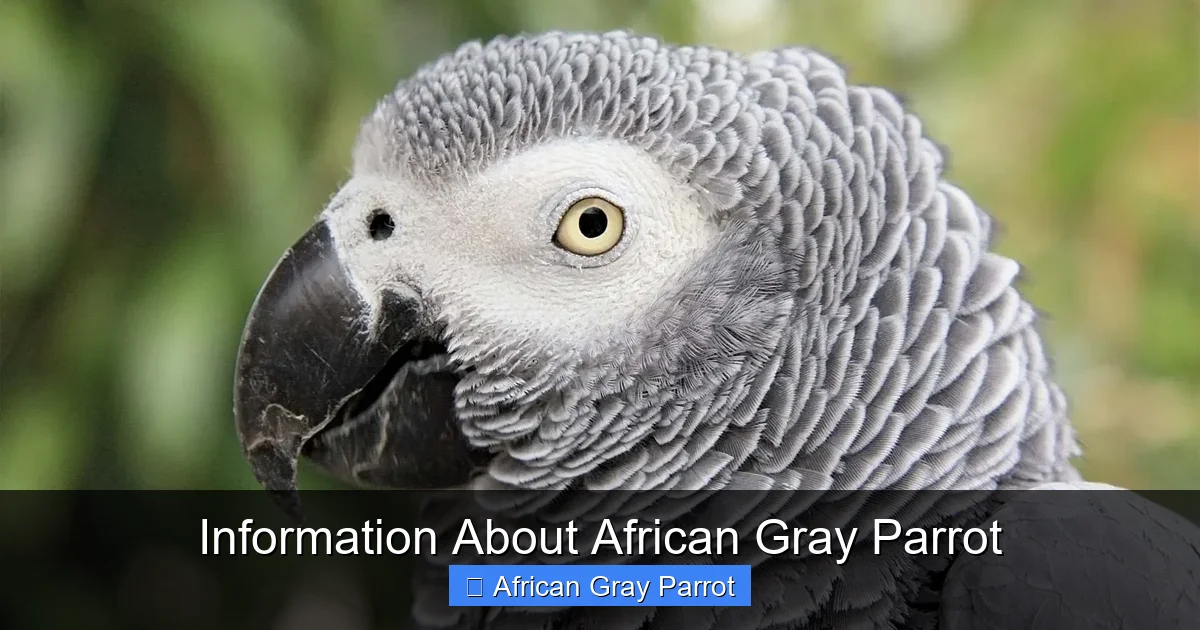
Visual guide about Information About African Gray Parrot
Image source: cdn.britannica.com
Congos originate from a vast range across Central Africa, including countries like Cameroon, Congo, Gabon, and the Democratic Republic of Congo. They tend to be slightly more outgoing and confident than their Timneh cousins, though individual personality varies enormously. Many experienced owners describe Congos as having a “bold” or “dramatic” presence, often demanding attention with loud vocalizations or impressive displays.
Timneh African Gray Parrot
The Timneh African Gray (Psittacus erithacus timneh) is noticeably smaller, weighing 275-375 grams and measuring 9-11 inches in length. Their plumage is a darker, charcoal gray, and their tail feathers are a deep maroon or burgundy rather than bright red. The upper mandible of their beak has a distinctive horn-colored (pale) patch, making identification easy even for novices.
Timnehs come from the western coastal regions of Africa, including Guinea-Bissau, Sierra Leone, and Liberia. They are often described as more relaxed, quicker to adapt to new situations, and slightly less prone to the nervous feather-plucking behaviors that sometimes plague Congos. Many breeders and behaviorists recommend Timnehs for first-time African Gray owners due to their generally steadier temperament.
Key Differences at a Glance
While both subspecies share the same remarkable intelligence and talking potential, the physical differences are consistent. Congo Grays have light gray feathers, black beaks, and red tails. Timneh Grays have dark charcoal feathers, two-toned beaks (black lower, horn-colored upper), and maroon tails. Size difference is immediately apparent when the two stand side by side. Personality generalizations should be taken as tendencies only — every bird is an individual shaped by genetics, early socialization, and life experiences.
The Science of Avian Intelligence
What Makes African Grays So Smart
African Gray Parrots do not just mimic sounds — they demonstrate genuine cognitive processing that continues to astonish researchers. The most famous example is Alex, the African Gray studied by Dr. Irene Pepperberg for over thirty years. Alex learned to identify over 100 objects, seven colors, five shapes, and quantities up to six. He understood concepts like “bigger,” “smaller,” “same,” and “different,” and could combine words to express desires, such as “want nut” or “wanna go back.”
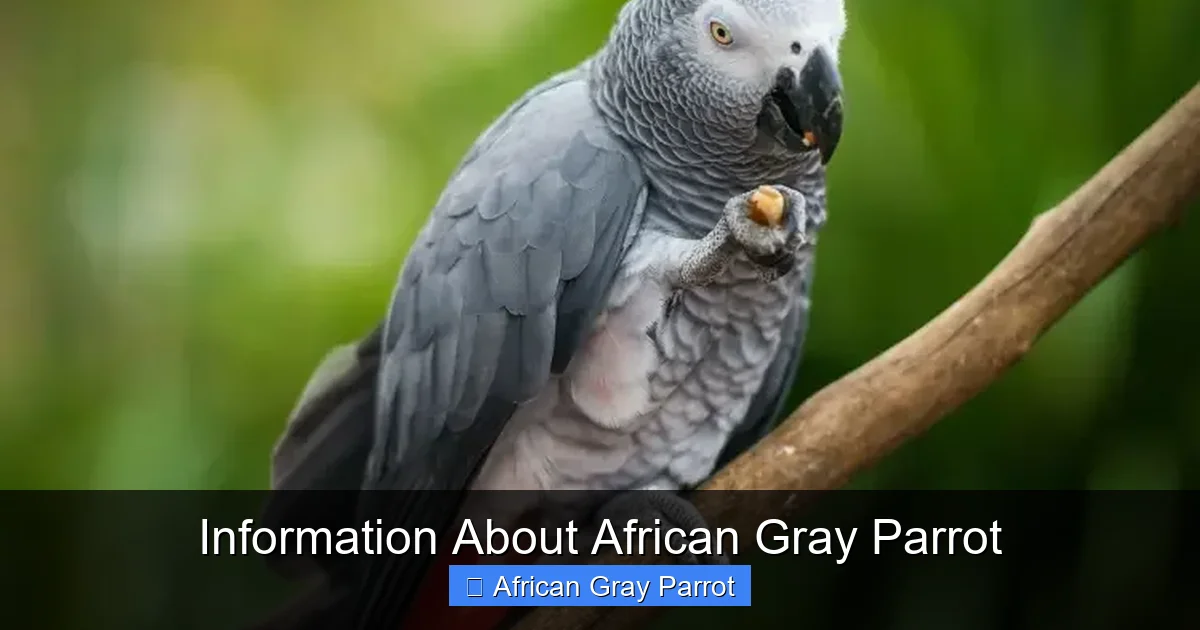
Visual guide about Information About African Gray Parrot
Image source: s3.animalia.bio
Subsequent research has shown that African Grays possess numerical competence, understanding the concept of zero — a cognitive milestone human children typically reach around age three or four. They can perform simple addition, infer the location of hidden objects through logical exclusion, and demonstrate episodic-like memory, remembering specific events from the past. Their brain-to-body ratio is comparable to that of great apes and cetaceans, and their pallium (the avian equivalent of the mammalian cortex) is densely packed with neurons.
Language Comprehension vs. Mimicry
A critical distinction exists between mimicry and referential speech. Mimicry is reproducing a sound without understanding its meaning — like a bird perfectly imitating a microwave beep. Referential speech means the bird uses a word to label an object, action, or concept consistently and appropriately. African Grays are one of the few non-human species documented to use referential speech spontaneously.
For example, a well-socialized Gray might see an apple and say “apple,” then see a banana and say “banana.” If offered a piece of each, the bird might say “want banana” or “no apple.” This demonstrates symbolic representation — the word stands for the object. Some Grays even combine words creatively, such as calling a cake “yummy bread” or a strawberry “red berry,” showing they understand the component concepts.
Problem Solving and Tool Use
In the wild, African Grays have been observed using tools — holding a twig in the beak to scratch hard-to-reach places or using pieces of bark to manipulate food. In captivity, they solve complex multi-step puzzles, such as unlocking a series of latches to retrieve a treat. They can plan several moves ahead, inhibiting immediate impulses for a better reward later. This executive function — the ability to plan, focus attention, and juggle multiple tasks — is a hallmark of advanced intelligence.
Lifespan and Long-Term Commitment
Decades of Daily Care
African Gray Parrots live 50 to 70 years in captivity with proper care, and some individuals have reached 80 or beyond. This means a Gray acquired in your twenties may still be with you in your eighties — or may need a new guardian after you are gone. This extraordinary longevity transforms parrot ownership from a pet decision into a life planning decision.
Consider the practical implications: veterinary costs over five decades, the need for consistent daily interaction regardless of your schedule changes, housing that accommodates a large cage and play areas through multiple moves, and arrangements for the bird’s care during vacations, illnesses, or emergencies. Many Grays end up in rescues because owners did not fully grasp the duration and intensity of the commitment.
Estate Planning for Your Parrot
Responsible African Gray owners include their birds in wills and estate plans. This involves designating a trusted caregiver who knows the bird well, setting aside funds for ongoing care (a parrot trust), and providing detailed care instructions covering diet, medication, veterinary contacts, daily routines, and behavioral quirks. Some owners establish a “parrot godparent” relationship years in advance, ensuring the designated person has bonded with the bird and understands its needs.
The Reality of Rehoming
African Grays form profound attachment bonds, often selecting one “chosen person” in the household. Separation from this person causes genuine grief — birds may stop eating, pluck feathers, scream incessantly, or become aggressive. Rehoming is traumatic and should be an absolute last resort. If you anticipate major life changes (international moves, career shifts, health issues, growing family) that might compromise your ability to provide consistent care, please reconsider acquiring an African Gray.
Creating the Ideal Home Environment
Cage Requirements and Setup
The minimum cage size for an African Gray is 36 inches wide, 24 inches deep, and 48 inches tall — but bigger is always better. Bar spacing should be 3/4 to 1 inch to prevent head entrapment. Horizontal bars on at least two sides allow climbing. The cage needs multiple perches of varying diameters and textures (natural wood, rope, concrete for nail maintenance) positioned to encourage movement and prevent pressure sores on feet.
Place the cage in a family area where the bird can observe daily activity but also has a quiet corner for retreat. Avoid drafty windows, direct afternoon sun, kitchens (toxic fumes from non-stick cookware), and high-traffic pathways where the bird might feel threatened. A cage cover for 10-12 hours of uninterrupted darkness each night supports healthy sleep cycles.
Out-of-Cage Time and Play Areas
African Grays need a minimum of 3-4 hours daily outside their cage, ideally more. Dedicated play stands in main living areas allow the bird to be part of family activities while having its own space. These stands should include foraging toys, chewable items, and perches at different heights. Rotate toys weekly to prevent boredom — a bored Gray becomes a destructive Gray.
Bird-proof any room the Gray accesses. Cover electrical cords, remove toxic plants, secure windows and mirrors, and eliminate access to ceiling fans, open water sources (toilets, sinks), and small ingestible objects. Supervise all out-of-cage time, especially in multi-pet households.
Environmental Enrichment Strategies
Enrichment mimics the cognitive challenges of wild life. Foraging is paramount — in nature, parrots spend 6-8 hours daily finding food. Provide puzzle feeders, wrapped treats, hidden food items, and commercially available foraging toys. Change locations and difficulty levels regularly. Offer safe branches for chewing, shreddable materials (phone books, cardboard, palm leaves), and auditory enrichment (music, nature sounds, recorded flock calls).
Social enrichment is equally critical. African Grays are flock animals. If you work long hours, consider whether you can meet the bird’s social needs. Some households successfully keep two Grays, but this requires careful introduction and does not reduce the human interaction requirement — both birds still need individual attention.
Nutrition: The Foundation of Health
Why Seeds Are Not Enough
A seed-only diet is the leading cause of premature death in captive parrots. Seeds are high in fat, deficient in vitamin A, calcium, and essential amino acids, and allow selective eating (birds pick favorites and ignore the rest). African Grays on seed diets develop obesity, fatty liver disease, vitamin A deficiency (causing respiratory and skin issues), and calcium deficiency (leading to seizures and bone fractures).
The Pellet-Based Diet
High-quality formulated pellets should comprise 60-70% of the daily diet. Look for brands with no artificial colors, preservatives, or sugar. Pellets provide balanced nutrition in every bite, preventing selective eating. Transitioning a seed-addicted bird takes patience — offer pellets in the morning when hunger is highest, mix with a small amount of seed initially, and gradually decrease seed over weeks. Never starve a bird into conversion.
Fresh Foods: Variety Is Vital
The remaining 30-40% of the diet should be fresh vegetables, fruits, grains, and legumes. Dark leafy greens (kale, collards, Swiss chard) and orange vegetables (sweet potato, carrot, pumpkin) provide critical vitamin A. Offer a “chop” — a finely diced mix of 10-15 vegetables, cooked grains (quinoa, brown rice, barley), and legumes (lentils, chickpeas, mung beans) — fresh daily. Fruits are treats, limited to 10% of fresh portion due to sugar content.
Calcium and Special Considerations
African Grays have higher calcium requirements than many parrots. Provide calcium-rich foods daily: dark greens, broccoli, almonds, sesame seeds, and cooked eggshell powder. A cuttlebone or calcium block in the cage allows self-regulation. Vitamin D3 is essential for calcium absorption — natural sunlight (not through glass) or full-spectrum avian lighting for 2-4 hours daily supports synthesis.
Toxic foods to absolutely avoid: avocado, chocolate, caffeine, alcohol, onions, garlic, fruit pits/seeds (cyanide), rhubarb, and anything salted, sugared, or fried. When in doubt, leave it out.
Health Monitoring and Veterinary Care
Finding an Avian Veterinarian
Standard dog/cat veterinarians lack the specialized training to treat birds. Locate a board-certified avian veterinarian (ABVP-Avian) or a vet with significant avian caseload before you bring your Gray home. Schedule a wellness exam within the first week, then annually thereafter. Birds mask illness instinctively — by the time symptoms are obvious, the condition is often advanced.
Signs of Illness to Watch For
Subtle changes warrant veterinary attention: decreased appetite or water consumption, changes in droppings (color, consistency, frequency), fluffed feathers, lethargy, voice changes, sneezing or nasal discharge, tail bobbing with breathing, weight loss (weigh weekly on a gram scale), and behavioral shifts like increased aggression or withdrawal. Early intervention saves lives.
Common African Gray Health Issues
Hypocalcemia (low blood calcium) causes seizures, weakness, and egg-binding in females. It is preventable with proper diet and lighting. Psittacine Beak and Feather Disease (PBFD) is a viral infection causing feather abnormalities and immune suppression — no cure exists, making breeder screening critical. Aspergillosis, a fungal respiratory infection, thrives in damp, poorly ventilated environments. Atherosclerosis and fatty liver disease result from high-fat diets and insufficient exercise. Feather destructive behavior (plucking) has medical, nutritional, and psychological causes requiring systematic investigation.
Preventive Care Routine
Annual exams should include blood work (CBC and chemistry panel and chemistry), fecal parasite screening, and weight tracking. Nail and beak trims are needed periodically — concrete perches reduce frequency. Wing trim decisions are individual; many owners maintain flight for exercise and confidence, while others trim for safety in hazardous homes. Discuss with your avian vet.
Behavior, Training, and Socialization
Understanding Body Language
African Grays communicate constantly through posture, feather position, eye pinning (rapid pupil dilation/contraction), beak grinding (contentment), and vocalizations. A relaxed bird has smooth feathers, one foot tucked up, and may grind its beak. An alert or excited bird pins its eyes, raises nape feathers slightly, and leans forward. A fearful bird flattens feathers against the body, widens eyes, and may hiss or growl. An aggressive bird expands to full size, fans tail, pins eyes intensely, and lunges. Learning these signals prevents bites and builds trust.
Positive Reinforcement Training
Training is not about tricks — it is communication. Target training (touching a stick for a reward) builds foundation skills. Step-up training ensures safe handling. Recall training (flying to you on cue) is lifesaving if the bird escapes. Use tiny, high-value treats (sliver of almond, sunflower kernel, piece of grape) and keep sessions to 5 minutes, 2-3 times daily. Never use punishment, force, or dominance-based methods — they destroy trust and increase aggression.
Managing Hormonal Behavior
Sexual maturity arrives at 3-5 years. Seasonal hormonal surges (spring) can trigger nesting behavior, territorial aggression, excessive vocalization, and regurgitation for “mates” (often the chosen person). Manage by: limiting daylight to 10-12 hours, removing nest-like spaces (boxes, tents, under furniture), avoiding cuddling/stroking the back and tail base (sexual stimulation), ensuring abundant exercise, and never reinforcing mating behaviors. Consistency across all family members is essential.
Feather Destructive Behavior
Feather plucking is a symptom, not a diagnosis. Medical causes (skin infection, allergies, pain, organ disease) must be ruled out first. Environmental causes include boredom, insufficient foraging, low humidity, smoke exposure, and sleep deprivation. Psychological causes include anxiety, separation distress, trauma, and learned behavior. Treatment requires a multi-faceted approach: medical intervention, environmental overhaul, increased enrichment, anxiety reduction (sometimes pharmaceutical), and behavior modification. Early intervention dramatically improves outcomes.
The Talking Phenomenon: What to Expect
When and How They Start Talking
Most African Grays begin mimicking sounds around 12-18 months, though some start as early as 6 months or as late as 3 years. First words are often high-frequency household sounds: microwave beeps, phone rings, alarm clocks, sneezes, laughter. Words associated with strong emotion or routine (“hello,” “goodnight,” “want nut”) follow. Consistent, enthusiastic repetition from humans accelerates learning — Grays learn best from interactive communication, not passive recordings.
Individual Variation Is Enormous
Not all African Grays become prolific talkers. Some develop vocabularies of hundreds of words used contextually; others learn a dozen favorite phrases; a few never speak intelligibly. Factors include: individual personality, early exposure to speech, human interaction quality, health, and whether the bird has a “rival” (another talking bird or human) that motivates competition. A non-talking Gray is not a “failed” Gray — intelligence manifests in many ways.
Beyond Words: Sound Effects and Context
Many owners find the sound effects more delightful than words. Grays perfectly replicate: dripping water, creaking doors, coughing, laughter, vehicle engines, other pets, and musical melodies. They often use sounds contextually — making the microwave beep when hungry, coughing when a family member is sick, or laughing at appropriate moments in conversation. This contextual use demonstrates genuine comprehension, not rote repetition.
Acquiring an African Gray Parrot
Choosing a Reputable Breeder
If purchasing a baby, visit the breeder’s facility. Look for: clean, spacious enclosures; parent birds on-site (indicating they are not just brokers); babies raised with abundant human interaction, not just hand-fed in isolation; weaning onto pellets and fresh foods, not just formula; complete health records and genetic testing (PBFD, polyomavirus); willingness to provide references and ongoing support; and a contract with health guarantee and return policy. Avoid breeders who ship unweaned babies, sell at bird marts, or cannot show you the parents.
Adoption: A Compassionate Alternative
Parrot rescues and sanctuaries are overflowing with African Grays surrendered due to owner death, illness, financial hardship, or behavioral issues. Adopting an adult Gray has advantages: personality is established, talking ability is known, and you save a life. Rescues typically provide veterinary records, behavioral assessments, and post-adoption support. The adoption fee (usually $500-1,500) is far less than breeder prices ($2,000-4,000+ for Congo, $1,500-3,000 for Timneh) and includes initial vetting.
Red Flags and Warning Signs
Avoid: sellers who cannot provide photos/videos of the actual bird; prices significantly below market (indicates wild-caught, sick, or scam); pressure to decide immediately; refusal to allow veterinary exam before purchase; birds kept in filthy, overcrowded conditions; babies sold unweaned (“finish hand-feeding yourself” — extremely high mortality); and any seller who does not ask YOU questions about your experience and setup. Legitimate breeders and rescues screen homes carefully.
Daily Life with an African Gray
A Typical Day Schedule
7:00 AM: Wake, uncover cage, fresh water, morning pellets. 7:30 AM: Out-of-cage time, training session, foraging breakfast (chop in puzzle toys). 9:00 AM: Shower or misting (many Grays love daily showers). 10:00 AM: Return to cage for rest, independent play with rotated toys. 12:00 PM: Quick check-in, treat, fresh water. 2:00 PM: Second out-of-cage session, family interaction, more foraging. 5:00 PM: Evening chop meal, social time during human dinner (bird on play stand, not shoulder). 7:00 PM: Quiet wind-down, preening, calm interaction. 8:00 PM: Cover cage for 10-12 hours sleep.
Travel and Vacation Planning
African Grays generally dislike travel. For vet visits, use a secure carrier with a perch, covered partially for security. For vacations, in-home pet sitters known to the bird are best. Boarding at avian vet clinics is second choice. Never leave a Gray alone for more than 24 hours — they need daily fresh food, water, medication if applicable, and welfare checks. Video calls help maintain connection during absences.
The Financial Reality
First-year costs: bird ($1,500-4,000), cage ($500-1,500), play stands ($200-500), initial vet exam and tests ($300-600), toys/perches ($300-500), food ($500-800), carrier ($100). Annual ongoing: food ($600-1,000), toys ($300-500), wellness vet ($200-400), emergency fund ($1,000+ recommended). Lifetime cost easily exceeds $50,000-100,000. Pet insurance for exotics exists but varies widely — research thoroughly.
Legal and Conservation Considerations
CITES and International Trade
African Gray Parrots are listed on CITES Appendix I (since 2017), banning international commercial trade of wild-caught birds. All legal captive-bred birds should have closed (seamless) leg bands or microchips linking to breeder records. Documentation proving captive-bred status is essential for interstate and international movement. Never purchase a bird without proper paperwork — you risk confiscation and legal penalties.
Wild Population Crisis
Wild African Gray populations have collapsed by 90-99% in many regions due to trapping for the pet trade and habitat loss. Ghana has lost 99% of its Grays. The Democratic Republic of Congo remains a stronghold but faces intense trapping pressure. Choosing captive-bred birds from ethical breeders or adopting rescues directly reduces demand for wild-caught parrots. Supporting conservation organizations working in range countries (World Parrot Trust, African Parrot Society) helps protect wild populations.
Local Regulations
Check state, county, and municipal laws before acquiring an African Gray. Some jurisdictions restrict or prohibit psittacines, require permits, limit numbers, or mandate specific caging standards. Rental agreements and HOA rules may also restrict birds. Noise ordinances are relevant — Grays can produce 90-100 decibel screams. Being a responsible owner includes being a legal owner.
Conclusion: Is an African Gray Right for You?
African Gray Parrots are extraordinary beings — intelligent, communicative, emotionally complex, and breathtakingly beautiful. They offer a depth of companionship unlike any other pet, engaging you in genuine interaction, surprising you daily with new words and insights, and becoming a true family member for decades. But they demand a level of commitment, resources, knowledge, and emotional resilience that few other animals require.
Before bringing an African Gray into your life, ask yourself honestly: Can I provide 3-4 hours daily of focused interaction for the next 50+ years? Can I afford $3,000-5,000 annually for proper care? Do I have access to an avian veterinarian? Is my household stable enough to withstand the noise, mess, and disruption? Will I still want this responsibility when I am older, when life circumstances change, when the novelty fades?
If the answer is a resounding yes — if you feel called to this species not despite the challenges but because of the profound connection they offer — then welcome to one of the most rewarding relationships possible between human and animal. The African Gray Parrot will teach you patience, presence, and the true meaning of communication. In return, you will give them the dignified, enriched, loving life every sentient being deserves.
Whether you choose a Congo or Timneh, a baby from a meticulous breeder or a seasoned adult from a rescue, you are embarking on a journey that will transform your understanding of animal minds and your own capacity for care. Welcome to the flock.
Frequently Asked Questions
How much does an African Gray Parrot cost?
Congo African Grays typically cost $2,000-4,000 from reputable breeders, while Timnehs range $1,500-3,000. Adoption fees from rescues are lower, usually $500-1,500, and include initial veterinary care. First-year setup costs (cage, toys, vet exams, food) add $2,000-4,000 more.
What size cage does an African Gray need?
The minimum cage size is 36 inches wide, 24 inches deep, and 48 inches tall with 3/4 to 1 inch bar spacing. However, larger is always better — many experts recommend 48x36x60 inches or bigger. The cage must accommodate multiple perches, toys, foraging stations, and allow full wing extension.
Why is my African Gray plucking its feathers?
Feather plucking has medical, environmental, and psychological causes. Medical issues include skin infections, allergies, organ disease, and pain. Environmental factors include boredom, low humidity, smoke, and sleep deprivation. Psychological causes include anxiety, trauma, and separation distress. A full avian veterinary workup is essential before assuming it is behavioral.
At what age do African Grays start talking?
Most African Grays begin mimicking sounds between 12-18 months, though some start as early as 6 months or as late as 3 years. First sounds are usually household noises (microwave, phone, sneezes), followed by words associated with routine and emotion. Consistent interactive communication from humans accelerates speech development.
Can African Grays be left alone during the workday?
African Grays should not be left alone for more than 6-8 hours regularly. They are highly social flock animals requiring mental stimulation and interaction. If you work full-time, consider: a trusted person visiting midday, a compatible second bird (with careful introduction), extensive foraging enrichment, and maximizing quality interaction before/after work. Chronic isolation causes severe behavioral problems.
Are African Gray Parrots loud?
African Grays are not typically screamers like macaws or cockatoos, but they can produce 90-100 decibel contact calls, alarm calls, and enthusiastic vocalizations. They also mimic loud household sounds (alarms, phones, laughter). In apartments or shared walls, noise can be an issue. Providing ample enrichment, routine, and attention reduces excessive vocalization.