
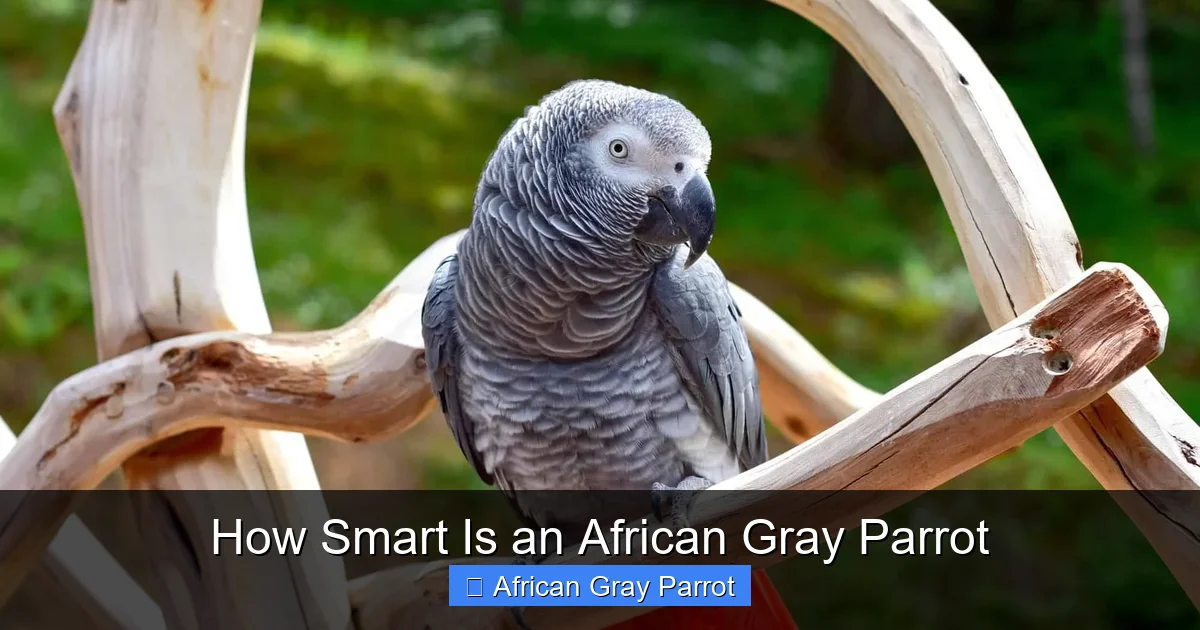
African Gray Parrots rank among the most intelligent birds on the planet. They solve puzzles, use tools, and can learn hundreds of words with contextual meaning. Their social skills rival those of young children, making them extraordinary companions.
Key Takeaways
- Problem‑solving: They can complete multi‑step puzzles and understand cause‑and‑effect.
- Tool use: In the wild and captivity they fashion sticks to retrieve food.
- Vocabulary: Some individuals master over 1,000 words and use them appropriately.
- Social cognition: They recognize human emotions and adjust their behavior accordingly.
- Memory: Long‑term recall of objects, locations, and phrases lasts years.
- Scientific proof: Studies with Alex and newer research confirm advanced reasoning.
- Care tips: Enrichment, training, and proper nutrition keep their minds sharp.
Quick Answers to Common Questions
Can an African Gray Parrot understand what it says?
Yes, research shows they can use words in appropriate contexts, not just mimic sounds.
How many words can they learn?
Some individuals learn over 1,000 words, though 200‑500 is more typical for pet birds.
Do they need social interaction to stay smart?
Absolutely. Regular interaction, training, and enrichment are essential for mental health.
Are they good pets for beginners?
They require significant time, patience, and knowledge; they are better suited for experienced bird owners.
What is the lifespan of an African Gray Parrot?
With proper care they can live 40‑60 years, sometimes longer.
📑 Table of Contents
Introduction
When people ask how smart is an African Gray Parrot, the answer usually surprises them. These birds are not just pretty talkers; they are thinkers. Researchers have compared their cognitive abilities to those of a five‑year‑old child. Owners often describe moments when their parrot seems to “understand” a request or even jokes. This article dives into the science, stories, and practical ways to nurture that brilliance.
African Gray Parrots belong to the genus Psittacus and come in two main subspecies: the Congo and the Timneh. Both share a large brain relative to body size, a trait linked to higher intelligence in many animals. Their natural habitat in the rainforests of West and Central Africa demands flexible foraging, complex social interactions, and predator avoidance — pressures that likely shaped their remarkable minds.
Cognitive Abilities Overview
Problem Solving
Laboratory tests show that African Gray Parrots can solve multi‑step puzzles without trial‑and‑error. In one classic experiment, a bird had to pull a string, release a latch, and then slide a door to reach a treat. The parrot completed the sequence on the first try after watching a human demonstrate it once. This indicates an understanding of cause‑and‑effect, not just mimicry.
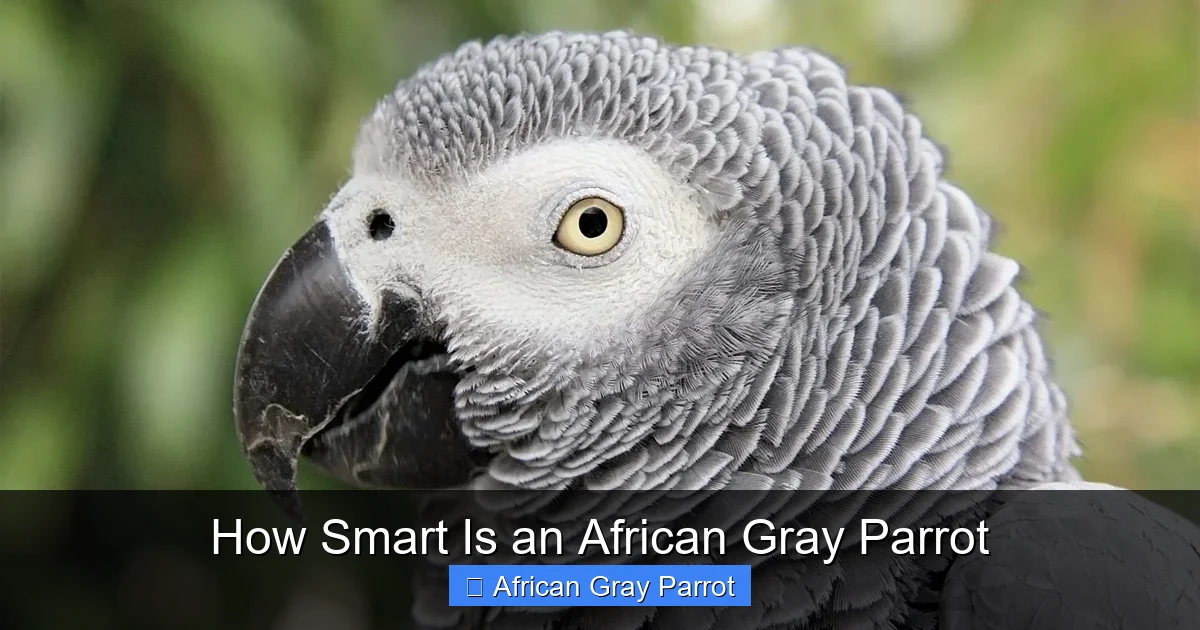
Visual guide about How Smart Is an African Gray Parrot
Image source: cdn.britannica.com
Tool Use
Tool use is rare in birds, yet African Gray Parrots have been observed shaping twigs to extract insects from bark. In captivity, they spontaneously use sticks to reach food placed outside their cage. The behavior is flexible; they modify the tool length depending on the distance. Such innovation places them alongside corvids and primates in the tool‑use club.
Memory
Long‑term memory tests reveal that these parrots remember the location of hidden objects for months. One study hid a peanut under one of three cups, shuffled the cups, and the bird still chose the correct cup after a 30‑day delay. They also recall specific words and phrases years after first hearing them, suggesting a robust episodic‑like memory system.
Language and Mimicry
Vocabulary Size
While many parrots mimic a few dozen sounds, African Gray Parrots can acquire vocabularies exceeding 1,000 words. The famous Alex, studied by Dr. Irene Pepperberg, used over 100 labels for objects, colors, shapes, and numbers. He could combine words to form simple sentences like “want nut” or “green key.”
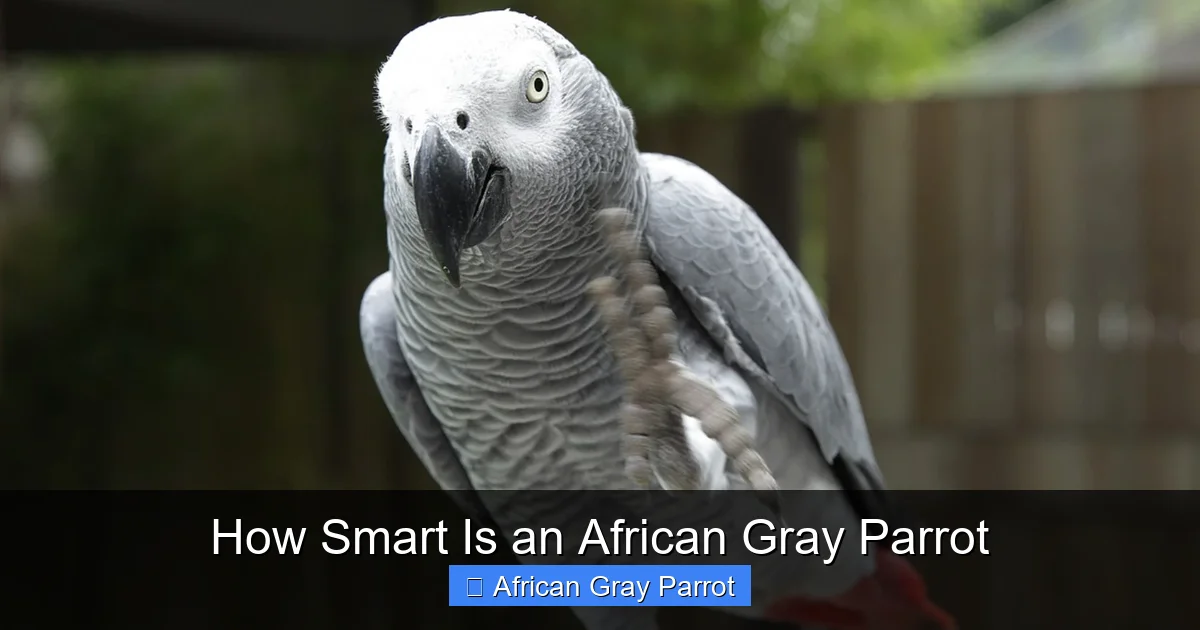
Visual guide about How Smart Is an African Gray Parrot
Image source: mandai.com
Contextual Use
What sets them apart is contextual understanding. Alex could answer “What color?” when shown a blue triangle, and “What shape?” when shown a red square. He also grasped concepts such as “same” and “different,” demonstrating abstract reasoning rather than rote repetition.
Learning New Sounds
These parrots learn new sounds throughout life. They pick up household noises — microwave beeps, phone rings, even laughter — and integrate them into their repertoire. Owners can accelerate learning by repeating target words in clear, consistent contexts, rewarding correct usage with treats or praise.
Social Intelligence
Bonding with Humans
African Gray Parrots form deep pair bonds, often choosing a single person as their “mate.” They seek physical contact, preen their chosen human, and become distressed when separated. This attachment mirrors the social bonding seen in highly social mammals.
Understanding Emotions
Studies indicate they can read human facial expressions. In a controlled test, parrots approached a smiling experimenter more readily than a frowning one. They also adjust vocal volume — speaking softly when a person whispers — showing sensitivity to social cues.
Cooperative Behavior
When two parrots work together, they can coordinate actions to obtain a shared reward. In one experiment, two birds had to pull opposite ends of a rope simultaneously to bring a platform within reach. They succeeded after a few trials, indicating an understanding of joint effort.
Scientific Studies and Famous Birds
Alex the Parrot
Alex remains the gold standard for avian cognition research. Over 30 years, he demonstrated counting up to six, categorizing objects by color and shape, and expressing preferences. His achievements shattered the notion that birds lack higher‑order thinking.
Recent Research
Modern labs use touchscreen tasks, MRI scans, and comparative tests with children. Recent findings show African Gray Parrots can infer hidden causal mechanisms, plan for future tool needs, and even exhibit a rudimentary sense of fairness — refusing a lesser reward when a partner receives a better one.
Practical Tips for Owners
Enrichment Activities
Mental stimulation prevents boredom and feather‑plucking. Rotate puzzle toys weekly. Offer foraging boxes filled with shredded paper and hidden treats. Teach new tricks using clicker training; the bird learns to associate the click with a reward, accelerating skill acquisition.
Training Techniques
Keep sessions short — five to ten minutes — and end on a positive note. Use clear, consistent cues. For example, say “step up” while offering a hand, then reward immediately. Gradually increase difficulty: “wave,” “turn around,” “fetch.” Consistency builds trust and reinforces learning pathways.
Health Considerations
A sharp mind needs a healthy body. Provide a balanced diet of high‑quality pellets, fresh vegetables, fruits, and occasional nuts. Ensure daily out‑of‑cage time for exercise. Regular avian vet check‑ups catch nutritional deficiencies or illnesses that could impair cognition.
Conclusion
So, how smart is an African Gray Parrot? The evidence points to a level of intelligence that rivals young children and exceeds most other pets. They solve problems, use tools, master large vocabularies, and navigate complex social worlds. By understanding their cognitive needs and providing rich environments, owners can unlock the full potential of these remarkable birds. Whether you are a seasoned parrot parent or considering your first feathered friend, remember that a stimulated mind leads to a happy, healthy companion.
Frequently Asked Questions
What makes African Gray Parrots smarter than other parrots?
Their large brain-to-body ratio, complex social structure in the wild, and demonstrated abilities in problem solving, tool use, and language set them apart.
Can they recognize themselves in a mirror?
Current studies have not conclusively proven mirror self‑recognition, but they show strong responses to mirrored images suggesting some level of self‑awareness.