
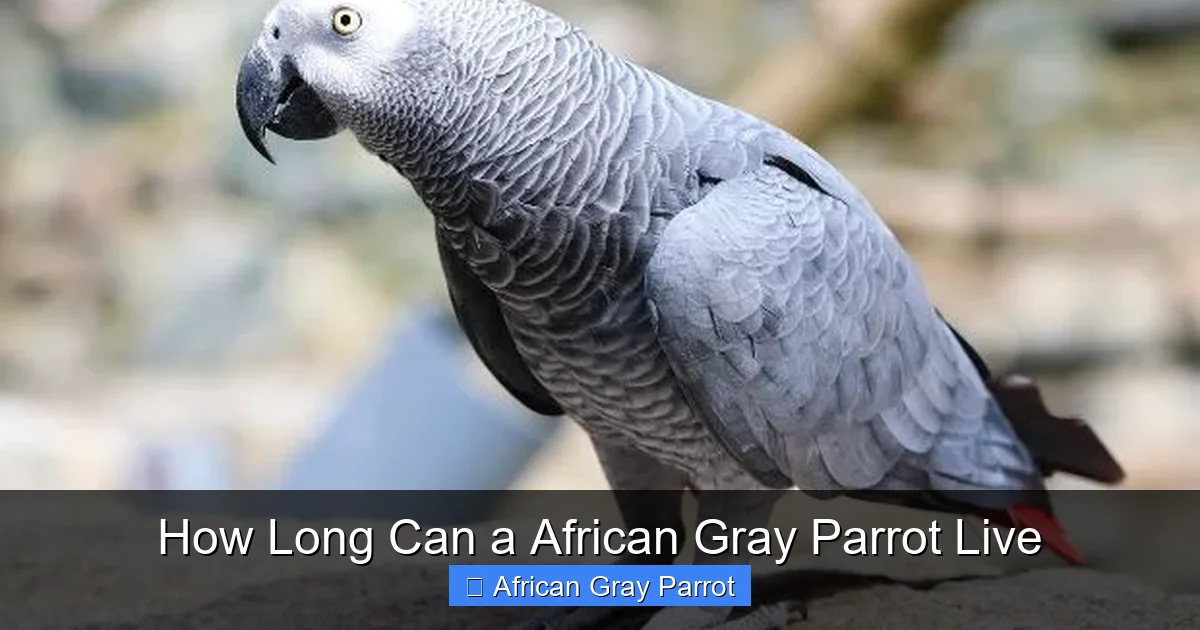
African Gray Parrots can live 40-60 years in captivity with proper care, and some even reach 80 years. Their lifespan depends heavily on diet, environment, veterinary care, and mental stimulation. Wild parrots typically live shorter lives of 20-30 years due to predators and environmental challenges.
Key Takeaways
- Captive lifespan: African Gray Parrots typically live 40-60 years in captivity with excellent care, and some individuals reach 70-80 years old.
- Wild lifespan: In their natural habitat, these parrots usually live 20-30 years due to predation, disease, and environmental hazards.
- Diet is critical: A balanced diet of pellets, fresh vegetables, fruits, and limited seeds directly impacts longevity and prevents obesity-related diseases.
- Mental stimulation matters: These highly intelligent birds need daily enrichment, social interaction, and problem-solving activities to prevent stress-related health issues.
- Regular vet care: Annual check-ups with an avian veterinarian catch health problems early and significantly extend lifespan.
- Environment counts: Proper cage size, lighting, humidity, and temperature control create the foundation for a long, healthy life.
- Commitment required: Adopting an African Gray means a potential 50+ year commitment — they often outlive their owners and need succession planning.
Quick Answers to Common Questions
What is the average lifespan of an African Gray Parrot in captivity?
The average lifespan is 40-60 years with proper care, though many reach 50+ and some live into their 70s or 80s.
How long do African Gray Parrots live in the wild?
Wild African Grays typically live 20-30 years due to predation, disease, habitat loss, and food scarcity.
What is the number one factor that determines how long an African Gray Parrot lives?
Nutrition is the single most controllable factor. A balanced pellet-based diet with fresh vegetables prevents the deficiencies and obesity that cause early death.
Do Congo and Timneh African Grays have different lifespans?
No significant difference exists. Both subspecies have similar lifespan potential of 40-60+ years in captivity.
Can an African Gray Parrot outlive its owner?
Yes, absolutely. With lifespans of 50-60+ years, they frequently outlive their human caregivers, making succession planning essential.
📑 Table of Contents
- Understanding the African Gray Parrot Lifespan
- Wild vs Captive Lifespan: The Stark Difference
- Nutrition: The Foundation of Longevity
- Environmental Factors That Extend Life
- Mental Health: The Hidden Longevity Factor
- Veterinary Care: Your Lifespan Insurance
- Life Stages and Age-Related Care
- The Human Factor: Planning for Their Future
- Conclusion: A Lifetime of Wonder
Understanding the African Gray Parrot Lifespan
When people ask how long can a African Gray Parrot live, they’re often surprised by the answer. These remarkable birds are among the longest-living pet parrots in the world. Their potential lifespan rivals that of humans in many cases. This isn’t a pet you’ll have for a few years — it’s a lifetime companion that may very well outlive you.
The difference between a parrot that lives 20 years and one that reaches 60 comes down to care. Every choice you make — from what goes in their food bowl to how much time you spend talking with them — adds up. Let’s explore everything that influences how long can a African Gray Parrot live and what you can do to help your feathered friend reach their full potential.
Wild vs Captive Lifespan: The Stark Difference
Life in the Wild
In the rainforests of West and Central Africa, African Gray Parrots face daily survival challenges. Predators like hawks, eagles, and snakes target them. Disease spreads quickly in flocks. Food sources fluctuate with seasons. Habitat loss from logging and agriculture shrinks their territory. The illegal pet trade removes thousands from the wild each year.
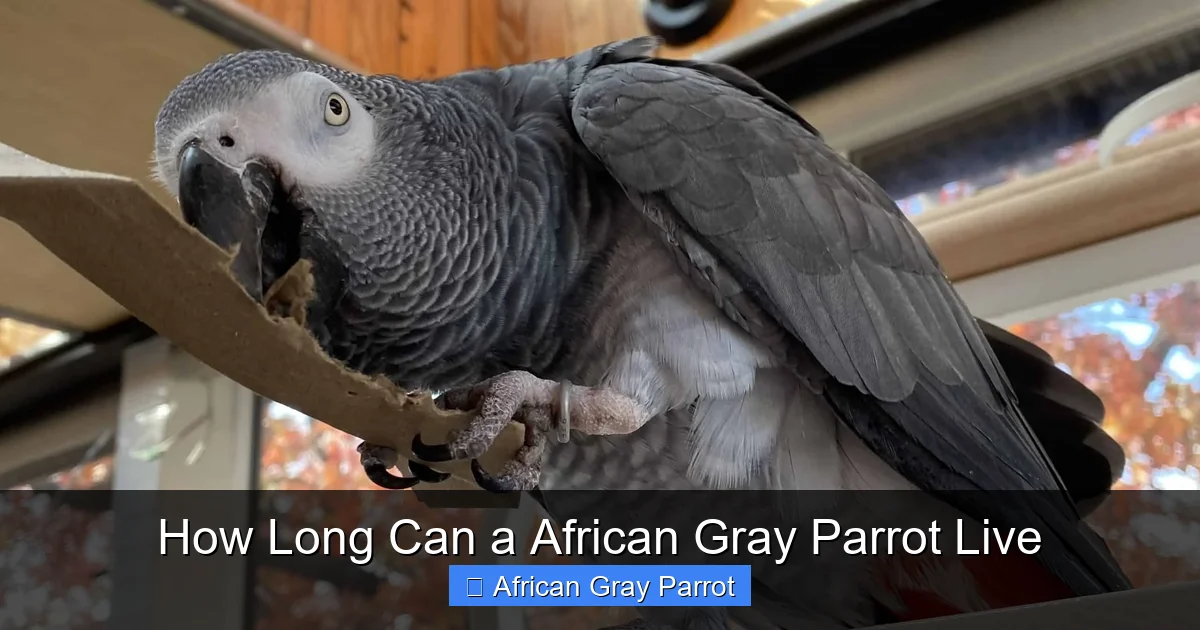
Visual guide about How Long Can a African Gray Parrot Live
Image source: birdybirdybirdy.com
These pressures mean wild African Grays typically live 20-30 years. A wild parrot reaching 30 is considered elderly. Most don’t make it that far. The first year is especially dangerous — juvenile mortality rates are high as young birds learn to forage, avoid predators, and navigate complex social dynamics.
Life in Captivity
Remove those threats, provide consistent nutrition, veterinary care, and a safe environment, and the picture changes dramatically. Captive African Grays routinely reach 40-60 years. Well-documented cases exist of birds living into their 70s and even 80s. The oldest recorded African Gray, a male named Tarbu, reportedly lived to 55 in the UK. Unverified reports claim birds reaching 70-80.
This massive gap — potentially 40+ extra years — shows the power of proper care. But captivity brings its own risks. Poor diet, lack of exercise, boredom, stress, and inadequate medical care can cut a captive parrot’s life short. The potential is there. Realizing it takes knowledge and dedication.
Congo vs Timneh: Any Difference?
Two subspecies exist: the larger Congo African Gray (Psittacus erithacus erithacus) and the smaller, darker Timneh African Gray (Psittacus erithacus timneh). Both have similar lifespan potential. Some breeders report Timnehs may be slightly hardier, but the difference is negligible compared to the impact of care quality. Whether you have a Congo or Timneh, the principles for maximizing lifespan remain identical.
Nutrition: The Foundation of Longevity
Why Diet Determines Lifespan
If you want to understand how long can a African Gray Parrot live, start with what goes in their bowl. Nutrition is the single biggest factor within your control. African Grays are prone to specific nutritional deficiencies that directly shorten lifespan. Calcium deficiency leads to seizures, weak bones, and egg-binding in females. Vitamin A deficiency causes respiratory infections, kidney problems, and poor feather quality. Obesity from high-seed diets triggers fatty liver disease, atherosclerosis, and heart failure.
These aren’t theoretical risks. They’re the leading causes of premature death in captive African Grays. The good news? They’re almost entirely preventable through diet.
The Ideal Diet Breakdown
Aim for this daily ratio:
- 60-70% high-quality pellets — formulated specifically for African Grays or large parrots. Brands like Harrison’s, Roudybush, and TOPS provide complete nutrition without the selectivity problems of seed mixes.
- 20-30% fresh vegetables — dark leafy greens (kale, collards, Swiss chard), orange vegetables (sweet potato, carrots, pumpkin), cruciferous veggies (broccoli, cauliflower), and others. Rotate daily for variety.
- 5-10% fresh fruits — berries, papaya, mango, apple (no seeds), pomegranate. Limit high-sugar fruits. Think of fruit as a treat, not a staple.
- Minimal seeds and nuts — use only as training treats. Walnuts, almonds, and pumpkin seeds are better choices than sunflower or safflower. Never free-feed seeds.
- Clean water always available — change twice daily. Use a water bottle or heavy ceramic bowl to prevent contamination.
Calcium: The African Gray Special Need
African Grays have higher calcium requirements than most parrots. In the wild, they consume calcium-rich soils and specific plants. In captivity, they need supplementation. Offer:
- Cuttlebone or mineral block available at all times
- Calcium-rich vegetables daily (kale, bok choy, turnip greens)
- Occasional cooked eggshell powder (baked and ground fine)
- Pellets with added calcium (check labels)
Vitamin D3 is essential for calcium absorption. Natural sunlight (not through glass) or full-spectrum UVB lighting enables D3 synthesis. This is non-negotiable for long-term health.
Foods to Avoid Completely
These can kill or severely harm your parrot:
- Avocado (contains persin, toxic to birds)
- Chocolate (theobromine toxicity)
- Caffeine (cardiac arrest risk)
- Alcohol (liver failure, respiratory depression)
- Onions and garlic (anemia risk)
- Apple seeds, cherry pits, peach pits (cyanide compounds)
- Salt (kidney failure)
- High-fat, high-sugar human junk food
Transitioning from a Seed Diet
If your parrot currently eats mostly seeds, transition slowly. Sudden changes cause starvation risk. Mix pellets with seeds, gradually increasing pellet ratio over 4-8 weeks. Offer vegetables in a separate bowl — curiosity often wins. Eat the vegetables yourself in front of your bird. Parrots learn by watching their flock. You are their flock.
Environmental Factors That Extend Life
Cage Size and Setup
An African Gray needs room to move, climb, and flap wings. Minimum cage dimensions: 36″ wide x 24″ deep x 48″ high. Bigger is always better. Bar spacing 3/4″ to 1″. Horizontal bars on at least two sides for climbing. Multiple perches of varying diameters and textures — natural wood, rope, cement (for nail health), and platform perches. No sandpaper perch covers; they damage feet.
Place the cage in a social area but not in direct traffic paths. Avoid drafts, direct afternoon sun, kitchen fumes, and aerosol sprays. Parrots have extremely sensitive respiratory systems. Teflon pans, scented candles, air fresheners, and cleaning chemicals can kill quickly. If you wouldn’t want a human baby breathing it, don’t expose your parrot.
Lighting and Sleep
African Grays need 10-12 hours of uninterrupted darkness for sleep. Cover the cage or use a separate sleep cage in a quiet room. Sleep deprivation causes immune suppression, hormonal issues, and behavioral problems.
Full-spectrum UVB lighting (like Arcadia or Zoo Med avian bulbs) for 4-6 hours daily supports vitamin D3 synthesis, feather health, and mood. Replace bulbs every 6-12 months — UVB output degrades before visible light dims.
Temperature and Humidity
Ideal range: 65-80°F (18-27°C). Avoid sudden changes. Humidity 40-60%. Dry air causes respiratory issues and poor feather quality. Use a humidifier in winter. Mist your bird lightly with plain water several times weekly — they enjoy it and it helps feather condition.
Air Quality
Invest in a true HEPA air purifier for the bird room. African Grays produce significant dander. Poor air quality leads to respiratory disease in both birds and humans. Change filters regularly. No smoking, vaping, or burning anything in the home.
Mental Health: The Hidden Longevity Factor
Intelligence Creates Needs
African Grays possess cognitive abilities comparable to a 3-5 year old human child. They understand concepts like same/different, bigger/smaller, and can use words contextually. This intelligence demands stimulation. A bored African Gray develops destructive behaviors: feather plucking, screaming, aggression, self-mutilation. Chronic stress from boredom suppresses immune function and shortens lifespan measurably.
Daily Enrichment Essentials
- Foraging: Make them work for food. Puzzle toys, hidden treats, wrapped food items, commercial foraging toys. In the wild, parrots spend 50-70% of waking hours foraging. Replicate this.
- Toy rotation: 10-15 toys minimum. Rotate 3-4 weekly. Novelty prevents boredom. Include shreddable toys (wood, paper, palm), puzzle toys, foot toys, and noise-makers.
- Training sessions: 10-15 minutes daily using positive reinforcement. Teach tricks, husbandry behaviors (step up, nail filing, wing lift), and vocabulary. Training provides mental exercise and strengthens your bond.
- Social time: Minimum 3-4 hours out-of-cage daily with direct interaction. You are their flock mate. Talk to them, include them in activities, let them perch on you while you read or watch TV.
- Audio/visual stimulation: Bird-safe videos, music, or nature sounds when you’re away. Some parrots enjoy specific shows or songs.
The Cost of Neglect
Feather destructive behavior (FDB) affects up to 15% of captive African Grays. Once established, it’s extremely difficult to reverse. Chronic plucking damages follicles permanently. Skin infections follow. The stress shortens life. Prevention through enrichment is infinitely easier than treatment. If you cannot provide several hours of daily interaction, an African Gray is not the right pet. Consider two birds — but understand that doubles cost, noise, and complexity.
Veterinary Care: Your Lifespan Insurance
Finding an Avian Veterinarian
Dogs and cats vets are not enough. Birds hide illness instinctively — by the time symptoms show, disease is advanced. You need a board-certified avian veterinarian or one with extensive avian experience. Search the Association of Avian Veterinarians directory. Visit before you need them. Ask about their African Gray experience, emergency protocols, and after-hours care.
Annual Wellness Exams
Schedule yearly check-ups including:
- Physical examination (weight, feathers, skin, eyes, nares, vent, feet)
- Complete blood count (CBC) and chemistry panel
- Fecal Gram’s stain and parasite check
- Chlamydia (psittacosis) screening
- Aspergillus testing if indicated
- Radiographs every 2-3 years for baseline
Blood work establishes individual baselines. Trends matter more than single values. Early detection of liver disease, kidney issues, or infection adds years.
Common Health Threats to Watch
- Hypocalcemia: Seizures, weakness, falling off perch. Emergency. Prevent with diet and UVB.
- Psittacine Beak and Feather Disease (PBFD): Viral, fatal, contagious. Test new birds. No cure.
- Proventricular Dilatation Disease (PDD): Bornavirus-linked. Weight loss, undigested food in droppings, neurological signs. Manageable but not curable.
- Aspergillosis: Fungal respiratory infection. Poor ventilation, stress, and malnutrition increase risk. Difficult to treat.
- Atherosclerosis: Common in older birds on high-fat diets. Sudden death risk. Prevent with diet and exercise.
- Heavy metal toxicity: Lead and zinc from cage hardware, toys, household items. Test blood if neurological signs appear.
Emergency Preparedness
Know the signs of emergency: labored breathing, inability to perch, bleeding, straining, seizures, collapse, not eating 24+ hours. Have a carrier ready. Know your vet’s emergency protocol. Keep a bird first aid kit: styptic powder, gauze, vet wrap, heating pad, electrolyte solution, syringe feeding formula. Quick action saves lives.
Life Stages and Age-Related Care
Baby to Juvenile (0-2 years)
Rapid growth phase. High nutrition needs. Socialization critical — expose to varied people, sounds, objects, handling. Wean onto pellets and vegetables, not seeds. First vet visit within 72 hours of acquisition. Baseline blood work. DNA sexing if desired. Begin training and harness training early.
Young Adult (2-6 years)
Sexual maturity arrives 3-5 years. Hormonal behavior may appear: nesting, aggression, regurgitation, screaming. Manage with consistent routines, reduced petting on back/under wings, increased foraging, and training. Peak learning ability — expand vocabulary and skills. Establish lifelong habits now.
Prime Adult (6-20 years)
Stable period. Maintain excellent diet, enrichment, vet care. Monitor weight weekly. Annual blood work. This is when early dietary mistakes may start showing as subclinical issues. Stay vigilant.
Senior (20+ years)
Age-related changes appear: arthritis, cataracts, reduced organ function, slower molt, less activity. Adapt environment: lower perches, platform perches, softer foods, more frequent vet visits (every 6 months). Blood work every 6-12 months. Pain management for arthritis (meloxicam commonly prescribed). Cognitive decline possible — maintain routine, reduce stress.
Geriatric (40+ years)
Intensive care phase. Multiple comorbidities likely. Quality of life assessments with vet. Hospice care when needed. Celebrate every day. These elders are rare and precious.
The Human Factor: Planning for Their Future
Outliving Their Owners
Because African Grays routinely live 50-60+ years, they frequently outlive their human caregivers. This isn’t morbid — it’s reality. Responsible ownership includes succession planning. Identify a committed successor caregiver. Discuss it with them. Put it in your will. Set up a pet trust or designate funds for their care. Provide a detailed care manual: diet, vet contacts, routines, preferences, vocabulary, medical history.
Rehoming Risks
Parrots rehomed multiple times suffer psychological trauma. Each transition increases risk of behavioral and health problems. If you cannot commit to decades of care, or cannot guarantee a succession plan, please reconsider adoption. Rescue organizations are full of parrots whose owners didn’t plan ahead. Don’t add to the crisis.
The Financial Commitment
Estimated lifetime cost: $50,000-$100,000+. Breakdown: cage ($500-2000), initial vet ($300-500), annual vet ($200-500), food ($500-1000/year), toys ($300-600/year), UVB bulbs ($100/year), air purifier ($200-500 + filters), emergency fund ($3000-5000), pet sitter/boarding ($50-100/day). Multiply by 50 years. This is not an inexpensive pet.
Conclusion: A Lifetime of Wonder
Understanding how long can a African Gray Parrot live transforms how you approach every day with your bird. Forty, fifty, sixty years — that’s not just a number. That’s decades of morning greetings, shared meals, conversations, quiet moments, and a bond unlike any other pet relationship. The effort required is substantial. The diet discipline, the daily enrichment, the vet visits, the financial planning, the succession preparation — it all adds up.
But ask any long-term African Gray owner, and they’ll tell you: it’s worth every bit. These birds bring intelligence, personality, humor, and companionship that enrich human lives immeasurably. They challenge us to be better caregivers, more patient teachers, more observant companions. In caring for them across decades, we grow too.
Your African Gray’s lifespan is largely in your hands. The choices you make today — the pellet you choose, the toy you rotate in, the vet appointment you schedule, the hour you spend talking with them — compound across years into a longer, healthier, happier life for your feathered family member. Start today. Every day counts.
Frequently Asked Questions
At what age is an African Gray Parrot considered a senior?
African Grays enter their senior years around age 20. Geriatric status begins around 40. Age-related changes like arthritis, cataracts, and organ function decline typically appear in the 20s and 30s.
How can I tell the age of my African Gray Parrot?
Exact age is impossible to determine visually in adults. Juveniles have dark gray/black irises that lighten to pale yellow by 2-3 years. Beyond that, only leg band records or breeder documentation can confirm age. Veterinarians can estimate based on health markers but not precisely.
Does talking ability affect how long an African Gray Parrot lives?
Talking itself doesn’t directly affect lifespan, but the training and social interaction required to develop vocabulary provides mental stimulation that reduces stress and prevents boredom-related health issues, indirectly supporting longevity.
What are the most common causes of death in captive African Gray Parrots?
The leading causes are atherosclerosis (heart disease), liver disease (hepatic lipidosis), cancer, respiratory infections (often Aspergillosis), and complications from nutritional deficiencies like hypocalcemia. Most are preventable with proper diet and care.
Should I get a second African Gray so my bird isn’t lonely?
Two birds can provide companionship, but they may bond to each other instead of you. It doubles cost, noise, mess, and complexity. Only get a second bird if YOU want another bird — not solely for your current bird’s benefit. Proper human interaction can meet social needs.
How often should I take my African Gray Parrot to the vet?
Annual wellness exams with blood work are standard for healthy adults. Seniors (20+) should go every 6 months. Any signs of illness — appetite change, droppings change, behavior change, breathing issues — warrant immediate veterinary attention.