
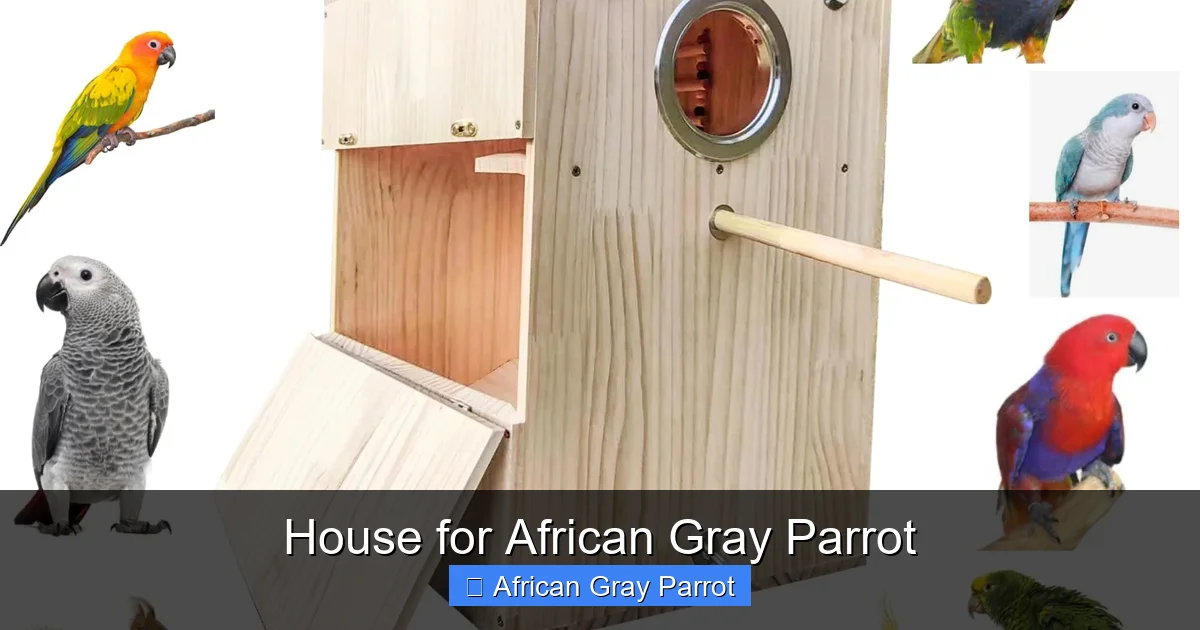
Creating the ideal house for African Gray Parrot companions means prioritizing space, safety, and mental stimulation. A properly sized cage with appropriate bar spacing, diverse perches, and rotating toys prevents boredom and supports this intelligent species’ complex needs for a lifetime of wellbeing.
Key Takeaways
- Minimum cage dimensions: 36 x 24 x 48 inches (W x D x H) for a single African Gray, but larger is always better for long-term health
- Bar spacing matters: Choose 3/4 to 1 inch spacing to prevent head trapping while allowing climbing
- Material safety is critical: Powder-coated or stainless steel cages only — avoid zinc, lead, or flaking paint
- Perch variety prevents foot problems: Provide natural wood, rope, and platform perches at different diameters
- Daily out-of-cage time is non-negotiable: African Grays need 3-4 hours minimum of supervised freedom daily
- Environmental enrichment rotates weekly: Swap toys, foraging puzzles, and destructible items to maintain engagement
- Location affects behavior: Place the cage in a social area away from drafts, direct sun, and kitchen fumes
Quick Answers to Common Questions
What is the minimum cage size for an African Gray Parrot?
The absolute minimum is 36 inches wide x 24 inches deep x 48 inches tall, but larger is strongly recommended for long-term wellbeing.
Can African Grays live in a cage with 1-inch bar spacing?
Yes, 3/4 to 1 inch bar spacing is ideal — it prevents head trapping while allowing natural climbing behavior.
Is stainless steel worth the extra cost for an African Gray cage?
Yes, stainless steel is non-toxic, indestructible, easy to sanitize, and lasts a lifetime, making it the safest long-term investment.
How many hours of out-of-cage time does an African Gray need daily?
African Grays need a minimum of 3-4 hours of supervised out-of-cage time every day for physical and mental health.
What perches should I avoid for an African Gray Parrot?
Avoid uniform dowel perches, sandpaper-covered perches, and plastic perches — they cause foot sores, arthritis, and bumblefoot over time.
📑 Table of Contents
- Why the Right House for African Gray Parrot Matters More Than You Think
- Understanding African Gray Parrot Housing Requirements
- Choosing the Best Cage Material and Construction
- Essential Cage Features and Accessories
- Setting Up the Interior: Zones and Flow
- Location, Location, Location: Where the Cage Lives
- Beyond the Cage: Out-of-Cage Time and Aviary Options
- Maintenance, Safety, and Long-Term Considerations
- Conclusion: Building a Home, Not Just a Cage
Why the Right House for African Gray Parrot Matters More Than You Think
Bringing home an African Gray Parrot feels a little like adopting a feathered toddler with a vocabulary that would impress a college professor. These birds are widely considered the Einsteins of the parrot world. They solve puzzles. They mimic human speech with uncanny accuracy. They form deep emotional bonds. And they live a long time — we are talking forty, fifty, sometimes sixty years.
That longevity means the house for African Gray Parrot you choose today will be their primary residence for decades. It is not just a cage. It is their bedroom, their playground, their safe zone, and their territory. Get it wrong, and you risk behavioral issues, health problems, and a very unhappy bird. Get it right, and you lay the foundation for a rich, interactive relationship that spans generations.
I have spent years talking with avian veterinarians, experienced breeders, and longtime Gray owners. The consensus is always the same: most first-time buyers underestimate what these birds need. They buy a cage that looks big in the store but feels cramped once you add perches, toys, food bowls, and a bird with a three-foot wingspan. Let us walk through everything you need to know so you can make the best choice from day one.
Understanding African Gray Parrot Housing Requirements
Species Overview and Why Housing Is Unique
There are two main types of African Gray Parrots kept as companions: the Congo African Gray and the Timneh African Gray. Congos are larger, sporting bright red tail feathers and a lighter gray body. Timnehs are smaller, darker, with a maroon tail and a horn-colored upper mandible. Both share the same fierce intelligence, emotional sensitivity, and need for space.
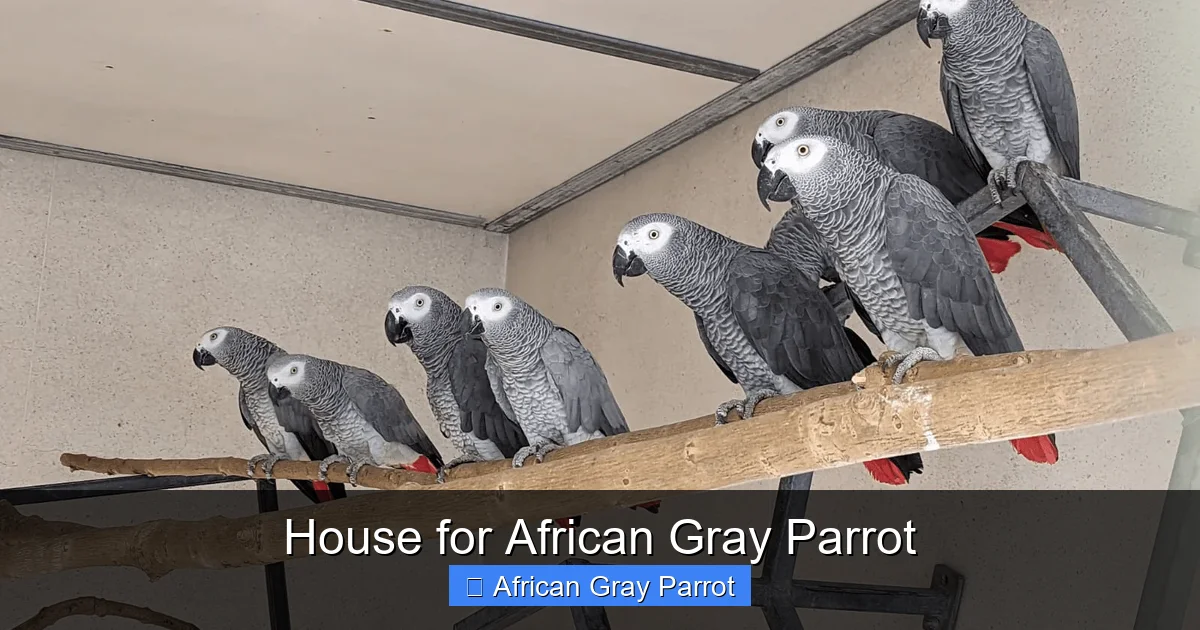
Visual guide about House for African Gray Parrot
Image source: a.storyblok.com
In the wild, these birds fly miles each day through the rainforests of West and Central Africa. They forage in flocks. They navigate complex canopy environments. They are not designed to sit still. A house for African Gray Parrot must acknowledge this biology. You cannot replicate a rainforest in a living room, but you can provide enough room to stretch, climb, flap, and explore.
African Grays are also prone to specific health issues linked to housing. Feather destructive behavior often stems from boredom or anxiety in inadequate enclosures. Bumblefoot — a painful foot infection — develops from inappropriate perch surfaces. Respiratory problems arise from poor ventilation or proximity to kitchen fumes. The cage you choose directly influences whether your bird thrives or merely survives.
Minimum vs. Optimal Cage Dimensions
Let us start with the numbers. The absolute minimum cage size for a single African Gray is 36 inches wide, 24 inches deep, and 48 inches tall. That is the floor. Not the goal. If you have the space and budget, aim for 48 x 36 x 60 inches or larger. Width and depth matter more than height because Grays move horizontally — they climb, sidle, and hop from perch to perch.
Why does the minimum feel so large? Picture this: your bird needs a sleeping perch, a feeding station, a water station, at least three toy zones, a foraging area, and room to turn around without tail feathers hitting bars. Add a couple of ladders and a swing, and that 36-inch width disappears fast. A cramped cage leads to clipped wing feathers hitting bars, tail damage, and chronic stress.
If you are housing a pair — which is rare and only for experienced owners — you need an aviary, not a cage. We will touch on that later. For 99 percent of companion situations, one bird, one large cage, and abundant out-of-cage time is the standard.
Bar Spacing and Orientation: Safety First
Bar spacing is where many well-meaning owners make dangerous mistakes. African Grays have heads just small enough to squeeze into gaps that look safe. The sweet spot is 3/4 inch to 1 inch. Go wider, and your bird can get stuck. Go narrower, and climbing becomes difficult — and Grays love to climb.
Horizontal bars on at least two sides are non-negotiable. Vertical-only bars force the bird to climb like a ladder, which is awkward and limits movement. Horizontal bars let them shimmy sideways, hang upside down, and navigate naturally. Look for cages with horizontal bars on the front and back at minimum. All four sides is ideal.
Bar thickness matters too. Thin bars bend. A determined Gray can warp thin gauge wire, creating escape gaps or sharp edges. Look for 3mm or thicker. Stainless steel cages often use 4mm or 5mm bars — virtually indestructible. Powder-coated cages vary, so check specifications before buying.
Choosing the Best Cage Material and Construction
Stainless Steel: The Gold Standard
If budget allows, stainless steel is the only material you should consider for a permanent house for African Gray Parrot. It does not rust. It does not chip. It does not leach heavy metals. It withstands the strongest beak pressure. It cleans easily with steam or vinegar solutions. And it lasts the bird’s lifetime — which means it likely outlasts you.
The downside is cost. A quality stainless cage in the optimal size range runs $2,000 to $4,000 or more. Brands like Kings Cages, A&E Cage Company, and Primate Products (yes, they make bird cages too) are respected in the community. Used stainless cages occasionally appear on enthusiast forums and can be a smart buy if you inspect welds and hinges carefully.
One caveat: not all “stainless” cages are created equal. Some use 304-grade stainless, which is excellent. Others use 200-series alloys with lower corrosion resistance. Ask for the grade. Reputable manufacturers will tell you. If they won’t, walk away.
Powder-Coated Steel: The Practical Alternative
Most owners choose powder-coated cages. High-quality powder coating over heavy-gauge steel provides years of service at a fraction of stainless cost — typically $600 to $1,500 for appropriate sizes. The coating resists chipping better than paint, but it is not invincible. A determined Gray will eventually chip corners, especially around doors and food bowl openings.
When chips happen, you face a decision: touch up with bird-safe epoxy paint, or replace the cage. Powder coating cannot be reapplied at home. Once the integrity is compromised, the underlying steel can rust, and rust dust is toxic if ingested. Inspect your cage monthly. Run your fingers along every bar, weld, and corner. Feel for rough spots before your bird finds them with their tongue.
Stick with reputable brands: Prevue Hendryx (their Flight Cage and Empire lines), A&E Cage Company, Vision, and Yaheetech’s higher-end models. Avoid unbranded imports with no manufacturer warranty. The savings are not worth the risk of lead or zinc in the coating.
Materials to Avoid Completely
Galvanized wire cages — the kind sold for outdoor aviaries or cheap “flight cages” — are dangerous for African Grays. The zinc coating creates a toxic risk. Grays explore everything with their beaks. They will ingest zinc over time. Zinc toxicity causes lethargy, weight loss, seizures, and death. It is not worth the $200 savings.
Painted cages, vintage cages, and repurposed furniture cages fall into the same category. Lead paint was common before 1978. Even modern paints may contain volatile organic compounds (VOCs) that off-gas into your bird’s sensitive respiratory system. Birds have air sacs that extend throughout their bodies. They breathe deeper and faster than mammals. What smells faint to you can be lethal to them.
Acrylic cages look modern and offer great visibility, but they scratch easily, retain heat, and lack climbing surfaces. They work as travel carriers or secondary day cages, not primary housing. Wood cages? Beautiful, but impossible to sanitize, and a Gray will destroy the interior in weeks. Stick with metal.
Essential Cage Features and Accessories
Door Design: Access and Security
You will open that main door multiple times a day. It needs to be wide — at least 18 inches — so you can reach in comfortably, place large toys, and retrieve your bird without squeezing. Double doors (one large, one small) are ideal. The small door serves for quick food changes without a full escape opportunity.
Locks are critical. African Grays are escape artists. They watch you. They learn. A simple slide latch lasts about a week. You need a lock that requires opposable thumbs or a specific sequence: padlock, quick-link with a wrench-tightened nut, or a manufacturer’s bird-proof latch. Some owners add carabiners as backup. Whatever you choose, test it daily. If you can open it with one hand while holding coffee, your bird can probably figure it out.
Feeder doors — those small flip-up ports for food bowls — should also lock. Many cages come with gravity-fed bowls that sit in external cups. These are convenient but check that the bird cannot lift the cup and squeeze through the opening. Some owners remove external feeders entirely and use internal bowls on the cage floor or platform perches to eliminate this risk.
Removable Trays and Grates: Cleaning Reality
You will clean this cage every day. Paper changes. Scrubbing perches. Washing bowls. A deep clean weekly. The tray system determines whether this takes ten minutes or an hour. Look for a pull-out tray that slides smoothly on tracks, not one that catches or requires lifting over a lip. The tray should be metal, not plastic — plastic warps, cracks, and absorbs odors.
A grate above the tray separates the bird from droppings and discarded food. This is essential for hygiene. However, the grate bars must be spaced so feet cannot get caught. Some owners cover the grate with newspaper or cage liner for comfort, changing it daily. Others remove the grate entirely and use deep litter (paper pellets) with daily spot cleaning. Both work if you stay consistent.
Seed guards — the acrylic or metal skirts around the cage base — reduce mess on your floor. They are not 100 percent effective. Grays are messy eaters. They fling food for sport. Accept that you will vacuum daily. A good seed guard just reduces the radius.
Perch Strategy: The Foundation of Foot Health
This is where many setups fail. A cage comes with two dowel perches. You throw them away. Dowel perches are uniform cylinders. They exert pressure on the same spot of the foot constantly. That causes pressure sores, arthritis, and bumblefoot. Your house for African Gray Parrot needs a perch portfolio.
Start with a natural manzanita or dragonwood perch as the main sleeping perch — high, secure, irregular diameter. Add a rope perch (cotton or sisal, not nylon) for texture and grip variety. Include a flat platform perch or corner shelf for resting flat-footed. Add a cement or conditioning perch near the food area — but only one, and not the highest perch — to help nail maintenance without overuse.
Diameter variety is key. Your bird’s feet should wrap around the perch about 2/3 of the way. Not touch. Not barely reach. Measure your bird’s foot span and buy perches ranging from 1 inch to 2.5 inches. Rotate positions monthly. Replace natural wood annually or when heavily soiled. Rope perches need replacement when frayed — loose threads wrap around toes and cut off circulation.
Food and Water Systems
Stainless steel bowls are the standard. They do not harbor bacteria in scratches like plastic. They do not tip easily. Get at least four: two for water (one backup), two for food (pellets and fresh). Mount them at mid-height, not the cage floor — floor bowls collect droppings. Not at the highest perch — dominant birds may guard them.
Foraging bowls and puzzle feeders should supplement, not replace, standard bowls. African Grays need to work for food. It is mental stimulation. But they also need reliable access. Never make the only food source a puzzle. That causes anxiety, not enrichment.
Water bottles are controversial. Some owners swear by them for cleanliness. Others argue they are unnatural and can malfunction. If you use one, provide a backup bowl. Check the ball bearing daily. A stuck bottle means a dehydrated bird in hours.
Setting Up the Interior: Zones and Flow
Creating Functional Zones
Think of the cage interior as a studio apartment. You need a sleeping zone, a dining zone, a play zone, and a hygiene zone. They should not overlap. The sleeping zone is the highest rear corner — quiet, dark, with the most comfortable perch. No toys directly above it. No food bowls beside it. This is the sanctuary.
The dining zone sits mid-cage, accessible but not under perches where droppings fall. Place food and water here. Add a foraging toy nearby but not blocking bowls. The play zone occupies the front and sides — ladders, swings, hanging toys, destructible items. This is where energy burns. The hygiene zone is the cage floor or a designated platform with a shallow bath dish. Grays love water. Offer a bath 2-3 times weekly.
Flow matters. Your bird should move from sleep to eat to play without backtracking through a toy gauntlet. Watch your bird for a week. Note their paths. Adjust accordingly. A well-zoned cage reduces territorial aggression and encourages exploration.
Toy Rotation: The Anti-Boredom Protocol
African Grays have the cognitive capacity of a 4-5 year old human child. Imagine giving a toddler the same three toys for five years. They would destroy the house. Your bird will destroy their feathers. Toy rotation is not optional. It is mental health maintenance.
Maintain a toy library of 15-20 items. Keep 4-6 in the cage at once. Swap two every Monday. Introduce one new toy monthly. Categories to cover: destructible (wood, paper, palm), manipulative (puzzle boxes, nuts in shells, bolts), auditory (bells, rattles), foot toys (small items to hold), and foraging (hidden treats). No two toys of the same type at once.
Inspect toys daily. Remove anything with loose parts, sharp edges, or frayed rope. A swallowed toy fragment causes crop impaction. A tangled toe loses circulation in minutes. This is not paranoia. It is the reality of living with a curious, powerful beak.
Lighting and Environmental Controls
Your house for African Gray Parrot exists within your home’s environment. You control that environment. Full-spectrum UVB lighting is essential if your bird does not get daily unfiltered sunlight (through a window does not count — glass blocks UVB). A 5.0 UVB bulb on a 12-hour timer supports vitamin D synthesis, feather quality, and hormonal balance. Replace bulbs every 6 months — UV output drops before visible light dims.
Temperature range: 65-80°F (18-27°C). Grays tolerate cooler better than overheating. Never place the cage near heating vents, radiators, or direct afternoon sun. Drafts from AC units or leaky windows cause respiratory distress. A digital thermometer/hygrometer on the cage exterior lets you monitor at bird level.
Humidity: 40-60 percent. Dry air causes dry skin, poor feather condition, and respiratory irritation. A room humidifier in winter helps. Avoid essential oil diffusers, scented candles, air fresheners, and non-stick cookware fumes (Teflon toxicosis kills birds fast). The kitchen is the worst place for a bird cage. Period.
Location, Location, Location: Where the Cage Lives
Social Integration vs. Overstimulation
African Grays are flock animals. They need to see and hear their humans. A cage in a spare bedroom creates a lonely, screaming bird. The living room, family room, or home office — wherever the family gathers — is ideal. Your bird should be part of daily life: meals, conversations, TV time, homework sessions.
But there is a line. The cage should not be in the main traffic path where people brush past constantly. Not under a ceiling fan (shadows from rotating blades trigger panic). Not facing a window with predator birds outside (hawks, crows). Not next to a loud speaker or TV. Corner placement with two walls behind provides security. One wall minimum.
Height matters. The cage bottom should be at least chest-high for you. Floor-level cages make birds feel vulnerable. Eye-level or slightly above lets them observe without threat. If you use a cage stand, ensure it is stable — no wobble when the bird flaps vigorously.
Sleep Environment: Darkness and Quiet
African Grays need 10-12 hours of solid sleep. Not “quiet-ish.” Not “TV on low.” Dark. Quiet. If your living room stays active until midnight, you need a separate sleep cage in a quiet room, or a cage cover that blocks light completely. Breathable, dark fabric — not a sheet that lets light through.
Some owners use a smaller sleep cage in a spare room. The bird transfers at night. This works well if the main cage is in a high-traffic area. The sleep cage needs only a comfortable perch, water, and a soft toy. No foraging. No puzzles. Just rest.
Consistency is everything. Same bedtime. Same wake time. Birds are photoperiodic — their hormones respond to day length. Erratic schedules trigger hormonal behavior: screaming, nesting, aggression. A timer on the cage lights helps maintain rhythm even when your schedule shifts.
Beyond the Cage: Out-of-Cage Time and Aviary Options
Daily Freedom: The Non-Negotiable Requirement
No cage is big enough. Read that again. No cage is big enough for an African Gray to live in 24/7. These birds need 3-4 hours minimum of supervised out-of-cage time daily. More on weekends. This is not playtime. This is biological necessity. Flight maintains muscle tone, respiratory health, and mental balance.
Bird-proof the room first. Cover windows (birds do not understand glass). Remove toxic plants. Hide electrical cords. Secure other pets. Close toilet lids. Turn off ceiling fans. Remove standing water. Check for gaps behind appliances. A Gray can squeeze into spaces you would not believe.
Provide a play gym or play stand — a dedicated out-of-cage station with perches, toys, and foraging opportunities. This becomes their “home base” during freedom time. Place it near the cage for easy return. Train a recall cue (“come here” or a whistle) so you can guide them back without chasing. Chasing breaks trust.
If your bird is flighted (not clipped), they will explore. Let them. Supervise. Intervene only for safety. If clipped, they need help navigating — ladders, ropes, bridges between furniture. Clipping is a personal choice with welfare implications. Discuss with your avian vet. Many behaviorists now advocate for flighted birds with proper training.
Outdoor Aviaries: The Dream Setup
If you have a yard, a safe outdoor aviary transforms your bird’s life. Sunlight. Fresh air. Rain baths. Natural sounds. Insects to hunt. An aviary does not replace the indoor cage — it supplements it. Your bird still sleeps inside. But daytime hours in an aviary provide enrichment no indoor setup can match.
Aviary requirements: double-door safety porch (so escapes are caught before freedom). 1/2 inch hardware cloth (not chicken wire — raccoons tear it). Shade cloth over 50 percent of roof. Solid roof section for rain protection. Perches at varying heights. Bathing station. Lockable food stations. Predator-proof foundation (concrete apron or buried wire).
Never leave your bird unattended outdoors. Hawks, raccoons, snakes, and neighborhood cats are patient. A determined predator will spend hours testing an aviary. You are the ultimate security system. Weather matters too: bring them in below 60°F or above 85°F, during storms, or high winds.
Travel and Temporary Housing
You need a travel carrier. Vet visits. Emergencies. Evacuations. A hard-sided carrier with a secure latch, ventilation, and a perch is essential. Get your bird used to it before you need it. Leave it open in the room with treats inside. Take short car rides to positive destinations (not just the vet).
A collapsible travel cage or a second smaller cage is useful for hotel stays or family visits. Same setup principles apply: perches, toys, familiar bowls. Bring your bird’s water from home if possible — some birds refuse unfamiliar water. Pack a first aid kit: styptic powder, gauze, vet wrap, emergency vet numbers.
Maintenance, Safety, and Long-Term Considerations
Daily, Weekly, Monthly Routines
Daily: Change cage liner. Wash food and water bowls with hot soapy water. Rinse thoroughly. Spot-clean perches and bars. Check toys for damage. Refill foraging toys. Wipe down play gym. Observe droppings — changes signal illness early.
Weekly: Deep clean. Remove everything. Scrub cage bars, tray, grate with bird-safe cleaner (vinegar/water or F10 veterinary disinfectant). Rinse until no scent remains. Soak perches and toys. Rotate toy library. Inspect welds, hinges, locks. Trim nails if needed (or schedule vet).
Monthly: Check powder coating for chips. Test all locks. Lubricate door hinges with food-grade silicone. Replace rope perches if frayed. Evaluate cage layout — does it still work? Upgrade if your bird has outgrown it (happens with young birds).
Annually: Professional avian vet checkup including blood work. Full cage inspection. Consider upgrading toys to match cognitive development. Review emergency plan. Update microchip info if applicable.
Common Hazards and How to Prevent Them
Heavy metal toxicity: Test any questionable metal with a lead/zinc test kit (hardware store). Remove suspicious items. Use only stainless steel hardware for toy making.
Entanglement: Trim loose threads immediately. Avoid happy huts, snuggle tents, and fabric toys with frayed edges. Crops and toes get caught. Birds panic and injure themselves severely.
Escape: Double-check locks every time you close the door. Add a carabiner on the main door as backup. Microchip your bird. Keep current photos and band numbers accessible.
Teflon toxicosis: Never use non-stick cookware, self-cleaning ovens, space heaters with PTFE coatings, or hair dryers near your bird. The fumes are odorless and fatal within minutes. Switch to ceramic, cast iron, or stainless cookware.
Other pets: Dogs and cats are predators. Never trust them unsupervised. Even a “gentle” dog can kill a bird in one shake. Separate rooms. Closed doors. No exceptions.
Budgeting for the Long Haul
Let us talk numbers. A proper house for African Gray Parrot setup:
- Quality cage: $800 – $3,500
- Perches (initial set): $80 – $150
- Toy library (starter): $150 – $300
- Play gym/stand: $150 – $400
- Travel carrier: $80 – $200
- UVB lighting setup: $60 – $120
- Cleaning supplies (first year): $100
- Avian vet fund (annual): $300 – $600
Total first year: $1,700 – $5,400+. Ongoing annually: $800 – $1,500 for toys, perches, vet, food. Over 50 years? You do the math. This is not a cheap pet. But the returns — companionship, laughter, wonder — are immeasurable if you are prepared.
Conclusion: Building a Home, Not Just a Cage
Choosing and setting up a house for African Gray Parrot is one of the most impactful decisions you will make as a guardian. It shapes your bird’s physical health, mental wellbeing, and the quality of your relationship for decades. The cage is not a container. It is the launchpad for a life shared with one of nature’s most remarkable minds.
Start with the largest stainless or high-quality powder-coated cage you can accommodate. Fill it with thoughtfully chosen perches, a rotating toy library, and safe feeding systems. Place it where your bird feels included but secure. Give them daily freedom. Provide outdoor time when possible. Maintain it rigorously. And never stop learning — your bird will teach you things no article can.
If you are reading this before bringing your Gray home, congratulations. You are already ahead of the curve. If you are reading this to improve an existing setup, it is never too late. Birds are resilient. They forgive. They adapt. And they thrive when we listen to what their wild hearts need.
Your African Gray is waiting. Build them a home worthy of their brilliance.
Frequently Asked Questions
Can I keep my African Gray Parrot in a cage in the kitchen?
No, the kitchen is dangerous due to Teflon fumes from non-stick cookware, cooking smoke, hot surfaces, and cleaning chemicals. These can cause fatal respiratory distress in birds within minutes.
Do African Grays need a sleep cage separate from their main cage?
A separate sleep cage in a quiet, dark room is ideal if your main cage area stays active past the bird’s bedtime. African Grays need 10-12 hours of uninterrupted darkness for hormonal and psychological health.
How often should I rotate my African Gray’s toys?
Rotate 2-3 toys weekly and introduce one new toy monthly. Maintain a library of 15-20 toys across categories (destructible, foraging, puzzle, foot, auditory) to prevent boredom and feather destructive behavior.
Is it safe to use a galvanized wire cage for an African Gray?
No, galvanized cages pose a zinc toxicity risk. African Grays explore with their beaks and will ingest zinc over time, leading to heavy metal poisoning. Only stainless steel or high-quality powder-coated cages are safe.
What temperature range is safe for an African Gray Parrot?
Keep the environment between 65-80°F (18-27°C). Avoid drafts, direct sunlight, heating vents, and sudden temperature changes. Use a digital thermometer at cage level to monitor conditions.
Can I use a happy hut or snuggle tent in my African Gray’s cage?
No, fabric huts and tents are entanglement hazards. Loose threads wrap around toes and necks, causing injury or death. They also trigger hormonal nesting behavior. Provide a flat platform perch or corner shelf for resting instead.