
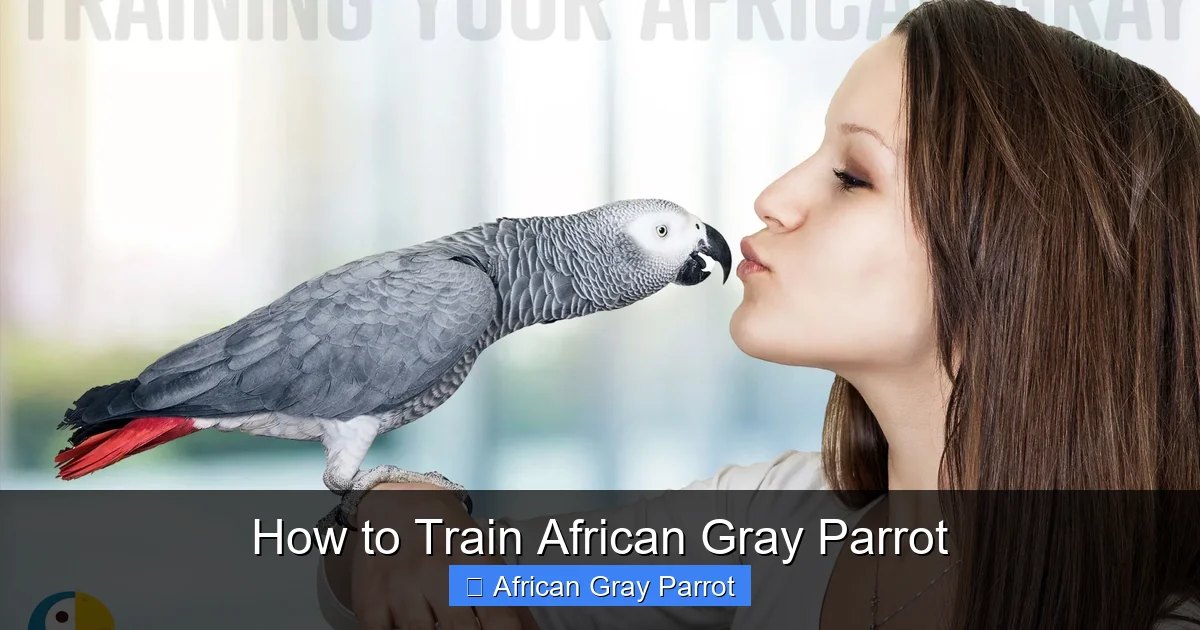
Training an African Grey parrot begins with building trust through consistent, positive interactions, using short, reward‑based sessions that reinforce desired behaviors. Patience and clear cues turn mimicry into meaningful communication, while a structured routine prevents boredom and encourages mental stimulation.
Key Takeaways
- Start training early: Builds trust and accelerates learning capacity.
- Use positive reinforcement: Reward desired behaviors with treats and praise immediately.
- Keep sessions brief: Limit to 5-10 minutes to maintain engagement.
- Master basics first: Teach “step up” and “step down” before complex tricks.
- Provide mental enrichment: Offer puzzles, foraging toys, and varied activities daily.
- Socialize consistently: Prevents aggression, screaming, and feather destructive behaviors.
- Practice patience always: African Grays learn at individual paces; never rush progress.
Why This Matters: Understanding the Problem with Parrot Training
So you brought home an African Grey. Congratulations. You have officially invited a tiny, feathered Einstein with the emotional range of a toddler and the volume of a rock concert into your life. It is exciting. It is also terrifying.
Most people search for How to Train African Gray Parrot because they are staring at a bird that screams at the microwave, bites when you try to say hi, or plucks its own feathers out of boredom. I have been there. My first Grey, Pepper, used to imitate the smoke detector battery chirp at 3 AM just for fun. Funny? Maybe once. For three months? Not so much.
The problem isn’t the bird. The problem is usually us. We expect dogs with wings. We want obedience. But Greys don’t do obedience. They do negotiation. They do partnership. If you try to dominate a Grey, you lose a finger or a friend. If you learn their language, you gain a companion for fifty years.
This guide isn’t about tricks. It is about communication. It is about building a relationship where the bird wants to listen. That is the real secret behind How to Train African Gray Parrot success. Let’s walk through it together, step by step.
What You Need Before You Start
You don’t need a degree in animal behavior. You do need a few basics. Think of this as your toolkit. Without these, you are just guessing. Guessing leads to bites.
Visual guide about How to Train African Gray Parrot
Image source: atractivopets.com
- High-value treats. Not seed mix. Think slivers of almond, walnut, pistachio, or a specific dried fruit they go crazy for. Find the “currency” your bird values.
- A clicker or a consistent marker word. “Good!” or a click sound. This marks the exact second the bird does the right thing.
- A target stick. A chopstick, a wooden dowel, or a fancy telescoping pointer. This teaches them to follow a point without using your hand as a lure.
- A training perch. A simple T-stand or a dedicated spot away from the main cage. Neutral territory reduces cage aggression.
- Patience. Real patience. Not the “I waited five minutes” kind. The “I will do this for three months straight” kind.
- A notebook or phone app. Track what works. Track what treats fail. Track the time of day. Data beats memory every time.
That is it. No magic wands. Just consistency and the right snacks. If you have these, you are ready to learn How to Train African Gray Parrot effectively.
Step-by-Step Guide to How to Train African Gray Parrot
Step 1: Learn to Read the Body Language
Before you ask for a single “step up,” you need to speak bird. Greys are subtle. A dilated pupil (pinning) can mean excitement or aggression. Feathers slicked down tight? Fear. Feathers puffed? Relaxed or sick. Tail fanning? Overstimulation.
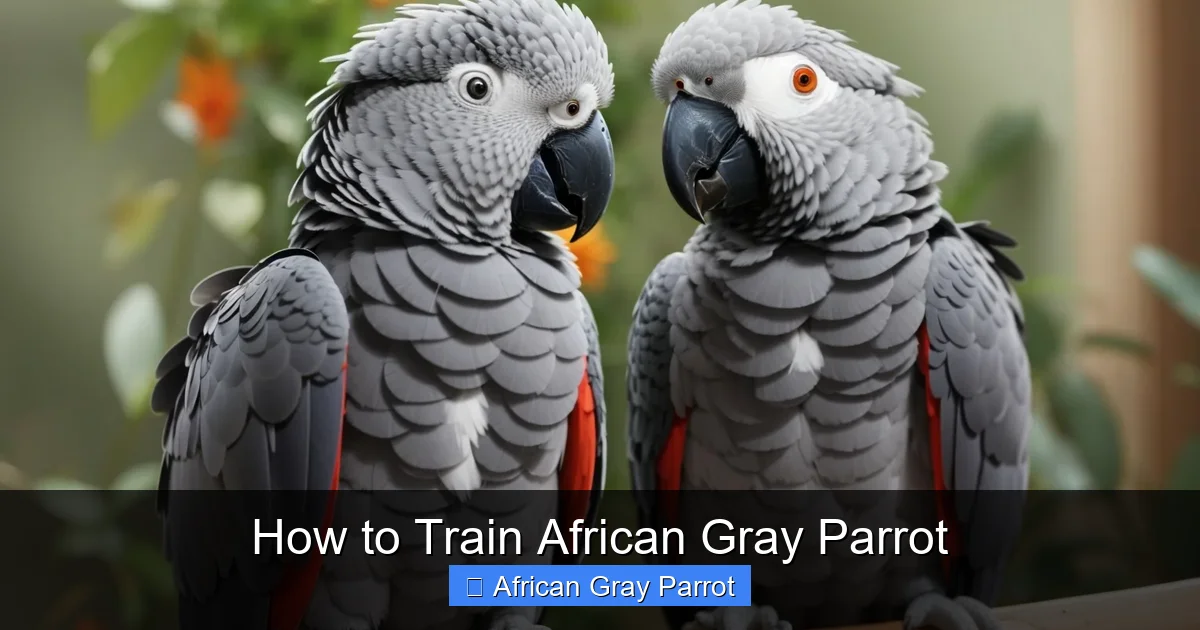
Visual guide about How to Train African Gray Parrot
Image source: atractivopets.com
I spent two weeks just sitting near Pepper’s cage with a book. No talking. No touching. Just watching. I learned his “I’m about to bite” face. It saves skin. If you miss the signs, you push the bird past its threshold. That breaks trust. Trust is the only currency that matters here.
Tip: Film your bird for ten minutes a day. Watch it back in slow motion. You will see micro-movements you miss in real time.
Step 2: Master the “Step Up” Without Force
This is the foundation. Never push on the bird’s chest. Never scoop them up against their will. That teaches them hands are scary.
Instead, hold the target stick near the bird. Click and treat when they look at it. Then click when they lean. Then click when they touch it. Move the stick so they have to step onto your hand (or a perch) to reach it. Say “Step up” as the action happens.
Do this five times. Stop. Come back in an hour. Short sessions beat long battles. This positive reinforcement method is the core of How to Train African Gray Parrot protocols used by professionals.
Step 3: Target Training for Movement
Once “Step Up” is solid, use the target stick to move the bird from point A to point B. Cage to play stand. Play stand to scale. Floor to cage top.
Why? It gives the bird agency. They choose to follow the stick. They aren’t being manhandled. This builds confidence. A confident Grey talks. A scared Grey bites.
Keep the stick low. Don’t make them stretch uncomfortably. Click the moment the beak touches the tip. Treat immediately. If they ignore it, you are asking too much. Lower the criteria.
Step 4: The “Station” Command
This is a game changer for daily life. Teach the bird to go to a specific spot (a perch, a mat, a scale) and stay there.
Place the target on the station. Click when they touch it. Then delay the click. One second. Two seconds. Build duration. Name it “Station” or “Place.”
Use this when you open the front door. Use it when company comes over. Use it during dinner. It keeps them safe and off your shoulder when you need two hands. It is a critical safety behavior in any How to Train African Gray Parrot curriculum.
Step 5: Recall Training (Fly to Me)
If your bird is flighted, recall is non-negotiable. It saves lives. Start inside the cage or a small room. Hold the target stick. Call their name or use a whistle. Click when they launch. Treat when they land on you.
Increase distance slowly. Add distractions slowly. Practice from different rooms. Practice from the floor to your hand.
If your bird is clipped, you still need a “come here” signal for walking/climbing. The principle is identical. Make coming to you the best game in the house.
Warning: Never call a bird to you for something they hate (meds, nail trim, going back in the cage). Go get them for the bad stuff. Call them only for the good stuff.
Step 6: Voluntary Nail Trims and Towel Work
Vet visits are stressful. Towel restraint is terrifying if not trained. Start now. Lay a hand towel on your lap. Toss treats on it. Click for stepping on it. Click for sitting on it.
Gradually drape it over your hand. Then over their back for a split second. Click. Treat. Build up to wrapping them gently.
For nails: Use a nail file or rotary tool. Touch one toe. Click. Treat. Touch the tool to the toe (off). Click. Treat. Turn it on (far away). Click. Treat. Bring it closer. This takes weeks. Do not rush. A bird that accepts grooming voluntarily is a bird that trusts you.
Step 7: Teaching Speech and Sounds on Cue
Greys talk. That is why you got one. But random screaming isn’t talking. Put vocalizations on cue.
When the bird makes a sound you like (a word, a whistle, a cute noise), click and say “Talk!” or “Sing!” then treat. Eventually, you say “Talk,” and they offer a sound.
This gives you control. You can ask for “Quiet” (reward silence) and “Talk” (reward noise). It channels the noise. It turns screaming into a conversation. This is a fun part of How to Train African Gray Parrot ownership.
Step 8: Harness Training for Outdoor Adventures
Sunlight is vital for Vitamin D. Fresh air is enrichment. But flight risk is real. A harness is the answer.
Do not just put it on. Show the harness. Click. Treat. Touch the bird with it. Click. Treat. Drape it over the back. Click. Treat. Put the head through the loop (huge milestone). Click. Jackpot treat (five almonds at once).
Let them wear it inside for two minutes. Then five. Then walk to the door. Then step outside. If they freeze, you went too fast. Back up. This process takes months. I am not kidding. But a harness-trained Grey sees the world.
Step 9: Puzzle Toys and Foraging Training
A bored Grey destroys furniture. A busy Grey sleeps well. You have to teach them how to play.
Start easy. A paper cup with a treat inside. Show them. Let them destroy it. Next, a treat wrapped in a coffee filter. Then a cardboard box with holes. Then commercial puzzle toys.
Rotate toys weekly. Hide food in different spots daily. Make them work for 50% of their diet. This isn’t “spoiling.” This is species-appropriate care. It prevents feather plucking and screaming.
Step 10: Generalization and Maintenance
The bird steps up in the living room. Great. Will they step up in the bathroom? At the vet? For your partner? For a stranger?
Behaviors don’t transfer automatically. You must practice everywhere. With everyone. In different lighting. With different backgrounds.
Schedule two five-minute sessions a day. Forever. Training isn’t a phase. It is a lifestyle. That is the honest truth about How to Train African Gray Parrot mastery.
Pro Tips & Common Mistakes to Avoid
I have made every mistake in the book. Here are the ones that hurt the most.
- Mistake: Training when you are tired. Birds read micro-expressions. If you are frustrated, they know. They will test you. End the session before you snap.
- Mistake: Using the “Step Up” to put them away. If “Step Up” always means “Fun ends,” they stop stepping up. Step up for head scratches. Step up for a view. Step up for a treat. Make it random.
- Pro Tip: The “Jackpot” Reward. For a breakthrough (first harness, first nail file touch), give a massive reward. A whole walnut. A grape. A cuddle session. Mark the moment big time.
- Mistake: Shoulder sitting. Cute until they bite your earlobe or fly into a ceiling fan. Keep them on your hand or a perch. Shoulder is a privilege for advanced, trusted birds only.
- Pro Tip: Morning sessions. Birds are sharpest after breakfast. Train then. Evening sessions are for easy review only.
- Mistake: One person does all the work. If only you train, the bird bonds only to you. Everyone in the house must feed, clean, and train. Even the kids (supervised).
- Pro Tip: Video your sessions. You will see your own late clicks. You will see the bird’s calming signals you missed. It is the fastest way to improve your technique.
FAQs About How to Train African Gray Parrot
How long does it take to train an African Grey?
It never ends. Seriously. Basic cues like “Step Up” take days or weeks. Complex chains like harness training take months. Behavioral issues like screaming can take years to reshape. Think in months, not days. Consistency beats speed.
My bird bites me when I ask him to step up. What do I do?
Stop asking. Go back to target training. He is saying “No” the only way he can. Respect the “No.” Build the “Yes” with the target stick. Make stepping up the easiest, most rewarding choice. Never punish a bite. It confirms hands are dangerous.
Can you train an older, rehomed African Grey?
Absolutely. My Pepper was eight and had three homes before me. He learned recall, harness, and stationing. It takes longer to undo bad associations. But the brain stays plastic. Patience is just higher.
What treats work best for training?
It varies by bird. Mine kills for pine nuts and dried mango. Others want sunflower seeds or a specific pellet. Test ten items. Rank them. Use the top three only for training. Keep the rest for the bowl. Value drives motivation.
Should I clip my bird’s wings to make training easier?
I don’t. Flighted birds are more confident. They have an “out.” Clipped birds often bite because they can’t flee. Training a flighted bird requires better skills (recall is mandatory), but the relationship is more honest. Your call. Research both sides deeply.
How do I stop the screaming?
First, rule out pain or illness. Vet check. Then, ignore the scream completely. Leave the room. Return the second there is silence. Click and treat silence. Teach “Whisper” or a quiet contact call. Ensure foraging and sleep (12 hours dark) are perfect. Screaming is usually unmet needs.
Is clicker training necessary?
No. A consistent word (“Yes!” or “Good!”) works fine. The clicker is just precise. It bridges the gap between action and treat. If you fumble the clicker, use your voice. Consistency matters more than the tool.
Final Thoughts
Training an African Grey is not a weekend project. It is a daily conversation. Some days you feel like a genius. Some days you feel like the bird is training you (spoiler: they are).
Focus on the relationship. Focus on trust. Focus on giving them choices. The tricks—talking, waving, recycling—are just byproducts of a bird that feels safe and heard.
Start today. Pick one thing. Target training. Five minutes. Put the phone away. Look at your bird. That is how you begin How to Train African Gray Parrot the right way. You’ve got this. And hey, save me an almond for the road.