
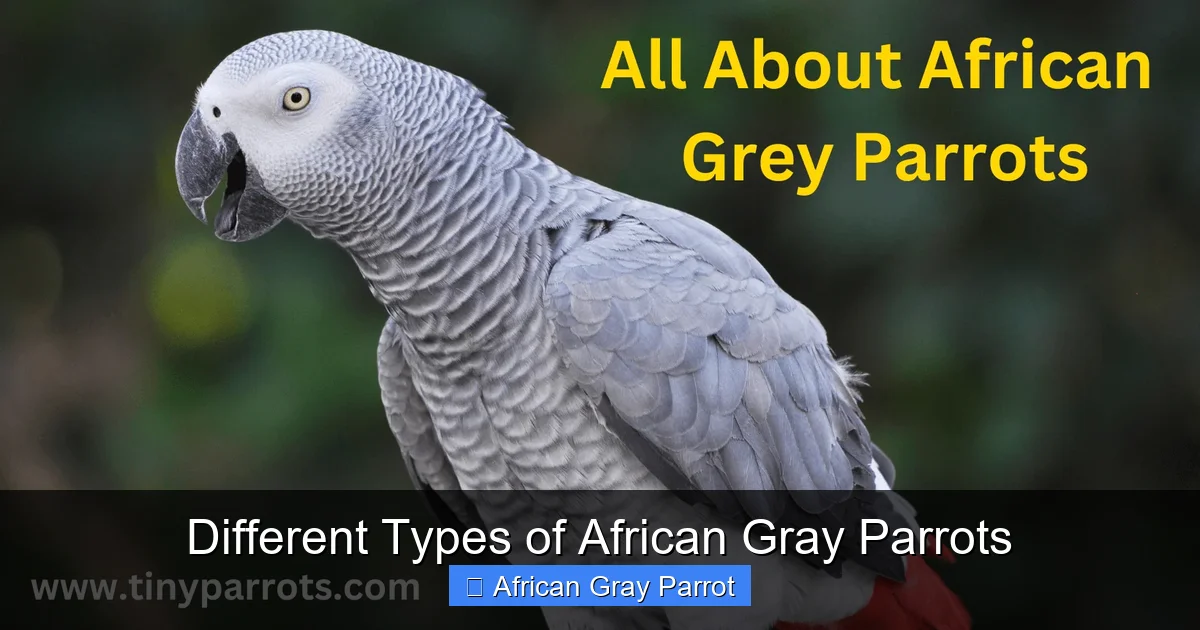
African Gray Parrots come in two main subspecies: the larger Congo African Gray and the smaller, darker Timneh African Gray. Both are renowned for exceptional intelligence and talking ability, but they differ in size, tail color, and temperament. Understanding these differences helps you choose the perfect feathered companion for your home.
If you have ever dreamed of sharing your home with a feathered genius, you have probably looked into African Gray Parrots. These birds are famous worldwide for their smarts. They can learn hundreds of words. They can use those words in context. They can even solve puzzles that would stump a toddler. But here is the thing many new owners miss. There is not just one type of African Gray. There are actually two distinct subspecies. They look similar at first glance. But they have real differences in size, color, and personality. Knowing these differences can help you pick the bird that fits your life best.
In this guide, we will walk through everything you need to know about the different types of African Gray Parrots. We will compare the Congo African Gray and the Timneh African Gray side by side. We will talk about their physical traits. We will cover their behavior quirks. We will discuss care needs, lifespan, and cost. By the end, you will feel confident identifying each type. You will also know which one might be your perfect match. Let us dive in.
Key Takeaways
- Two Main Subspecies: The Congo African Gray and Timneh African Gray are the only two recognized subspecies of African Gray Parrots.
- Size Matters: Congo African Grays are larger, weighing 400-650 grams, while Timnehs weigh 275-375 grams.
- Tail Color Difference: Congo Grays have bright red tail feathers; Timneh Grays have darker maroon or dark gray tail feathers.
- Beak Color Varies: Congo Grays have solid black beaks; Timneh Grays have a horn-colored upper mandible with a dark tip.
- Personality Nuances: Timnehs often mature faster and may be less prone to feather plucking than their Congo cousins.
- Talking Ability: Both subspecies are world-class mimics with vocabularies exceeding 1,000 words.
- Lifespan Commitment: Both types live 40-60 years in captivity, requiring a lifetime care plan.
Quick Answers to Common Questions
What is different types of african gray parrots?
different types of african gray parrots refers to essential knowledge and techniques.
📑 Table of Contents
Meet the Two Main Types of African Gray Parrots
Scientifically, the African Gray Parrot is known as Psittacus erithacus. For a long time, experts recognized two subspecies under this name. The first is the Congo African Gray Parrot (Psittacus erithacus erithacus). The second is the Timneh African Gray Parrot (Psittacus erithacus timneh). In 2012, some taxonomic authorities elevated the Timneh to full species status (Psittacus timneh). However, in the pet trade and among most bird lovers, they are still discussed together as the two main types of African Gray Parrots. Both come from the rainforests of West and Central Africa. Both are highly social. Both are incredible talkers. But they evolved in slightly different regions. That led to some neat physical and behavioral differences.
The Congo African Gray Parrot
The Congo African Gray is the classic image most people picture. It is the larger of the two. It is often called the “CAG” by breeders and owners. This bird hails from a huge range across Central Africa. Think countries like Cameroon, Congo, Gabon, and Uganda. They live in dense lowland forests. They also visit forest edges and clearings. In the wild, they gather in large, noisy flocks. They roost together in tall trees at night. During the day, they fly long distances to feed on palm nuts, seeds, fruits, and leafy matter.
The Timneh African Gray Parrot
The Timneh African Gray comes from a smaller range in West Africa. You will find them in Guinea-Bissau, Sierra Leone, Liberia, and the western Ivory Coast. They prefer the dense upper canopy of primary rainforests. They are also seen in forest edges and mangroves. The Timneh is often called the “TAG” for short. It is smaller and darker overall. For years, it was considered just a subspecies. But many experts now treat it as a separate species. In the pet world, Timnehs are sometimes called the “gentler” Gray. We will explore if that reputation holds up.
Physical Differences: How to Tell Them Apart
You can learn to spot the difference in seconds once you know the markers. The three big giveaways are size, tail color, and beak color. Let us break each one down.
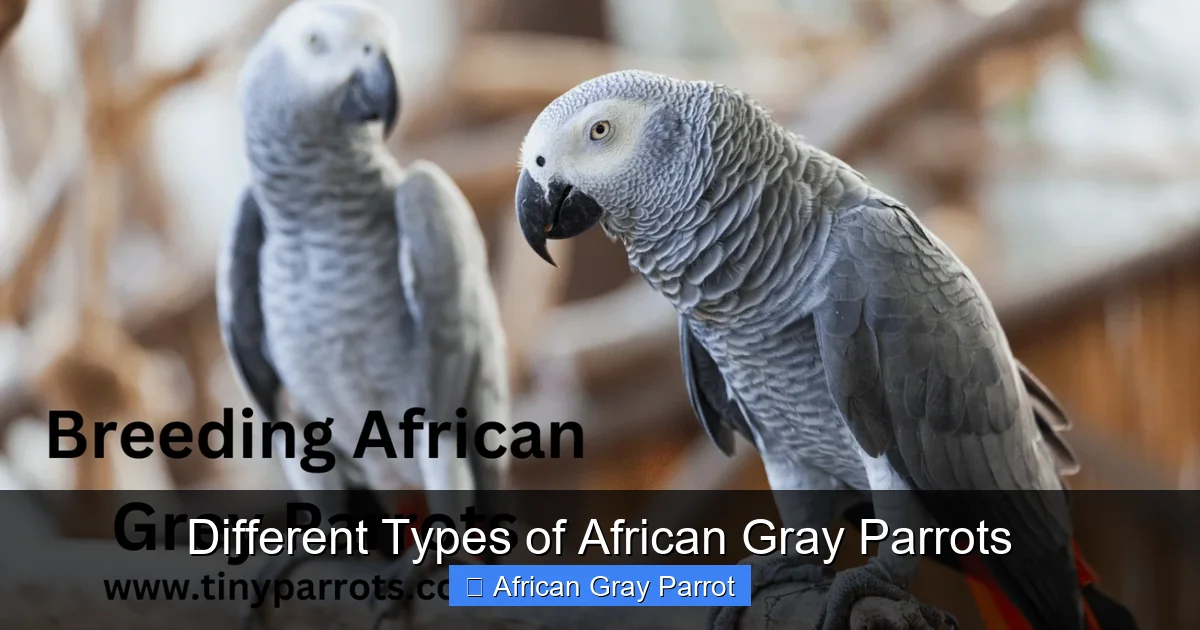
Visual guide about Different Types of African Gray Parrots
Image source: tinyparrots.com
Size and Weight
The Congo African Gray is noticeably bigger. An adult Congo weighs between 400 and 650 grams. That is roughly 14 to 23 ounces. Their body length runs about 13 to 14 inches from beak to tail tip. They have a heavier, more robust build. Their head looks larger in proportion to their body. The Timneh African Gray is petite by comparison. Adults weigh 275 to 375 grams. That is about 9.5 to 13 ounces. They measure 9 to 11 inches long. They look more compact and streamlined. If you put them side by side, the size gap is obvious. The Congo looks like a small crow. The Timneh looks like a large parakeet with a big personality.
Tail Feathers: Red vs. Maroon
This is the fastest visual ID trick. The Congo African Gray has a brilliant, bright red tail. It pops against the gray body like a stop sign. The Timneh African Gray has a tail that is dark maroon, dark gray, or even brownish-red. It is much more subdued. In low light, a Timneh tail can look almost black. This color difference is reliable in adult birds. Baby birds of both types have darker, duller tails. The true color shows after their first major molt around 12 to 18 months.
Beak Color: Black vs. Two-Tone
Look at the upper mandible (the top part of the beak). The Congo African Gray has a solid black beak. It is shiny and uniform. The Timneh African Gray has a distinct two-tone beak. The upper mandible is a pale horn color or light pinkish-gray. The tip darkens to black or dark gray. The lower mandible is usually dark. This “horn-colored” top beak is a hallmark of the Timneh. It gives them a softer, almost smiling look.
Plumage Shade and Texture
Both birds are gray. But the shade differs. The Congo African Gray wears a lighter, silvery-gray coat. The feathers have a nice, clean look. The Timneh African Gray is a darker, charcoal or slate gray. Their feathers often have a slightly scalloped or mottled appearance. This is due to pale edges on the feathers. The Timneh also tends to have a pinkish or salmon-colored patch on the upper legs (the “thighs”). Congos usually have gray legs. The skin around the eyes (the eye ring) is bare and white in both. But the Timneh sometimes shows a bit more pinkish skin near the nares (nostrils).
Personality and Behavior: Is One “Better”?
This is the question everyone asks. Is the Timneh really calmer? Is the Congo more neurotic? The short answer: every bird is an individual. But there are strong trends backed by decades of breeder and owner observations.
Congo African Gray Temperament
Congo African Grays are often described as intense. They are incredibly observant. They notice everything. A changed picture frame. A new shirt. A shift in your routine. They can be cautious with new things. This wariness can look like fear or aggression if not managed well. They tend to bond deeply with one person. They may tolerate others but reserve their best talk and cuddles for their chosen human. They are famous for “phobic” episodes. A Congo might suddenly fear a toy they loved yesterday. Or they might panic at a thunderstorm. These birds need steady, patient socialization. They thrive on routine. When they feel safe, they are playful, goofy, and astonishingly verbal. They love complex puzzles. They enjoy learning tricks. They want to be part of your flock.
Timneh African Gray Temperament
Timneh African Grays have a reputation for being more easygoing. They often adapt faster to new situations. They may be less prone to the sudden fear responses seen in Congos. Many owners say Timnehs are “steady Eddies.” They tend to be a bit more independent. They might not demand constant shoulder time. They often enjoy playing on their own with toys. They also tend to bond with the whole family more readily. That said, a poorly socialized Timneh can be just as nippy or loud as any parrot. And a well-raised Congo can be a total sweetheart. The “Timnehs are calmer” rule is a generalization, not a guarantee.
Talking Ability: A Tie for First Place
Here is the good news. Both types are world-class talkers. They are widely considered the best talking parrots on the planet. They do not just mimic. They associate words with meaning. A Gray might say “Want a nut” when they see the treat jar. They might say “Bye-bye” when you pick up keys. They can learn 1,000 to 2,000 words or more. Some famous examples like Alex (studied by Dr. Irene Pepperberg) showed cognitive skills equal to a 5-year-old child. There is no clear winner in talking talent. Some say Timnehs start talking earlier (around 6 months vs 12 months for Congos). But Congos often develop larger, clearer vocabularies long-term. Both will fill your home with words, whistles, microwave beeps, and phone rings.
Feather Plucking Risk
Feather destructive behavior (FDB) is a heartbreaking issue in captive parrots. African Grays are prone to it. Stress, boredom, poor diet, low humidity, and lack of sleep can all trigger it. Anecdotal evidence suggests Timneh African Grays may have a slightly lower incidence of plucking. Their faster maturation and steadier temperament might help. But Congos are not doomed to pluck. A Congo with a rich environment, great diet, 12 hours sleep, and daily interaction often keeps perfect feathers. The key for both is prevention. Do not wait for bare spots to improve their life.
Natural History and Wild Status
Understanding where these birds come from helps us care for them better. It also highlights a conservation crisis.
Range and Habitat
As mentioned, the Congo African Gray ranges across Central Africa. The Timneh African Gray is restricted to the Upper Guinea forest block in West Africa. This region is a biodiversity hotspot. It is also heavily fragmented by logging, farming, and mining. Both species rely on large, old trees for nesting cavities. They need diverse fruiting trees for food. Habitat loss hits them hard.
Conservation Status: A Dire Warning
Both types are in serious trouble in the wild. The IUCN Red List classifies the Gray Parrot (Psittacus erithacus) as Endangered. The Timneh Parrot (Psittacus timneh) is also Endangered. Populations have crashed by 50-90% in some areas over three generations. The main drivers are trapping for the pet trade and habitat destruction. In 2016, CITES moved both to Appendix I. This bans international commercial trade of wild-caught birds. Legal pet trade now relies on captive-bred birds only. Always verify your breeder uses legal, ethical practices. Never buy a “cheap” Gray from a questionable source. It likely fuels poaching.
Wild Diet vs. Captive Diet
In the wild, Grays eat a varied diet. Palm nuts (especially oil palm) are a staple. They also eat fruits, seeds, flowers, bark, insects, and even snails. They visit clay licks to eat soil. This neutralizes toxins in unripe seeds and provides minerals. In captivity, we must mimic this variety. A seed-only diet causes obesity, vitamin A deficiency, and liver disease. The base should be high-quality pellets (60-70%). Fresh vegetables and fruits (20-30%). Healthy nuts and seeds as treats (10%). Red palm oil is a great supplement for vitamin E and beta-carotene. Both types benefit from this plan.
Care Requirements: Housing, Diet, and Enrichment
Because they are so smart, African Grays are high-maintenance pets. They are not “cage ornaments.” They need space, time, and mental work.
Cage Size and Setup
Bigger is always better. For a Congo African Gray, the absolute minimum cage size is 36″ wide x 24″ deep x 48″ high. Bar spacing should be 3/4″ to 1″. For a Timneh African Gray, you can go slightly smaller: 32″ x 23″ x 38″ minimum. But honestly, give both the largest cage you can fit and afford. They need room to flap, climb, and play. Horizontal bars on at least two sides encourage climbing. Provide multiple perch diameters. Natural wood branches (manzanita, dragonwood, java wood) are best. They exercise feet and prevent bumblefoot. Avoid sandpaper perch covers. They hurt feet. Place the cage in a social area. Not the kitchen (fumes). Not a dark hallway. The living room or family room is ideal. They want to see the flock.
Sleep Needs
This is non-negotiable. African Grays need 10 to 12 hours of solid, dark, quiet sleep every night. In the wild, they roost at sunset and wake at dawn. Artificial light disrupts their hormones. It can trigger screaming, aggression, and plucking. Use a cage cover or a separate sleep cage in a dark room. A white noise machine can mask household sounds. Stick to a strict bedtime. Your bird’s mental health depends on it.
Diet Details
We touched on diet earlier. Let us get specific. Pellets: Harrison’s, Roudybush, TOPS, or Zupreem Natural. No artificial colors. Vegetables: Dark leafy greens (kale, chard, dandelion). Orange veggies (sweet potato, carrot, pumpkin). Cruciferous (broccoli, cauliflower). Fruits: Berries, papaya, mango, apple (no seeds), pomegranate. Go easy on high-sugar fruits. Nuts: Almonds, walnuts, pistachios (unsalted). In shell for foraging fun. Limit fatty nuts like macadamias. Sprouts: Live food packed with enzymes. Easy to grow at home. Water: Fresh, changed twice daily. A water bottle keeps it cleaner than a bowl. But offer a bowl for bathing too.
Enrichment: The Brain Gym
A bored Gray is a destructive Gray. You need a rotation of toys. Foraging toys are #1. Hide food in paper cups, cardboard boxes, vine balls, or commercial puzzles. Make them work for every meal. Shreddable toys: Palm leaves, balsa wood, yucca, paper rolls. They need to destroy things. It is natural. Foot toys: Small items they can hold and manipulate. Puzzle toys: Acrylic sliders, treat mazes. Rotate toys weekly. Novelty sparks interest. Training sessions: 5-10 minutes, twice daily. Teach tricks. Practice recall. Work on stationing. This builds trust and burns mental energy. Social time: At least 3-4 hours out of cage daily. On a play stand. On you. Watching TV with you. They are flock animals. Isolation is torture for them.
Health Concerns and Veterinary Care
African Grays hide illness like pros. In the wild, a sick bird gets eaten. So they act normal until they crash. You must be proactive.
Common Health Issues
Hypocalcemia (Low Blood Calcium): This is the signature Gray problem. They have a higher calcium requirement than other parrots. Seizures, wobbliness, and falling off perches are signs. It often hits young birds on seed diets. Or hens laying eggs. Prevention: Pellets,
Frequently Asked Questions
What is different types of african gray parrots?
different types of african gray parrots is an important topic with many practical applications.