
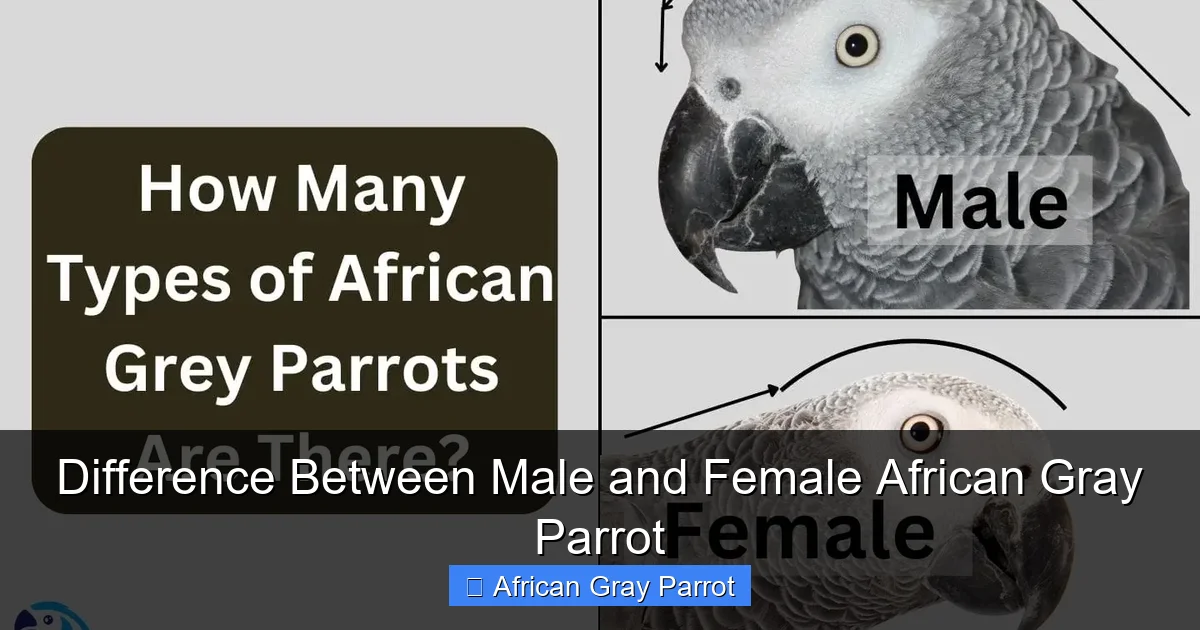
Male and female African Gray Parrots look nearly identical, making visual sexing extremely difficult without DNA testing. While subtle differences in size, head shape, and tail feather color may exist, they are unreliable indicators. Behavioral differences during breeding season offer clues, but DNA testing remains the only 99.9% accurate method to determine your parrot’s sex.
Key Takeaways
- Visual sexing is unreliable: Male and female African Grays share nearly identical plumage, making visual identification extremely difficult even for experts.
- Subtle physical differences exist but vary: Males may have slightly broader heads, larger beaks, and darker tail feathers, but these traits overlap significantly between sexes.
- Behavioral cues appear during breeding season: Males often display more territorial behavior, regurgitation, and mating dances, while females may show nesting behaviors.
- DNA testing is the gold standard: A simple blood feather or blood sample provides 99.9% accuracy for sex determination at any age.
- Surgical sexing is outdated and invasive: Endoscopic examination requires anesthesia and carries risks, making it rarely used today.
- Age affects accuracy of visual cues: Juvenile birds show no reliable sexual dimorphism; differences only become slightly more apparent after maturity at 3-5 years.
- Both sexes make equally wonderful pets: Talking ability, intelligence, and bonding potential are not determined by sex in African Gray Parrots.
Quick Answers to Common Questions
Can you tell male and female African Gray Parrots apart by looking at them?
No, visual sexing is extremely unreliable. Males and females look nearly identical. Subtle differences in head shape, size, or tail feather color overlap too much between individuals to be diagnostic.
What is the most accurate way to determine an African Gray’s sex?
DNA testing using a blood feather or blood sample provides 99.9% accuracy at any age. It is safe, affordable, and widely available through avian veterinarians or mail-in kits.
Do male and female African Grays have different talking abilities?
No. Both sexes are equally capable of extensive vocabularies and mimicry. Talking ability depends on individual personality, environment, and training, not on sex.
At what age can you DNA test an African Gray Parrot?
DNA testing works at any age, from day-old chicks to senior birds. Chromosomes never change, so results are permanent and accurate regardless of when you test.
Will a female African Gray lay eggs without a male present?
Yes. Female African Grays can lay infertile eggs without a male. This is triggered by hormonal cycles, environmental cues, and bonding with their human. Egg-laying depletes calcium, so dietary management is important.
📑 Table of Contents
- Introduction: The Great African Gray Mystery
- Understanding Sexual Dimorphism in Parrots
- Visual Differences: What You Might See (And What You Probably Won’t)
- Behavioral Differences: Clues From the Bird’s Personality
- The Gold Standard: DNA Sexing
- Surgical Sexing: The Historical Method
- Myths, Old Wives’ Tales, and Methods That Do Not Work
- When Should You Sex Your African Gray?
- Subspecies Considerations: Congo vs. Timneh
- Living Happily Without Knowing
- Conclusion: Science Wins, But Love Matters More
Introduction: The Great African Gray Mystery
If you have ever stared at your African Gray Parrot and wondered whether you share your home with a handsome boy or a beautiful girl, you are definitely not alone. This question ranks among the most common inquiries from new and experienced parrot owners alike. The truth is, nature played a clever trick on us with these remarkable birds. Unlike many parrot species where males flaunt brilliant colors and females wear subtle tones, African Grays keep their secrets close.
Both sexes wear the same elegant charcoal suit with the same striking red tail. Both possess that uncanny ability to mimic your microwave beep, your laughter, and that one phrase you wish they had not learned. So how do you tell them apart? The short answer is: you probably cannot, at least not with your eyes alone. In this comprehensive guide, we will explore every known method for determining the sex of your African Gray, from old wives’ tales to modern science, helping you understand what works, what does not, and why it might not matter as much as you think.
Understanding Sexual Dimorphism in Parrots
What Is Sexual Dimorphism?
Before we dive into African Gray specifics, let us talk about what sexual dimorphism actually means. In the animal kingdom, sexual dimorphism refers to distinct differences in appearance between males and females of the same species. Think of lions with their majestic manes versus the sleek lionesses, or cardinals where the male blazes red while the female wears warm brown. These differences usually evolve for specific reasons: attracting mates, camouflage during nesting, or competition between rivals.
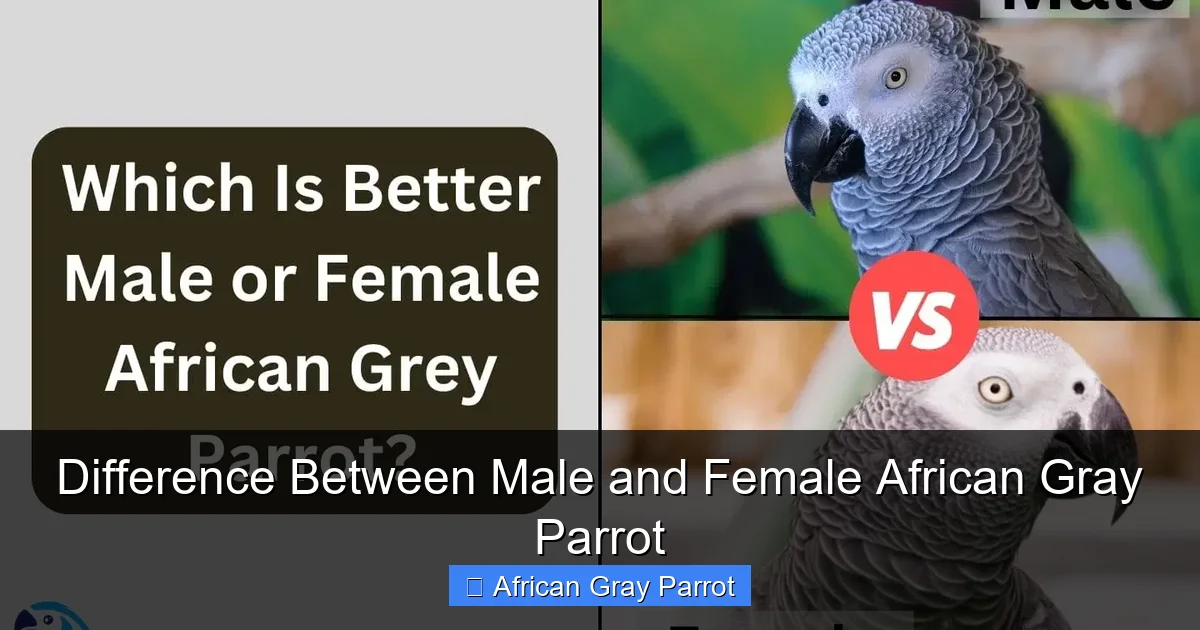
Visual guide about Difference Between Male and Female African Gray Parrot
Image source: evm8bcf5cz8.exactdn.com
Where African Grays Fit In
African Gray Parrots belong to a group of birds that scientists call “monomorphic” species. This fancy term simply means that males and females look essentially the same. In the wild, this makes perfect sense. Both parents share incubation duties. Both forage in the same canopy. Both need the same camouflage against predators. Nature saw no reason to give one sex flashier feathers when both lead nearly identical lives.
This lack of obvious dimorphism frustrates many owners, but it also tells us something beautiful about these birds. In African Gray society, partnerships are truly equal. The male does not need to impress the female with bright colors because their bond forms through intelligence, vocal duets, and shared parenting. When you live with an African Gray, you are witnessing one of nature’s most egalitarian partnerships.
Visual Differences: What You Might See (And What You Probably Won’t)
The Head Shape Theory
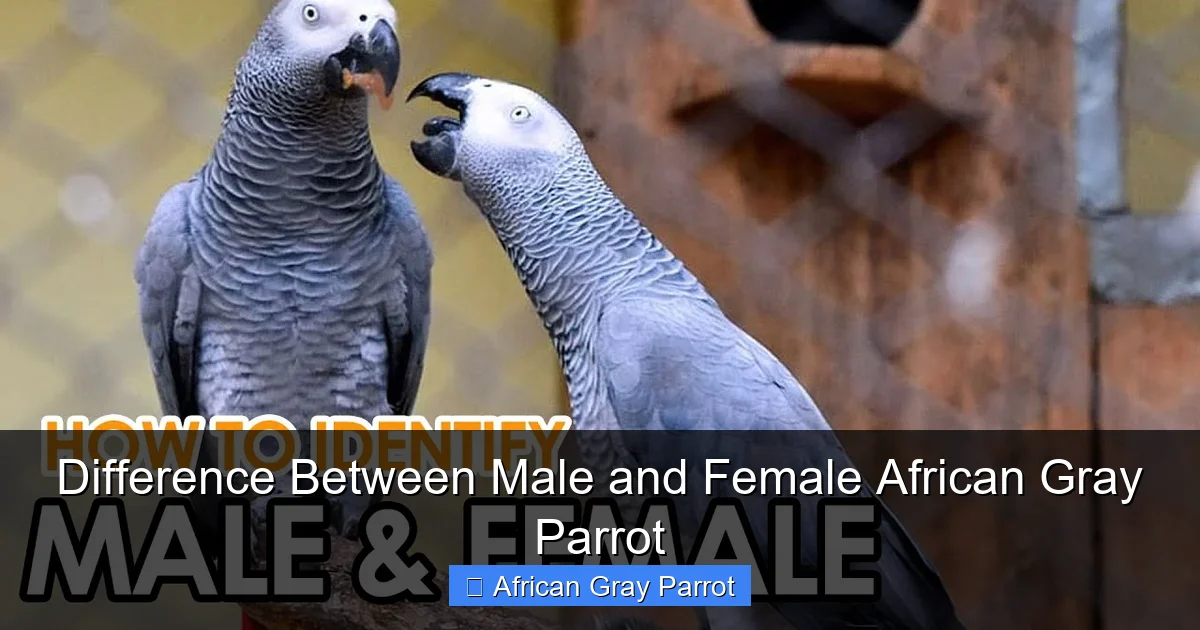
Ask ten breeders about head shape, and you might get ten different answers. The traditional belief suggests that male African Grays have broader, flatter heads while females have narrower, more rounded crowns. Some describe the male head as “blocky” and the female head as “domed.” However, this difference is incredibly subtle. Lighting, feather position, the bird’s mood, and even the angle of your photograph can completely change how the head appears.
Visual guide about Difference Between Male and Female African Gray Parrot
Image source: i.ytimg.com
I have seen experienced breeders confidently sex a bird by head shape, only to have DNA results prove them wrong. The variation within each sex far exceeds the average difference between sexes. A large female can easily have a broader head than a small male. Unless you have a flock of twenty birds to compare side by side, head shape remains an unreliable indicator at best.
Size and Weight Considerations
On average, male African Grays run slightly larger and heavier than females. We are talking about a difference of perhaps 50 to 100 grams on a bird that weighs 400 to 600 grams total. That is less than the weight of a few grapes. Individual variation, diet, health, and subspecies (Congo vs. Timneh) create far more size difference than sex does.
A well-fed female Congo African Gray can easily outweigh a petite male Timneh. Using weight or overall size to determine sex is like guessing a person’s gender based on their shoe size. You might be right more often than chance, but you will be wrong often enough to make it useless.
The Tail Feather Debate
Here is where things get interesting. Many sources claim that male African Grays have solid red tail feathers while females show silver or white edging on their tail feathers. This would be a fantastic visual marker if it were consistently true. Unfortunately, it is not.
Both sexes can display solid red tails. Both can show silver edging. The amount of silver appears to relate more to individual genetics and possibly subspecies than to sex. Some breeders swear by this method, but controlled studies have shown it fails as often as it succeeds. Juvenile birds of both sexes typically show more silver edging, which may fade or remain as they mature. Do not bet your naming ceremony on tail feathers.
Eye Color and Iris Rings
Both male and female African Grays start life with dark brown to black eyes. As they mature, typically around eight to twelve months, the iris lightens to a pale yellow or white. This change happens at roughly the same rate in both sexes. Some old texts suggest females retain darker eyes longer, but modern observation shows no consistent pattern. The iris ring, that thin circle of bare skin around the eye, also shows no reliable sexual difference.
Beak Size and Shape
Similar to head shape, males are often described as having slightly larger, broader upper mandibles. Again, the overlap is massive. A female from a line of large birds will have a bigger beak than a male from a line of petite birds. Beak shape also changes with wear, diet, and chewing habits. This is not a reliable marker.
Behavioral Differences: Clues From the Bird’s Personality
Breeding Season Behaviors
If you want to see the clearest behavioral differences between male and female African Grays, watch them during breeding season. This typically occurs in late winter through spring, though indoor birds with artificial lighting may cycle differently. During this time, hormonal changes bring out sex-specific behaviors that are otherwise hidden.
Male Courtship Displays
Male African Grays put on quite a show when hormones surge. You might observe the “mating dance” where the male droops his wings, fans his tail, and bobs rhythmically while making soft clucking or whistling sounds. He may regurgitate food for his chosen mate (or his favorite human, much to their delight or dismay). Males often become more territorial, defending their cage, a favorite corner, or their perceived mate with surprising ferocity.
Some males engage in “shadow boxing” with their reflection, attacking mirrors or shiny surfaces they perceive as rivals. They may also masturbate on toys, perches, or even your hand. While embarrassing for owners, this is normal male behavior during breeding season.
Female Nesting Behaviors
Females, meanwhile, focus on finding and preparing a nest site. You might notice your female exploring dark corners, chewing cardboard boxes into shreds, or becoming possessive of a specific cabinet or drawer. She may spend hours arranging “nesting material” which could be your important documents, the mail, or her own feathers.
Females often become more cuddly and solicit preening during this time. They may assume a mating posture: crouching low, wings slightly spread, tail lifted, making soft cooing sounds. This invitation is directed at their chosen mate, which again might be you. Some females lay infertile eggs even without a male present, a clear sign you have a girl.
Year-Round Personality Differences
Outside of breeding season, behavioral differences largely disappear. Both sexes are equally intelligent, equally capable of extensive vocabularies, equally affectionate, and equally prone to feather plucking if their complex needs are not met. Any personality differences you observe stem from individual temperament, early socialization, and life experiences, not from sex.
I have known male African Grays who were gentle cuddle bugs and females who were independent thinkers. I have known females who talked up a storm and males who preferred whistling. Do not choose a bird based on sex if you want specific personality traits. Choose based on the individual bird’s history and temperament.
The Gold Standard: DNA Sexing
How DNA Testing Works
If you want to know your African Gray’s sex with certainty, DNA testing is the answer. This technology has revolutionized avian care since becoming widely available in the 1990s. The test examines the bird’s chromosomes. Birds have a ZW sex determination system, the opposite of mammals. Males are ZZ (homogametic) and females are ZW (heterogametic). The test looks for the presence of the W chromosome. If it is there, you have a female. If not, you have a male.
Sample Collection Methods
Two main sample types work for DNA sexing. Blood feathers (newly growing feathers with a blood supply) provide excellent DNA. Your avian veterinarian can pluck one quickly during a wellness exam. Alternatively, a few drops of blood from a toenail clip (done carefully to avoid the quick) or a small needle prick work perfectly. Some labs now accept fresh feather pulp from clipped feathers, though blood feathers remain the gold standard.
The process is quick, minimally stressful, and carries virtually no risk when performed by an experienced avian vet. Results typically return within three to seven business days. Cost ranges from $20 to $50 depending on the lab and whether you go through your vet or mail a kit directly.
Accuracy and Reliability
DNA sexing boasts 99.9% accuracy. Errors are extraordinarily rare and usually stem from sample contamination or labeling mistakes, not the test itself. This method works at any age. You can test a day-old chick or a thirty-year-old companion. The results never change because chromosomes never change.
Popular DNA Testing Labs
Several reputable labs serve the avian community. Avian Biotech, Animal Genetics, and Zoogen (now part of Animal Genetics) are among the most established. Many avian veterinarians have preferred labs they trust. Some offer convenient mail-in kits with everything you need: instructions, collection tubes, submission forms, and prepaid return envelopes. Always use a lab that specializes in avian DNA testing, not generic pet DNA services.
Surgical Sexing: The Historical Method
What It Involved
Before DNA testing became affordable and accessible, surgical sexing was the only definitive method. This procedure requires general anesthesia. An avian veterinarian makes a small incision in the bird’s left side, between the ribs, and inserts an endoscope to visualize the gonads. Testes appear as small, bean-shaped organs near the kidneys. Ovaries appear as a single structure (only the left ovary develops in most birds) with a distinct granular texture.
Why It Fell Out of Favor
Surgical sexing carries real risks: anesthesia complications, infection, air sac damage, and stress. It requires a highly skilled avian surgeon and proper surgical facilities. Recovery takes days. The cost runs hundreds of dollars. With DNA testing offering equal accuracy for a fraction of the cost and risk, surgical sexing is now reserved for specific situations: when a bird is already under anesthesia for another procedure, when internal organ inspection is needed, or when DNA results are ambiguous (extremely rare).
When It Might Still Be Used
Some breeders still prefer surgical sexing for valuable breeding pairs because it allows simultaneous evaluation of reproductive health. The vet can check for ovarian cysts, testicular tumors, or other abnormalities that DNA cannot detect. For the average pet owner, however, DNA testing is overwhelmingly the better choice.
Myths, Old Wives’ Tales, and Methods That Do Not Work
The Pendulum Test
You may hear about dangling a pendulum (often a wedding ring on a string) over the bird’s head. The claim: circular motion means female, back-and-forth means male. This is pure superstition with zero scientific basis. The pendulum moves due to microscopic hand movements influenced by your subconscious expectations. It works no better than a coin flip.
Pelvic Bone Palpation
Some old-time breeders claim they can feel the pelvic bones to determine sex. The theory suggests females have wider, more flexible pelvic bones to allow egg passage. In reality, African Gray pelvic bones are tiny, covered by muscle and fat, and vary enormously between individuals. Even experienced veterinarians cannot reliably sex birds this way. Do not let anyone poke and prod your bird’s abdomen for this purpose.
Vent Sexing
Vent sexing works for day-old chicks in some poultry species but fails completely for parrots. The avian vent (cloaca) looks identical in male and female parrots of all ages. Anyone claiming to vent sex your African Gray is guessing.
Personality-Based Guessing
“He’s so aggressive, must be a male.” “She’s so sweet, definitely a female.” We love to project human gender stereotypes onto our birds. But aggression, sweetness, talkativeness, shyness, and every other personality trait appear in both sexes equally. These guesses reflect our biases, not biological reality.
When Should You Sex Your African Gray?
For Breeding Purposes
If you plan to breed African Grays, knowing the sex is essential. You need a confirmed male and female pair. Even then, compatibility is not guaranteed. Some pairs bond instantly. Others tolerate each other for years without breeding. Some never bond at all. DNA sexing young birds allows you to plan pairings before they reach sexual maturity at three to five years.
For Medical Reasons
Certain medical conditions are sex-specific. Egg binding, dystocia, ovarian cancer, and ovarian cysts only affect females. Testicular tumors and certain hormonal imbalances primarily affect males. If your bird shows symptoms of reproductive disease, knowing the sex helps your veterinarian narrow the diagnosis quickly. Some owners choose to DNA sex their birds proactively so this information is in the medical record from day one.
For Behavioral Management
Understanding your bird’s sex can help you interpret and manage seasonal hormonal behaviors. If you know you have a male, you can anticipate territorial aggression and mating displays. If you have a female, you can prepare for potential egg-laying (even without a male) and provide appropriate calcium supplementation. This knowledge helps you adjust the environment, lighting, and interaction to minimize hormonal frustration.
Just for Fun (And Naming)
Let us be honest. Most of us just want to know so we can use the right pronoun and pick the perfect name. There is nothing wrong with that. Discovering your “he” is actually a “she” after two years of wrong pronouns is a rite of passage for parrot owners. DNA testing satisfies curiosity and lets you personalize your relationship with accurate language.
Subspecies Considerations: Congo vs. Timneh
Congo African Gray (Psittacus erithacus erithacus)
The larger, more commonly known subspecies. Everything discussed above applies to Congos. They reach sexual maturity around four to five years. The visual “clues” (head shape, tail feathers, size) are equally unreliable in Congos as in the species overall.
Timneh African Gray (Psittacus erithacus timneh)
Smaller, darker, with a maroon tail and horn-colored upper mandible. Timnehs mature slightly earlier, around three to four years. The same visual and behavioral principles apply. Some Timneh breeders report slightly more consistent tail feather differences, but DNA testing remains the only reliable method.
Hybrid Birds
Congo-Timneh hybrids occur in captivity. These birds show intermediate physical traits. Sexing hybrids visually is even more challenging due to the mixed gene pool. DNA testing works perfectly regardless of subspecies or hybrid status.
Living Happily Without Knowing
Here is a secret many long-time African Gray owners eventually learn: the bird does not care. Your African Gray does not know whether you call him “he” or “she.” They do not feel misgendered. They do not need you to know their chromosomes to bond deeply, learn hundreds of words, or become your feathered soulmate.
Some of the most devoted parrot-human relationships I have witnessed involve owners who never tested and never will. They chose a name that works either way (Sunny, Charlie, Frankie, Robin) and focused on what matters: providing a rich life, proper nutrition, mental stimulation, veterinary care, and unconditional love.
If you never DNA test your African Gray, you will still share decades of laughter, conversation, and companionship. The mystery becomes part of your shared story. “We never knew if Frankie was a boy or girl, and honestly, it never mattered.”
Conclusion: Science Wins, But Love Matters More
We have explored every angle of African Gray sex determination. We have debunked myths, examined subtle visual cues, discussed behavioral patterns, and crowned DNA testing the undisputed champion of accuracy. The verdict is clear: if you need to know, get a DNA test. It is affordable, safe, fast, and definitive.
But we also learned that the differences between male and female African Grays are minimal compared to their similarities. Both sexes possess the extraordinary intelligence, emotional depth, and vocal prowess that make these birds legendary companions. Both need the same spacious cage, the same varied diet, the same mental enrichment, and the same devoted human.
Whether your African Gray carries ZZ or ZW chromosomes, you have won the lottery of avian companionship. These birds choose us as flock mates, teachers, and family. They grace our homes with wild intelligence wrapped in gray feathers and red tails. They remind us daily that communication transcends species, that trust is earned, and that love does not require a label.
So test if you want to. Or don’t. Either way, when your African Gray looks at you with those wise yellow eyes and says “hello” in your voice, you will know the only truth that matters: you are theirs, and they are yours, no matter what the chromosomes say.
Frequently Asked Questions
How much does DNA sexing cost for an African Gray Parrot?
DNA sexing typically costs between $20 and $50 depending on the laboratory and whether you submit through your veterinarian or use a mail-in kit directly. Most avian vets charge a small additional fee for sample collection during a wellness exam.
Can African Gray Parrots change sex?
No, birds cannot change sex. Their sex is determined chromosomally at conception (ZZ for males, ZW for females) and remains fixed for life. Hormonal changes or behavioral shifts do not alter biological sex.
Is surgical sexing still performed on African Grays?
Surgical sexing is rarely performed today since DNA testing offers equal accuracy without anesthesia risks. It may still be used when a bird requires anesthesia for another procedure, allowing simultaneous reproductive organ evaluation.
Do male African Grays make better pets than females?
No. Both sexes make equally wonderful companions. Personality, talking ability, affection level, and behavioral challenges vary by individual, not by sex. Choose based on the bird’s temperament and history rather than gender.
What does it mean if my African Gray regurgitates for me?
Regurgitation is a courtship behavior typically seen in males, though females may also do it. It indicates your bird views you as a mate. While endearing, it is best to gently discourage this behavior to prevent hormonal frustration and behavioral issues.
Can two female African Grays bond as a pair?
Yes, two females can form a strong pair bond, engage in mutual preening, and even mate with each other. One or both may lay infertile eggs. Same-sex pairs are common in captivity and can be very devoted to each other.