
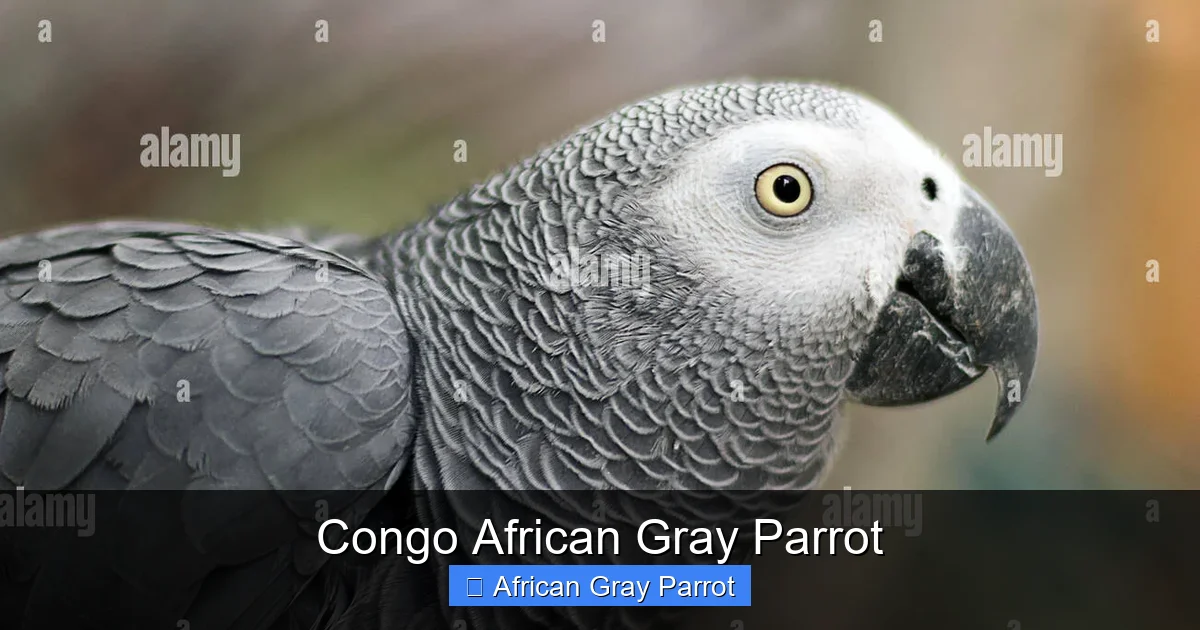
The Congo African Gray Parrot is widely considered one of the most intelligent bird species on Earth, famous for its exceptional talking ability and emotional depth. These medium-sized parrots require dedicated care, mental stimulation, and social interaction to thrive in captivity. With proper attention, they can become lifelong companions living 50 to 60 years or more.
If you have ever watched a video of a parrot having what appears to be a genuine conversation with its owner, chances are you were watching a Congo African Gray Parrot. These remarkable birds have captured human fascination for centuries, earning a reputation as the Einstein of the avian world. But behind those impressive vocabulary skills lies a complex, sensitive creature with very specific needs.
Bringing a Congo African Gray into your home is not a decision to make lightly. This is a commitment that spans decades, requires significant daily investment, and demands a level of understanding that goes far beyond typical pet ownership. In this comprehensive guide, we will explore everything you need to know about these extraordinary birds, from their natural history and cognitive abilities to the practical realities of daily care.
Key Takeaways
- Exceptional Intelligence: Congo African Grays possess cognitive abilities comparable to a 5-year-old human child, enabling complex problem-solving and extensive vocabulary acquisition.
- Two Distinct Subspecies: The Congo African Gray (Psittacus erithacus erithacus) is larger with bright red tail feathers, while the Timneh African Gray is smaller with darker plumage and maroon tail feathers.
- Lifelong Commitment: These parrots live 50 to 60 years in captivity, requiring decades of consistent care, social interaction, and financial investment.
- High Social Needs: Without daily interaction and mental stimulation, African Grays develop behavioral issues like feather plucking, screaming, and aggression.
- Specialized Diet Requirements: A balanced diet includes high-quality pellets, fresh vegetables, fruits, nuts, and calcium-rich foods to prevent nutritional deficiencies.
- Sensitive Respiratory Systems: These birds are extremely sensitive to airborne toxins from non-stick cookware, aerosols, smoke, and scented products.
- Legal Considerations: International trade is regulated under CITES Appendix I; ensure any bird comes with proper documentation and was captive-bred legally.
Quick Answers to Common Questions
How long do Congo African Gray Parrots live?
Congo African Gray Parrots typically live 50 to 60 years in captivity with proper care, and some individuals reach 70 years or more. This makes them a multi-decade, often lifelong commitment.
Are Congo African Gray Parrots good for beginners?
No, Congo African Grays are not recommended for first-time bird owners. Their high intelligence, emotional sensitivity, complex care needs, and potential for behavioral issues require experienced, dedicated caregivers.
Do all Congo African Gray Parrots talk?
While the species is renowned for talking ability, not every individual becomes a prolific talker. Some prefer whistling or mimicking household sounds. Talking depends on personality, early exposure, and interactive training.
What is the difference between a Congo and a Timneh African Gray?
The Congo African Gray is larger (12-14 inches), has a black beak, bright red tail feathers, and lighter gray plumage. The Timneh is smaller (9-11 inches), has a horn-colored upper beak, maroon tail feathers, and darker charcoal plumage.
How much does a Congo African Gray Parrot cost?
A captive-bred Congo African Gray typically costs $3,000 to $5,000. First-year setup costs add $2,000 to $3,000, and annual care averages $1,000 to $2,000, not including emergency veterinary expenses.
📑 Table of Contents
- Understanding the Congo African Gray Parrot
- The Remarkable Intelligence of the African Gray
- Creating the Ideal Home Environment
- Nutrition: Fueling a Brilliant Mind and Body
- Daily Care, Training, and Socialization
- Health, Wellness, and Veterinary Care
- The Long-Term Reality: Lifespan, Costs, and Planning
- Conclusion: Is a Congo African Gray Right for You?
Understanding the Congo African Gray Parrot
Natural History and Origins
The Congo African Gray Parrot, scientifically known as Psittacus erithacus erithacus, originates from the dense rainforests of Central and West Africa. Their natural range extends across countries including Congo, Cameroon, Gabon, Ghana, and Ivory Coast. In the wild, these birds inhabit primary and secondary rainforests, forest edges, and clearings, often forming large, noisy flocks that roost together in tall trees.
Wild Congo African Grays live highly social lives. They forage in groups, communicate constantly through a complex system of calls and contact vocalizations, and form strong pair bonds that often last a lifetime. Understanding this natural social structure is crucial for anyone considering keeping one as a companion. A solitary parrot in a human home is essentially a flock animal separated from its flock, which creates the foundation for many behavioral challenges.
Physical Characteristics and Identification
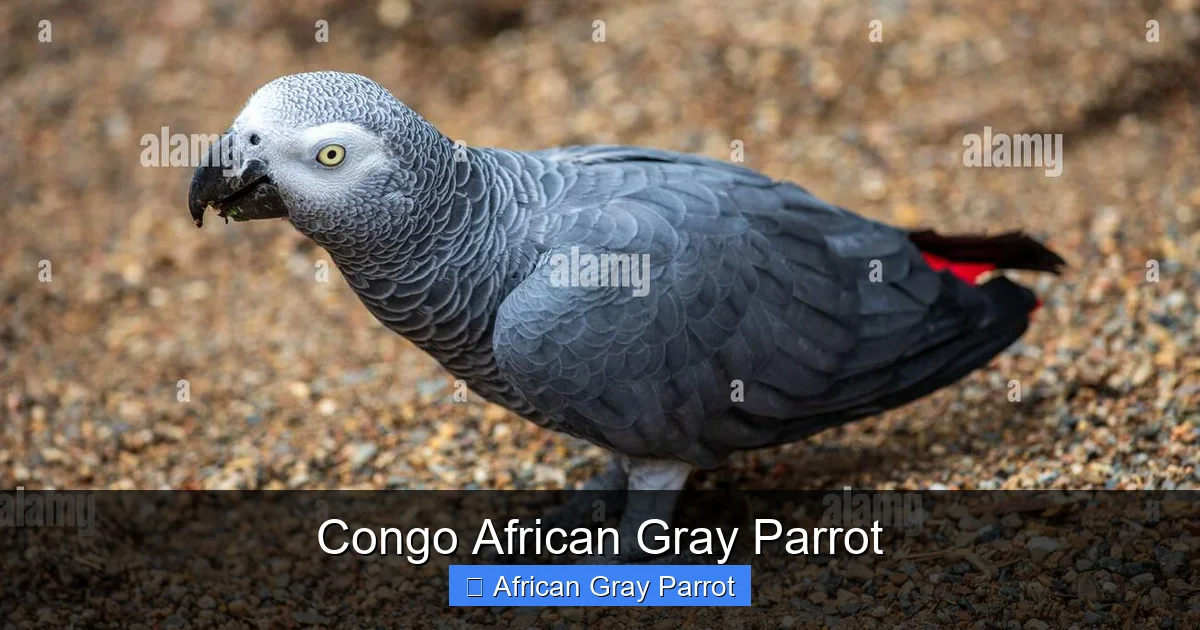
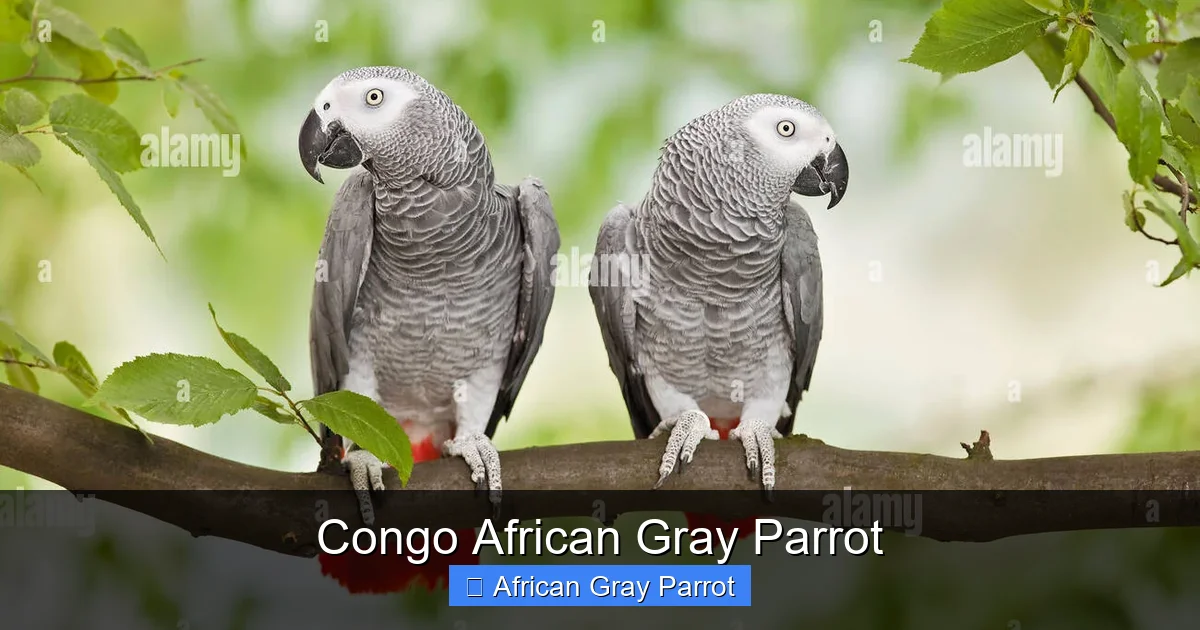
The Congo African Gray is a medium-sized parrot, typically measuring 12 to 14 inches from beak to tail tip and weighing between 400 and 650 grams. Their plumage is predominantly a beautiful, soft gray with subtle variations in shade across the body. The most striking feature is their bright, solid red tail feathers, which contrast dramatically with the gray body.
They have a large, powerful black beak designed for cracking hard nuts and seeds in the wild. Their eyes are particularly expressive, with a pale yellow iris surrounded by a distinctive white eye ring that gives them an intense, intelligent gaze. Juvenile birds have darker, grayish eyes that lighten to yellow as they mature, usually around 2 to 3 years of age.
It is important to distinguish the Congo African Gray from its close relative, the Timneh African Gray (Psittacus erithacus timneh). The Timneh is noticeably smaller, darker in overall coloration, has a horn-colored upper mandible rather than black, and possesses maroon tail feathers instead of bright red. While both share similar intelligence and care requirements, the Congo is the larger, more commonly recognized subspecies in the pet trade.
Conservation Status and Legal Protection
The Congo African Gray Parrot faces severe threats in the wild. Decades of extensive trapping for the international pet trade, combined with massive habitat loss due to logging and agricultural expansion, have caused wild populations to plummet. As a result, the species is listed as Endangered on the IUCN Red List.
International commercial trade of wild-caught Congo African Grays has been banned since 2017 under CITES Appendix I. This means any bird legally available in the pet market today must be captive-bred and accompanied by proper documentation proving its legal origin. Always verify paperwork and purchase only from reputable breeders who can provide closed band records and CITES permits where required. Supporting ethical breeding practices helps reduce pressure on wild populations.
The Remarkable Intelligence of the African Gray
Cognitive Abilities That Astonish Researchers
When we talk about parrot intelligence, the Congo African Gray stands in a league of its own. The groundbreaking work of Dr. Irene Pepperberg with her famous subject Alex demonstrated cognitive abilities that shattered previous assumptions about avian intelligence. Alex could identify over 50 objects, recognize quantities up to six, distinguish seven colors and five shapes, and understand concepts like “bigger,” “smaller,” “same,” and “different.”
Visual guide about Congo African Gray Parrot
Image source: c8.alamy.com
These birds do not merely mimic sounds. They demonstrate genuine comprehension, using words in appropriate contexts, combining labels to request specific items, and even expressing preferences or refusals. Studies have shown they can perform inferential reasoning, solve multi-step puzzles, and understand the concept of zero, a mathematical concept human children typically grasp around age four.
Talking Ability and Vocal Mimicry
The talking ability of the Congo African Gray is legendary. They are widely considered the best talking parrots, with some individuals developing vocabularies of hundreds, even thousands, of words. But what sets them apart is not just quantity. It is the clarity of their speech and their uncanny ability to mimic voices, tones, and household sounds with near-perfect accuracy.
They can replicate the sound of a microwave beep, a telephone ring, a dripping faucet, or a specific family member’s laugh so precisely that humans are often fooled. This mimicry serves a social function in the wild, where contact calls maintain flock cohesion. In a home, the human family becomes the flock, and the parrot learns their “dialect” to fit in.
However, not every African Gray becomes a prolific talker. Some remain relatively quiet, preferring whistles and environmental sounds. Talking ability varies by individual personality, early exposure to speech, and the amount of interactive conversation they receive. Never purchase a parrot solely for its talking potential. The bird’s welfare must come first.
Emotional Intelligence and Sensitivity
Perhaps the most defining and challenging aspect of the Congo African Gray is its profound emotional sensitivity. These birds are often described as “feathered toddlers” with the emotional complexity of a young child but the cognitive capacity to remember and process experiences deeply. They form intense bonds with their chosen person and can become deeply distressed by changes in routine, environment, or caregiver attention.
This sensitivity makes them prone to stress-related behaviors. A Gray that feels neglected, frightened, or insecure may resort to feather destructive behavior (feather plucking), excessive screaming, or aggression. They are keen observers of human emotion and will often mirror the emotional state of their household. A tense, chaotic home creates a tense, chaotic parrot. A calm, consistent, loving environment creates a confident, well-adjusted companion.
Creating the Ideal Home Environment
Cage Requirements and Setup
The cage is your parrot’s bedroom, safe zone, and primary territory. For a Congo African Gray, bigger is always better. The absolute minimum cage size should be 36 inches wide, 24 inches deep, and 48 inches high, but a cage measuring 48 by 36 by 60 inches or larger is strongly recommended. Bar spacing should be 3/4 inch to 1 inch to prevent head entrapment while allowing climbing.
Visual guide about Congo African Gray Parrot
Image source: c8.alamy.com
Choose a cage made of powder-coated steel or stainless steel. Avoid cages with zinc or lead-based paints, as parrots test everything with their beaks and heavy metal toxicity is a real danger. The cage should have multiple large doors for easy access, a removable grate and tray for cleaning, and secure locks, because Grays are escape artists who quickly learn to manipulate latches.
Inside the cage, provide a variety of perches of different diameters and textures. Natural wood branches like manzanita, dragonwood, or java wood are excellent for foot health. Include a rope perch for comfort and a cement or grooming perch near the food area to help maintain beak and nail condition. Avoid sandpaper perch covers, which cause foot abrasions.
Location, Lighting, and Temperature
Place the cage in a room where the family spends time, but not in the direct center of chaotic activity. A corner against a wall provides a sense of security. Avoid drafty areas, direct sunlight through glass (which can cause overheating), and kitchens due to airborne toxins from cooking.
African Grays require access to full-spectrum UVB lighting for vitamin D synthesis, which is essential for calcium metabolism. If they cannot safely spend time outdoors in a secure aviary or harness, provide a high-quality avian UVB lamp over the cage for 10 to 12 hours daily. Replace bulbs every 6 to 12 months as UV output degrades.
Maintain a stable temperature between 65 and 80 degrees Fahrenheit. These tropical birds tolerate moderate variation but suffer in extremes. Humidity around 50 to 60 percent mimics their natural environment and supports respiratory health and feather condition. A humidifier in dry climates or winter months is beneficial.
Environmental Enrichment and Foraging
In the wild, parrots spend 50 to 70 percent of their waking hours foraging. In captivity, food is often presented in a bowl, requiring zero effort. This vacuum of activity leads to boredom and behavioral problems. Foraging enrichment is not optional. It is a welfare necessity.
Start simple. Wrap treats in paper cups, hide pellets in cardboard tubes, or use commercial foraging toys. Gradually increase complexity. Puzzle toys that require manipulation, shredding toys made of palm leaves or balsa wood, and foot toys they can hold and manipulate all engage their problem-solving skills. Rotate toys weekly to maintain novelty.
Provide a “destruction station” — a designated area or toy where shredding is encouraged. This satisfies their natural urge to chew and manipulate materials. Safe items include untreated pine cones, palm fronds, vegetable-tanned leather strips, and bird-safe wooden blocks. Avoid pressure-treated wood, cedar, redwood, and any materials with glues, dyes, or chemicals.
Nutrition: Fueling a Brilliant Mind and Body
The Foundation: High-Quality Pellets
A proper diet is the single most important factor in your Congo African Gray’s long-term health. The foundation should be a high-quality, formulated pellet diet making up approximately 60 to 70 percent of daily intake. Look for brands that are organic, non-GMO, and free from artificial colors, flavors, and preservatives. Pellets ensure balanced nutrition in every bite, preventing selective eating where the bird picks out only favorite seeds.
Transitioning a seed-eating bird to pellets requires patience. Never starve a bird into conversion. Offer pellets alongside familiar foods, gradually increasing the pellet ratio over weeks or months. Some birds prefer certain shapes or flavors. Experiment with different brands. Warm, moistened pellets can be more appealing initially.
Fresh Foods: The Daily Rainbow
Fresh vegetables and fruits should comprise 20 to 30 percent of the diet. Focus heavily on dark leafy greens and orange vegetables rich in beta-carotene, which converts to vitamin A. Vitamin A deficiency is common in seed-fed parrots and leads to respiratory, skin, and immune issues.
Excellent daily staples include kale, collard greens, mustard greens, Swiss chard, dandelion greens, broccoli, carrots, sweet potato, pumpkin, and red bell peppers. Offer a “chop” — a finely chopped mix of 8 to 12 vegetables — daily. Fruits like berries, papaya, mango, kiwi, and pomegranate are nutritious treats but should be limited due to sugar content.
Wash all produce thoroughly. Organic is preferred to minimize pesticide exposure. Remove uneaten fresh food after 2 to 4 hours to prevent bacterial growth. Never feed avocado, chocolate, caffeine, alcohol, onions, garlic, rhubarb, or fruit pits and apple seeds, which contain cyanide compounds.
Healthy Fats, Protein, and Calcium
African Grays have a higher requirement for calcium than many other parrot species. Include calcium-rich foods daily: dark leafy greens, broccoli, almonds, sesame seeds, and cuttlebone or a calcium block in the cage. A veterinarian may recommend a liquid calcium supplement, especially for breeding hens or birds on seed-heavy diets.
Healthy fats from raw, unsalted nuts are important for feather quality and brain function. Offer walnuts, almonds, Brazil nuts, macadamia nuts, and pistachios in moderation — a few pieces daily. These are high in calories, so adjust portions for weight management. Sprouted seeds and legumes (mung beans, lentils, chickpeas) provide highly bioavailable protein and enzymes.
Water and Hydration
Fresh, clean water must be available at all times. Change it at least twice daily, more if the bird dunks food or defecates in it. Many African Grays enjoy a water bottle in addition to a bowl, which keeps water cleaner. Clean bowls and bottles daily with hot, soapy water and rinse thoroughly.
Daily Care, Training, and Socialization
The Critical Importance of Routine
Congo African Grays thrive on predictability. Establish a consistent daily schedule for waking, meals, out-of-cage time, training sessions, and bedtime. They need 10 to 12 hours of uninterrupted sleep in a dark, quiet room. A cage cover or separate sleep cage in a quiet room helps. Sleep deprivation leads to irritability, hormonal behavior, and immune suppression.
Morning and evening are typically peak activity times. Plan interactive sessions during these windows. A sample routine might include: wake and greet, fresh chop breakfast, 1-hour supervised out-of-cage play and training, foraging toys in cage during midday, afternoon nap, second out-of-cage session with family dinner nearby, pellet top-up, quiet wind-down, and lights out.
Positive Reinforcement Training
Training is not about tricks. It is communication. It builds trust, provides mental stimulation, and gives you tools to manage behavior safely. Use positive reinforcement exclusively. Identify high-value rewards (a specific nut, a head scratch, a verbal praise) and mark desired behaviors instantly with a clicker or verbal marker like “good!”
Start with foundational skills: step up onto hand or perch, step down, target training (touching a stick), and stationing (staying on a designated perch). These skills make daily handling, vet visits, and cage maintenance stress-free. Keep sessions short, 5 to 10 minutes, 2 to 3 times daily. End on a success. Never force, punish, or use dominance-based methods. These destroy trust and create fear responses.
Socialization and the “One-Person Bird” Myth
African Grays have a reputation for bonding intensely to one person and rejecting others. While they do often form a primary attachment, this is not inevitable. It results from that person providing the majority of positive interactions. Prevent exclusivity by ensuring all family members participate in feeding, training, and play from day one.
Socialize your bird to new people, sounds, and experiences gradually and positively. Use a travel carrier for short car rides. Play recordings of thunderstorms, vacuums, and crowds at low volume, pairing with treats. Invite calm visitors to offer a treat through the cage bars. A well-socialized Gray is adaptable and confident. An under-socialized Gray becomes phobic and aggressive toward anyone but its chosen person.
Out-of-Cage Time and Flight
Daily supervised out-of-cage time is mandatory. Aim for a minimum of 3 to 4 hours, ideally more. Bird-proof the room: cover windows, remove toxic plants, secure electrical cords, close toilet lids, turn off ceiling fans, and keep other pets separated. Provide a play gym or hanging perch system away from the cage to encourage independence.
Flight is natural and beneficial for muscle tone, respiratory health, and confidence. If your home allows, consider maintaining flight feathers. If clipping is necessary for safety, request a conservative clip that allows gliding but not lift. Never clip a young bird before it has learned to fly and land confidently. Fledging is a critical developmental window for coordination and spatial awareness.
Health, Wellness, and Veterinary Care
Finding an Avian Veterinarian
Before you bring your bird home, locate a board-certified avian veterinarian or a vet with significant avian experience. Dogs and cats vets are not equipped to treat parrots. Birds mask illness instinctively. By the time symptoms are obvious, the bird is often critically ill. Establish care with a wellness exam within the first week.
Schedule annual checkups including physical exam, weight monitoring, fecal gram stain, and blood work (CBC and chemistry panel). Discuss vaccination options (polyomavirus) and routine screening for psittacosis (chlamydia), bornavirus, and PBFD (psittacine beak and feather disease). Keep a health journal tracking weight, droppings, behavior, and molt patterns.
Common Health Concerns in African Grays
Hypocalcemia (low blood calcium) is a well-documented syndrome in African Grays, causing seizures, weakness, and collapse. It stems from dietary deficiency, lack of UVB, or chronic egg-laying. Prevention through diet and lighting is far easier than treatment.
Feather destructive behavior (FDB) is a complex issue with medical, psychological, and environmental causes. Rule out pain, infection, allergies, hormonal drives, and heavy metal toxicity first. Then address enrichment, sleep, social dynamics, and anxiety. Work with an avian vet and a certified parrot behavior consultant.
Respiratory sensitivity is extreme. Teflon/PTFE cookware overheating releases odorless fumes that kill birds in minutes. Eliminate all non-stick cookware, self-cleaning ovens, space heaters with PTFE coatings, and irons. Avoid aerosols, candles, air fresheners, essential oil diffusers, cigarette smoke, and vaping. Use unscented cleaning products. Ventilate well when cooking.
Other concerns include atherosclerosis (linked to high-fat diets and inactivity), aspergillosis (fungal infection from moldy environments or immunosuppression), and reproductive issues in hens (chronic egg-laying, egg binding). Obesity is common in sedentary, seed-fed birds. Monitor body condition by feeling the keel bone.
Grooming: Bathing, Nails, and Beak
Most African Grays enjoy bathing. Offer a shallow dish, mist with a spray bottle, or invite them into the shower on a suction perch. Bathing 2 to 3 times weekly maintains feather condition, reduces dust, and encourages preening. Never use soaps or bird shampoos unless directed by a vet. Plain water is best.
Nail trims are needed every few months. Learn to do it yourself with a rotary tool or clippers and styptic powder, or have your vet handle it. Overgrown nails catch on toys and cage bars, causing injury. Beak trims are rarely needed if the bird has proper chewing materials. An overgrown beak often signals liver disease or malnutrition — see a vet.
Recognizing Signs of Illness
Learn your bird’s normal. Subtle changes are significant. Watch for: fluffed feathers, sitting low on perch, tail bobbing with breath, change in droppings (color, consistency, volume), decreased appetite, weight loss, voice change, sneezing, nasal discharge, eye swelling, lethargy, or sudden aggression. Weigh weekly on a gram scale. A 5 to 10 percent weight drop is an emergency.
The Long-Term Reality: Lifespan, Costs, and Planning
A 50-Year Commitment
A Congo African Gray Parrot can live 50 to 60 years in captivity, with some reaching 70 or beyond. This means your bird may outlive you. This is not hyperbole. It is a statistical reality. You must plan for their care in your will or estate. Identify a trusted successor guardian who knows the bird, understands the commitment, and has the financial means. Discuss this openly with family.
Consider your own life stage. Are you in your 20s? Your bird will be with you through career changes, moves, relationships, children, and retirement. Are you in your 50s or 60s? You need a concrete succession plan now. Rehoming an older bonded parrot is traumatic for the bird and difficult to do ethically. Rescue organizations are overflowing with surrendered Grays whose owners did not plan ahead.
Financial Investment
The purchase price of a captive-bred Congo African Gray typically ranges from $3,000 to $5,000 or more. But the bird is the smallest expense. First-year setup (large cage, play gym, UVB lighting, carrier, toys, perches, initial vet exams, testing) easily reaches $2,000 to $3,000. Annual costs for high-quality food, toy replacement, routine vet care, and supplements average $1,000 to $2,000.
Emergency veterinary care for a critical illness can cost $3,000 to $10,000 or more. Pet insurance for exotic birds is available and worth investigating. Budget for boarding or a trusted pet sitter when you travel. This is not a low-cost pet. Financial stability is a prerequisite for responsible ownership.
Noise, Mess, and Lifestyle Impact
African Grays are not silent. They vocalize at dawn and dusk, contact call when you leave the room, and can scream loudly if bored or lonely. They produce feather dust (dander) continuously, which coats surfaces and can trigger allergies or asthma in sensitive people. An air purifier with HEPA filtration in the bird room is essential.
They are messy eaters. Food flings, water dunks, and shredded toy debris create daily cleanup. They chew furniture, baseboards, window frames, and anything within reach if unsupervised. Your home will never be pristine again. Accept this or choose a different companion.
Travel becomes complicated. You cannot leave a Gray alone for a weekend with a feeder. They need daily interaction. Boarding at an avian vet or specialized facility, or hiring a knowledgeable in-home sitter, is required. Spontaneous trips end. Vacation planning revolves around bird care logistics.
Conclusion: Is a Congo African Gray Right for You?
The Congo African Gray Parrot is, without question, one of the most extraordinary creatures you can share your life with. Their intelligence, humor, affection, and ability to communicate create a bond unlike any other pet relationship. They challenge you to be more patient, more observant, more consistent, and more present. They teach you about non-verbal communication, consent, and the depth of interspecies connection.
But they are not for everyone. They are not decorative. They are not low-maintenance. They are not a “starter bird.” They are a profound responsibility that demands the best of you, every day, for decades. The tragedy of the unwanted, neglected, or abandoned African Gray is a direct result of people acquiring them for the wrong reasons — for the talking, for the status, for the novelty — without understanding the reality.
If, after reading this, you feel a sense of awe rather than overwhelm. If you have the time, resources, stability, and genuine desire to build a life around a feathered companion who will challenge and delight you in equal measure. If you are willing to put their needs first, to learn their language, to forgive their messes, and to plan for their future beyond yours. Then, and only then, you might be ready for the privilege of a Congo African Gray Parrot.
Do not rush. Visit rescues. Talk to long-term owners. Volunteer at a parrot sanctuary. Spend time with adult birds. The right match is worth the wait. And when it happens, you will understand why those who truly know these birds say: once a Gray chooses you, your life is never the same.
Frequently Asked Questions
What size cage does a Congo African Gray Parrot need?
A Congo African Gray needs a minimum cage size of 36 inches wide by 24 inches deep by 48 inches high, though larger is strongly recommended. Bar spacing should be 3/4 to 1 inch. The cage must be made of safe, non-toxic materials like powder-coated or stainless steel.
What should I feed my Congo African Gray Parrot daily?
Feed a base diet of 60-70% high-quality organic pellets, supplemented with 20-30% fresh vegetables (especially dark leafy greens and orange vegetables), limited fruits, healthy nuts for fat, and calcium-rich foods. Provide fresh water changed twice daily.
Why is my African Gray plucking its feathers?
Feather plucking has many causes including medical issues (pain, infection, allergies), nutritional deficiencies, lack of UVB light, insufficient sleep, boredom, anxiety, hormonal behavior, or environmental stress. A full avian veterinary workup is essential before assuming it is behavioral.
Can Congo African Gray Parrots be left alone during the day?
They should not be left alone for more than 6-8 hours regularly. These highly social flock animals need daily interaction. If you work full-time, provide extensive foraging enrichment, consider a compatible companion bird (with careful introduction), or hire a mid-day visitor.
Are Congo African Gray Parrots loud?
They are moderately loud. They have natural dawn and dusk vocalizations, contact calls, and can scream if bored or lonely. They are not as consistently loud as macaws or cockatoos, but their high-pitched whistles and alarm calls carry. Apartment living requires soundproofing consideration.
Do Congo African Gray Parrots need a companion bird?
They do not require another bird if their human flock provides sufficient daily interaction, enrichment, and social stimulation. However, a second bird can be beneficial for owners with limited time. Introductions must be slow, supervised, and never forced. Some Grays prefer being the only bird.