
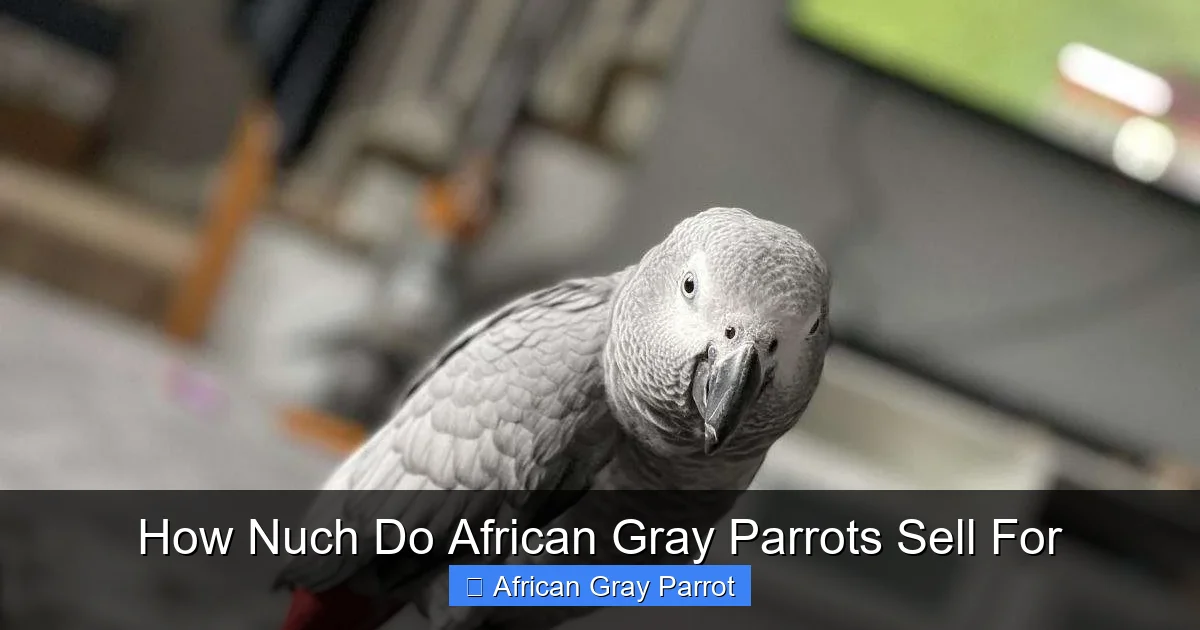
African Gray Parrots typically sell for $1,500 to $4,000 depending on age, training, and breeder reputation. Total ownership costs exceed $50,000 over their 50-year lifespan including vet care, diet, and enrichment.
So you are thinking about bringing home an African Gray Parrot. Smart choice. These birds are brilliant. They talk. They bond deeply. They live a long time. But before you fall in love with those bright red tail feathers, you need to know the real cost. The price tag on the bird is just the beginning. Let us walk through everything you need to know about how much do african gray parrots sell for and what you will actually spend.
I have talked to breeders. I have talked to rescue volunteers. I have talked to owners who have had their birds for twenty years. The numbers might surprise you. Most people budget for the bird and forget the cage. They forget the vet. They forget the toys that get destroyed in a week. This guide covers it all. No sugar coating. Just the facts you need to make a good decision.
Key Takeaways
- Price range varies widely: Expect to pay $1,500 to $4,000 for a healthy, hand-raised African Gray from a reputable breeder
- Age affects cost significantly: Baby birds cost more than adults but require intensive hand-feeding and socialization
- Hidden costs add up fast: Cage, toys, vet visits, and premium diet can exceed $3,000 in the first year alone
- Adoption saves money: Rescue organizations often charge $500 to $1,500 and include vet checks and behavioral assessments
- Beware of low prices: Birds under $1,000 often come from mills or have undisclosed health and behavioral issues
- Lifetime investment is huge: These 50-year companions can cost $50,000+ over their lifetime in care expenses
- Choose Congo vs Timneh wisely: Congo African Grays typically cost $200 to $500 more than Timneh subspecies
Quick Answers to Common Questions
What is the cheapest way to get an African Gray Parrot?
Adoption from a rescue organization is typically the cheapest legitimate route, with fees ranging from $500 to $1,500 including vet checks and behavioral assessments.
Why are African Gray Parrots so expensive compared to other parrots?
They require extensive hand-raising, have lower clutch sizes, need genetic and disease testing, and are in high demand due to their exceptional talking ability and intelligence.
Can I finance an African Gray Parrot purchase?
Some breeders offer payment plans, but most require full payment upfront. Personal loans or credit cards are options but add interest to an already expensive purchase.
Do male and female African Grays cost different amounts?
Generally no, prices are similar. However, proven breeding pairs cost significantly more ($5,000 to $8,000+) than pet birds.
What ongoing costs should I budget for monthly?
Budget $100 to $200 monthly for food, toys, supplements, and routine care, plus $50 to $100 monthly into an emergency vet fund.
📑 Table of Contents
- Understanding the Base Price Range
- The Real Cost of Baby vs Adult Birds
- Hidden Costs That Catch New Owners Off Guard
- Veterinary Care: The Non-Negotiable Expense
- Adoption vs Buying: Money and Ethics
- Long-Term Financial Planning for 50 Years
- Red Flags: When the Price Is Too Good to Be True
- Making the Smart Financial Decision
- Conclusion
Understanding the Base Price Range
What You Will Pay at a Reputable Breeder
Let us start with the basics. A healthy, hand-raised baby African Gray from a good breeder costs between $2,000 and $4,000 right now. The price depends on a few things. Congo African Grays are the larger subspecies with bright red tails. They usually run $2,500 to $4,000. Timneh African Grays are smaller with darker, maroon tails. They typically cost $1,500 to $3,000. The difference is not just size. Congos are more popular. Higher demand means higher prices.
Why do breeders charge this much? It is not profit. Not really. Raising a baby parrot takes months of work. Someone has to hand-feed every few hours around the clock. Someone has to socialize the bird daily. The breeder pays for genetic testing. They pay for disease screening. They pay for premium formula and weaning foods. A good breeder loses sleep over these babies. That labor is built into the price.
Pet Store Prices vs Breeder Prices
You might see African Grays in pet stores for $3,000 to $5,000. The bird costs more there. The store has overhead. Rent. Staff. Utilities. They also buy from brokers, not directly from breeders. Each middleman adds a markup. The bigger issue? Pet store birds often lack socialization. They sit in cages. They get handled by random people. They develop fear behaviors. You pay more for a bird that needs more work. Not a good deal.
Why Price Varies by Region
Where you live changes the price. In areas with many breeders like Florida or California, prices trend lower. Competition helps buyers. In the Northeast or Midwest, fewer breeders mean higher prices. Shipping a bird adds $300 to $600 plus a travel crate. Some breeders will not ship at all. They want you to pick up the bird. That means travel costs for you. Factor that in.
The Real Cost of Baby vs Adult Birds
Baby Birds Cost More Upfront
Everyone wants a baby. They are cute. They bond to you from the start. You get to shape their personality. But babies cost the most. A weaned baby (eating on its own) runs $2,500 to $4,000. An unweaned baby costs less, maybe $1,800 to $2,500. Do not buy unweaned. Hand-feeding is dangerous for beginners. Birds aspirate. They crop burn. They die. The savings are not worth the risk. Let the breeder do that work.
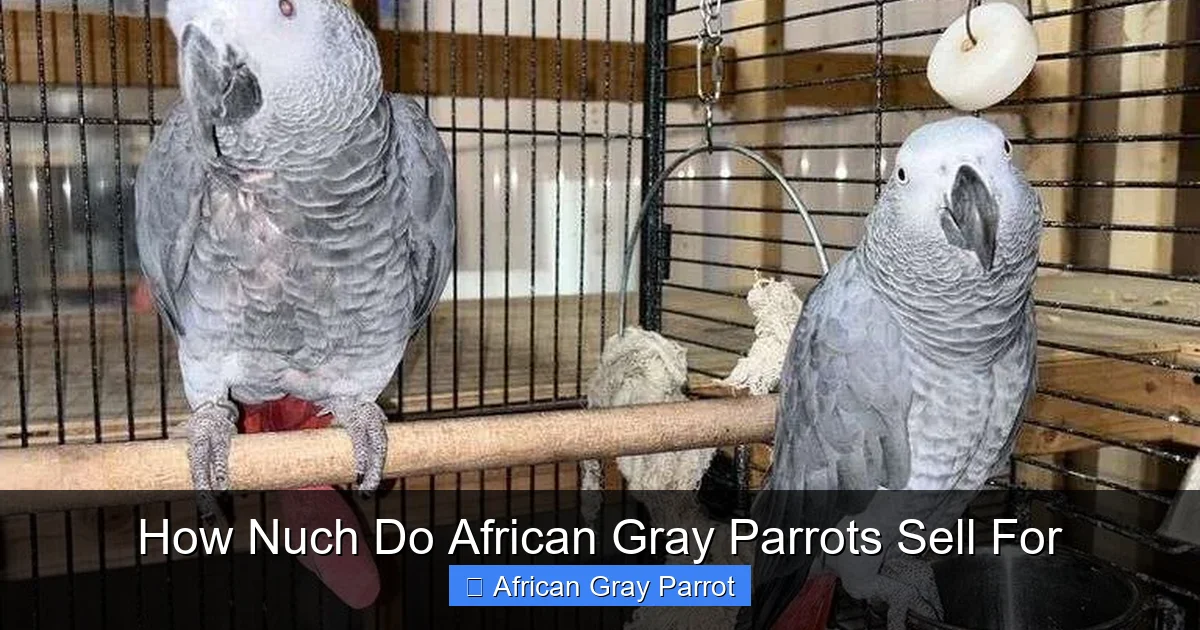
Visual guide about How Nuch Do African Gray Parrots Sell For
Image source: auctioneersoftware.s3.amazonaws.com
Adult Birds Can Be a Bargain
Adult African Grays often sell for $1,000 to $2,500. Sometimes less. Why? People surrender them. Life changes. Divorce. New baby. Allergies. Moving. The bird is not the problem. Many adult birds are already talking. They are already trained. They are past the terrible twos (yes, parrots have a terrible two phase). You skip the baby chaos. But you must ask questions. Why is this bird being rehomed? Any biting? Screaming? Plucking? Get a vet check before you commit.
The Senior Bird Option
Birds over 30 sometimes sell for $500 to $1,500. These are lifetime commitments. African Grays live 50 to 60 years. A 30-year-old bird still has decades left. Senior birds often come with health issues. Arthritis. Heart disease. Kidney problems. Vet bills will be higher. But giving a senior bird a good home is noble. Just go in with eyes open.
Hidden Costs That Catch New Owners Off Guard
The Cage Is Not Optional
You cannot put an African Gray in a budgie cage. These are large, powerful birds. They need a cage at minimum 36 inches wide, 24 inches deep, 48 inches tall. Bar spacing 3/4 inch to 1 inch. Powder coated or stainless steel. A decent cage costs $400 to $800. A great cage costs $1,000 to $2,000. Stainless steel lasts forever. Powder coating chips. The bird will chew it. Do not cheap out here. The cage is their bedroom. Their safe space. It matters.
Perches and Toys Are Consumables
African Grays destroy toys. That is their job. A $20 toy lasts three days. Budget $50 to $100 monthly for toys. Rotate them. Make your own. Use pine cones. Phone books. Cardboard boxes. Natural branches. Perches need variety. Rope. Natural wood. Cement for nails. Platform. Replace them as they get soiled or chewed. This is not optional. Bored birds pluck feathers. Bored birds scream. Toys prevent both.
Food Costs More Than You Think
Seed mix is not enough. African Grays need pellets. Fresh vegetables. Some fruit. Healthy grains. Occasional nuts. A high-quality pellet like Harrison’s or Roudybush costs $30 to $50 for a 5-pound bag. That lasts one bird about a month. Fresh produce adds $20 to $40 weekly. Calcium supplements. Omega supplements. Treats for training. First year food costs run $800 to $1,200 easy.
Veterinary Care: The Non-Negotiable Expense
Find an Avian Vet Before You Buy
This is critical. Dog and cat vets do not treat birds. Avian medicine is a specialty. You need a board-certified avian vet or one with extensive bird experience. Call around. Ask how many African Grays they see weekly. Ask about emergency hours. Ask about hospitalization. If you cannot find one within two hours, reconsider getting a bird. Seriously.
Routine Care Costs
Annual wellness exam: $150 to $300. Blood work: $200 to $400. Fecal test: $50 to $100. Nail and beak trims: $30 to $60 each (or learn to do it yourself). Wing trims if you choose: $30 to $50. Yearly baseline: $500 to $1,000 for a healthy bird. That assumes nothing goes wrong.
Emergency Fund Is Mandatory
Birds hide illness. By the time you see symptoms, it is often serious. Emergency vet visit: $300 to $600 just to walk in. Hospitalization: $200 to $500 per night. Surgery: $1,500 to $5,000. Heavy metal toxicity treatment: $2,000 to $4,000. Egg binding surgery: $1,500 to $3,000. You need $3,000 to $5,000 set aside. Or pet insurance. Nationwide offers avian coverage. It costs $30 to $50 monthly. Worth considering.
Adoption vs Buying: Money and Ethics
Rescue Organizations Charge Less
Parrot rescues typically ask $500 to $1,500 adoption fees. This includes a vet check. Blood work. Behavioral assessment. The bird is usually already spayed or neutered (yes, birds can be surgically sterilized). You get support. The rescue will take the bird back if it does not work out. That safety net has value. Many rescue birds are wonderful. They just lost their homes.
Private Rehomes Vary Wildly
Craigslist. Facebook. Bird forums. People rehome directly. Prices range from free to $2,000. Free birds often have issues. The owner is desperate. Be careful. Ask for vet records. Visit the bird multiple times. Bring a carrier. Do not hand over money until you see the bird in person. Get a written agreement. Have a vet check within 48 hours.
The Ethics of Your Choice
Buying from a breeder supports captive breeding. Good breeders preserve species. Bad breeders run mills. Adoption reduces demand for breeding. It gives a home to a bird that already exists. Both can be ethical. Both can be unethical. Research your source. Ask hard questions. Trust your gut. If something feels wrong, walk away.
Long-Term Financial Planning for 50 Years
Inflation Will Increase Costs
Think about 1974. Gas was 53 cents a gallon. A stamp cost 10 cents. Now? You know the prices. Your bird will live through decades of inflation. Food costs will rise. Vet costs will rise. Toy costs will rise. Plan for 3 to 4 percent annual increases. That $500 yearly vet budget becomes $1,600 in 30 years. The $100 monthly toy budget becomes $320. Build this into your long-term plan.
Life Changes Affect Your Budget
You might lose a job. Get divorced. Have kids. Get sick. Move to a no-pet apartment. The bird still needs care. Who pays? Who cares for the bird? You need a plan. A pet trust. A designated caregiver. Written instructions. Emergency contacts. This is not morbid. It is responsible. Parrots outlive owners. It happens constantly.
Total Lifetime Cost Estimate
Let us do rough math. Bird: $3,000. Cage and setup: $1,500. First year food and toys: $1,500. First year vet: $800. Years 2 to 50: $2,500 annually (conservative). That is $3,000 + $1,500 + $1,500 + $800 + (49 × $2,500) = $130,300. Call it $100,000 to $150,000 over the bird’s life. Can you afford that? If not, please reconsider. It is not fair to the bird to struggle financially.
Red Flags: When the Price Is Too Good to Be True
Under $1,000 Usually Means Trouble
See an African Gray for $500? $800? Run. That bird likely comes from a mill. Or it is sick. Or it has severe behavioral issues. Or it is stolen. Or it is a different species entirely (some sellers pass off other gray parrots as African Grays). Legitimate breeders cannot produce healthy birds at that price. The math does not work. Formula alone costs hundreds per baby.
No Vet Records? Walk Away
Any seller should provide vet records. Hatch certificate. Band number. DNA sexing results. Disease testing for PBFD, Polyoma, Psittacosis, Bornavirus. If they cannot or will not provide these, do not buy. The risk is too high. Treating PBFD costs thousands. Treating Psittacosis risks your health. It is not worth saving $500 upfront.
Pressure Tactics Are a Bad Sign
“I have three other buyers.” “Price goes up tomorrow.” “You must decide today.” Good breeders want you to think. They want you to visit. They want you to meet the parents. They want you to be sure. Pressure means they want the bird gone. Ask yourself why.
Making the Smart Financial Decision
Create a Parrot Budget Spreadsheet
Before you look at birds, make a spreadsheet. Monthly income. Monthly expenses. Add parrot costs. Cage fund. Emergency fund. Monthly food. Monthly toys. Annual vet. Insurance. Boarding for vacations. See the numbers. If it stresses you, wait. Save more. There is no rush. The birds will still be there.
Consider Fostering First
Many rescues need foster homes. You care for a bird temporarily. The rescue pays vet bills. You provide food and love. It lets you test the waters. You learn the noise. The mess. The routine. The time commitment. Some foster homes adopt. Some realize it is not for them. Both outcomes are fine. The bird gets a break from the shelter either way.
Wait for the Right Bird
Do not impulse buy. Do not buy because “this one talked to me.” Do not buy because the price dropped. The right bird at the right price from the right source is worth waiting for. Join waiting lists. Build relationships with breeders. Volunteer at rescues. Your patience protects your wallet and the bird’s future.
Conclusion
How much do african gray parrots sell for? The short answer: $1,500 to $4,000 for the bird itself. The honest answer: $100,000 to $150,000 over a lifetime. These are not impulse pets. They are not decoration. They are intelligent, emotional beings who depend on you completely for decades. The financial commitment is real. The time commitment is real. The emotional commitment is real.
If you have the resources, the patience, and the heart, an African Gray can be the most rewarding companion imaginable. They talk. They joke. They comfort you when you cry. They greet you when you come home. They become family. But they need you to be prepared. Not just today. For the next 50 years.
Do your homework. Save your money. Find your avian vet. Build your support network. Then, when you are truly ready, bring home that brilliant gray feathered mind. You will never regret being prepared. The bird deserves nothing less.
Frequently Asked Questions
How much does a baby African Gray Parrot cost from a breeder?
A weaned baby African Gray from a reputable breeder typically costs $2,500 to $4,000. Congo subspecies are at the higher end while Timnehs are slightly less expensive. Unweaned babies cost less but should never be sold to inexperienced owners.
Are there cheaper alternatives to buying from a breeder?
Yes, parrot rescues and adoption organizations offer African Grays for $500 to $1,500. These birds are vet-checked, behaviorally assessed, and come with support. Private rehomes may cost less but carry more risk.
What is the difference in price between Congo and Timneh African Grays?
Congo African Grays typically cost $200 to $500 more than Timnehs. Congos are larger with bright red tails and higher demand. Timnehs are smaller with maroon tails but have similar talking ability and intelligence.
How much should I budget for the first year of ownership?
Plan for $5,000 to $8,000 in the first year including the bird ($2,500 to $4,000), cage and setup ($800 to $2,000), initial vet visits ($500 to $1,000), and food/toys ($1,000 to $1,500).
Do African Gray Parrots cost more than other talking parrots?
Yes, African Grays are among the most expensive parrots. Amazons cost $1,000 to $2,500. Eclectus cost $1,500 to $3,000. Macaws range $2,000 to $5,000+. Budgies and cockatiels cost $20 to $200.
Is pet insurance worth it for an African Gray Parrot?
Avian pet insurance (primarily Nationwide) costs $30 to $50 monthly and covers accidents, illnesses, and exams. Given that a single emergency can cost $3,000 to $5,000, insurance provides valuable peace of mind for most owners.