
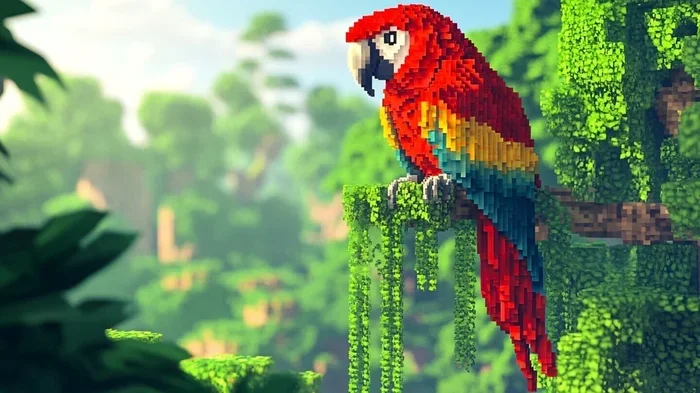
Featured image for Minecraft parrots jungle biome
Image source: ensigame.com
Parrots cannot be bred in vanilla Minecraft, but you can tame them using seeds and keep them as loyal companions. This guide covers everything from finding parrots in jungle biomes to taming mechanics, care tips, and common mistakes like feeding them cookies.
If you have spent any time exploring the lush, vibrant jungles of Minecraft, you have likely encountered the colorful parrots fluttering through the canopy. These feathered friends are among the most charming passive mobs in the game. Many players immediately wonder how to breed parrots mc style, hoping to create a flourishing aviary inside their base. The short answer might surprise you: you cannot breed parrots in vanilla Minecraft. Unlike cows, sheep, or chickens, parrots do not have a “love mode” and will not produce offspring when fed.
This design choice by Mojang means your parrot collection grows only through exploration and taming, not through farming. But do not let that disappoint you. Parrots offer unique mechanics, personality, and utility that make them one of the most rewarding mobs to interact with. In this comprehensive guide, we will cover everything you need to know about finding, taming, caring for, and enjoying parrots in Minecraft. We will also clear up common misconceptions and share expert tips to keep your feathered companions safe and happy.
Key Takeaways
- No Breeding in Vanilla: Minecraft parrots do not have a breeding mechanic in the base game; you cannot produce baby parrots naturally.
- Taming with Seeds: Feed parrots any type of seed (wheat, melon, pumpkin, or beetroot) to tame them, with a 33% success rate per seed.
- Jungle Biome Spawns: Parrots only spawn naturally in jungle biomes, including bamboo jungles and sparse jungles, at light level 7 or higher.
- Cookies Are Fatal: Feeding a parrot a cookie instantly kills it due to chocolate poisoning, reflecting real-world bird toxicity.
- Shoulder Perching: Tamed parrots can sit on your shoulder by walking through them, but they dismount if you take damage or enter water.
- Sound Mimicry: Parrots imitate sounds of nearby hostile mobs within 20 blocks, acting as an early warning system.
- Dancing Mechanics: Parrots dance when near a jukebox playing a music disc, a fun cosmetic behavior added in the World of Color update.
📑 Table of Contents
- Understanding Parrot Mechanics in Minecraft
- Where and When to Find Parrots
- How to Tame a Parrot Step by Step
- Living with Your Tamed Parrots
- Unique Parrot Behaviors and Utilities
- Protecting Your Parrots: Safety Guide
- Advanced Tips for Parrot Enthusiasts
- Parrots in Modded Minecraft
- Frequently Asked Questions About Minecraft Parrots
Understanding Parrot Mechanics in Minecraft
Why Parrots Cannot Be Bred
Mojang has never officially added a breeding mechanic for parrots. The developers likely avoided it to prevent players from easily farming an infinite supply of a mob that spawns in specific, somewhat rare biomes. It also adds a layer of realism; parrots are exotic birds that do not reproduce as rapidly as farm animals. This makes each tamed parrot feel special, like a hard-earned trophy from a jungle expedition.
Did You Know? Parrots were added to Minecraft in the “World of Color” update (Java Edition 1.12) in June 2017. They were the first bird mob added to the game since chickens, and they remain the only tamable mob that cannot be bred.
The Five Color Variants
When you find parrots in the wild, you will notice they come in five distinct color patterns. These variants are purely cosmetic and do not affect behavior, stats, or taming difficulty. The five types are:
- Red (Scarlet Macaw inspired): Bright red with yellow and blue accents.
- Blue (Hyacinth Macaw inspired): Deep cobalt blue with yellow eye rings.
- Green (Green-winged Macaw inspired): Vibrant green with red and blue highlights.
- Cyan (Blue-and-yellow Macaw inspired): Teal and yellow coloration.
- Gray (Cockatiel inspired): Gray body with yellow head and orange cheeks.
Think of these like different skins for the same character in a game. The gameplay is identical, but collecting all five colors becomes a fun side quest for completionists.
Where and When to Find Parrots
Jungle Biome Requirements
Parrots spawn exclusively in jungle biomes. This includes the standard Jungle, the Bamboo Jungle, and the Sparse Jungle (Bedrock Edition). They do not spawn in Jungle Edge or Modified Jungle variants in some versions, so sticking to the main three biome types is your best bet.
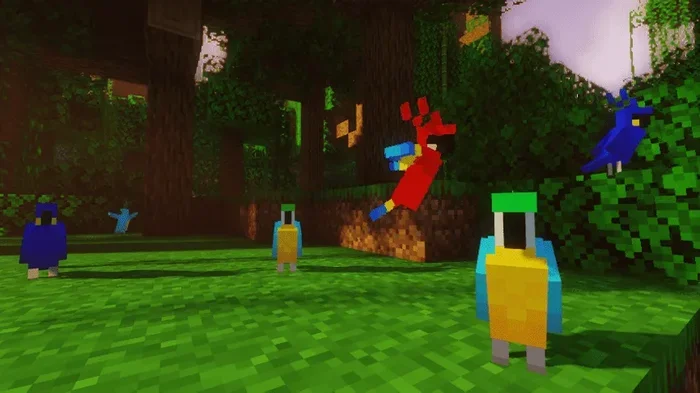
Visual guide about Minecraft parrots jungle biome
Image source: cdn.apexminecrafthosting.com
Spawning conditions are specific. Parrots spawn on grass blocks, logs, or leaves at a light level of 7 or higher. They usually spawn in groups of 1 to 2. Because jungles are dense with trees, the canopy often blocks light, reducing spawn rates on the forest floor. Your best strategy is to look up.
Spawn Rates and Statistics
Parrots are classified as a “rare” ambient spawn. In Java Edition, they have a spawn weight of 10 compared to the standard passive mob weight. For context, sheep have a weight of 12, pigs 10, and cows 8 in jungles. However, because parrots only spawn on specific blocks (grass, logs, leaves) and require high light levels, they feel much rarer than the numbers suggest.
Pro Tip: Clear a large platform high up in the jungle canopy at Y-level 100 or above. Light it up thoroughly with torches or lanterns. This creates an artificial “parrot platform” that maximizes valid spawn blocks and light levels, dramatically increasing your encounter rate.
Bedrock vs. Java Differences
In Bedrock Edition, parrots can also spawn in the Sparse Jungle biome, which has fewer trees and higher light levels at ground level. This actually makes finding parrots slightly easier on Bedrock. However, Bedrock parrots have a slightly different hitbox and movement logic, making them a bit trickier to hit with seeds while flying.
How to Tame a Parrot Step by Step
Gathering the Right Food
Since you cannot breed them, taming is the only way to “get” parrots. You tame a parrot by feeding it seeds. Any seed works: wheat seeds, melon seeds, pumpkin seeds, or beetroot seeds. Wheat seeds are the easiest to obtain in bulk early game. Simply break grass blocks in almost any biome to collect them.
Each seed you feed has a 33% (1/3) chance to tame the parrot. On average, you will need 3 seeds per parrot, but luck varies. Bring at least 20 seeds per parrot you want to tame to account for bad streaks.
The Taming Process
- Locate a parrot in a jungle biome. They often fly or perch on leaves.
- Equip seeds in your main hand.
- Approach slowly. Parrots are skittish. If you sprint or move too fast, they fly away.
- Right-click (or tap) on the parrot with the seeds.
- Watch for hearts. Red hearts appear above the parrot when tamed. Gray smoke particles mean the attempt failed; try again.
- Repeat for each parrot you want.
Common Taming Mistakes
Many players try to chase a flying parrot. This rarely works. Instead, stand still on a high branch or platform. Parrots are curious and often land near stationary players. Crouching (holding Shift) prevents you from falling off leaves and makes you less threatening.
Another mistake is feeding cookies. Never feed a parrot a cookie. In a famous design choice, Mojang made cookies instantly kill parrots. This mimics real life, where chocolate is toxic to birds. The parrot will die instantly with no drops. This was added as a teaching moment about pet safety. Always double-check your hotbar before interacting.
Living with Your Tamed Parrots
Shoulder Perching Mechanics
Once tamed, a parrot will follow you like a wolf or cat. The signature feature is shoulder perching. If you walk into a tamed parrot (or it flies to you), it will perch on your shoulder. You can have one parrot on each shoulder simultaneously.
While perched, the parrot is effectively an item on your player entity. It does not take damage, cannot be attacked, and moves with you. This is the safest way to transport parrots across dangerous terrain.
When Parrots Dismount
Your feathered friends will jump off your shoulder automatically in several situations:
- You take any damage (fall, mob attack, suffocation).
- You enter water deeper than 1 block (swimming).
- You sleep in a bed.
- You descend a drop higher than 3/4 of a block (sometimes).
- You use a totem of undying.
Plan your travel routes accordingly. If you are crossing a river, your parrots will swim behind you. They can drown if they cannot pathfind out of deep water.
Sitting and Staying
Right-click a tamed parrot (without seeds in hand) to make it sit. A sitting parrot stays in place indefinitely, even if you travel thousands of blocks away. It will not teleport to you. This is perfect for creating a static display in your base. Right-click again to make it stand and follow.
Unique Parrot Behaviors and Utilities
Sound Mimicry: Your Early Warning System
This is the parrot’s most practical feature. A tamed (or wild) parrot within 20 blocks of a hostile mob will occasionally imitate that mob’s sound at a higher pitch. For example, if a creeper is hiding around a corner, a nearby parrot might make a high-pitched “ssss” hiss. If a zombie is in a cave below you, the parrot might let out a groaning moan.
The mimicry is not constant. It happens randomly every few seconds when a hostile mob is in range. The imitated sounds include: zombies, creepers, skeletons, spiders, endermen, witches, pillagers, ravagers, and even the Warden. It does not mimic passive mobs or players.
Analogy: Think of the parrot like a smoke detector that beeps differently depending on what kind of fire is burning. It does not tell you exactly where the danger is, but it alerts you that something hostile is nearby.
Dancing and Jukeboxes
If a jukebox is playing a music disc within 3 blocks, parrots will “dance.” They bob their heads and move side to side. This is a purely cosmetic behavior, but it is delightful. It works for both tamed and wild parrots. If you want a parrot dance party, place a jukebox in your jungle base and spin a disc.
Did You Know? The dancing animation was inspired by real-life videos of parrots dancing to music. Parrots are one of the few animals in nature that can synchronize movements to a beat, a trait called “entrainment.”
Health and Healing
Parrots have 6 health points (3 hearts). They do not regenerate health naturally. You cannot heal them with food. The only way to heal a damaged parrot is with splash potions of healing or regeneration, or by letting them sit safely until you can apply a potion. Avoid taking them into combat.
Protecting Your Parrots: Safety Guide
Environmental Hazards
Parrots are fragile. They have low health and poor pathfinding around hazards. Common causes of accidental parrot death include:
- Lava and Fire: Parrots fly aimlessly and can fly straight into lava pools or burning blocks.
- Cacti and Sweet Berry Bushes: Contact damage kills them quickly.
- Drowning: They swim poorly and exhaust quickly in deep water.
- Fall Damage: They take fall damage like any mob. A fall from a tall jungle tree can kill them.
- Suffocation: Flying into walls or growing bamboo can suffocate them.
Mob Threats
Hostile mobs target parrots. Zombies, husks, drowned, and vindicators will attack parrots on sight. Creepers do not target them specifically, but explosions kill them instantly. Phantoms are a major threat at night if your parrots are not sitting safely indoors. Always keep parrots inside a secure, well-lit room at night.
The Cookie Trap
We cannot stress this enough: Cookies kill parrots instantly. This is not a “poison” effect that can be cured with milk. It is instant death. If you have cookies in your inventory for your own hunger, move them far away from your seed stack. Accidental right-clicks happen. Many players have lost beloved parrots this way. Treat cookies like poison around your birds.
Advanced Tips for Parrot Enthusiasts
Building a Parrot Sanctuary
Since you cannot breed parrots, every parrot you tame is a unique individual you went out and found. Build them a sanctuary that reflects that. Use glass walls so they can see out but mobs cannot get in. Add plenty of leaf blocks, logs, and bamboo for perching. Place a jukebox for dancing sessions. Keep the light level high (above 7) to prevent hostile spawns inside.
Consider naming each parrot with a name tag. This prevents them from despawning (though tamed mobs rarely despawn) and adds personality. “Captain Redbeak,” “Sunny,” “Azure” — give them names that match their colors.
Transporting Parrots Long Distance
Moving parrots from a jungle to your main base can be tricky. The shoulder method works for short trips. For long distances (thousands of blocks), use these methods:
- Boat Method: Place a boat, right-click the parrot to make it stand, push it into the boat, then get in yourself. Drive the boat. Parrots in boats are safe and fast.
- Lead Method: Attach a lead to the parrot and walk. They fly behind you. Risky over rough terrain.
- Nether Highway: Build a safe tunnel in the Nether. Bring parrots through on shoulders or in boats. 1 block in Nether = 8 blocks in Overworld.
- Elytra + Shoulder: With elytra, you can fly with parrots on your shoulders. Just do not take damage or hit water.
Collecting All Five Colors
Completionists often want one of each color. Since colors are random per spawn, you just have to keep finding and taming. The Gray (Cockatiel) variant seems subjectively rarer to many players, but data shows equal spawn weights for all five. Keep a checklist. The hunt is half the fun.
Using Parrots in Redstone Contraptions
Creative players have used parrot mimicry in redstone builds. A parrot in a sealed chamber near a mob spawner can trigger a note block or observer circuit when it mimics a specific sound. This is highly advanced and unreliable due to random mimicry timing, but it proves parrots have technical applications beyond aesthetics.
Parrots in Modded Minecraft
Breeding Mods
If you are playing on a modded server or modpack, several mods add parrot breeding. Popular mods like Animania, Alex’s Mobs, or Exotic Birds introduce breeding mechanics, new bird species, nests, eggs, and incubation. These mods often use seeds or fruit as breeding items and add baby bird models.
If your goal is specifically to breed parrots, you must use a mod or datapack. Vanilla Minecraft does not support it, and no amount of feeding or environment setup will change that. Always check your modpack’s wiki or JEI (Just Enough Items) for specific breeding recipes.
Datapacks for Vanilla+ Experience
For players who want to stay close to vanilla but add breeding, lightweight datapacks exist. Search sites like Planet Minecraft or CurseForge for “parrot breeding datapack.” These typically add a simple recipe: 2 tamed parrots + specific seeds = baby parrot. They are easy to install on servers or single-player worlds without requiring Forge or Fabric.
Frequently Asked Questions About Minecraft Parrots
Can you breed parrots in Minecraft Bedrock Edition?
No, parrots cannot be bred in Bedrock Edition either. The lack of breeding is consistent across Java and Bedrock. You can only tame wild parrots found in jungle biomes.
What do parrots eat in Minecraft?
Parrots eat seeds to be tamed: wheat seeds, melon seeds, pumpkin seeds, or beetroot seeds. Once tamed, they do not eat anything for healing or breeding. Feeding them a cookie kills them instantly.
Do tamed parrots despawn?
No, tamed parrots do not despawn. They are permanently attached to your world save. However, untamed wild parrots follow standard passive mob despawn rules if you move far enough away.
Can parrots teleport to you like wolves and cats?
Yes, standing (not sitting) tamed parrots will teleport to you if you move far away (roughly 12+ blocks), provided the destination is safe. They will not teleport if sitting, if you are in the Nether/End and they are in the Overworld (or vice versa), or if the teleport would put them in a dangerous spot.
How do you get a parrot off your shoulder in Minecraft?
You cannot manually remove a parrot from your shoulder via a keybind. They dismount automatically when you take damage, enter water, sleep in a bed, or use a totem of undying. To intentionally remove them, jump into a 1-block deep water pool or take a small fall.
Are parrots useful in Minecraft?
Yes! Beyond being cute companions, their mimicry of hostile mob sounds acts as a proximity alarm. They also dance near jukeboxes, adding atmosphere to builds. Many players value them for the challenge of collecting all five color variants.
Parrots bring a splash of color and personality to Minecraft that few other mobs match. While the answer to how to breed parrots mc is a firm “you can’t” in vanilla, the journey of finding, taming, and protecting these jungle jewels is its own reward. Treat them well, keep the cookies far away, and enjoy the soundtrack of mimicry and music discs in your base. Happy exploring!