
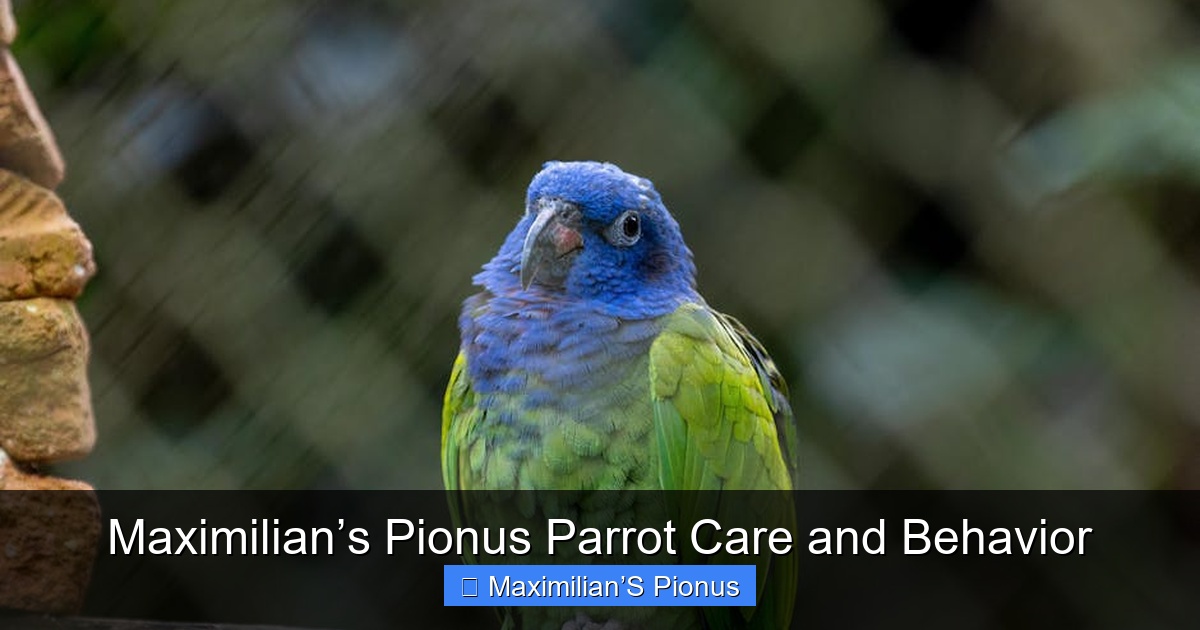
Featured image for this comprehensive guide about Maximilian’s Pionus
Maximilian’s Pionus Parrot Care and Behavior
Are you considering welcoming a feathered friend into your home, or perhaps you’re already captivated by the charm of a Maximilian’s Pionus? These stunning parrots, known for their gentle demeanor and striking beauty, are much more than just pretty faces. They offer a unique blend of quiet companionship and intelligent interaction, making them a favored choice among parrot enthusiasts seeking a less boisterous yet equally engaging avian companion.
Often overlooked in favor of their more flamboyant cousins, the Maximilian’s Pionus (Pionus maximiliani) possesses a subtle elegance and a personality that truly shines once you get to know them. Unlike some larger parrots that demand constant attention with loud calls, the Maximilian’s is generally more reserved, emitting soft, almost purring sounds when content, and a distinctive “wheeze” when excited or alarmed. This makes them an excellent option for apartment dwellers or those who appreciate a calmer household environment.
In this comprehensive guide, we’ll dive deep into everything you need to know about caring for a Maximilian’s Pionus, from understanding their natural behaviors and dietary needs to creating an enriching environment that fosters their well-being. Whether you’re a seasoned parrot owner or new to the world of avian companionship, prepare to unlock the secrets to a happy, healthy, and fulfilling life with your magnificent Maximilian.
📋 Table of Contents
- Understanding the Maximilian’s Pionus: Origins, Appearance, and Temperament
- Creating the Perfect Home: Housing and Environment for Your Maximilian’s Pionus
- Fueling Their Health: Diet and Nutrition for Maximilian’s Pionus
- Nurturing Mind and Body: Exercise, Enrichment, and Training for Maximilian’s Pionus
- Keeping Them Healthy: Common Health Issues and Preventive Care for Maximilian’s Pionus
- Behavioral Insights and Troubleshooting for Maximilian’s Pionus Owners
- Conclusion
Understanding the Maximilian’s Pionus: Origins, Appearance, and Temperament
The Maximilian’s Pionus is a parrot species native to South America, primarily found in Brazil, Bolivia, Paraguay, and Argentina. They inhabit a variety of environments, from humid lowland forests to dry scrubland and even cultivated areas, showcasing their adaptability. Understanding their natural habitat provides crucial insights into their needs as pets, particularly regarding their diet and need for a stimulating environment.
While other parrot species like the Bronze-Winged Pionus share similar habitats, each has distinct care requirements. The Maximilian’s Pionus thrives on a balanced diet and mental stimulation, just as many small parrots such as Amazonian Parrotlets require specific diets and social interactions.
Distinctive Appearance
At first glance, the Maximilian’s Pionus might appear predominantly green, but a closer look reveals a kaleidoscope of subtle colors that give them their unique appeal. They typically measure around 11-12 inches (28-30 cm) in length and weigh between 200-250 grams. Key features include:
| Characteristic | Maximilian’s Pionus Detail | Notes / Comparison |
|---|---|---|
| Scientific Name | Pionus maximiliani | Also widely known as the Scaly-headed Pionus due to its distinct head feathering. |
| Native Region | South America (Brazil, Argentina, Paraguay, Bolivia) | Found in various humid forest and woodland habitats. |
| Average Size | 10-12 inches (25-30 cm) | A medium-sized parrot, known for a stocky build and weighing around 220-280g. |
| Average Lifespan | 25-35 years | Requires a significant long-term commitment from owners. |
| Temperament | Calm, gentle, less prone to screaming | Often described as “laid-back” and can be quite affectionate and cuddly with owners. |
| Vocalization | Moderate, melodic calls; can learn some words | Generally quieter than many Amazon or Cockatoo species, making them suitable for apartments. |
- Head: A distinctive dusky brown to purple-brown crown and nape, often with a hint of iridescent blue.
- Body: Mostly green plumage, with a bronze-olive wash on the upper back.
- Underwings: Beautiful blue underwing coverts, visible during flight.
- Vent: Red feathers under the tail, a common trait among Pionus parrots.
- Eyes: Dark eyes surrounded by a bare, grayish eye-ring.
- Beak: A horn-colored beak with a dark tip.
While there are four recognized subspecies, their care requirements are largely consistent, focusing on the needs of the species as a whole.
Gentle and Affectionate Temperament
One of the most appealing aspects of the Maximilian’s Pionus is their temperament. They are often described as:
- Calm and Gentle: Generally less prone to the loud screaming bouts associated with some other parrot species, making them suitable for many living situations.
- Affectionate: They form strong bonds with their human companions, enjoying head scratches and gentle interaction. While they might not be as overtly cuddly as some cockatoos, their affection is deep and loyal.
- Intelligent: Like all parrots, they are highly intelligent and require mental stimulation to thrive. They can learn to mimic words and phrases, though they are not known for extensive vocabularies like some Amazon parrots. Their intelligence manifests more in problem-solving and observational learning.
- Independent: While they enjoy interaction, they are also capable of entertaining themselves, especially if provided with plenty of toys and enrichment.
- Sensitive: They can be sensitive to stress and changes in their environment. A stable routine and a calm household contribute significantly to their well-being.
A well-socialized Maximilian’s Pionus can be a delightful and rewarding companion for many years, often living 20-30 years or longer with proper care.