
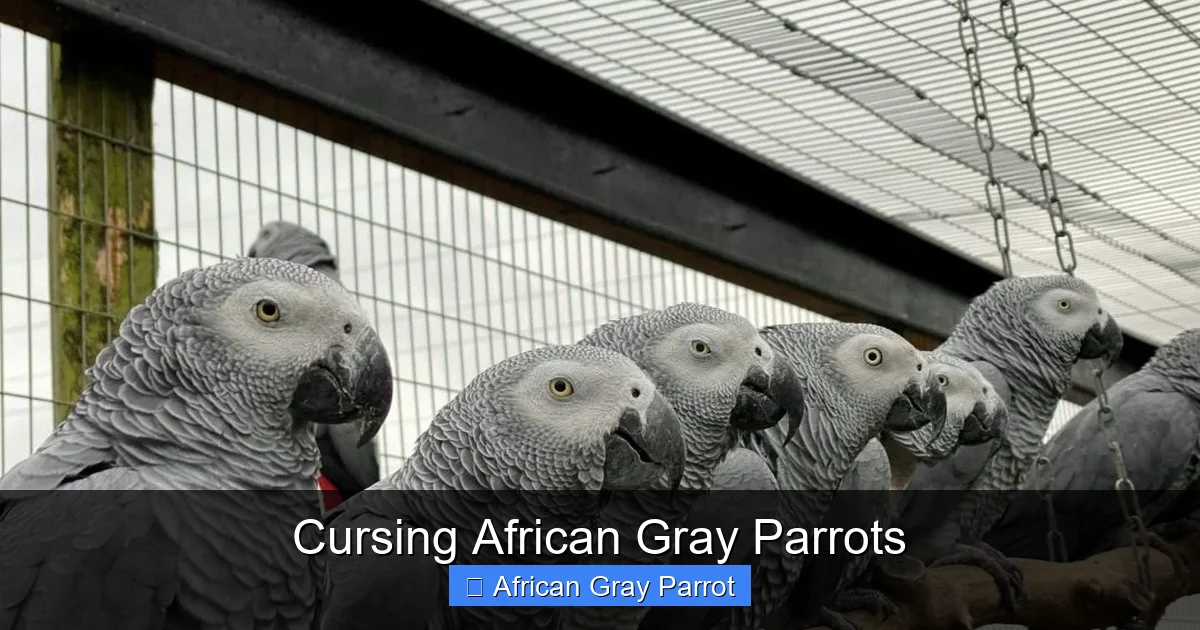
Cursing African gray parrots are famous for their uncanny ability to mimic human profanity with perfect timing. These intelligent birds pick up swear words quickly because of the emotional emphasis humans place on them. With patience and consistent training, you can redirect their vocabulary toward more family-friendly phrases.
Key Takeaways
- African greys mimic emotional speech: They learn curse words faster than normal words because humans say them with high emotion and emphasis.
- Reinforcement drives the behavior: Laughing or reacting strongly when your parrot swears accidentally rewards the behavior and makes it repeat.
- Prevention is easier than correction: Watching your own language around the bird stops bad habits before they start.
- Redirection works better than punishment: Teaching replacement phrases and rewarding them builds a better vocabulary over time.
- Consistency across the household matters: Everyone in the home must follow the same rules or the bird will keep picking up bad words.
- Some parrots never fully stop: Older birds with years of cursing history may always slip up, but frequency can be reduced significantly.
- Professional help exists for tough cases: Avian behaviorists can create custom plans when home training isn’t working.
Quick Answers to Common Questions
Why do African grey parrots learn curse words faster than other words?
African greys learn curse words faster because humans say them with high emotion, distinctive intonation, and emphasis, making these words more memorable and salient to the bird’s pattern-recognition system.
How long does it take to stop an African grey from cursing?
Retraining can take weeks to months depending on how long the behavior has been reinforced, with older birds requiring more time due to deeply established neural pathways for those vocalizations.
Should I punish my parrot when it swears?
No, punishment does not work because any reaction, even negative attention, rewards the behavior. Complete extinction (zero reaction) combined with heavy reinforcement of alternative words is the effective approach.
Can a rescue African grey with years of cursing history be retrained?
Yes, rescue birds can be retrained using the same extinction and reinforcement principles, though it typically takes longer and requires more patience due to the long reinforcement history.
What replacement phrases work best for redirecting cursing?
Replacement phrases should match the emotional energy of the curse words, such as “Oh my!” “Goodness!” “Oops!” or “Holy moly!” said with similar emphasis and in the same triggering contexts.
📑 Table of Contents
Why Your African Grey Sounds Like a Sailor
You walk into the living room and your African grey lets out a string of words that would make a truck driver blush. Sound familiar? You are not alone. Cursing African gray parrots are practically an internet phenomenon at this point. Videos of these birds dropping F-bombs at dinner parties or yelling insults at the family cat rack up millions of views.
But when it happens in your own home, it is less funny and more embarrassing. Especially when guests come over. Or when your parrot decides to serenade the repairman with a greatest hits album of profanity. The good news? This behavior is completely normal for the species. The better news? You can actually do something about it.
African greys are widely considered the best talking parrots on the planet. Their cognitive abilities rival those of a young child. They do not just repeat sounds. They understand context. They know when to use certain phrases. That is exactly why cursing African gray parrots are so good at dropping the perfect swear word at the perfect moment. They have watched you. They have learned the rhythm. And they are performing for an audience.
The Science Behind the Swearing
Emotional Weight Makes Words Sticky
Here is the thing about curse words. They carry emotional weight. When you stub your toe and shout a four-letter word, your voice changes. Your pitch goes up. Your volume spikes. Your face shows intense feeling. To an African grey, that moment stands out like a neon sign.
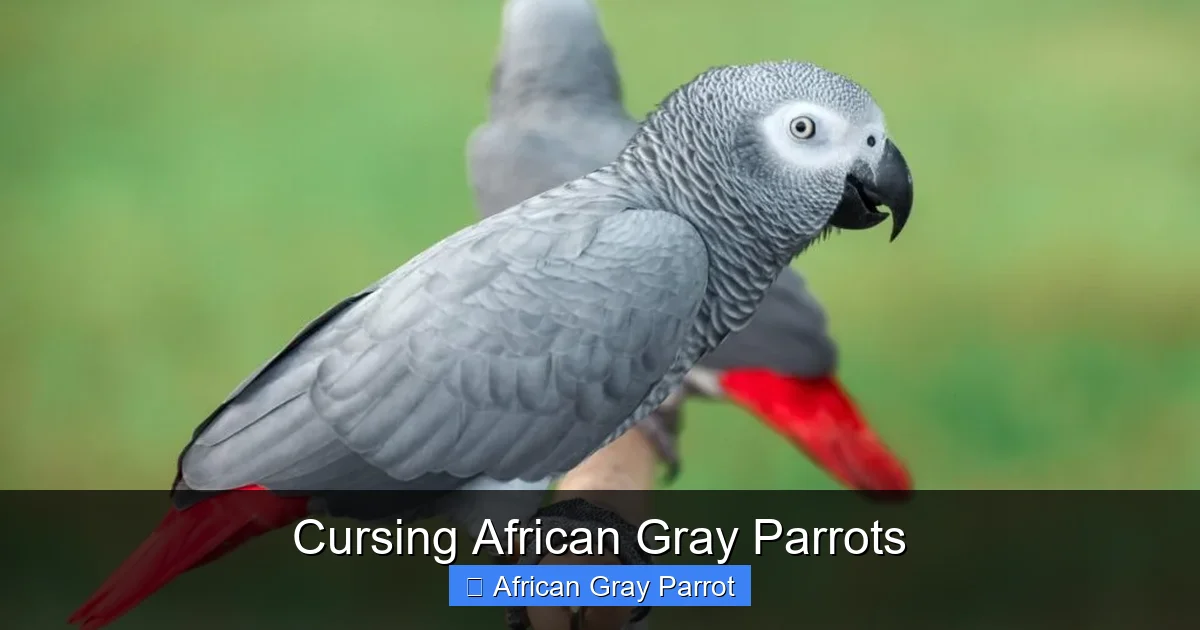
Visual guide about Cursing African Gray Parrots
Image source: gizmodo.com
Normal conversation? That is background noise. But an emotional outburst? That is data worth storing. The bird’s brain flags it as important. Next time the bird wants attention or wants to match the energy in the room, it pulls that file.
Researchers who study parrot cognition have found that African greys attend to prosody. That is the rhythm, stress, and intonation of speech. Curse words almost always have distinctive prosody. They are short. Punchy. Stressed. That makes them easy to mimic and easy to deploy for effect.
Social Learning and the Flock Dynamic
In the wild, African greys live in large flocks. They learn vocalizations from each other. They practice contact calls. They mimic alarm calls. This social learning drive does not disappear in captivity. Your family becomes the flock. You are the models.
If the flock uses certain sounds during high-arousal moments, the bird learns those sounds belong in high-arousal moments. It is not being bad. It is being a good flock member. It is doing exactly what evolution programmed it to do. Learn the local dialect. Use it appropriately.
The Accidental Reinforcement Trap
This is where most owners go wrong. The first time your parrot drops a curse word, what do you do? You laugh. You gasp. You call your partner over. “Did you hear that? He said the thing!” You might even record it for social media.
To the bird, that reaction is a jackpot. Attention. Excitement. Energy. The flock is responding. The behavior worked. So the bird does it again. And again. Each time you react, you pour gasoline on the fire. Even negative attention works. Yelling “No!” or “Bad bird!” still gives the bird what it wants. Your focus. Your voice. Your energy.
Prevention: The Best Cure
Watch Your Own Mouth
The single most effective strategy for cursing African gray parrots is simple. Do not swear in front of them. Ever. Not when you drop a pan. Not when the traffic is terrible. Not when your favorite team loses. The bird is always listening. Always learning.
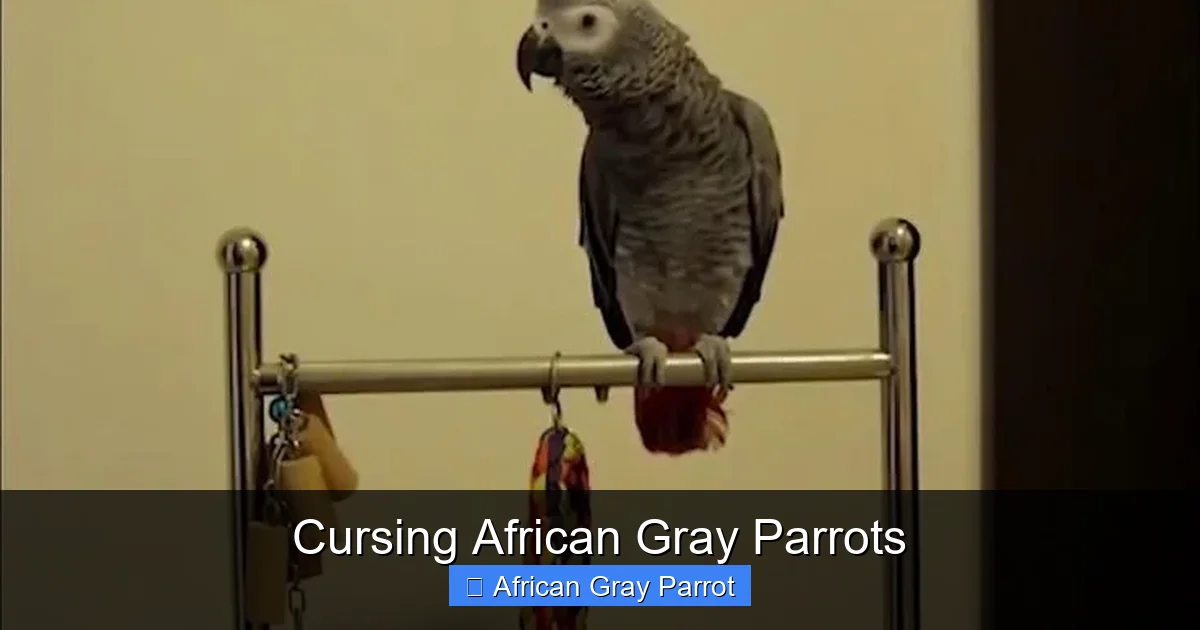
Visual guide about Cursing African Gray Parrots
Image source: i.pinimg.com
This is harder than it sounds. Curse words are automatic for many adults. They slip out before you think. But if you want a clean-mouthed bird, you need a clean-mouthed household. Some owners wear a rubber band on their wrist and snap it when they curse. Others put a swear jar by the cage. Find what works for you.
Teach the Household
You cannot do this alone. If your partner swears like a sailor and your teenager thinks it is hilarious when the bird curses, you will lose. Have a family meeting. Explain the plan. Make it a game. Whoever slips up owes the bird a new toy or a special treat. Kids often become the best enforcers once they understand the stakes.
Control the Environment
Television, movies, video games, podcasts. Your parrot hears all of it. That R-rated comedy special you are watching at 10 PM? The bird is taking notes. The online game with the toxic chat? Vocabulary lesson. Be mindful of what plays in the same room as your bird. Headphones are your friend. So is a separate room for the cage during adult entertainment time.
Retraining a Potty-Mouthed Parrot
The Extinction Method
If your bird already curses, you need extinction. That means zero reaction. None. Not a glance. Not a sigh. Not a whispered “oh no.” You become a statue. The bird says the word. You keep folding laundry. You keep reading. You keep walking.
This feels wrong. Every instinct says to correct the bird. But correction is attention. And attention is the reward. Extinction bursts are real. The bird will try harder. Louder. More frequent. Different variations. It is testing to see if the old button still works. You must outlast it. Weeks. Maybe months. But eventually, the behavior fades when it stops paying off.
Differential Reinforcement
While you ignore the bad, you must heavily reward the good. This is differential reinforcement of alternative behavior. Every time your bird says something acceptable, you party. “Hello!” gets a treat. “Pretty bird!” gets a head scratch. “Want a nut?” gets a nut.
Make the approved phrases pay better than the curse words ever did. High-value treats. Enthusiastic praise. Favorite activities. The bird is smart. It will do the math. Good words equal jackpot. Bad words equal nothing. The shift happens naturally.
Teach Replacement Phrases
Pick specific phrases to replace the curse words. If the bird swears when startled, teach “Oh my!” or “Goodness!” or “Holy moly!” If it swears when you drop something, teach “Oops!” or “Clumsy me!” Match the emotional energy of the original. The replacement needs to feel just as satisfying to say.
Practice these replacements daily. Say them with feeling. Use them in context. When you stub your toe, loudly say “Oh my goodness!” The bird will notice. It will compare. It will eventually swap the files.
The Clicker Training Advantage
Clicker training adds precision. Click the exact moment the bird says an approved word. Then treat. The click marks the behavior like a highlighter. The bird learns faster. You can shape longer phrases. You can chain behaviors. “Hello” click treat. “Hello pretty” click treat. “Hello pretty bird” click treat.
Keep sessions short. Five minutes max. Two or three times a day. End on a win. Always. A frustrated bird learns nothing. A successful bird wants more.
Special Situations and Challenges
The Rescue Bird With a History
Adopted an older African grey? It might come with a vocabulary that would make a comedian blush. Rescue birds often learned their words in previous homes. Or in chaotic environments. You did not teach them. But you own the problem now.
These birds need more patience. Their neural pathways for those words are deep. Myelinated. High-speed highways. Building new pathways takes longer. But it works. The same principles apply. Extinction plus reinforcement. Just expect a longer timeline. Celebrate small wins. A week without the F-word is a victory.
The Bird That Curses for Attention
Some birds figure out the pattern. They want you in the room. They scream a curse word. You come running. “Quiet!” you say. Mission accomplished. The bird trained you.
Break this cycle by giving attention on a schedule. Not on demand. Set timers. Every 30 minutes, go to the bird. Talk. Play. Train. Give undivided attention for five minutes. Then leave. The bird learns attention comes reliably. It does not need to manufacture crises.
The Selective Curser
Does your bird only curse at your mother-in-law? Only when the kids are fighting? Only at the vet? That is context awareness. The bird has matched the word to the situation. It knows that word fits that energy.
You cannot easily fix the trigger. But you can change the response. If the bird curses at the vet, practice vet visits at home. Towel training. Carrier training. Stranger handling. Make the situation boring. Routine. Low emotion. The curse word loses its context.
When to Call a Professional
Signs You Need Help
Six months of consistent training. Zero improvement. The bird curses more than ever. The behavior escalates to screaming or aggression. You are frustrated to the point of considering rehoming. These are signs to bring in an expert.
Avian veterinarians can rule out medical causes. Pain, hormonal shifts, neurological issues can all change vocal behavior. A clean bill of health means it is behavioral. Then a certified parrot behavior consultant can observe your specific dynamic. They see things you miss. They customize the plan.
What a Consultant Does
A good consultant takes a full history. Diet. Sleep. Cage setup. Daily routine. Household dynamics. Training history. They watch you interact with the bird. They identify the maintaining variables. Then they give you a written protocol. Step by step. Measurable goals. Follow-up support.
This is not cheap. But it is cheaper than years of frustration. Or a bird that loses its home. Many consultants offer virtual sessions now. Geography is not a barrier.
Living With a Reformed Curser
Realistic Expectations
Here is the honest truth. Some cursing African gray parrots never stop completely. A word learned 15 years ago lives in deep memory. Stress, excitement, illness, or a new person can trigger an old recording. It does not mean you failed. It means the bird has a brain.
Goal is reduction. Not perfection. Ninety percent less cursing is a massive win. Cursing only when genuinely startled instead of all day is a win. The bird saying “Oh shoot” instead of the F-bomb is a win. Measure progress in months. Not days.
The Joy of a Clean Vocabulary
When the work pays off, it is magical. Your bird greets guests with “Hello, how are you?” instead of an insult. It asks for “Scritches please” instead of screaming obscenities. It laughs at the right moments. It sings the theme song to your favorite show.
You realize the cursing was just the tip of the iceberg. Underneath is a bird that understands conversation. That uses language to connect. That chooses words to make you happy. That is the real gift of an African grey. The cursing was just a detour.
Maintaining the Gains
Training is not a one-time event. It is a lifestyle. Keep modeling good language. Keep rewarding good words. Keep the schedule. Keep the enrichment. A bored, lonely, understimulated bird reverts to old habits. A busy, engaged, loved bird keeps learning.
Rotate toys weekly. Forage daily. Train new tricks monthly. Socialize constantly. The best prevention for bad behavior is a full life. Your African grey deserves that. And you deserve the companion that results.
Conclusion
Cursing African gray parrots are not broken. They are not bad. They are doing exactly what their magnificent brains evolved to do. Learn the language of their flock. Use it with precision. Match the emotion of the moment. The fact that they chose your worst words is actually a compliment. It means they were paying close attention to you.
Changing the vocabulary takes time. Consistency. Patience. A sense of humor helps. There will be setbacks. There will be moments you want to laugh when you should stay stone-faced. There will be days you wonder if it is worth it.
It is. Every owner who has come out the other side will tell you the same thing. The first time your bird spontaneously says “I love you” instead of a curse word, you will forget all the hard work. You will just hear your feathered family member. Speaking from the heart. In words you taught them. With meaning you both understand.
Start today. One word at a time. One reaction at a time. One day at a time. Your African grey is ready to learn whatever you teach. Make it something beautiful.
Frequently Asked Questions
Is it harmful for my African grey to hear curse words on TV?
Yes, parrots learn from all audio in their environment, including television, movies, and video games. They do not distinguish between live speech and recorded speech. Limit exposure to adult content when your bird is in the room.
My parrot only curses when my husband is home. Why?
Your parrot has associated your husband with the specific context where those words were originally modeled or reinforced. The bird may also be mimicking your husband’s speech patterns or reacting to the energy dynamic between them.
Can I teach my African grey to curse on command as a trick?
While technically possible, this is strongly discouraged. Putting cursing on cue still reinforces the vocalization and makes it harder to extinguish. It also creates awkward situations with guests, veterinarians, and potential future homes.
Does covering the cage stop the cursing?
Covering the cage may temporarily stop the noise but does not address the underlying behavior. It can also increase frustration and screaming. Focus on extinction and differential reinforcement instead of suppression.
Will getting a second parrot help reduce cursing?
A second parrot may actually increase vocalization as birds stimulate each other. The new bird might also learn the curse words. Address the behavior directly before adding another bird to the household.
At what age do African greys start picking up curse words?
African greys can begin mimicking speech as early as 6-12 months, but most start talking clearly around 12-18 months. They can learn curse words at any age if exposed to them with sufficient emotional salience.