
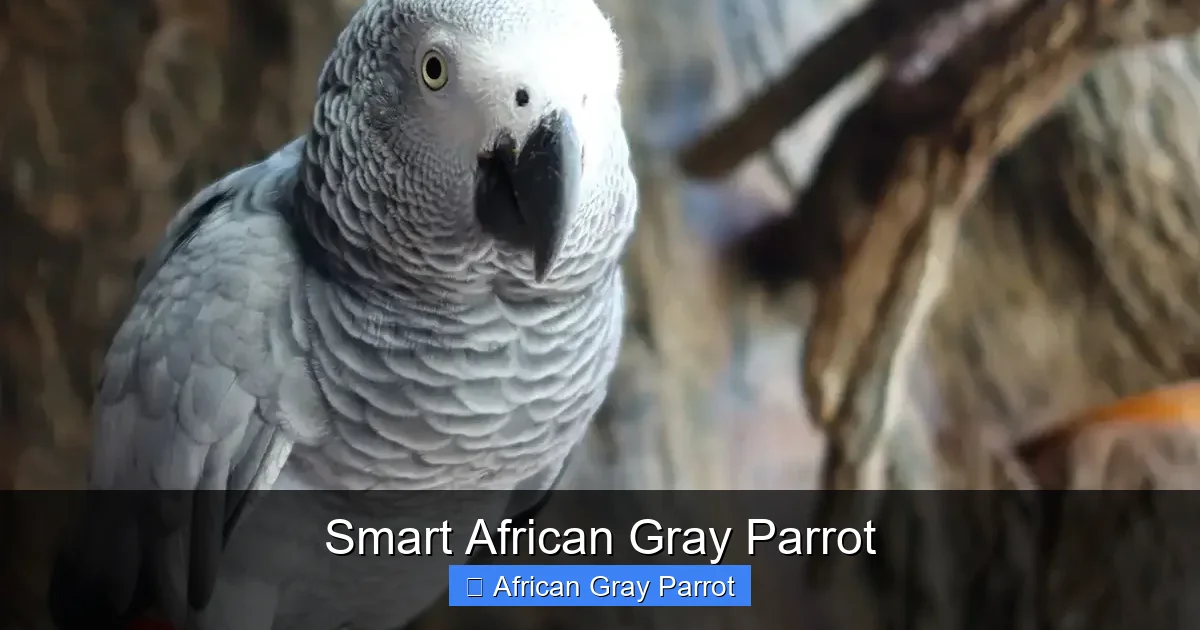
The smart African gray parrot is widely regarded as one of the most intelligent bird species on Earth, with cognitive abilities comparable to a young child. These remarkable parrots can learn hundreds of words, understand concepts like shape and color, and form deep emotional bonds with their human companions.
Have you ever wondered what it would be like to share your home with a feathered genius? The smart African gray parrot might just blow your mind. These incredible birds have fascinated scientists, bird lovers, and pet owners for decades. Their reputation as the Einstein of the bird world is well earned. But there is so much more to these parrots than just their talking ability.
When you bring a smart African gray parrot into your life, you are not just getting a pet. You are welcoming a highly intelligent, emotionally complex, and long-lived companion who will challenge you, entertain you, and quite possibly outsmart you on a regular basis. Let us dive deep into everything you need to know about these extraordinary birds.
Key Takeaways
- Exceptional Intelligence: African gray parrots possess cognitive abilities similar to a 3-5 year old human child, making them the smartest parrots in the world.
- Incredible Vocabulary: These birds can learn 1000+ words and use them in proper context, not just mimicry.
- Long Lifespan Commitment: With proper care, a smart African gray parrot can live 50-60 years, requiring a lifetime commitment.
- High Social Needs: These parrots need several hours of daily interaction and mental stimulation to prevent behavioral issues.
- Two Distinct Subspecies: The Congo African gray and Timneh African gray differ in size, color, and personality traits.
- Specialized Diet Required: A balanced diet of pellets, fresh vegetables, fruits, and limited seeds is essential for health.
- Early Training Matters: Consistent positive reinforcement training from a young age creates a well-adjusted companion.
Quick Answers to Common Questions
How smart is an African gray parrot compared to a human?
African gray parrots have cognitive abilities comparable to a 3-5 year old human child. They can count, understand concepts like same/different, solve puzzles, and use language in context.
Do all African gray parrots talk?
No, not all African grays talk. While most develop some vocabulary, some prefer whistling or making sounds. A non-talking African gray is still highly intelligent.
How long do African gray parrots live?
With proper care, African gray parrots typically live 50-60 years, with some reaching 70-80 years. This requires a lifetime care plan.
Are African gray parrots good for beginners?
Generally no. Their high intelligence, sensitivity, long lifespan, and complex needs make them challenging for first-time bird owners. Experience with parrots is recommended.
What is the difference between Congo and Timneh African grays?
Congos are larger with bright red tails and black beaks. Timnehs are smaller with maroon tails and horn-colored beaks. Timnehs often talk earlier and tend to be slightly more relaxed.
📑 Table of Contents
Understanding the Smart African Gray Parrot
Two Subspecies You Should Know
First things first. There are actually two types of African gray parrots. Both are incredibly smart, but they have some key differences.
The Congo African gray is the larger of the two. They sport bright red tail feathers and a black beak. Their feathers are a lighter shade of gray. These birds tend to be a bit more high-strung and can be shy around strangers. They often bond deeply with one person.
The Timneh African gray is smaller and darker. Their tail feathers are a deep maroon color. They have a horn-colored upper beak. Many owners find Timnehs to be slightly more relaxed and quicker to warm up to new people. They often start talking at a younger age too.
Both subspecies share that remarkable intelligence. The smart African gray parrot title applies equally to both. Your choice often comes down to personal preference and lifestyle.
Natural Habitat and Wild Behavior
In the wild, these parrots call the rainforests of West and Central Africa home. You will find them in countries like Ghana, Ivory Coast, Cameroon, and the Democratic Republic of Congo. They live in large flocks, sometimes numbering in the hundreds.
Wild African grays spend their days foraging for palm nuts, seeds, fruits, and leafy vegetation. They are incredibly social creatures. Their flock dynamics are complex. They communicate constantly through a variety of calls, whistles, and body language.
This social nature is exactly why they need so much interaction in captivity. A lonely African gray is a recipe for disaster. We will talk more about that later.
Why They Are Considered the Smartest Parrots
The research on African gray intelligence is truly mind-blowing. Dr. Irene Pepperberg’s work with her famous parrot Alex changed everything we thought we knew about bird brains.
Alex could identify over 50 objects. He understood concepts like same, different, bigger, smaller, and zero. He could count up to six. He even combined words to create new meanings. When he saw an apple for the first time, he called it a “banerry” – combining banana and cherry.
Other studies have shown that smart African gray parrots can:
- Solve multi-step puzzles
- Use tools in captivity
- Understand cause and effect
- Show evidence of reasoning
- Demonstrate self-awareness
- Exhibit emotional intelligence
Their brain-to-body ratio is similar to that of great apes and marine mammals. The pallium region of their brain, responsible for higher cognitive functions, is highly developed. This is not just mimicry. This is genuine intelligence.
The Incredible Talking Ability
More Than Just Mimicry
Everyone knows African grays can talk. But the smart African gray parrot does so much more than repeat words. They use language in context. They understand what words mean.
Your parrot might say “want water” when their bowl is empty. They might greet you with “hello” when you walk in the door and “bye bye” when you leave. Some learn to associate specific phrases with specific people or situations.
One owner reported their bird saying “ouch” when the owner stubbed a toe. Another bird would say “good job” when the microwave beeped. These are not random sounds. They are appropriate responses to situations.
Vocabulary Potential
A smart African gray parrot can learn an astounding number of words. The average is 200 to 500 words. Exceptional birds have documented vocabularies of 1000 words or more. The Guinness World Record holder, a bird named Prudle, had a vocabulary of over 800 words.
But vocabulary size is not everything. Clarity matters too. African grays are widely considered the clearest talkers in the parrot world. Their voices sound remarkably human. They can mimic different voices, accents, and even household sounds like phones, microwaves, and alarm clocks.
When Do They Start Talking?
Most African grays start mimicking sounds around 6 to 12 months. Clear words often appear between 12 and 18 months. But every bird is different. Some start earlier. Some take longer. Timnehs often talk sooner than Congos.
Here is the important part. Not every African gray will talk. Some prefer whistles and sounds. Others are quiet observers. A non-talking African gray is still a smart African gray parrot. Their intelligence shows in many other ways.
Encouraging Speech Development
Want to help your bird develop their vocabulary? Try these tips:
- Talk to your bird constantly. Narrate your day.
- Use clear, enthusiastic speech.
- Repeat words in context. Say “apple” when offering an apple.
- Play recordings when you are not home.
- Reward attempts with treats and praise.
- Be patient. It takes time.
Remember that your smart African gray parrot is always listening. Even when you think they are not paying attention, they are. Choose your words wisely!
Personality and Emotional Intelligence
Complex Emotional Lives
The smart African gray parrot is not just intellectually gifted. They are emotionally sophisticated. These birds experience a wide range of emotions. Joy, jealousy, grief, anger, affection, and anxiety are all part of their repertoire.
They form incredibly strong bonds with their chosen people. This bond can look a lot like love. Your parrot may preen your hair, snuggle against your neck, and make soft contented sounds when you are near. They may become visibly distressed when you leave.
But this deep attachment has a flip side. Separation anxiety is common. Jealousy toward other pets or family members happens frequently. A smart African gray parrot may scream, bite, or pluck feathers when they feel neglected.
Sensitivity and Empathy
Many owners swear their African gray knows exactly how they feel. These birds are highly attuned to human emotions. They notice changes in your tone, posture, and energy.
If you are crying, your parrot may become quiet and gentle. They might offer a soft kiss or rest their head on your shoulder. If you are angry, they may become agitated or try to deflect with humor. Some birds even mimic laughter during tense moments.
This sensitivity means your mood directly affects your bird. A household full of stress and conflict will create a stressed, anxious parrot. A calm, loving home creates a confident, happy bird.
The One-Person Bird Tendency
African grays, especially Congos, often become “one-person birds.” They choose a favorite human and may tolerate or even dislike everyone else. This can be challenging in a family setting.
Socialization from a young age helps. Having multiple family members handle, feed, and train the bird reduces this tendency. But even well-socialized birds often have a clear favorite. It is just part of their nature.
Playfulness and Humor
Do not let their serious reputation fool you. The smart African gray parrot has a fantastic sense of humor. They love to play tricks. They enjoy making you laugh. They create games and invite you to participate.
Your bird might drop a toy repeatedly just to watch you pick it up. They might mimic the phone ringing and then say “hello” when you answer. They might pretend to be asleep, then suddenly shout “boo!”
This playfulness is a sign of intelligence. It requires imagination, timing, and understanding of cause and effect. Enjoy it. It is one of the joys of living with these birds.
Housing and Environment Requirements
Choosing the Right Cage
Your smart African gray parrot spends a lot of time in their cage. It needs to be spacious, safe, and stimulating. Bigger is always better.
Minimum cage dimensions should be 36 inches wide, 24 inches deep, and 48 inches tall. But honestly? Go larger if you can. A flight cage or aviary is ideal. Bar spacing should be 3/4 to 1 inch. Horizontal bars on at least two sides allow for climbing.
Stainless steel is the gold standard. It is non-toxic, easy to clean, and virtually indestructible. Powder-coated cages are fine if the coating is high quality and lead-free. Avoid cheap painted cages. African grays will chip the paint and ingest it.
Perch Variety Is Critical
Foot health depends on perch variety. Your smart African gray parrot needs:
- Natural wood branches of varying diameters
- Rope perches for comfort
- Cement or sand perches for nail maintenance (use sparingly)
- Platform perches for resting
- Swing perches for fun and balance
Rotate perches regularly. Place them at different heights. Avoid placing perches directly over food and water bowls. Droppings contaminate quickly.
Toy Rotation and Enrichment
A bored African gray is a destructive African gray. These birds need constant mental stimulation. Provide a minimum of 10 to 15 toys at any given time. Rotate them weekly.
Toy categories to include:
- Foraging toys (puzzle feeders, hidden treats)
- Shreddable toys (paper, palm, balsa wood)
- Manipulative toys (nuts, bolts, beads, links)
- Foot toys (small items to hold and explore)
- Noise makers (bells, rattles, musical toys)
- Preening toys (rope, fleece strips)
DIY toys are great too. Phone books, cardboard boxes, paper cups, and untreated pine cones provide hours of entertainment. Just ensure all materials are bird-safe.
Lighting and Temperature
African grays come from equatorial regions. They need 10 to 12 hours of quality light daily. Full-spectrum UVB lighting is essential for vitamin D synthesis and calcium metabolism. Replace bulbs every 6 to 12 months even if they still work.
Room temperature should stay between 65 and 80 degrees Fahrenheit. Avoid drafts, direct sunlight on the cage, and sudden temperature changes. Humidity around 50 to 60 percent is ideal. A humidifier helps in dry climates.
Out-of-Cage Time
This is non-negotiable. Your smart African gray parrot needs a minimum of 3 to 4 hours outside the cage daily. More is better. This time should include:
- Direct interaction with you
- Training sessions
- Exploration of bird-safe areas
- Foraging opportunities
- Flight time (if wings are not clipped)
Bird-proof the room first. Cover windows. Remove toxic plants. Hide electrical cords. Secure ceiling fans. Put away anything you do not want destroyed. Because it will be destroyed.
Nutrition and Health Care
The Foundation: High-Quality Pellets
Diet is the single biggest factor in your smart African gray parrot’s long-term health. The base diet should be 60 to 70 percent high-quality pellets. Look for brands formulated specifically for African grays. Avoid pellets with artificial colors, flavors, or preservatives.
Harrison’s, Roudybush, and TOPS are respected brands. Your avian vet can recommend the best option for your bird. Transition slowly from seeds if needed. Never starve a bird into eating pellets.
Fresh Foods Daily
The remaining 30 to 40 percent should be fresh vegetables, fruits, grains, and legumes. Variety is key. Aim for a rainbow of colors every day.
Excellent vegetable choices:
- Dark leafy greens (kale, collards, swiss chard)
- Orange vegetables (sweet potato, carrots, pumpkin)
- Cruciferous vegetables (broccoli, cauliflower, Brussels sprouts)
- Peppers of all colors
- Green beans, snap peas, zucchini
Fruits should be offered in moderation due to sugar content. Berries, papaya, mango, apple (no seeds), and pomegranate are great choices.
Cooked grains like quinoa, brown rice, and barley add variety. Legumes such as lentils, chickpeas, and mung beans provide protein. Sprouted seeds are nutritional powerhouses.
Calcium and Vitamin A: Special Concerns
African grays have higher calcium needs than many parrots. They are prone to hypocalcemia (low blood calcium). This can cause seizures, weakness, and egg-binding in females.
Provide calcium through:
- Dark leafy greens daily
- Cuttlebone or calcium block in cage
- Calcium supplement if recommended by vet
- Full-spectrum lighting for D3 synthesis
Vitamin A deficiency is also common. Orange and dark green vegetables prevent this. Never supplement vitamin A without veterinary guidance. It can be toxic in excess.
Foods to Avoid Completely
Never feed your smart African gray parrot:
- Avocado (toxic)
- Chocolate (toxic)
- Caffeine (toxic)
- Alcohol (toxic)
- Onions and garlic (toxic)
- Mushrooms (potentially toxic)
- Rhubarb (toxic)
- Apple seeds and fruit pits (cyanide)
- Salt, sugar, fried foods
- Dairy (birds cannot digest lactose)
Water and Hydration
Fresh water must be available 24/7. Change it at least twice daily. More often if your bird dunks food or poops in it. A water bottle reduces contamination but offer a bowl too. Many African grays prefer bathing in their water bowl.
Regular Veterinary Care
Find an avian veterinarian before you bring your bird home. Not all vets treat birds. Schedule a well-bird exam within the first week. Then annual checkups.
African grays are masters at hiding illness. By the time you see symptoms, they are often very sick. Watch for:
- Changes in droppings
- Fluffed feathers
- Decreased appetite
- Voice changes
- Sneezing or nasal discharge
- Balance issues
- Feather destructive behavior
Annual blood work catches problems early. Psittacosis, PBFD, and ABV testing may be recommended. Discuss vaccination options with your vet.
Training and Behavioral Management
Positive Reinforcement Only
The smart African gray parrot responds beautifully to positive reinforcement. They shut down with punishment. Yelling, spraying water, covering the cage, or physical discipline destroys trust and creates fear.
Instead, reward desired behaviors immediately. Use treats, praise, head scratches, or access to favorite activities. Clicker training works exceptionally well. The click marks the exact moment of correct behavior.
Essential Training Foundations
Every African gray should learn these basics:
- Step up onto hand or perch
- Step down onto designated spots
- Target training (touch stick with beak)
- Recall (fly or walk to you on cue)
- Crate or carrier training
- Accepting medication from syringe
- Allowing nail trims and wing checks
Train in short sessions. 5 to 10 minutes, 2 to 3 times daily. End on a positive note. Keep it fun. Your smart African gray parrot will look forward to training time.
Addressing Problem Behaviors
Even well-raised birds develop issues. The key is understanding the cause.
Screaming: Usually attention-seeking or contact calling. Ignore the scream. Reward quiet. Ensure needs are met. Teach an acceptable contact call.
Biting: Fear, hormonal, territorial, or displaced aggression. Learn body language. Respect boundaries. Never force interaction. Build trust slowly.
Feather Plucking: Medical, psychological, or environmental. Rule out medical first. Then address enrichment, diet, sleep, humidity, and stress. This is complex. Work with your vet and a behaviorist.
Phobic Behavior: Sudden fear of familiar things. Common in African grays. Slow desensitization. Maintain routine. Avoid major changes during phobic episodes.
Hormonal Season Management
Spring brings hormonal surges. Your sweet bird may become territorial, loud, and aggressive. They may regurgitate for you, shred paper obsessively, or defend their cage fiercely.
Manage hormones by:
- Limiting daylight to 10-11 hours
- Avoiding warm, mushy foods
- Removing nest-like spaces (boxes, tents)
- Limiting petting to head and neck only
- Increasing exercise and foraging
- Not encouraging mating behaviors
This phase passes. Stay consistent. Do not take it personally.
The Long-Term Commitment
Lifespan Reality
Let us talk about the elephant in the room. A smart African gray parrot lives 50 to 60 years with good care. Some reach 70 or even 80. This is not a pet. This is a lifetime companion. Possibly multi-generational.
You need a plan. Who cares for your bird if you become ill? If you pass away? Include your parrot in your will. Designate a guardian. Set up a trust fund for their care. Talk to your family. This is responsible ownership.
Financial Considerations
The initial cost of a smart African gray parrot ranges from $2,000 to $5,000 depending on subspecies, age, and source. But the purchase price is just the beginning.
Annual costs typically include:
- High-quality food: $500-$800
- Toys and enrichment: $300-$500
- Routine vet care: $200-$400
- Emergency fund: $1,000+ (essential)
- Cage and supplies replacement: $200-$400
- Boarding or pet-sitting: $300-$600
Over 50 years, we are talking tens of thousands of dollars. Pet insurance for birds exists but is limited. A dedicated savings account is wise.
Lifestyle Impact
Your daily routine revolves around your bird. Morning feeding and medication. Evening cage cleaning and prep. Weekends for deep cleaning and toy making. Vacations require trusted bird-sitters. Spontaneous overnights are a thing of the past.
Noise is a factor. African grays are not the loudest parrots, but they can be loud. Their contact calls carry. Apartment living can be challenging. Neighbors may complain.
Dust is another consideration. African grays produce significant feather dust. Air purifiers are mandatory. Allergy sufferers may struggle. Daily cleaning is non-negotiable.
The Rewards Are Immeasurable
Despite the challenges, ask any devoted African gray owner. They will tell you it is worth every sacrifice. The bond you form with a smart African gray parrot is unlike any other pet relationship.
You will have conversations. Real, meaningful exchanges. You will watch them solve problems you created. You will laugh at their jokes. You will be comforted by their empathy. You will witness intelligence that humbles you.
They become family in the truest sense. A feathered child who never grows up and never moves out. And you will never be lonely again.
Finding Your Smart African Gray Parrot
Adoption vs. Purchase
Please consider adoption first. Rescues and sanctuaries are full of African grays needing homes. Many are surrendered due to life changes, not behavioral issues. Adult birds bond beautifully. You skip the baby phase. You know their personality.
If you purchase, choose carefully. Avoid pet stores. Most source from bird mills. Seek a reputable breeder who:
- Allows facility visits
- Shows parent birds
- Provides health guarantees
- Offers lifetime support
- Weans onto healthy diet
- Socializes babies extensively
- Does not sell unweaned babies
Expect a waiting list. Good breeders have them. This is a good sign.
Red Flags to Avoid
- Selling unweaned babies (“hand-feeding finishes bonding”)
- No health testing or guarantees
- Multiple species bred in same facility
- Dirty or overcrowded conditions
- Pressure to buy quickly
- Prices significantly below market
- Shipping without proper arrangements
Preparing for Arrival
Before your smart African gray parrot comes home:
- Cage set up and bird-proofed
- Toys and perches installed
- Food purchased (same as breeder/rescue uses initially)
- Avian vet appointed and first visit scheduled
- Household members educated on rules
- Other pets managed for safety
- Quiet room designated for adjustment period
The first few weeks are about trust-building. Go slow. Let them observe. Offer treats through cage bars. Talk softly. Respect their space. The relationship you build now sets the tone for decades.
Conclusion
The smart African gray parrot is truly one of nature’s masterpieces. Their intelligence, personality, and capacity for connection make them extraordinary companions. But they are not for everyone. They demand time, money, patience, and a level of commitment few pets require.
If you have the resources, the dedication, and the heart for it, sharing your life with an African gray can be the most rewarding relationship you ever experience. You will learn as much from them as they learn from you. Maybe more.
Do your research. Talk to current owners. Visit rescues. Spend time with adult birds. Make an informed decision. And if you do choose to welcome a smart African gray parrot into your home, prepare for an adventure that will last a lifetime.
Your feathered Einstein is waiting. Are you ready?
Frequently Asked Questions
How much does a smart African gray parrot cost?
The purchase price ranges from $2,000 to $5,000 depending on subspecies, age, and source. Annual care costs run $1,500-$2,500 for food, toys, vet care, and supplies. Emergency funds of $1,000+ are essential.
Can African gray parrots be left alone during the day?
African grays should not be left alone for more than 4-6 hours regularly. They need social interaction and mental stimulation. If you work full-time, consider a bird-sitter, companion bird, or working from home arrangements.
Why is my African gray plucking feathers?
Feather plucking has medical, psychological, or environmental causes. Medical issues like skin infections, allergies, or organ disease must be ruled out first. Then address enrichment, diet, sleep, humidity, stress, and hormonal triggers with your avian vet.
What size cage does an African gray need?
Minimum cage size is 36″W x 24″D x 48″H with 3/4 to 1″ bar spacing. Larger is always better. Stainless steel is ideal. The cage needs horizontal bars for climbing and multiple doors for access.
How do I stop my African gray from screaming?
Identify the cause: contact calling, attention-seeking, boredom, fear, or hormonal. Ignore screaming completely. Reward quiet behavior. Ensure all needs are met. Teach an acceptable contact call. Never yell back – this reinforces the behavior.
Are African gray parrots messy?
Yes. They produce significant feather dust, drop food, shred toys, and splash water. Daily cage paper changes, weekly deep cleaning, and HEPA air purifiers are necessary. They are not suitable for people with allergies or respiratory sensitivities.