
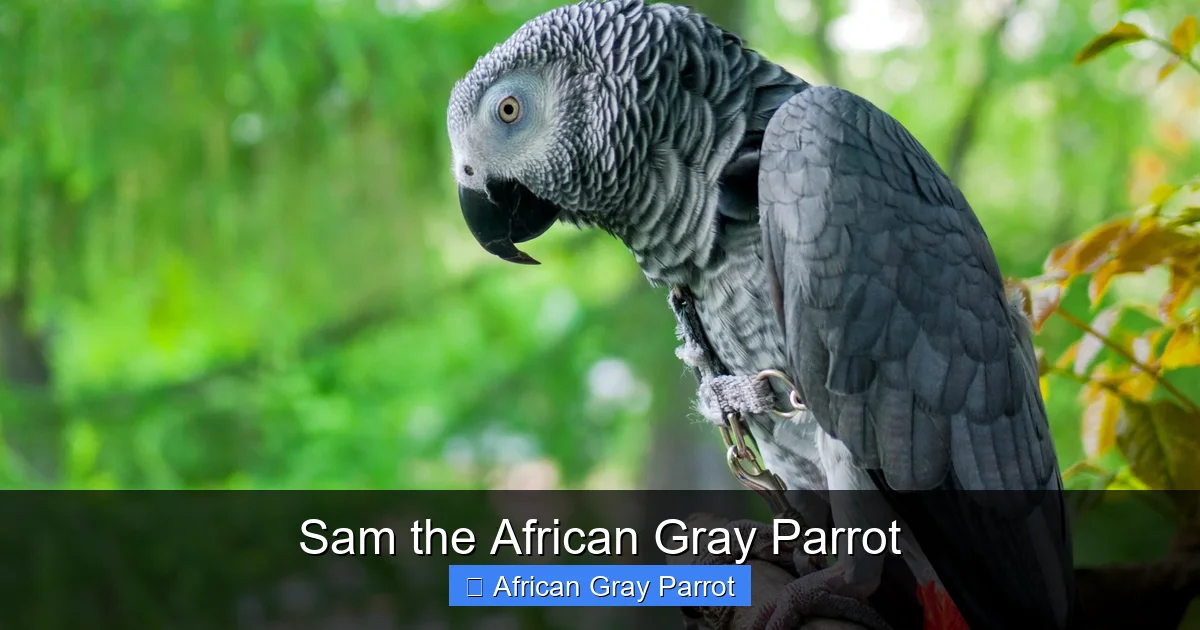
Sam the African Gray Parrot represents the pinnacle of avian intelligence, showcasing remarkable cognitive abilities that rival young children. These extraordinary birds form deep emotional bonds, master extensive vocabularies, and require dedicated care to thrive in captivity for their 50-60 year lifespan.
When you first meet Sam the African Gray Parrot, something remarkable happens. He doesn’t just look at you—he studies you. Those intelligent amber eyes seem to calculate your intentions, your mood, your very essence. Then, in a voice that sounds uncannily like your own, he might greet you with a perfect “Hello there” or ask “What are you doing?” at exactly the right moment. This isn’t a party trick. This is the daily reality of living with one of the most intelligent creatures on our planet.
African Gray Parrots have captivated humans for centuries. Ancient Egyptians kept them as prized companions. Portuguese sailors brought them to Europe during the Age of Exploration. Today, they remain among the most sought-after avian companions worldwide. But Sam represents something more than just a pet—he embodies the profound connection possible between humans and birds when we respect their extraordinary nature. His story, and the stories of countless African Grays like him, teach us about intelligence, empathy, and the responsibility that comes with caring for a being who may outlive us.
This comprehensive guide explores everything you need to know about African Gray Parrots through the lens of Sam’s experience. Whether you’re considering bringing one of these remarkable birds into your life, already share your home with a feathered genius, or simply marvel at avian intelligence, you’ll discover the science, the practical care requirements, and the deep emotional rewards that define life with an African Gray Parrot.
Key Takeaways
- Exceptional Intelligence: African Gray Parrots like Sam possess cognitive abilities comparable to a 5-year-old human child, including problem-solving, reasoning, and emotional understanding.
- Advanced Vocal Mimicry: These parrots don’t just mimic sounds—they understand context, use words appropriately, and can develop vocabularies of 1,000+ words with proper training.
- Lifelong Commitment: With lifespans of 50-60 years, adopting an African Gray Parrot means making a multi-generational commitment that requires careful estate planning.
- Complex Emotional Needs: These birds form deep pair bonds and suffer severe psychological distress when neglected, requiring several hours of daily interaction and mental stimulation.
- Specialized Dietary Requirements: A proper diet goes far beyond seeds, requiring fresh vegetables, fruits, high-quality pellets, and calcium supplementation to prevent common health issues.
- Environmental Enrichment Is Critical: Without adequate mental stimulation through toys, foraging opportunities, and social interaction, these intelligent birds develop destructive behaviors like feather plucking.
- Legal and Ethical Considerations: Ensure your bird comes from a reputable breeder or rescue, as wild-caught African Grays are illegal to trade and suffer tremendously in captivity.
Quick Answers to Common Questions
How long do African Gray Parrots like Sam typically live?
African Gray Parrots commonly live 50-60 years in captivity with proper care, and some documented cases have reached 70-80 years. This makes them a multi-generational commitment requiring estate planning.
Can African Gray Parrots really understand what they’re saying?
Yes, research demonstrates African Grays possess referential communication abilities—they associate words with meanings, use them in appropriate contexts, combine words creatively, and understand basic syntax, similar to human toddlers.
What is the minimum cage size for an African Gray Parrot?
The absolute minimum is 36″ wide × 24″ deep × 48″ high, but larger is significantly better. These birds need horizontal flight space and vertical climbing room for physical and psychological health.
Why do African Gray Parrots need special calcium supplementation?
African Grays have uniquely high calcium requirements and are prone to hypocalcemia (seizures, weakness) without adequate dietary calcium, vitamin D3 from UVB lighting, and proper calcium-to-phosphorus ratios in their diet.
Are African Gray Parrots good pets for beginners?
Generally no. Their extreme intelligence, emotional complexity, 50+ year lifespan, specialized care needs, and potential for behavioral challenges make them suitable only for experienced, committed, well-resourced owners with avian veterinary access.
📑 Table of Contents
- Understanding the African Gray Parrot Species
- The Extraordinary Intelligence of African Gray Parrots
- Creating the Ideal Home Environment
- Nutrition: The Foundation of Health and Longevity
- Training, Communication, and Behavioral Health
- Health Care and Veterinary Partnership
- The Lifelong Journey: Aging, Planning, and Legacy
- Conclusion
Understanding the African Gray Parrot Species
Two Distinct Subspecies
Before diving deeper into Sam’s world, it’s essential to understand that “African Gray Parrot” actually refers to two distinct subspecies. The Congo African Gray (Psittacus erithacus erithacus) is the larger, more commonly known variety. These birds feature bright scarlet tail feathers, a solid black beak, and lighter gray plumage overall. They originate from the rainforests of Central and West Africa, ranging from Ivory Coast to Kenya and down to Angola.
The Timneh African Gray (Psittacus erithacus timneh) is smaller, darker, and possesses a distinctive horn-colored upper mandible with a dark lower mandible. Their tail feathers are a deep maroon rather than bright red. Timnehs come from the western coastal regions of Africa, including Guinea, Sierra Leone, and Liberia. Both subspecies share the same remarkable intelligence, but Timnehs often mature slightly faster and may begin talking earlier than their Congo cousins.
Natural History and Wild Behavior
In their native rainforest habitats, African Gray Parrots live in large, noisy flocks that can number in the hundreds. They’re highly social creatures with complex communication systems that include distinct calls for different predators, food sources, and social situations. These birds form lifelong pair bonds, engaging in mutual preening, food sharing, and coordinated parenting.
Wild African Grays are master foragers. They feed on palm nuts, seeds, fruits, leaf buds, and occasionally snails or insects for protein. Their powerful beaks can crack the hardest nuts, while their dexterous tongues and feet manipulate food with incredible precision. They’re also known to consume clay from riverbanks, which helps neutralize toxins from unripe fruits and provides essential minerals.
Understanding this wild heritage explains so much about Sam’s behavior in captivity. His need for social interaction mirrors flock dynamics. His destructive chewing reflects natural foraging behaviors. His vocalizations at dawn and dusk echo the contact calls wild flocks use to maintain cohesion. When we recognize these behaviors as natural rather than problematic, we can provide appropriate outlets that keep our birds psychologically healthy.
Conservation Status and Ethical Sourcing
The African Gray Parrot’s popularity has come at a terrible cost. Decades of trapping for the pet trade, combined with habitat destruction from logging and agriculture, have devastated wild populations. In 2016, CITES (the Convention on International Trade in Endangered Species) moved African Grays to Appendix I, effectively banning international commercial trade of wild-caught birds.
Today, any African Gray Parrot legally available as a companion should be captive-bred. Reputable breeders provide documentation including hatch certificates, band numbers, and health records. Rescue organizations also offer wonderful birds needing homes—often adults with established personalities who desperately need second chances. Never purchase a bird without verifying its legal, ethical origin. The few hundred dollars saved on an undocumented bird supports a trade that destroys wild populations and subjects birds to horrific suffering.
The Extraordinary Intelligence of African Gray Parrots
Cognitive Abilities That Astonish Scientists
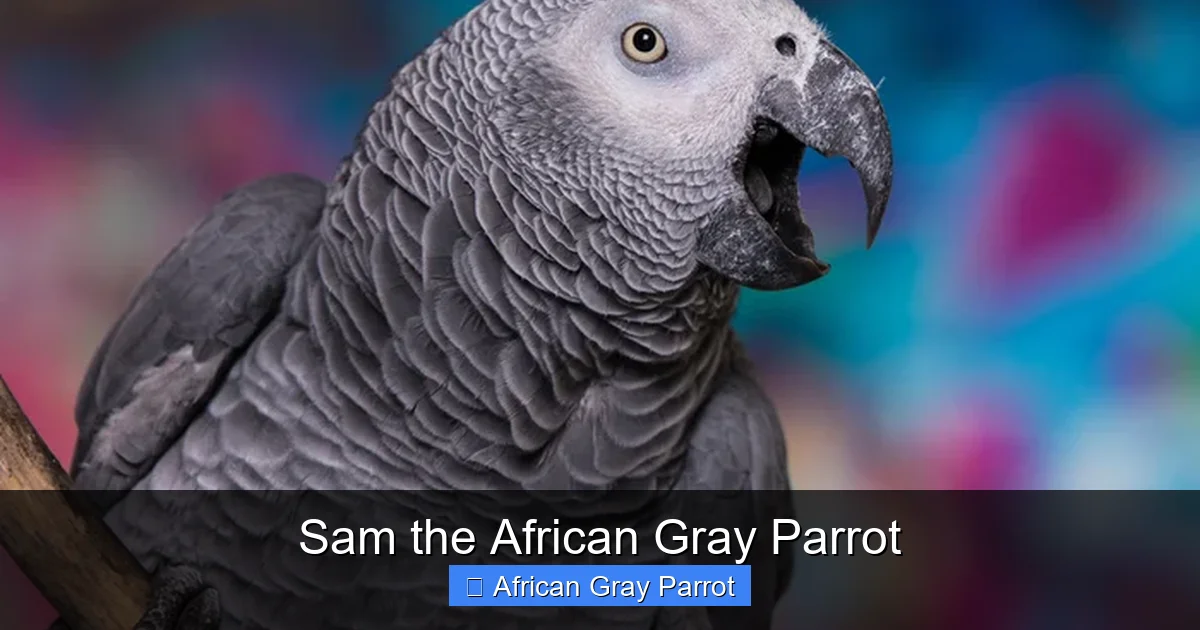
Dr. Irene Pepperberg’s groundbreaking work with Alex, an African Gray Parrot, revolutionized our understanding of avian intelligence. Over three decades, Alex demonstrated abilities previously thought unique to humans and great apes. He could identify over 50 objects, recognize quantities up to six, distinguish seven colors and five shapes, and understand concepts like “same,” “different,” “bigger,” “smaller,” and even a zero-like concept.
Visual guide about Sam the African Gray Parrot
Image source: thehappychickencoop.com
But Alex wasn’t an anomaly. Research continues to reveal that African Gray Parrots possess:
- Object permanence understanding that exceeds that of human toddlers
- Logical reasoning allowing them to solve multi-step puzzles
- Tool use and manufacture in both wild and captive settings
- Episodic-like memory enabling them to recall specific past events
- Theory of mind elements suggesting they understand others have different knowledge
- Numerical competence including addition and ordinal number comprehension
Sam demonstrates this intelligence daily. He doesn’t just press a lever for a treat—he figures out how to unlock his cage, navigate to the treat cabinet, open the container, and select his preferred snack. He understands that when his human puts on shoes, departure is imminent, and he’ll preemptively say “Bye bye” or “See you later.” He recognizes individual family members by name and greets them appropriately.
Language Comprehension vs. Mimicry
This distinction is crucial. Many birds mimic sounds—microwaves, phones, other pets. But African Grays like Sam go far beyond mimicry into genuine referential communication. They associate specific sounds with specific meanings and use them intentionally to affect their environment.
For example, Sam doesn’t just say “water” randomly. He says it when his bowl is empty. He says “want nut” when he sees someone eating almonds. He combines words creatively: “want go outside” or “tickle head please.” He understands syntax—”Sam want nut” means something different than “nut want Sam” (which he finds hilarious).
Research suggests African Grays process language similarly to humans, using analogous brain regions. They don’t simply associate sound with reward; they categorize, generalize, and create novel combinations. This places their communicative abilities closer to human toddlers than to any other non-human species studied.
Emotional Intelligence and Empathy
Perhaps most remarkable is the emotional depth these birds display. Sam notices when his human is sad, offering gentle head scratches or quiet vocalizations. He celebrates excitement with enthusiastic flapping and vocalizations. He shows jealousy when attention goes to others, and grief when separated from bonded individuals.
Studies confirm African Grays exhibit empathy-like behaviors, consoling distressed flock mates and showing distress themselves when others are upset. They form attachment bonds comparable to human-infant relationships, complete with separation anxiety, secure base behaviors, and reunion celebrations. This emotional complexity means they suffer profoundly from neglect, isolation, or abrupt changes in caregivers.
Creating the Ideal Home Environment
Cage Requirements: Bigger Is Always Better
Sam’s cage isn’t just a container—it’s his bedroom, his safe space, his territory. For an African Gray, the absolute minimum cage size is 36″ wide × 24″ deep × 48″ high, but larger is exponentially better. These birds need horizontal space for wing-flapping exercise and vertical space for climbing. Bar spacing should be 3/4″ to 1″ to prevent head entrapment while allowing climbing.
Material matters enormously. Powder-coated wrought iron or stainless steel withstands powerful beaks. Avoid zinc-coated or galvanized cages—zinc toxicity kills parrots. The cage should have multiple large doors for easy access, a removable bottom tray for cleaning, and secure locks (African Grays are escape artists).
Placement is equally critical. Position the cage against a wall for security, at chest height or slightly higher, away from drafts, direct sunlight, and kitchen fumes. The bird should see household activity without being in the center of chaos. A separate sleep cage in a quiet, dark room ensures 10-12 hours of uninterrupted rest—essential for hormonal and psychological health.
Perches, Toys, and Enrichment Essentials
Foot health requires perch variety. Provide natural branches of varying diameters (manzanita, dragonwood, java wood), rope perches for comfort, and a cement or sand perch for nail maintenance—never as the sole perch. Arrange them to encourage movement throughout the cage.
Toys aren’t optional—they’re survival equipment for an African Gray’s mind. Rotate these categories weekly:
- Foraging toys that hide food, requiring problem-solving to access
- Destructible toys made of wood, leather, paper, palm leaves for chewing
- Puzzle toys with locks, latches, moving parts
- Foot toys small enough to hold and manipulate
- Noise-making toys bells, rattles, musical instruments
- Preening toys rope, fleece, feather dusters to prevent over-preening
Create foraging stations throughout the cage. Hide pellets in paper cups, wrap treats in palm leaves, stuff vegetables into puzzle feeders. In the wild, African Grays spend 6-8 hours daily foraging. Replicating this prevents boredom, reduces screaming, and eliminates feather-destructive behaviors.
Environmental Conditions: Light, Air, and Safety
African Grays need full-spectrum lighting (UVB/UVA) for 10-12 hours daily to synthesize vitamin D3, essential for calcium metabolism. Without it, they develop metabolic bone disease, seizures, and immune dysfunction. Use bird-specific lamps on timers—window glass blocks UVB.
Air quality is non-negotiable. Birds have incredibly efficient respiratory systems that absorb toxins rapidly. Eliminate: Teflon/non-stick cookware (fumes kill instantly), scented candles, air fresheners, cigarette smoke, aerosol sprays, self-cleaning oven cycles, and essential oil diffusers. Use HEPA air purifiers and ensure excellent ventilation.
Temperature stability between 65-80°F (18-27°C) prevents stress. Humidity around 40-60% mimics rainforest conditions—use humidifiers in dry climates. Provide bathing opportunities daily: shallow dishes, misting, or shower perches. Many African Grays love joining their humans in the shower.
Nutrition: The Foundation of Health and Longevity
Beyond Seeds: The Modern Parrot Diet
Seeds alone kill parrots slowly. They’re high in fat, deficient in vitamin A, calcium, and protein, and promote obesity, liver disease, and nutritional deficiencies. Sam’s diet—and every African Gray’s diet—should center on high-quality formulated pellets (60-70% of intake), specifically designed for African species with appropriate calcium-to-phosphorus ratios.
The remaining 30-40% should be fresh, diverse, and colorful:
- Dark leafy greens daily: kale, collard greens, mustard greens, swiss chard, dandelion greens (vitamin A powerhouses)
- Orange vegetables: sweet potato, carrot, butternut squash, pumpkin (beta-carotene)
- Other vegetables: broccoli, bell peppers, snap peas, green beans, zucchini
- Fruits in moderation: berries, papaya, mango, pomegranate, apple (seeds removed), kiwi
- Healthy grains/legumes: quinoa, brown rice, lentils, chickpeas (cooked, unsalted)
- Occasional protein: hard-boiled egg with shell, lean cooked chicken, mealworms
Chop (a finely diced vegetable/grain mix) fed fresh each morning encourages natural foraging. Remove uneaten fresh food after 2-4 hours to prevent bacterial growth. Clean water must be available constantly—changed at least twice daily, more in warm weather.
Calcium: The African Gray’s Special Need
African Gray Parrots have uniquely high calcium requirements. In the body’s calcium metabolism. Without adequate calcium and vitamin D3, they develop hypocalcemia—seizures, weakness, egg-binding in females, and pathological fractures.
Provide calcium through:
- Cuttlebone or calcium block always available
- Calcium-fortified pellets as dietary base
- Dark leafy greens (high calcium, low oxalates)
- Occasional calcium supplements per avian vet guidance
- Full-spectrum lighting for D3 synthesis
Never supplement calcium without veterinary guidance—excess causes kidney damage. Annual blood panels monitor calcium, phosphorus, and vitamin D3 levels.
Dangerous Foods: Absolute Avoidance
These foods can kill or severely harm African Grays:
- Avocado (persin toxin causes cardiac arrest)
- Chocolate (theobromine toxicity)
- Caffeine (cardiac arrhythmias)
- Alcohol (liver failure, respiratory depression)
- Onions/garlic (hemolytic anemia)
- Fruit pits/seeds (cyanide compounds)
- Rhubarb (oxalic acid)
- Salt (electrolyte imbalance, kidney failure)
- Xylitol (hypoglycemia, liver failure)
- Mushrooms (various toxins)
Training, Communication, and Behavioral Health
Positive Reinforcement: The Only Ethical Method
African Grays respond exclusively to positive reinforcement. Punishment, dominance theory, or force destroys trust and creates fear-based aggression. Training sessions should be short (5-10 minutes), frequent (2-3 daily), and always end successfully.
Start with target training—teaching the bird to touch a stick or finger. This builds communication foundation. Progress to station training (going to a specific perch), recall (flying to you on cue), and husbandry behaviors (stepping up, allowing nail trims, entering carrier voluntarily).
Use a bridge signal (clicker or word “good”) marking the exact moment of correct behavior, followed immediately by a valued reward. Rewards vary by individual—Sam prefers almond slivers, head scratches, and verbal praise. Discover your bird’s currency.
Developing Vocabulary and Communication
Sam’s impressive vocabulary didn’t happen by accident. It resulted from modeling—consistently labeling objects, actions, and emotions in context. When offering water, say “water.” When scratching his head, say “tickle.” When leaving, say “bye bye.” Repetition with clear association builds understanding.
Use contextual labeling throughout the day. Narrate activities: “Sam eating broccoli,” “Mom cooking dinner,” “Dad coming home.” African Grays learn best when words have immediate, tangible referents. Avoid teaching phrases without meaning—they become meaningless noise.
Encourage functional communication. If Sam wants a nut, wait for “want nut” before providing it. If he wants head scratches, wait for “tickle please.” This teaches that communication controls outcomes—a powerful concept for an intelligent being.
Preventing and Addressing Behavioral Challenges
Even well-cared-for African Grays develop challenges. Understanding root causes enables effective solutions:
Excessive Vocalization
African Grays are naturally loud at dawn/dusk (flock contact calls). Excessive screaming usually indicates boredom, loneliness, or inadvertently reinforced behavior. Solutions: increase foraging, schedule interaction before screaming starts, ignore screaming completely (any attention reinforces), reward quiet behavior lavishly.
Feather Destructive Behavior
Feather plucking signals medical or psychological distress. Always rule out medical causes first—skin infections, allergies, hormonal imbalances, pain, heavy metal toxicity. If medical workup is clear, address psychological factors: increase enrichment, ensure 12 hours sleep, reduce stress triggers, provide bathing, consider pharmaceutical intervention with avian vet guidance.
Aggression and Biting
Biting is communication: “I’m uncomfortable,” “I’m scared,” “I’m hormonal,” “I’m protecting territory.” Learn body language: pinned eyes, flared tail, raised nape feathers, leaning away. Respect these signals. Never force interaction. Use positive reinforcement to build trust. Hormonal aggression (spring) requires environmental management: reduce daylight hours, remove nest-like spaces, avoid touching erogenous zones (back, under wings, tail base).
Fear and Phobias
African Grays develop fears of specific objects, colors, or situations. Systematic desensitization and counter-conditioning work: present feared object at distance where bird remains calm, reward calm behavior, gradually decrease distance over sessions. Never flood (force exposure)—this worsens fear.
Health Care and Veterinary Partnership
Finding an Avian Veterinarian
Dog and cat vets cannot adequately treat parrots. Avian medicine is a distinct specialty requiring specific training, equipment, and experience. Locate a board-certified avian veterinarian (ABVP) or one with extensive parrot experience before you need one. Establish care within the first week of bringing your bird home.
Preventive Care Schedule
- Annual wellness exam: Physical exam, weight check, fecal gram stain, blood panel (CBC, chemistry, bile acids, calcium, phosphorus, vitamin D3, heavy metals)
- New bird exam: Within 72 hours of acquisition—chlamydia testing, fecal exam, baseline bloodwork, gender determination if desired
- Grooming as needed: Nail trims, wing trim assessment (many owners choose flighted birds), beak evaluation
- Emergency fund: Maintain $2,000-5,000 for unexpected veterinary costs—avian emergencies are expensive
Common Health Issues in African Grays
Hypocalcemia Syndrome
Unique to African Grays, this causes seizures, tremors, weakness, and collapse. Usually affects birds 2-5 years old on seed diets without UVB lighting. Emergency treatment: injectable calcium, diazepam for seizures, long-term dietary correction and UVB provision.
Psittacine Beak and Feather Disease (PBFD)
Circovirus causing feather abnormalities, beak deformities, immune suppression. No cure. Testing essential for new birds. Supportive care extends quality of life.
Aspergillosis
Fungal respiratory infection from mold spores. Symptoms: voice change, respiratory distress, weight loss. Prevention: excellent ventilation, no moldy food, clean environment. Treatment: long-term antifungals.
Atherosclerosis and Heart Disease
Common in older African Grays, especially on high-fat diets. Exercise, low-fat diet, omega-3 supplementation help prevent. Regular cardiac monitoring via ultrasound in seniors.
Heavy Metal Toxicity
Zinc (galvanized cages, hardware) and lead (old paint, weights, stained glass) cause neurological signs, anemia, gastrointestinal stasis. Chelation therapy treats; prevention through safe environment is paramount.
Monitoring Health at Home
Weigh Sam weekly at the same time (morning, post-void, pre-breakfast) on a gram scale. A 10% weight loss is an emergency. 5% loss warrants veterinary contact. Observe droppings daily—three components: formed feces (green/brown), white urates, clear urine. Changes in color, consistency, volume signal illness.
Behavioral changes often precede physical symptoms: decreased vocalization, reduced activity, fluffed posture, appetite changes, sleep pattern shifts. African Grays mask illness instinctively—by the time signs are obvious, disease is advanced. Trust your intuition. You know your bird best.
The Lifelong Journey: Aging, Planning, and Legacy
Life Stages and Changing Needs
Sam’s life spans distinct phases, each requiring adaptation:
Juvenile (0-2 years)
Exploratory, clumsy, learning boundaries. High socialization needs. Dietary foundation established. Training foundation built. Vaccinations if available (polyomavirus).
Young Adult (2-5 years)
Hormonal surges begin. Increased independence, potential aggression. Vocabulary expands rapidly. Strong pair bonding—may choose favorite person. Establish consistent boundaries.
Prime Adult (5-20 years)
Stable personality. Peak cognitive ability. Established routines. Regular health monitoring. Continued enrichment evolution.
Senior (20+ years)
Reduced activity. Potential arthritis (provide flat perches, heated perches). Cataracts possible (maintain consistent cage layout). Organ function monitoring. Dietary adjustments for kidney/liver health. Increased veterinary frequency (semi-annual).
Estate Planning: The Responsible Owner’s Duty
With lifespans of 50-60 years (documented cases into 70s), your African Gray will likely outlive you. Failure to plan condemns them to uncertain futures. Essential steps:
- Designate a committed caregiver who knows your bird, agrees to the responsibility, and has legal authority
- Create a pet trust funding lifetime care (estimated $50,000-100,000+ for food, vet, enrichment, housing)
- Document everything: diet, medications, routines, vocabulary, preferences, fears, veterinary contacts, medical history
- Introduce successor caregiver gradually while you’re alive
- Identify avian-savvy rescue organizations as backup
- Include in will with specific provisions—standard pet clauses are insufficient
Sam’s owner has a detailed “Sam Manual” updated annually. It contains his favorite foods (almonds, pomegranate), hated foods (broccoli stems), phrases he understands (“ready for bed,” “shower time”), medical history, and contact information for his veterinarian, backup caregivers, and trusted rescue. This isn’t morbid—it’s love expressed as responsibility.
The Grief and Joy of Deep Bonding
Loving an African Gray Parrot means loving a being who understands you, manipulates you, frustrates you, astonishes you, and breaks your heart with their trust. Sam has seen his human through divorce, job loss, illness, and grief. He’s celebrated promotions, births, recoveries. He says “I love you” in the voice of a departed parent. He laughs at inside jokes.
This bond transcends typical pet ownership. It’s a relationship with a non-human person—intelligent, emotional, opinionated, and entirely dependent on you. The commitment is staggering. The rewards are immeasurable.
Conclusion
Sam the African Gray Parrot represents the extraordinary potential of human-avian relationships. His intelligence challenges our understanding of consciousness. His emotional depth reminds us that love isn’t uniquely human. His longevity demands a commitment that transcends typical pet ownership.
If you’re considering welcoming an African Gray into your life, approach with eyes wide open. The financial costs are substantial. The time commitment is daily and decades-long. The emotional labor is real. But for those prepared to meet these magnificent beings on their own terms—to provide the enrichment, nutrition, medical care, social interaction, and respect they deserve—the relationship offers something rare: a genuine meeting of minds across the evolutionary divide.
Sam doesn’t just live in a human home. He participates in a human family. He contributes to conversations. He offers comfort. He demands respect. He gives it in return. In his amber eyes, we see reflected not a pet, but a person—feathered, winged, and utterly extraordinary.
The privilege of sharing your life with an African Gray Parrot carries a sacred obligation: to honor their wild heritage while providing a captive life of dignity, stimulation, and love. Meet that obligation, and you’ll discover, as Sam’s family has, that the boundary between “human” and “animal” is far more permeable than we ever imagined.
Frequently Asked Questions
How much does an African Gray Parrot cost initially and annually?
Initial costs range $2,000-5,000 for a captive-bred bird from a reputable breeder, plus $1,000-3,000 for cage, toys, perches, lighting, and initial veterinary exams. Annual costs average $2,000-4,000 for high-quality food, veterinary care, toy replacement, and enrichment. Emergency veterinary expenses can exceed $5,000 per incident.
Do African Gray Parrots scream all day?
African Grays have natural vocalization periods at dawn and dusk (15-30 minutes each) mimicking wild flock calls. Excessive screaming usually indicates boredom, loneliness, or inadvertent reinforcement. With adequate enrichment, social interaction, and training, most birds maintain reasonable noise levels acceptable in detached homes but potentially problematic for apartments.
Can African Gray Parrots live with other pets?
Supervised coexistence is possible but requires extreme caution. Cats and dogs pose predatory risks—even gentle pets can kill a bird instantly. Other parrots may transmit diseases or cause injuries. African Grays often prefer human companionship over other birds. Separate airspace, supervised interactions only, and secure housing are mandatory.
How do I know if my African Gray is sick?
Birds mask illness instinctively. Subtle signs include: weight loss (weigh weekly), changed droppings (color, consistency, volume), fluffed posture, reduced vocalization, decreased appetite, increased sleep, sneezing, tail bobbing, or behavior changes. Any concern warrants immediate avian veterinary contact—by the time signs are obvious, disease is often advanced.
What’s the difference between Congo and Timneh African Grays?
Congo African Grays are larger (13-16 inches, 400-650g), lighter gray with bright red tails and solid black beaks. Timnehs are smaller (9-11 inches, 275-400g), darker charcoal gray with maroon tails and horn-colored upper mandibles. Timnehs often mature faster, talk earlier, and may be slightly less prone to feather plucking, but both share equivalent intelligence and care needs.
Can I teach my African Gray to use the toilet?
Yes, many African Grays can be “potty trained” to eliminate on command or in designated areas. Use positive reinforcement: observe natural elimination patterns (typically every 15-30 minutes), place bird over designated spot at those intervals, give cue (“go potty”), reward immediately after elimination. Consistency yields results in weeks, but accidents will happen—never punish.