
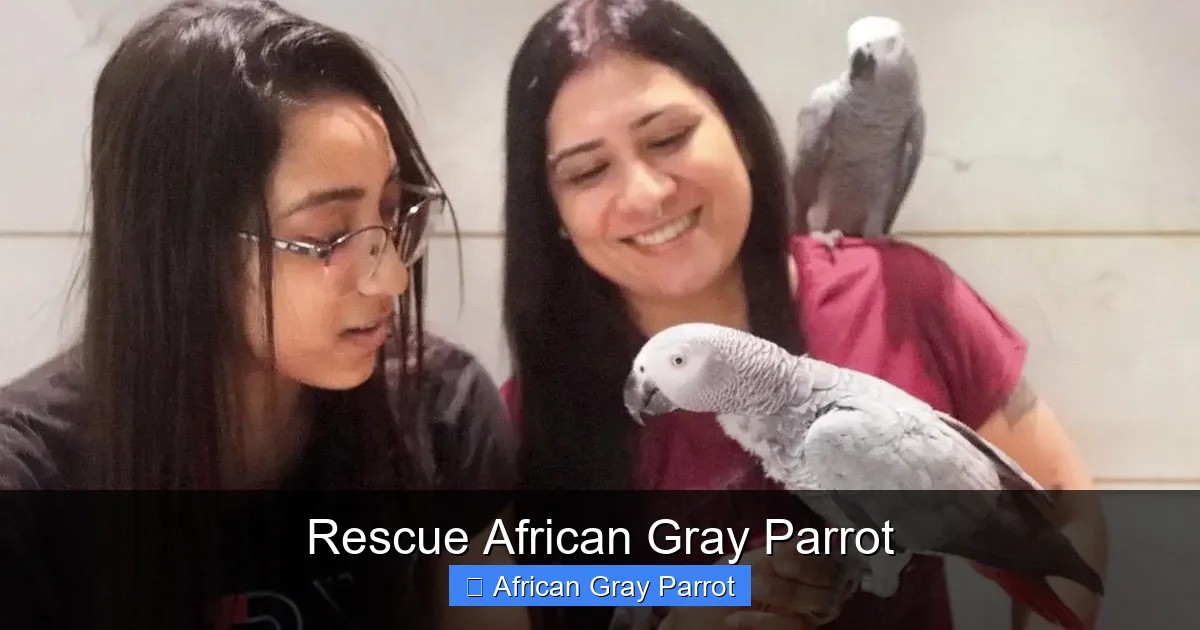
Rescuing an African Gray Parrot is a life-changing commitment that requires patience, knowledge, and resources. These intelligent birds often come with trauma, behavioral challenges, and special dietary needs that demand dedicated rehabilitation. With proper preparation and support, a rescue African Gray Parrot can become a loving, lifelong companion.
Bringing a rescue African Gray Parrot into your home is one of the most rewarding decisions you can make. These remarkable birds possess intelligence comparable to a five-year-old child, emotional depth that rivals primates, and the capacity to form profound bonds with their human caregivers. Yet behind every rescue African Gray Parrot lies a story — sometimes heartbreaking, sometimes simply sad — of a bird who lost their home through no fault of their own.
Perhaps their previous owner passed away. Maybe a life change — divorce, job loss, new baby, developing allergies — made proper care impossible. Some rescue African Gray Parrots come from hoarding situations, neglectful environments, or impulse purchases by people unprepared for a 60-year commitment. Whatever their history, these birds deserve a second chance with someone who understands their unique needs. This comprehensive guide walks you through every aspect of adopting, rehabilitating, and providing a forever home for a rescue African Gray Parrot.
Key Takeaways
- Research First: Understand the species’ 50-60 year lifespan, complex emotional needs, and high intelligence before committing to a rescue African Gray Parrot.
- Choose Reputable Rescues: Work with certified avian rescues that provide medical records, behavioral assessments, and post-adoption support for every rescue African Gray Parrot.
- Budget for True Costs: Initial adoption fees are just the beginning. Plan for $2,000-5,000 annually for veterinary care, quality nutrition, enrichment, and housing for your rescue African Gray Parrot.
- Prepare for Rehabilitation: Most rescue birds need months of patient trust-building, dietary conversion, and behavioral modification before they thrive in a new home.
- Avian Veterinarian Essential: Establish care with a board-certified avian vet immediately. Rescue African Gray Parrots often have hidden health issues like psittacosis, malnutrition, or feather destructive behavior.
- Environmental Enrichment Critical: Provide foraging opportunities, puzzle toys, social interaction, and mental stimulation daily to prevent boredom and behavioral issues in your rescue African Gray Parrot.
- Commit to Lifetime Care: These birds bond deeply and grieve loss. A rescue African Gray Parrot needs a stable, permanent home with contingency plans for their care if something happens to you.
Quick Answers to Common Questions
How much does it cost to adopt a rescue African Gray Parrot?
Adoption fees typically range from $500-2,500, but the first year including veterinary care, cage, toys, and diet conversion often costs $3,000-5,000. Annual ongoing costs average $2,000-4,000 for a rescue African Gray Parrot.
How long does it take for a rescue African Gray Parrot to trust me?
Trust-building varies enormously. Some birds show progress in weeks; others take a year or more. A rescue African Gray Parrot with severe trauma may never enjoy handling but can still form a deep bond. Patience and consistency are essential.
Can I adopt a rescue African Gray Parrot if I work full-time?
Yes, but you must provide 3-4+ hours of daily interaction, mental stimulation, and out-of-cage time. Many owners hire bird-sitters for midday visits or work from home part-time. A lonely rescue African Gray Parrot develops severe behavior problems.
What if my rescue African Gray Parrot never talks?
Not all African Grays talk, and rescue birds may have learned to be quiet for survival. Talking isn’t a measure of intelligence or bond quality. Many non-talking rescue African Gray Parrots communicate beautifully through body language, whistles, and learned cues.
Is it better to adopt a baby or adult rescue African Gray Parrot?
Adults have known personalities, established behaviors, and are past the chaotic “terrible twos” hormonal phase. Babies require intense socialization and may develop issues later. Most rescuers recommend adults for first-time African Gray owners.
📑 Table of Contents
- Understanding the African Gray Parrot Species
- Finding a Reputable Rescue Organization
- Preparing Your Home for a Rescue African Gray Parrot
- Health Assessment and Veterinary Care
- Behavioral Rehabilitation and Trust Building
- Daily Life with a Rescue African Gray Parrot
- Special Considerations and Advanced Topics
- Conclusion
Understanding the African Gray Parrot Species
Two Subspecies, One Remarkable Bird
Before you pursue a rescue African Gray Parrot, you must understand what makes this species extraordinary. Two subspecies exist: the Congo African Gray (Psittacus erithacus erithacus) and the Timneh African Gray (Psittacus erithacus timneh). The Congo is larger, reaching 13-16 inches with bright red tail feathers and a black beak. The Timneh is smaller at 9-11 inches, with darker charcoal plumage, a maroon tail, and a horn-colored upper mandible. Both subspecies share the same brilliant intelligence, talking ability, and emotional complexity that make a rescue African Gray Parrot such a unique companion.
Intelligence and Emotional Depth
Research by Dr. Irene Pepperberg with her famous African Gray Alex demonstrated that these birds understand concepts like same/different, bigger/smaller, and can count to six. They don’t just mimic — they communicate meaningfully. A rescue African Gray Parrot brings this cognitive capacity into your home. They experience joy, grief, jealousy, anxiety, and love. They remember people, places, and events for years. This intelligence means a rescue African Gray Parrot requires constant mental stimulation. Without it, they develop destructive behaviors — feather plucking, screaming, aggression, self-mutilation — that are difficult to reverse.
Lifespan and Long-Term Commitment
A rescue African Gray Parrot typically lives 50-60 years in captivity, with some reaching 70+. When you adopt, you’re making a multi-decade commitment. This isn’t a pet you “try out.” Many rescue African Gray Parrots have already lost multiple homes. Each rehoming compounds their trauma. Before adopting, honestly assess your life stability, financial resources, health, and support network. Who will care for your rescue African Gray Parrot if you become ill? What happens when you travel? Have you made provisions in your will? These aren’t pleasant questions, but they’re essential for a species that outlives many owners.
Finding a Reputable Rescue Organization
Red Flags vs. Green Flags
Not all organizations calling themselves “rescues” operate ethically. A legitimate rescue African Gray Parrot organization prioritizes bird welfare over quick placements. Green flags include: 501(c)(3) nonprofit status, transparent finances, thorough adoption applications, mandatory home visits, veterinary records for each bird, behavioral assessments, trial periods, lifetime return policies, and post-adoption support. Red flags: no application process, same-day adoptions, no medical history, pressure to decide quickly, refusal to allow visits, “breeder rescue” operations that are actually retail fronts, and organizations that won’t take birds back if things don’t work out.
Questions to Ask Any Rescue
When contacting a rescue about a rescue African Gray Parrot, ask specific questions. What is this bird’s known history? Why were they surrendered? What veterinary care have they received? Have they been tested for psittacosis, PBFD, polyomavirus, and heavy metal toxicity? What is their current diet? What behavioral issues have been observed? How do they interact with men, women, children, other birds? What enrichment do they enjoy? What is their daily routine? A reputable rescue will answer transparently. They want the right match as much as you do.
Types of Rescue Organizations
You’ll encounter several types of groups offering rescue African Gray Parrots. Species-specific rescues focus exclusively on African Grays and often have the deepest expertise. General parrot rescues handle multiple species but may have African Gray specialists on staff. Animal shelters occasionally receive parrots but rarely have avian expertise. Sanctuaries provide lifetime care for unadoptable birds but sometimes place suitable candidates. Foster-based rescues keep birds in volunteer homes, providing valuable behavioral insights. Each model has strengths. The key is finding an organization that matches your experience level and support needs.
The Adoption Process
Expect a thorough process when adopting a rescue African Gray Parrot. Most rescues require: a detailed application, reference checks (including your avian vet), a home visit or virtual tour, an adoption fee ($500-2,500 depending on the bird’s age, health, and the rescue’s costs), a signed contract with a lifetime return clause, and often a foster-to-adopt period of 30-90 days. This process protects the bird. A rescue African Gray Parrot who’s been through multiple homes needs stability, not another failed placement. Be patient. The right bird is worth the wait.
Preparing Your Home for a Rescue African Gray Parrot
Housing Requirements
Your rescue African Gray Parrot needs a cage that’s truly a home, not a prison. Minimum dimensions: 36″ wide x 24″ deep x 48″ tall for a Congo, slightly smaller for a Timneh. Bar spacing: 3/4″ to 1″. Horizontal bars for climbing. Multiple doors for easy access. Stainless steel or powder-coated — avoid galvanized wire (zinc toxicity risk). Place the cage in a social area against a wall (not in front of windows — drafts and predators cause stress). Provide multiple perch types: natural wood branches of varying diameters, rope perches, platform perches, and a cement or sand perch for nail maintenance. No sandpaper perch covers — they cause foot sores.
Environmental Safety
African Grays have incredibly sensitive respiratory systems. Before your rescue African Gray Parrot arrives, eliminate: Teflon/non-stick cookware (PTFE fumes kill birds instantly), scented candles, air fresheners, essential oil diffusers, cigarette smoke, aerosol sprays, self-cleaning oven cycles, and carbon monoxide sources. Use stainless steel, cast iron, or ceramic cookware. Install carbon monoxide detectors. Use bird-safe cleaning products (vinegar/water, F10, Poop-Off). Secure windows and doors. Cover mirrors. Remove toxic plants (avocado, chocolate, caffeine, alcohol, onions, garlic, fruit pits, rhubarb, mushrooms). Your rescue African Gray Parrot will explore everything with their beak — assume nothing is safe until proven otherwise.
Setting Up a Quarantine Area
If you have other birds, your rescue African Gray Parrot needs a minimum 30-day quarantine (45-60 days is better) in a separate air space — ideally a different building or at minimum a separate room with its own HVAC zone. Wash hands and change clothes between birds. Use separate feeding supplies. This prevents disease transmission. Many rescue African Gray Parrots carry subclinical infections that stress or illness can activate. Quarantine protects your existing flock and gives your new bird time to adjust without territorial pressure.
First Week Essentials
Stock up before arrival: high-quality pellets (Harrison’s, Roudybush, TOPS), fresh vegetables and fruits, stainless steel bowls, cage covers for night security, a travel carrier, a gram scale for daily weights, bird-safe disinfectant, and enrichment toys. Place the cage where your rescue African Gray Parrot can observe household activity without being in the center of chaos. Cover three sides initially for security. Keep the environment calm. Limit visitors. Let them watch you from a distance. The first week sets the tone for your entire relationship with your rescue African Gray Parrot.
Health Assessment and Veterinary Care
Finding an Avian Veterinarian
This is non-negotiable. A dog/cat vet cannot properly care for a rescue African Gray Parrot. You need a board-certified avian veterinarian (ABVP-Avian) or a vet with extensive avian experience. Find one before adoption. Schedule a new bird exam within 72 hours of bringing your rescue African Gray Parrot home. Bring any medical records from the rescue. The exam should include: physical examination, weight check, fecal gram stain and parasite check, complete blood count and chemistry panel, psittacosis (chlamydia) testing, PBFD and polyomavirus testing, heavy metal screening (lead, zinc), and baseline radiographs if indicated. This establishes your rescue African Gray Parrot’s health baseline and catches hidden issues early.
Common Health Issues in Rescue Birds
Rescue African Gray Parrots frequently arrive with: malnutrition (seed-only diets cause vitamin A deficiency, obesity, fatty liver disease), feather destructive behavior (plucking, barbering, self-mutilation), psittacosis (chlamydia psittaci — zoonotic, treatable with doxycycline), bacterial and fungal infections, old injuries (improperly healed fractures, amputations), arthritis (especially in older birds), atherosclerosis (common in older, overweight birds), heavy metal toxicity (from chewing cage bars, hardware, toys), and reproductive issues (chronic egg-laying, egg binding in females). Your avian vet will create a treatment plan. Many conditions are manageable with proper care.
Dietary Conversion
Most rescue African Gray Parrots eat seed-heavy diets. Converting to a balanced diet is crucial but challenging. African Grays are naturally suspicious of new foods. Start by offering pellets alongside their current diet. Try different brands, shapes, colors. Warm pellets slightly. Eat them yourself (pretend enthusiasm works). Sprinkle with a tiny amount of seed powder. Offer pellets in foraging toys. Never starve a bird into conversion — African Grays can develop hepatic lipidosis (fatty liver) in 24-48 hours without food. Monitor weight daily during conversion. A rescue African Gray Parrot may take months to fully convert. Patience saves lives.
Ongoing Preventive Care
Schedule annual wellness exams for your rescue African Gray Parrot. Yearly blood work catches organ dysfunction early. Weigh weekly at home — weight loss is often the first illness sign. Trim nails and beak as needed (or have your vet do it). Provide UVB lighting (Arcadia or Zoo Med avian lamps) 12 hours daily for vitamin D3 synthesis, calcium metabolism, and feather health. Replace bulbs every 6-12 months. Offer bathing opportunities daily — misting, shower perches, shallow dishes. Clean water twice daily. Disinfect cage weekly. A healthy rescue African Gray Parrot is a happy, interactive companion.
Behavioral Rehabilitation and Trust Building
Understanding Trauma Responses
Your rescue African Gray Parrot’s history shapes their behavior. Common trauma responses include: fear of hands (suggests rough handling or chasing), cage aggression (territorial defense of their only safe space), fear of specific objects (brooms, hats, stick-like items), screaming when left alone (abandonment trauma), fear of men or women (gender-specific trauma), resource guarding (food insecurity history), and self-soothing behaviors (rocking, pacing, feather plucking). These aren’t “bad behaviors” — they’re survival strategies. A rescue African Gray Parrot who bites isn’t mean; they’re communicating fear or boundary-setting in the only way they know.
The Trust-Building Timeline
Expect a general progression with your rescue African Gray Parrot, though every bird is different. Weeks 1-2: Observation only. Sit near the cage. Read aloud. Speak softly. No touching. Let them acclimate to your presence. Weeks 3-4: Offer high-value treats (almond slivers, sunflower seeds) through cage bars. Clicker train “target” (touch beak to stick). Build positive association. Month 2-3: Open cage door. Let them choose to come out. Never force. Target train onto hand/perch. Short sessions. Always end positively. Month 4-6: Step-up training. Gentle head scratches if invited. Expand exploration areas. Introduce new toys gradually. Month 6+: Deepening bond. Training complex behaviors. Two-way communication. A rescue African Gray Parrot may take a year or more to fully trust. Some never enjoy handling but still bond deeply. Respect their pace.
Addressing Feather Destructive Behavior
Feather plucking affects 10-15% of African Grays and is heartbreakingly common in rescue African Gray Parrots. Causes are multifactorial: medical (pain, infection, allergies, hormonal), environmental (boredom, low humidity, poor lighting, cage size), nutritional (deficiencies, imbalances), psychological (anxiety, trauma, lack of foraging), and social (isolation, pair bond frustration). Treatment requires veterinary workup first. Then: maximize foraging (food puzzles, hidden treats), increase humidity (daily misting, humidifier), optimize lighting (UVB, photoperiod), provide social interaction (you are their flock), reduce stressors, consider pharmaceutical intervention (haloperidol, fluoxetine) under veterinary guidance, and use protective collars only as last resort. Many rescue African Gray Parrots improve significantly with comprehensive management, though some plucking may persist as a lifelong coping mechanism.
Managing Vocalizations
African Grays are vocal. They mimicry, not screamers — but a rescue African Gray Parrot may scream from anxiety, learned behavior, or contact calling. Never reinforce screaming (no yelling back, no rushing over, no covering the cage as punishment). Instead: teach an acceptable contact call (whistle, specific word), reward quiet behavior heavily, ensure needs are met (foraging, social time, sleep), use antecedent rearrangement (close blinds if outside birds trigger screaming), and provide a “scream time” outlet (play loud music, dance together — make it a game). A rescue African Gray Parrot who feels secure screams less. Focus on meeting needs, not suppressing communication.
Daily Life with a Rescue African Gray Parrot
Routine and Structure
African Grays thrive on predictability. Your rescue African Gray Parrot needs: 10-12 hours uninterrupted sleep (cage covered, dark, quiet), consistent wake/bedtimes, scheduled meals (fresh chop morning, pellets available all day, evening treat), daily out-of-cage time (minimum 3-4 hours, ideally more), structured training sessions (5-10 minutes, 2-3x daily), foraging opportunities throughout the day, social interaction (talking, preening, just being together), and a wind-down routine before bed. Weekends shouldn’t drastically differ. A rescue African Gray Parrot who knows what to expect feels safe. Safety enables personality to blossom.
Nutrition Deep Dive
Feed your rescue African Gray Parrot: 60-70% high-quality pellets (organic, no artificial colors/preservatives), 20-30% fresh vegetables (dark leafy greens, orange veggies, cruciferous veggies, peppers), 5-10% fruits (berries, papaya, mango, pomegranate — limit high-sugar fruits), 5% healthy nuts/seeds (almonds, walnuts, pumpkin seeds — training treats only), and constant fresh water. Offer “chop” — finely diced vegetable mix — daily. Rotate ingredients for variety. Supplement with: calcium source (cuttlebone, calcium block), omega-3s (flax, chia, hemp seeds), and probiotics (avian-specific). Avoid: avocado, chocolate, caffeine, alcohol, rhubarb, onion, garlic, fruit pits, mushrooms, salt, sugar, fried foods, dairy (lactose intolerant). A well-fed rescue African Gray Parrot has brighter feathers, better immunity, and more stable behavior.
Enrichment That Works
Enrichment isn’t optional for a rescue African Gray Parrot — it’s survival. Categories: Foraging (puzzle toys, wrapped food, hidden treats, foraging boxes with substrate), Cognitive (training, puzzle boxes, matching games, color/shape recognition), Physical (climbing nets, swings, ladders, varied perches, flight if safe), Sensory (music, nature sounds, different textures, safe herbs/flowers), Social (interaction, mirror for some birds, video calls with other parrots), and Environmental (cage rearrangement, new toy rotation weekly, outdoor aviary time). Rotate toys weekly. Introduce one new item at a time. Watch for fear responses. A mentally stimulated rescue African Gray Parrot doesn’t develop behavior problems.
Training as Communication
Positive reinforcement training transforms your relationship with a rescue African Gray Parrot. Start with target training (touch stick = treat). Progress to: step up, step down, station (go to perch), recall (fly to you), harness training (for safe outdoor time), nail trimming cooperation, wing exam cooperation, medication acceptance, and fun tricks (wave, turn around, retrieve). Training builds trust, provides mental exercise, enables husbandry without stress, and gives your rescue African Gray Parrot a way to communicate choices. Always use high-value treats. Keep sessions short. End before they lose interest. Never force. A rescue African Gray Parrot who chooses to participate is a partner, not a subject.
Special Considerations and Advanced Topics
Adopting a Pair vs. Single Bird
Some rescue African Gray Parrots come as bonded pairs. Adopting a pair has advantages: they provide each other species-appropriate companionship, reduce human-dependent social needs, and often show fewer stress behaviors. Challenges: they may bond less intensely with humans, require double everything (cage space, food, vet costs), and if one dies, the survivor grieves profoundly. Single rescue African Gray Parrots bond deeply with humans but need more direct interaction. Neither is “better” — match to your lifestyle. If adopting a single bird, you become their flock. This means hours of daily interaction, not “cage decoration” time.
Gender Considerations
African Grays aren’t sexually dimorphic — DNA testing determines gender. Females may have slightly narrower heads, smaller beaks, and lighter tail feathers (Congo), but this is unreliable. Gender affects: hormonal behavior (females can become chronic egg-layers — manage with lighting, diet, environment), pair bonding tendencies (males often bond to one person, females may be more social), and health risks (females: egg binding, reproductive tumors; males: testicular tumors). A rescue African Gray Parrot’s personality matters more than gender. Don’t choose based on myths.
Senior Rescue African Gray Parrots
Adopting an older rescue African Gray Parrot (20+ years) is incredibly rewarding. Seniors are often calmer, already trained, past hormonal chaos, and desperately need homes. Special considerations: arthritis (provide flat perches, heated perches, ramps), cataracts (keep cage layout consistent, announce approach), organ dysfunction (more frequent vet checks), dietary needs (easier-to-digest foods), and shorter time together. But senior rescue African Gray Parrots often form the deepest, most grateful bonds. They know they’ve been saved. Their wisdom and gentleness are unmatched.
Legal and Ethical Considerations
African Grays are CITES Appendix I (since 2017) — international commercial trade is banned. In the US, they’re protected under the Wild Bird Conservation Act and Endangered Species Act. Ensure any rescue African Gray Parrot has documentation proving legal origin (captive-bred before 2017, or legal import with permits). Never buy wild-caught birds — it fuels poaching. Support rescues that don’t breed. Consider: are you prepared to advocate for this species? Your rescue African Gray Parrot is an ambassador. Share their story. Educate others. Support conservation organizations like World Parrot Trust. Every rescue African Gray Parrot represents thousands still suffering in the wild and in captivity.
Building a Support Network
You cannot do this alone. Build your village: avian veterinarian (primary and emergency), experienced parrot behavior consultant, reliable bird-sitter (trained by you), parrot-savvy friends/mentors, online communities (African Gray specific forums, Facebook groups), local bird club, and family members who understand the commitment. A rescue African Gray Parrot affects your entire household. Everyone needs basic training: reading body language, safe handling, emergency procedures. The stronger your network, the more resilient your rescue African Gray Parrot’s home.
Conclusion
Adopting a rescue African Gray Parrot changes two lives — theirs and yours. You’ll witness a frightened, perhaps broken bird slowly unfold into a confident, communicative, affectionate companion. You’ll hear your words reflected back with perfect timing and context. You’ll feel the trust of a prey animal who chooses to perch on your hand, preen your hair, and fall asleep against your cheek. You’ll also face challenges: vet bills, behavior puzzles, lifestyle adjustments, and the weight of a 50-year promise.
But ask anyone who’s loved a rescue African Gray Parrot — they’ll tell you the rewards immeasurably outweigh the costs. These birds teach us patience, presence, and the profound responsibility of caring for a being who understands more than we realize. They remind us that redemption is possible, that trust can be rebuilt, that love transcends species. Your rescue African Gray Parrot isn’t a project or a pet. They’re a person — feathered, brilliant, and deserving of every effort you’ll make.
If you’re ready — truly ready — for this journey, reach out to a reputable rescue today. The perfect rescue African Gray Parrot is waiting. Their second chance starts with you.
Frequently Asked Questions
What should I feed my rescue African Gray Parrot during the first week home?
Continue their current diet from the rescue to avoid stress-induced anorexia. Gradually introduce pellets and fresh foods alongside familiar foods. Monitor weight daily. Sudden dietary changes can trigger hepatic lipidosis in a stressed rescue African Gray Parrot.
How do I know if a rescue organization is legitimate?
Legitimate rescues are 501(c)(3) nonprofits with transparent finances, thorough adoption screening, veterinary records for each bird, lifetime return policies, and post-adoption support. They prioritize matching over quick placement and never pressure adopters.
Can a rescue African Gray Parrot live with other pets?
With careful management, yes. Dogs and cats are predators — never leave them unsupervised with your rescue African Gray Parrot. Separate rooms when you’re not home. Some birds enjoy watching other pets from a safe distance. Always prioritize the bird’s safety.
What are signs my rescue African Gray Parrot is sick?
Watch for: fluffed feathers, lethargy, appetite changes, weight loss, discharge from eyes/nares, tail bobbing, voice changes, droppings changes, balance issues, or sitting on cage bottom. Birds hide illness instinctively. Any change warrants immediate veterinary attention.
How do I handle hormonal behavior in my rescue African Gray Parrot?
Reduce daylight to 10-11 hours, remove nest-like spaces (boxes, tents, dark corners), avoid cuddling under wings or on back, limit high-fat foods, increase exercise and foraging, and redirect regurgitation/mating displays. Never punish hormonal behavior — it’s instinctual.
What happens to my rescue African Gray Parrot if something happens to me?
Include your rescue African Gray Parrot in your will with a designated caregiver and financial provision. Create a care guide with vet info, diet, routine, medications, and preferences. Discuss plans with your chosen caregiver. Some rescues offer lifetime sanctuary programs for adopters’ birds.