
A picture of African gray parrot captures the intelligence and beauty of these remarkable birds. This guide explores where to find high-quality images, photography tips, and fascinating facts about their behavior and conservation.
Have you ever seen a picture of African gray parrot and felt instantly captivated? These birds are not just beautiful; they are among the smartest creatures on the planet. Their expressive eyes and sleek gray feathers make them a magnet for photographers and bird lovers alike. Whether you are a professional photographer, a bird enthusiast, or someone who just appreciates nature’s artistry, understanding what makes a great picture of these parrots can deepen your appreciation.
In this guide, we will dive into everything you need to know about pictures of African gray parrots. We will explore where to find the best images, how to take your own stunning shots, what details to look for, and why these pictures matter for conservation. So grab a cup of tea, get comfortable, and let’s explore the world through the lens of these incredible birds.
Key Takeaways
- African gray parrots are highly photogenic: Their striking gray feathers and bright red tails make them a favorite subject for bird photographers.
- High-quality images are widely available: You can find professional pictures on stock photo sites, birding forums, and conservation organization websites.
- Taking your own photos requires patience: Use natural light, a fast shutter speed, and avoid flash to capture their true colors and personality.
- Pictures help with identification: Key features like eye color, beak shape, and tail feathers distinguish the two subspecies.
- Photography supports conservation: Sharing images raises awareness about habitat loss and the illegal pet trade threatening these birds.
- Common mistakes include disturbing the bird: Always keep a respectful distance and never bait or stress a parrot for a photo.
- Ethical photography matters: Prioritize the bird’s well-being over getting the perfect shot.
Quick Answers to Common Questions
What makes a picture of African gray parrot so popular?
Their striking gray plumage, bright red tail, and expressive eyes combine with a reputation for high intelligence, making them incredibly photogenic and engaging subjects.
Where can I find free high-quality pictures of African gray parrots?
Conservation organization websites like World Parrot Trust, Creative Commons searches on Flickr, and birding forums often offer free images for educational use with proper attribution.
What camera settings are best for photographing African gray parrots?
Use a fast shutter speed (1/2000s+), wide aperture (f/4-f/5.6), continuous autofocus, and the lowest ISO possible for the light. A lens of 300-600mm is ideal.
How can I tell the difference between Congo and Timneh African greys in a photo?
Congos are larger, lighter gray with a bright red tail and all-black upper beak. Timnehs are smaller, darker charcoal gray with a maroon tail and often a horn-colored patch on the upper beak.
Is it okay to use flash when taking a picture of African gray parrot?
No, flash can startle and stress the bird, potentially harming its eyes. Always use natural light or increase ISO instead.
📑 Table of Contents
- Why Pictures of African Gray Parrots Are So Popular
- Where to Find High-Quality Pictures of African Gray Parrots
- How to Take Your Own Stunning Picture of African Gray Parrot
- Identifying Features in a Picture of African Gray Parrot
- Using Pictures for Education and Conservation
- Common Mistakes When Photographing African Gray Parrots
- Conclusion
Why Pictures of African Gray Parrots Are So Popular
There is something undeniably magnetic about a picture of African gray parrot. It is not just their looks. It is their reputation. These birds are famous for their intelligence, their ability to mimic human speech, and their complex social lives. A single photograph can hint at all of that. Let’s break down why these images are so sought after.
Their Striking Appearance
At first glance, an African gray parrot might seem simply gray. But look closer. A good picture of African gray parrot reveals a masterpiece of subtle tones. The feathers are not a flat gray. They show scalloped patterns, lighter edges, and a beautiful gradient from dark charcoal on the wings to a pale, almost silvery gray on the chest and head. Then there is the tail. That vivid, shocking red tail is like an exclamation point at the end of a sentence. It provides a stunning color contrast that photographers love. The eyes are another focal point. Adult birds have pale yellow irises that stand out against the dark pupil and the white facial skin. Juveniles have dark eyes. Capturing that eye detail can make a photo feel alive.
Intelligence and Personality
A picture of African gray parrot often captures more than feathers. It captures a moment of thought. These birds are problem solvers. They use tools in the wild. They understand concepts like shape, color, and number. When you photograph one, you might catch it tilting its head, studying you, or manipulating an object with its foot. That sense of curiosity and awareness translates beautifully into a still image. It creates a connection between the viewer and the subject. People love photos that show personality. A parrot playing with a toy, preening a mate, or “talking” to the camera makes for a compelling story in a single frame.
Where to Find High-Quality Pictures of African Gray Parrots
Maybe you need a picture of African gray parrot for a project, a presentation, or just to admire. Knowing where to look saves time and ensures you get images that are legal to use and high in quality. Here are the best sources.
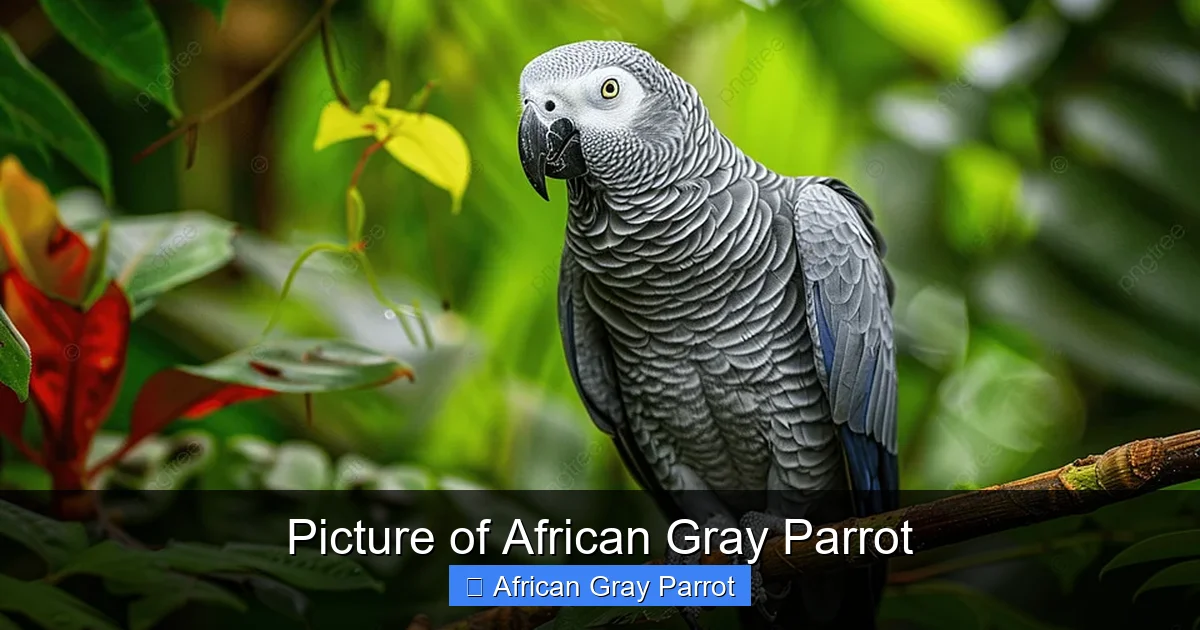
Visual guide about Picture of African Gray Parrot
Image source: png.pngtree.com
Professional Photography Websites
Stock photo sites like Shutterstock, Getty Images, Adobe Stock, and Alamy host thousands of professional pictures of African gray parrots. These images are high resolution, well-composed, and properly exposed. The downside? They usually require a license fee. If you need an image for commercial use, this is often the safest route. You get a legal guarantee and model releases if needed. Search terms like “African gray parrot portrait,” “African gray parrot flying,” or “African gray parrot close up” yield great results. Many sites offer subscriptions or credit packs if you need multiple images.
Social Media and Birding Communities
Platforms like Instagram, Flickr, and 500px are goldmines for authentic, creative pictures of African gray parrots. Photographers often share their work here. Birding groups on Facebook or forums like BirdForum.net also have members posting photos. The quality varies, but you can find unique, candid shots that stock sites lack. Always check the licensing. Many photographers use Creative Commons licenses. Some allow free use with attribution. Others reserve all rights. Never assume an image is free to use. Reach out to the photographer if you are unsure. Most are happy to grant permission for non-commercial use with credit.
Conservation Organizations
Organizations like the World Parrot Trust, BirdLife International, and the African Grey Parrot Project often have media libraries. They provide pictures of African gray parrots for educational and awareness purposes. These images are usually free to use for non-commercial educational projects, provided you credit the organization. They also offer context. The photos often come with data about the bird’s location, conservation status, and the threats it faces. This adds depth if you are using the image for a report or article.
How to Take Your Own Stunning Picture of African Gray Parrot
There is a special satisfaction in capturing your own picture of African gray parrot. Whether you are visiting a sanctuary, a zoo, or are lucky enough to see them in the wild (in West or Central Africa), these tips will help you get the shot.
Equipment Essentials
You do not need the most expensive gear, but certain tools make a big difference. A camera with good autofocus tracking is crucial. These birds move fast and unpredictably. A lens with a focal length of at least 300mm (full-frame equivalent) lets you keep a respectful distance. 400mm to 600mm is ideal. A wide maximum aperture (f/2.8 to f/5.6) helps blur the background and lets in light. If you are using a crop sensor camera, a 100-400mm zoom is a versatile choice. A fast burst mode (8 fps or higher) increases your chances of nailing the perfect wing position or head tilt. Don’t forget extra batteries and memory cards.
Lighting and Composition Tips
Lighting makes or breaks a picture of African gray parrot. Harsh midday sun creates ugly shadows on the feathers and blows out the red tail. Early morning or late afternoon light is golden, warm, and directional. It adds texture to the gray plumage. Overcast days are actually perfect. The clouds act like a giant softbox, giving even, flattering light with no harsh shadows. For composition, use the rule of thirds. Place the eye on an intersection point. Leave space in the direction the bird is looking. This creates “breathing room.” Try to get at eye level. Shooting down on a bird makes it look small. Shooting up can be dramatic but watch for blown-out skies. A clean background is key. Move slightly to avoid branches crossing the bird’s head.
Capturing Personality and Behavior
A static portrait is nice, but a picture of African gray parrot showing behavior tells a story. Wait for the moment. Preening stretches reveal the wing feathers. Feeding shows the powerful beak in action. Social interactions like allopreening (mutual grooming) show their bonds. Vocalizing shots are fun but hard; the beak opens and closes fast. Use a very fast shutter speed (1/2000s or faster) to freeze motion. Focus on the eye. If the eye is sharp, the photo works even if the tail is slightly blurred. Be patient. Spend time watching before shooting. Learn their rhythms. They often return to the same perch. Anticipate the action.
Identifying Features in a Picture of African Gray Parrot
Not all African gray parrots look exactly the same. A detailed picture of African gray parrot can help you distinguish between the two main subspecies and even determine age or sex. This is useful for birders, researchers, and anyone trying to learn more from photos.
The Classic Gray Plumage
The nominate subspecies, Psittacus erithacus erithacus (often called the Congo African Grey), is the larger, more common one in photos. Its feathers are a medium gray with distinct white edging, giving a scalloped or “lacey” look. The Timneh African Grey (Psittacus erithacus timneh) is smaller and darker. Its feathers are a deep, charcoal gray, almost dusky. The scalloping is less pronounced. In a side-by-side picture of African gray parrot, the size and shade difference is obvious. The Congo has a lighter, silvery appearance. The Timneh looks richer, darker.
The Bright Red Tail
This is the most famous field mark. The Congo African Grey has a bright, vibrant red tail. It is solid red. The Timneh African Grey has a tail that is maroon, dark red, or even brownish-red. It is noticeably duller. In a picture of African gray parrot, if the tail looks like a bright cherry red, it is almost certainly a Congo. If it looks like dried blood or dark brick red, it is likely a Timneh. Lighting can affect color perception, so compare with the body gray tone.
Eye Color and Facial Details
Adult birds of both subspecies have pale yellow irises. Juveniles have dark brown or black eyes. This is a reliable age indicator in a picture of African gray parrot. The bare facial skin (the patch around the eye and above the beak) is white in both. However, the Congo often shows a bit more extensive white skin, sometimes extending further back. The beak is black in both. The upper mandible (top beak) of the Congo is usually entirely black. The Timneh often has a horn-colored (pale) patch on the upper mandible, though this varies. The feet are dark gray to black.
Using Pictures for Education and Conservation
A picture of African gray parrot is more than a pretty image. It is a tool. In the right hands, it educates, inspires, and drives action. Let’s look at how photos make a difference.
Raising Awareness
Many people do not know that African gray parrots are endangered. The IUCN lists them as Endangered. Their populations have crashed due to trapping for the pet trade and habitat loss. A powerful picture of African gray parrot in the wild—perched on a forest tree, flying over a canopy, or feeding on palm nuts—reminds viewers that these birds belong in nature, not cages. Conservation campaigns use striking images on posters, social media, and fundraising materials. A photo of a rescued parrot with damaged feathers tells a story of suffering. A photo of a healthy wild flock tells a flock tells a story of hope. Both are needed.
Supporting Research
Researchers use pictures of African gray parrots for identification and monitoring. Camera traps capture images automatically. Scientists analyze these photos to estimate population density, study flock dynamics, and monitor health. Citizen scientists contribute photos to databases like eBird and iNaturalist. Each photo with location and date data becomes a data point. It helps map distribution changes over time. Even a backyard photo of a pet parrot (clearly marked as captive) can help studies on plumage variation or genetics if shared with the right projects. Always include accurate metadata when sharing for science.
Common Mistakes When Photographing African Gray Parrots
Even experienced photographers make errors when trying to get a picture of African gray parrot. Avoiding these pitfalls will improve your success rate and, more importantly, protect the birds.
Using Flash Incorrectly
Flash photography is a major no-no for parrots. Their eyes are sensitive. A sudden burst of light can startle them, cause stress, and even temporary vision impairment. In a sanctuary or zoo, flash is usually prohibited. In the wild, it is unethical. It disrupts natural behavior. If you are in low light, raise your ISO. Modern cameras handle ISO 1600-3200 well. Use a wider aperture. Use a slower shutter speed if the bird is still, but brace your camera. Natural light is always better for the bird and usually looks more natural in the final picture of African gray parrot.
Disturbing the Bird
Getting too close is the biggest mistake. It stresses the bird. A stressed bird may fly away, abandon a nest, or show aggressive displays. It ruins the photo opportunity for everyone. Use your lens to bridge the distance. Learn the signs of stress: slicked feathers, rapid breathing, wide eyes, alarm calls, or moving away. If you see these, back off immediately. Never use playback (recorded calls) to attract them. This is unethical and often illegal in protected areas. It disrupts territorial behavior and wastes energy. A great picture of African gray parrot is never worth the bird’s well-being.
Poor Background Choices
A messy background ruins a good shot. Chain-link fences, concrete walls, feeders, or cluttered branches distract from the bird. Before you shoot, scan the background. Move a few steps left or right. Often a small shift puts a green leaf blur or a clean sky behind the bird. If you are at a zoo or sanctuary, wait for the bird to move to a better perch. Patience pays off. A clean background makes the picture of African gray parrot look professional and keeps the focus on the subject.
Conclusion
We have journeyed through the world of the picture of African gray parrot. We have seen why these images captivate us—their beauty, their brains, their personality. We have explored where to find professional photos and how to take our own with respect and skill. We have learned to read the details in a photo to identify subspecies and age. And we have seen how these pictures serve a greater purpose: education and conservation.
Whether you are browsing a gallery, editing your latest shots, or sharing an image to raise awareness, remember the bird behind the picture. The African gray parrot is a wonder of nature. It deserves our admiration, our protection, and our ethical engagement. The next time you see a picture of African gray parrot, take a moment to appreciate the story it tells. Better yet, go out and create your own story—responsibly. The parrots will thank you for it.
Frequently Asked Questions
What is the conservation status of the African gray parrot?
The African gray parrot is listed as Endangered by the IUCN. Populations have declined drastically due to heavy trapping for the international pet trade and ongoing habitat loss across their West and Central African range.
Can African gray parrots really talk?
Yes, they are renowned for their exceptional ability to mimic human speech and sounds. They can learn hundreds of words and use them in context, demonstrating cognitive abilities comparable to a young child.
What do African gray parrots eat in the wild?
Their wild diet consists mainly of palm nuts, seeds, fruits, berries, and leafy matter. They particularly favor the fruit of the oil palm. They also ingest clay and soil, likely for mineral supplementation and toxin binding.
How long do African gray parrots live?
In captivity, with proper care, they commonly live 40 to 60 years, and some individuals reach 80 years. Wild lifespan is shorter due to predation, disease, and human pressures.
Are there two types of African gray parrots?
Yes, there are two recognized subspecies: the larger Congo African Grey (Psittacus erithacus erithacus) with a bright red tail, and the smaller, darker Timneh African Grey (Psittacus erithacus timneh) with a maroon tail.
Why are African gray parrots endangered?
They are endangered primarily due to unsustainable trapping for the global pet trade and extensive deforestation destroying their forest habitat. They are one of the most heavily traded wild birds in history.