
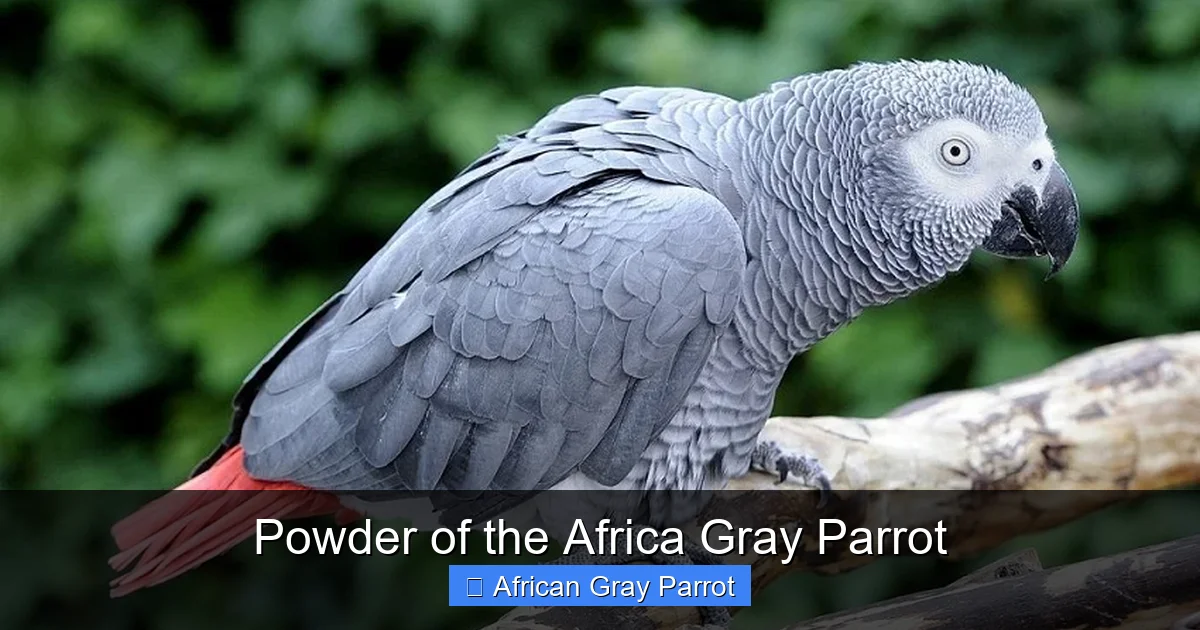
The powder of the Africa Gray parrot is a natural, keratin-based dust produced by specialized feathers essential for feather health and waterproofing. While completely normal, this fine dust can trigger allergies in sensitive owners and requires specific cleaning strategies to maintain a healthy home environment for both bird and human.
If you share your life with an African Grey, you know the drill. You wipe down the cage bars in the morning, and by afternoon, a fine, white film has already settled back onto every surface. You find it on your laptop screen, your black t-shirts, and floating in the sunbeams crossing the living room. This ubiquitous substance is the powder of the Africa Gray parrot, and while it makes for extra housework, it is actually a fascinating biological feature and a critical indicator of your bird’s well-being.
Many new owners mistake this dust for dander, dry skin, or even a sign of illness. It is none of those things. It is a highly evolved, perfectly natural adaptation that serves vital functions for the bird. However, living with a “dust factory” presents unique challenges for human respiratory health and home maintenance. Understanding what this powder is, why your bird makes it, and how to manage it effectively is the key to a happy, healthy coexistence. This guide dives deep into the science, the health implications, and the practical daily strategies you need to keep your air clear and your Grey thriving.
Key Takeaways
- Natural Biology: Powder down is a sign of a healthy African Grey, produced by specialized feathers that disintegrate into fine keratin dust.
- Waterproofing Function: This powder coats feathers to repel water and condition the plumage, vital for the bird’s thermoregulation.
- Allergy Trigger: The fine particulate matter is a common allergen for humans, often causing “Bird Fancier’s Lung” or respiratory irritation.
- Air Quality Management: HEPA air purifiers are the single most effective tool for reducing airborne powder in the home.
- Bathing Reduces Dust: Regular misting or showering helps the bird manage powder naturally and reduces the amount released into the air.
- Cleaning Strategy: Damp wiping and HEPA vacuuming prevent dust from becoming airborne again during cleaning routines.
- Species Trait: African Greys are “powder down birds” alongside Cockatoos and Cockatiels, producing significantly more dust than parrots with oil glands.
Quick Answers to Common Questions
Is the powder from my African Grey harmful to my lungs?
Yes, prolonged exposure to the fine particulate matter and avian proteins in the powder can cause respiratory irritation, asthma exacerbation, or Hypersensitivity Pneumonitis (Bird Fancier’s Lung) in susceptible individuals. Using a HEPA air purifier and wet-cleaning methods significantly reduces this risk.
Can I stop my African Grey from producing powder?
No, you cannot and should not stop it. Powder down is a natural, essential biological function for feather waterproofing and health. A lack of powder is often a sign of serious illness like PBFD or severe malnutrition.
Why does my African Grey produce more powder than my friend’s Macaw?
African Greys, Cockatoos, and Cockatiels are “powder down species” that lack a functional oil gland. They rely on disintegrating keratin feathers for feather maintenance. Macaws and Amazons have oil glands and produce significantly less airborne dust.
What is the best way to clean the white dust off my furniture and floors?
Always use damp cleaning methods. Spray surfaces with water or a bird-safe cleaner and wipe with a microfiber cloth. Never dry dust or sweep, as this aerosolizes the fine particles back into the air you breathe.
Does bathing my African Grey reduce the amount of dust in the house?
Yes, regular bathing (misting or showering) washes excess powder off the feathers before it becomes airborne. It also encourages healthy preening. However, expect a temporary “dust cloud” during the post-bath preening session as the bird reapplies its waterproofing layer.
📑 Table of Contents
- What Exactly Is Powder Down?
- The Vital Functions of Parrot Powder
- Why African Greys Are “High Powder” Birds
- Health Implications: The Bird, The Human, and The Home
- Mastering Air Quality: Filtration and Ventilation
- Cleaning Strategies That Actually Work
- Bathing: The Bird’s Self-Cleaning Mechanism
- Diet, Health, and Powder Quality
- Living Harmoniously: Lifestyle Adjustments
- Conclusion
What Exactly Is Powder Down?
To understand the mess, we first need to understand the biology. The powder of the Africa Gray parrot is not dead skin or dander in the mammalian sense. It is a product of specialized feathers called powder down feathers (or pulviplumes). Unlike standard feathers that grow, mature, and eventually molt, these feathers grow continuously at their tips and disintegrate into a fine, talc-like powder.
These specialized feathers are distributed throughout the bird’s plumage, often concentrated in specific patches on the flanks, rump, or belly, though in African Greys, they are widely dispersed. As the bird preens, moves, or flaps its wings, the mechanical action crushes the fragile tips of these feathers, releasing clouds of microscopic keratin particles. Keratin is the same protein that makes up human fingernails and hair, as well as the bird’s beak and standard feathers.
The Difference Between Powder Down and Dander
It is crucial to distinguish between powder down and dander. Dander consists of microscopic flakes of skin shed from the epidermis. All birds and mammals produce dander. Powder down, however, is unique to specific bird families—most notably Parrots (Psittaciformes), Herons, and Tinamous. The powder of the Africa Gray parrot is almost pure keratin powder. It feels dry and slippery between your fingers, almost like fine cornstarch or talcum powder, whereas dander is often invisible and more allergenic due to protein content.
Evolutionary Origins
Why evolve a messy powder instead of an oil gland? Most birds possess a uropygial gland (preen gland) at the base of the tail that secretes an oily substance. The bird spreads this oil over feathers during preening to waterproof and condition them. African Greys, Cockatoos, Cockatiels, and a few others have a reduced or absent uropygial gland. Evolution favored powder down as their primary method of feather maintenance. In the humid, dense forests of Central and West Africa where Greys originate, a fine, water-repellent powder coating is arguably more effective than oil at shedding tropical downpours and preventing feather rot.
The Vital Functions of Parrot Powder
It is easy to view the dust as a nuisance, but for the African Grey, it is a survival tool. The powder of the Africa Gray parrot performs three critical roles that keep the bird alive and comfortable in its natural habitat—and in your living room.
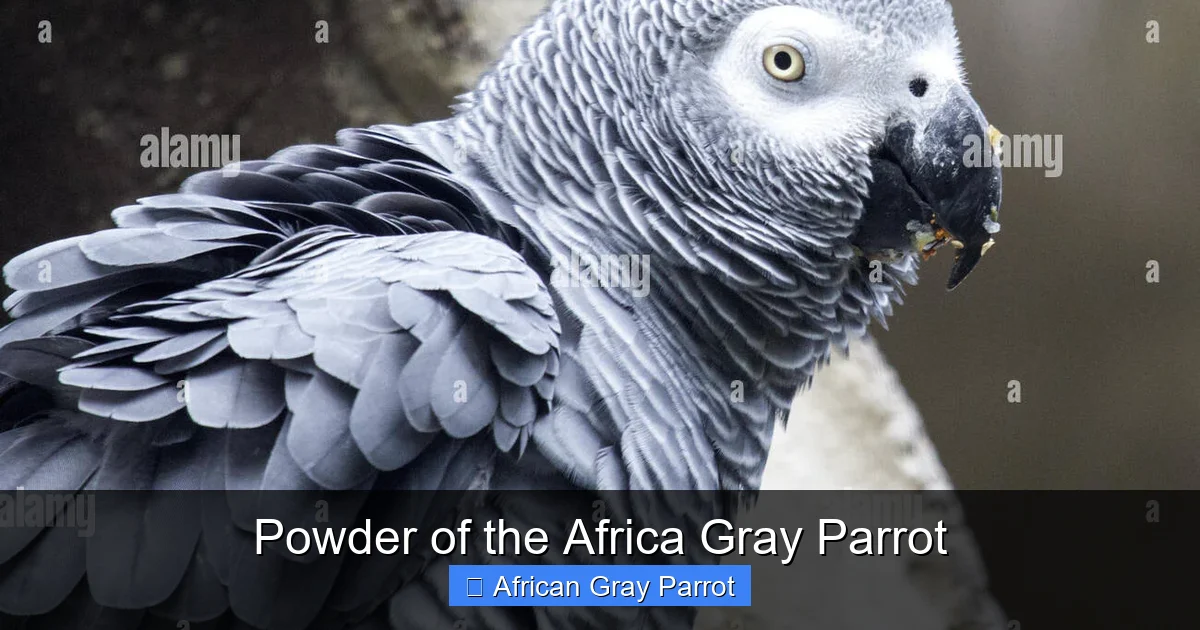
Visual guide about Powder of the Africa Gray Parrot
Image source: c8.alamy.com
Waterproofing and Weatherproofing
When an African Grey preens, it actively works the powder into the barbs and barbules of its contour feathers. This creates a fine, hydrophobic (water-repelling) layer. If you mist your Grey, you will often see water bead up and roll off the feathers rather than soaking through to the skin. This waterproofing is essential for thermoregulation. A wet bird loses body heat rapidly; in the wild, a soaked Grey could succumb to hypothermia. The powder ensures the bird stays dry and warm even during heavy rain.
Feather Conditioning and Integrity
Feathers are dead structures, much like human hair. They cannot repair themselves once damaged. They face constant mechanical stress from flying, brushing against branches, and preening. The fine keratin powder acts as a dry lubricant and conditioner. It reduces friction between feather barbs, preventing them from fraying or snapping. It also helps keep the feathers supple and flexible. Without this constant dusting, feathers would become brittle, leading to breakage, poor flight capability, and exposed skin.
Hygiene and Parasite Control
There is evidence suggesting powder down plays a role in hygiene. The fine dust can absorb excess oils, dirt, and organic debris on the feather surface, which is then shaken off. Some researchers hypothesize that the powder may create an inhospitable environment for feather lice and mites, either by physically smothering them or by altering the microclimate of the plumage. A dusty bird is often a cleaner bird, microscopically speaking.
Why African Greys Are “High Powder” Birds
Not all parrots are created equal when it comes to dust. If you have owned a Macaw or an Amazon parrot, you might be shocked by the sheer volume of powder of the Africa Gray parrot. Macaws and Amazons possess a well-developed uropygial gland. They are “oil birds.” They preen oil onto their feathers. You might see a slight sheen on their plumage, but you rarely see clouds of white dust when they flap.
The “Powder Down” Club
African Greys belong to an exclusive club of heavy powder producers. The other famous members are Cockatoos (especially Cockatoos like Umbrellas and Moluccans) and Cockatiels. If you have a “Gang of Greys” or a mixed flock with a Cockatoo, the dust load in your home is exponentially higher. These species lack a functional preen gland (or have a very rudimentary one) and rely entirely on powder down for feather maintenance.
Volume and Particle Size
African Greys are medium-large birds with a high feather density. They have thousands of powder down feathers. Because they are active, intelligent birds that climb, play, and flap wings frequently, they mechanically aerosolize a massive amount of particulate matter daily. The particle size is extremely small—often sub-micron to a few microns. This means the dust stays airborne for hours, penetrates deep into lung tissue (both avian and human), and settles into the tiniest crevices of electronics, HVAC systems, and fabric.
Seasonal and Hormonal Fluctuations
You may notice the dust gets significantly worse at certain times of the year. During molting season (usually once or twice a year), the bird is growing thousands of new feathers. Each new feather is sheathed in a keratin casing (pin feather). As these casings break down, they add to the powder load. Simultaneously, new powder down feathers are maturing and disintegrating. Hormonal surges during breeding season can also increase preening activity and powder production. A “dust explosion” in spring is often a sign of a healthy, hormonal bird.
Health Implications: The Bird, The Human, and The Home
The powder of the Africa Gray parrot is not inert. It interacts dynamically with the respiratory systems of everyone in the household. Understanding these interactions is vital for long-term health.
Avian Respiratory Sensitivity
Birds have a uniquely efficient but fragile respiratory system. They possess air sacs that extend throughout their body, even into their bones. Air flows in one direction through the lungs, allowing for near-total oxygen exchange. This efficiency makes them incredibly sensitive to airborne particulates. In the wild, the dust dissipates into the infinite atmosphere. In a home, it accumulates. A Grey living in a dusty room is essentially breathing its own waste product constantly. This can lead to chronic respiratory irritation, increased susceptibility to Aspergillosis (fungal infection), and reduced oxygen capacity during exercise.
Human Health: “Bird Fancier’s Lung”
The most serious human risk is Hypersensitivity Pneumonitis, commonly known as Bird Fancier’s Lung (BFL). This is an immune-mediated lung disease caused by inhaling avian proteins found in droppings, serum, and feather bloom (powder down). The powder of the Africa Gray parrot carries these antigenic proteins deep into the alveoli. Symptoms include cough, fever, chills, and shortness of breath hours after exposure. Chronic BFL leads to irreversible pulmonary fibrosis (scarring). Even non-allergic individuals can develop irritation, bronchitis, or exacerbated asthma from the sheer particulate load (PM2.5).
Cross-Contamination and Secondary Exposure
The dust does not stay in the bird room. It travels on air currents, clothing, and hair. It settles in ductwork and is redistributed by HVAC systems. You carry it to work, to the grocery store, and into your car. Family members who never enter the bird room can still be exposed. This “secondary exposure” is a common reason why allergists struggle to pinpoint the trigger for a patient’s respiratory issues. The powder is a whole-house issue, not a single-room issue.
Mastering Air Quality: Filtration and Ventilation
Since you cannot stop the bird from producing powder (nor should you), the only solution is aggressive air management. This is the single most impactful step you can take for the health of your flock and your family.
HEPA Filtration: Non-Negotiable
A true HEPA (High-Efficiency Particulate Air) filter is mandatory. It must be rated to capture 99.97% of particles 0.3 microns in size. The powder of the Africa Gray parrot falls squarely in this capture range. Place the unit in the bird room, rated for a room size larger than the actual space. Run it 24/7. Change filters strictly according to manufacturer guidelines—often every 6 to 12 months, but potentially every 3 months in heavy powder environments. Avoid “HEPA-type” or “HEPA-like” marketing terms; demand true HEPA certification.
Strategic Placement and Airflow
Do not hide the purifier in a corner behind the cage. Place it where it can pull dusty air from the cage vicinity and push clean air across the room. Create a flow pattern. If possible, use two units: one near the cage (intake side) and one across the room. Keep doors closed to contain the dust in the bird room, but ensure the purifier can handle the volume. An air exchange rate of 4 to 6 times per hour is a good target for a bird room.
Ventilation and Fresh Air
Mechanical filtration removes particles; ventilation removes gases (CO2, ammonia from droppings) and brings in oxygen. Open windows when weather permits, using window fans to create cross-ventilation. Be mindful of drafts directly on the bird. In winter or extreme climates, an ERV (Energy Recovery Ventilator) or HRV (Heat Recovery Ventilator) integrated into your HVAC system is a game-changer, bringing in fresh air without losing heat/AC.
HVAC Upgrades
Your central air system is a dust highway. Upgrade your furnace filter to MERV 13 or higher (if your blower motor can handle the static pressure). Change it monthly during heavy molting. Consider adding a whole-house HEPA bypass system or a media air cleaner in the return duct. Seal return duct leaks in the bird room to prevent sucking dust into the whole house distribution.
Cleaning Strategies That Actually Work
Cleaning a Grey’s room with a feather duster or a dry cloth is an exercise in futility—you are just launching the powder of the Africa Gray parrot back into the air. You need methods that capture and remove.
The Golden Rule: Damp Cleaning Only
Never dry dust. Never dry sweep. Never use a standard household vacuum without a HEPA bag/exhaust filter (it blows fine dust out the exhaust). Use a spray bottle with water (or a bird-safe cleaner like diluted vinegar or F10SC) and microfiber cloths. Spray the surface, wipe, rinse cloth. Spray the floor, mop. The moisture weighs down the particles so they stick to the cloth instead of flying.
Floor and Surface Management
Hard flooring (tile, laminate, vinyl, sealed concrete) is vastly superior to carpet. Carpet acts as a reservoir, trapping dust deep in the pile and releasing it with every footstep. If you must have carpet, vacuum daily with a sealed-system HEPA vacuum (like Miele or Sebo) and steam clean quarterly. For cages, use cage liners (newspaper, butcher paper, or commercial cage liners) changed daily. Do not use corn cob or walnut shell bedding; they grow mold and create their own dust.
The “Shower Curtain” Trick
Hang a clear plastic shower curtain liner on the width-wise across the room, separating the cage area from the human living space (or just behind the cage against the wall). It catches a massive amount of dust that would otherwise coat the wall and floor. You can wipe it down weekly or toss it and replace it for a few dollars. It protects paint and drywall from the greasy powder film that is notoriously hard to scrub off.
Laundry and Textiles
Bird dust binds to fabric with static electricity. Wash cage covers, blankets, and your own “bird clothes” separately in hot water with an extra rinse cycle. Use dryer sheets or wool dryer balls to reduce static. Keep a dedicated “bird shirt” by the door to change into, preventing whole-house contamination.
Bathing: The Bird’s Self-Cleaning Mechanism
You cannot eliminate powder production, but you can help your bird manage it. Bathing is the primary way a Grey controls its own dust load. In the wild, rain showers are frequent. In captivity, we must simulate this.
Methods: Mist, Shower, Bowl, or Pan
Every Grey has a preference. Some love a fine mist from a spray bottle (use a continuous mister for a rain-like effect). Others want to join you in the shower (use a suction cup perch). Some prefer a shallow bowl of water in the cage or a large paint roller pan on the floor. Offer options daily. The goal is to get the bird wet enough to flatten the feathers and wash excess powder down the drain, rather than into your air.
Frequency and Technique
Daily misting is ideal. A thorough soaking shower 1-2 times a week is better. Always bathe in the morning or early afternoon so the bird is completely dry before roosting. A wet bird at night is a chilled bird. Use lukewarm water. Never use soap, shampoo, or “bird bath sprays” with oils/conditioners—they strip the natural powder and ruin waterproofing. Plain water is biologically correct.
The Post-Bath “Powder Explosion”
Be warned: 30 minutes after a bath, your bird will shake, preen vigorously, and release a massive cloud of fresh powder as it re-conditions its feathers. This is normal and healthy. Run your air purifier on high during and after bath time. It is the bird “reloading” its waterproofing layer.
Reluctant Bathers
Some Greys are terrified of water. Start slow. Mist the air *above* the bird, not directly on it. Let them watch you shower. Play rain sounds. Offer a wet kale leaf or large wet lettuce leaf to rub against. Patience and positive association (treats near water) usually win. A bird that never bathes will have poor feather quality, dry skin, and will aerosolize significantly more dust because the powder isn’t being washed off periodically.
Diet, Health, and Powder Quality
The powder of the Africa Gray parrot reflects internal health. Changes in the quantity, texture, or color of the powder can be early warning signs.
Nutritional Foundations
Keratin production requires high-quality protein, amino acids (methionine, cysteine), biotin, zinc, and Vitamin A. A seed-only diet produces poor quality powder—often excessive, greasy, or yellowish—and brittle feathers. A balanced diet (high-quality pellets, fresh vegetables, fruits, grains, nuts) produces a fine, white, dry powder that does its job and falls away. Red palm oil (in moderation) is famous for improving feather sheen and powder quality due to beta-carotene and Vitamin E.
Warning Signs in the Dust
- Yellow/Orange Staining: Can indicate liver disease, poor diet, or nicotine staining (if someone smokes in the house).
- Absence of Powder: If a bird stops producing powder, it may have a damaged preen gland (rare in Greys), severe malnutrition, PBFD (Psittacine Beak and Feather Disease), or follicular damage. This is a vet emergency.
- Excessive “Flaky” Powder: Large flakes rather than fine dust can indicate dry skin, low humidity, or dermatitis.
- Oily/Greasy Dust: Suggests contamination (hand lotion, cooking oils) or metabolic issues.
Humidity Matters
African Greys evolved in 70-90% humidity. Most homes run 30-40% in winter. Low humidity dries the respiratory tract, makes powder more airborne (less weight), and causes dry skin/itching leading to feather picking. Run a humidifier in the bird room (clean it religiously to avoid mold/bacteria). Target 50-60% RH. This weighs down dust particles, improves bird respiratory health, and reduces static electricity on feathers.
Living Harmoniously: Lifestyle Adjustments
Beyond hardware and cleaning, small habit changes make a massive difference in managing the powder of the Africa Gray parrot long-term.
Cage Design and Placement
Choose a cage with a deep base and seed guards (skirts) to contain debris. Place the cage away from air returns and high-traffic paths. If possible, place it on a hard floor with a large, washable mat (like a vinyl office chair mat) extending 2-3 feet around the perimeter. This defines a “clean zone” you can mop in 60 seconds.
Out-of-Cage Time Management
When your Grey is out, the dust follows. Designate a “play gym” area on an easy-clean surface. Keep a handheld HEPA vacuum or a wet-swiffer nearby for quick cleanup after play sessions. Encourage bathing *before* out-time to reduce the dust cloud during activity.
Travel and Boarding
Travel carriers get dusty fast. Line them with puppy pads or newspaper. Wipe down the carrier interior after every trip. If boarding, ensure the facility understands powder management and has adequate air filtration—your bird shouldn’t return with a respiratory infection from another bird’s dust.
Educating Visitors and Family
Explain the dust to guests. “My bird produces a natural powder; it’s not dirt.” Provide a lint roller by the door. Warn anyone with asthma or severe allergies *before* they visit. It is not a reflection on your cleaning; it is a biological fact of the species.
Conclusion
The powder of the Africa Gray parrot is the signature of the species. It is the dust of intelligence, the glitter of the Congo rainforest, the physical proof of a bird perfectly adapted to its environment. It cannot be stopped, nor should it be. It is the hallmark of a healthy, well-feathered Grey.
Managing it is not about winning a war against dust; it is about establishing a rhythm of care. A HEPA purifier humming in the corner. A morning misting routine that becomes a bonding ritual. A damp microfiber cloth wiping the cage top while the coffee brews. These small, consistent actions protect your lungs, preserve your home, and honor the magnificent creature shedding that fine, white magic into your life. Embrace the powder. It means your Grey is home.
Frequently Asked Questions
What exactly is the white powder on my African Grey?
The white powder is keratin dust produced by specialized feathers called powder down feathers. These feathers disintegrate at the tips to create a fine dust that the bird spreads through its plumage during preening to waterproof and condition its feathers.
Can the powder from an African Grey cause allergies in humans?
Yes, the powder carries avian proteins that are a common trigger for Hypersensitivity Pneumonitis (Bird Fancier’s Lung) and can exacerbate asthma or allergies. High-efficiency particulate air (HEPA) filtration is strongly recommended for households with these birds.
Do all parrots produce this much powder?
No. African Greys, Cockatoos, and Cockatiels are the primary “high powder” species. Most other parrots, like Macaws, Amazons, and Conures, have a preen gland that secretes oil for feather maintenance and produce significantly less airborne dust.
How often should I change my HEPA filter with an African Grey?
In a room with an African Grey, HEPA filters typically saturate faster than manufacturer estimates for standard dust. Plan to replace the main HEPA filter every 3 to 6 months and pre-filters monthly, depending on the visible dust load and purifier runtime.
Is it bad if my African Grey stops producing powder?
Yes, a sudden cessation of powder production is a major red flag. It can indicate Psittacine Beak and Feather Disease (PBFD), severe malnutrition, liver disease, or feather follicle damage. Consult an avian veterinarian immediately if you notice a lack of powder.
Can I use a humidifier to help with the dust?
Yes, maintaining humidity between 50-60% helps weigh down airborne dust particles so they settle faster, reduces static electricity, and supports the bird’s respiratory health. Ensure the humidifier is cleaned daily to prevent bacterial or mold growth.