
Act fast when your African Gray Parrot disappears. This guide covers immediate search steps, creating effective lost bird flyers, leveraging social media, working with local rescues, and prevention strategies. Time is critical — these intelligent birds can travel far but often stay nearby if you know where to look.
Your heart drops. The cage door swings open. One moment your African Gray Parrot sits on their perch, the next they’re gone — a flash of gray and red tail feathers through the door or window. Panic sets in. But here’s the truth: most missing African Gray Parrots are found within 24 hours if you act fast and smart. These birds are incredibly intelligent, strongly bonded to their humans, and surprisingly predictable in how they behave when loose. This guide walks you through every step, from the first frantic minutes to long-term prevention.
I’ve spoken with avian veterinarians, parrot rescue founders, and dozens of owners who’ve lived through this nightmare. Their stories share a common thread: the people who stayed calm, followed a plan, and used their bird’s unique traits got their companions back. You can too. Let’s start right now.
Key Takeaways
- First hour matters most: African Gray Parrots rarely fly far initially; search a one-mile radius immediately with familiar sounds and treats.
- Use their intelligence: These parrots recognize voices and routines — call their name, play recorded phrases, and shake treat containers.
- Create high-visibility flyers: Include clear photos, distinctive markings, microchip info, and your phone number; post within a three-mile radius.
- Leverage digital networks: Post on Nextdoor, Facebook lost pet groups, PawBoost, and local veterinary clinic pages within the first 24 hours.
- Contact professionals early: Alert avian vets, animal control, wildlife rehabbers, and parrot rescues — they often receive found birds first.
- Secure your home after recovery: Install double-door entry systems, window screens, and recall training to prevent future escapes.
- Microchip and document: A registered microchip and current photos dramatically increase reunion chances if your bird is found by strangers.
Quick Answers to Common Questions
How far can a missing African Gray Parrot fly in a day?
African Gray Parrots typically stay within a one-mile radius for the first 24-48 hours. They are not migratory and prefer to remain near familiar territory unless chased or displaced by weather.
Should I put my bird’s cage outside to lure them back?
Yes. Place their familiar cage in a visible, safe spot with the door wired open, favorite foods inside, and a familiar toy. Play recordings of your voice or household sounds nearby at dawn and dusk.
What’s the most effective way to get a scared parrot to come down from a tree?
Do not chase or stare. Crouch down, look slightly away, speak softly, and offer high-value treats. Play recordings of familiar phrases. Wait patiently — let the bird choose to approach you.
How long can a lost African Gray Parrot survive outside?
Survival depends on weather, food access, and predators. In mild climates with food sources, they can survive weeks or months. In extreme heat, cold, or storms, survival drops to days. Act urgently regardless.
Do African Gray Parrots come back on their own?
Many do return to their cage or yard within hours or days, especially if food, water, and familiar sounds are present. However, never rely on this — active searching dramatically increases recovery chances.
📑 Table of Contents
- Immediate Action: The First Critical Hour
- Creating Lost Bird Flyers That Actually Work
- Harnessing Technology and Social Networks
- Working With Professionals and Organizations
- Understanding African Gray Behavior When Lost
- Trapping and Recovery Techniques
- Prevention: Never Go Through This Again
- When Days Become Weeks: Long-Term Search
- Conclusion: Your Bird Is Counting On You
Immediate Action: The First Critical Hour
The clock starts the second you realize your bird is gone. African Gray Parrots are prey animals. When startled, they fly up and away — often landing in the tallest tree within sight. They don’t migrate. They don’t fly for miles unless chased. Most stay within a one-mile radius for the first several hours. Your job: be where they land before they get scared further.
Grab Your Go-Bag
Keep a “bird emergency kit” by your door year-round. Mine has: a favorite treat container (mine loves almonds in the shell), a recording of my voice saying his name and “peekaboo,” a flashlight, a towel, a collapsible travel carrier, and a phone charger. If you don’t have one assembled, grab whatever you can in thirty seconds. Treats. Recording. Phone. Go.
Search Smart, Not Just Hard
Walk your property slowly. Look up. Way up. African Grays perch high — thirty, forty, fifty feet up. They freeze when spotted. Scan tree trunks, dense foliage, roof lines, and power lines. Call their name in your normal voice. Shake the treat container. Play the recording. Pause. Listen. They often answer before you see them.
Bring a helper if possible. One person searches. One stays at the last known location with the cage door open, favorite foods visible, and familiar sounds playing. Many birds return to their cage on their own within hours.
Don’t Chase. Don’t Stare.
This is counterintuitive but critical. Direct eye contact feels predatory to a parrot. If you spot yours, stop. Look slightly away. Speak softly. Crouch down. Extend a treat. Wait. Let them choose to come to you. Chasing — even climbing toward them — triggers flight. I’ve seen owners lose visual contact for days because they rushed a bird twenty feet up a pine tree.
Alert Neighbors Immediately
Knock doors. Text your neighborhood group. Show a photo on your phone. Ask them to check garages, sheds, covered porches, and high shelves. A frightened parrot seeks enclosed, dark spaces. One owner found hers in a neighbor’s open garage, perched on a kayak rack, three hours after escape. The neighbor had no idea.
Creating Lost Bird Flyers That Actually Work
You need flyers up within two hours. Not perfect flyers. Up flyers. You can improve them tomorrow. But a basic flyer today beats a beautiful one next week.

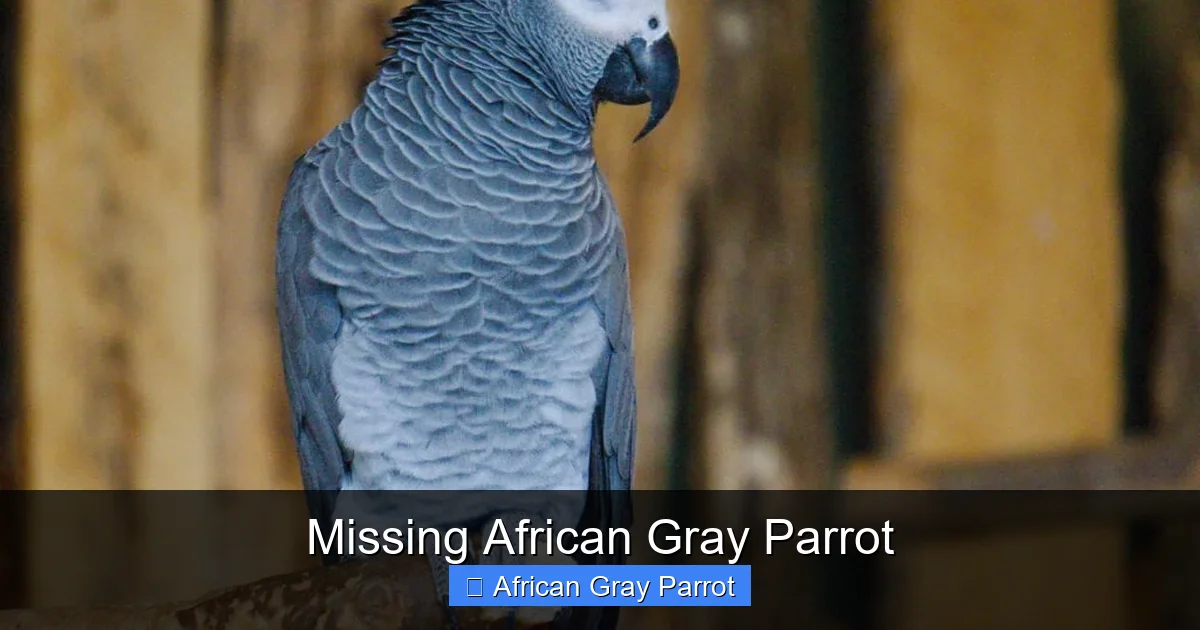
Visual guide about Missing African Gray Parrot
Image source: i.ytimg.com
Essential Elements Every Flyer Needs
- Large, clear headline: “LOST AFRICAN GRAY PARROT” in bold 72-point font minimum
- Best photo: Full body, showing the red tail, distinctive face, any unique markings
- Second photo: Close-up of face or special feature (missing toe, band number, unusual feather pattern)
- Your phone number: Large. Twice. With “TEXT OR CALL ANYTIME”
- Date and location lost: Specific intersection, not just neighborhood name
- Microchip status: “MICROCHIPPED — SCAN AT ANY VET” if applicable
- Behavioral notes: “Responds to ‘peekaboo’ and almond shake” or “Says ‘hello’ and wolf-whistles”
- Do NOT chase warning: “DO NOT CHASE — CALL OWNER IMMEDIATELY”
Design for Visibility
Use neon poster board — pink, orange, or green. Black marker. Plastic sheet protectors or packing tape over the whole thing. Rain destroys paper flyers in hours. Staple to telephone poles at eye level. Tape to community mailboxes (check local laws first). Hand to every dog walker, jogger, mail carrier, and delivery driver you see.
Strategic Placement Radius
Day one: half-mile radius in all directions. Day two: one mile. Day three: two miles. Focus on schools, parks, veterinary clinics, pet stores, garden centers, and busy intersections. Ask permission for private property. Most people say yes when they see your face.
Digital Flyers Too
Create a square version for Instagram and Facebook. A vertical version for Nextdoor and community apps. Save as JPEG and PDF. Email to every local vet clinic, animal shelter, wildlife rehabber, and parrot rescue within twenty miles. Ask them to print and post in their lobby.
Harnessing Technology and Social Networks
Your phone is your most powerful search tool. But posting once on Facebook isn’t a strategy. You need a systematic digital approach.
Platform-by-Platform Action Plan
Nextdoor: Post in your neighborhood and the three adjacent ones. Use the “Lost & Found” category. Pin the post. Reply to every comment within minutes. Nextdoor users are hyper-local — they see birds in their yards that Facebook users never notice.
Facebook: Post to your personal profile (public), then share to: “Lost & Found Pets [Your City],” “Lost Parrots [Your State],” “African Gray Parrot Owners,” “Parrot 911,” and any local community groups. Tag your city’s animal control page. Use hashtags: #LostParrot #AfricanGray #YourCityName #ParrotAlert.
PawBoost / Petco Love Lost / Finding Rover: These free services syndicate to shelters and vet clinics automatically. Upload photos, microchip number, and details. They generate printable flyers too.
Ring / Neighbors App: Post there. Ask neighbors to check security camera footage. A parrot landing on a fence at 6:47 AM might be on someone’s driveway cam.
Organize Your Digital Command Center
Create a shared Google Doc or Notes file with: every place you’ve posted (with links), every sighting report (date, time, location, witness contact), every organization contacted, and a master flyer link. Share with helpers. Chaos loses birds. Organization finds them.
Use Audio Strategically
Record your bird’s favorite phrases, your voice calling their name, the treat container shake, household sounds (microwave beep, garage door, your laugh). Play these on a Bluetooth speaker during searches. Play them from your open window at dawn and dusk when parrots are most vocal. One owner recovered her bird at 5:30 AM because he answered her recorded “good morning!” from three blocks away.
Working With Professionals and Organizations
Don’t try to do this alone. Professionals have networks, equipment, and authority you don’t. Contact them early and often.
Avian Veterinarians
Call every avian vet within thirty miles. Not just your own. Found parrots almost always end up at avian clinics first. Finder googles “bird vet near me.” Provide a flyer for their lobby. Ask them to scan any gray parrot for a microchip. Offer to pay the scan fee for any suspected match. Most clinics will do it free.
Animal Control and Shelters
File a formal lost report with your city/county animal control. Visit in person with a flyer. Ask about their stray hold period (often just three days for birds). Check their website daily. Many shelters don’t post birds online. Go look. Bring treats and your recording.
Wildlife Rehabilitators
Licensed rehabbers often receive “wild” birds that are actually escaped pets. They know the difference. Find your state’s rehabber list (usually on the Department of Natural Resources website). Email them all with your flyer. Ask them to check any African Gray intake against your description.
Parrot Rescues and Sanctuaries
These organizations have vast volunteer networks. They’ll share your post, send volunteers to search, and often have traps and nets. Contact: local parrot rescue, national organizations like The Gabriel Foundation or Mickaboo, and any species-specific groups. They’ve seen hundreds of lost bird cases. Their advice is gold.
Professional Pet Detectives
If your bird is missing beyond 48 hours, consider a pet detective who specializes in birds. They use thermal drones, tracking dogs trained for birds, and systematic grid searches. Costs range $300-$800 per day. Many offer free phone consultations. Worth the call if you’re stuck.
Understanding African Gray Behavior When Lost
Knowing how your bird thinks changes everything. African Grays aren’t like dogs or cats. Their survival instincts, intelligence, and social bonding create predictable patterns.
They Don’t Fly Far By Choice
Studies and countless anecdotal reports confirm: escaped companion parrots typically stay within a half-mile radius for days. They’re not migratory. They’re not exploring. They’re terrified, hungry, and looking for something familiar. Search close first. Expand slowly.
They Go Silent When Scared
Your chatty companion may not make a sound for days. Silence doesn’t mean they’re gone. It means they’re hiding. Search visually. Check dense evergreens, leafy deciduous trees, ivy-covered walls, and roof eaves. They press tight against trunks, feathers flattened, eyes barely open.
They Come Down for Food and Water
After 24-48 hours, dehydration and hunger override fear. They’ll visit bird feeders, fruit trees, vegetable gardens, pet food bowls, and dripping faucets. Ask neighbors with feeders to watch closely. Set up a feeding station in your yard: familiar cage, favorite foods, water dish, and your recording on a loop.
They Recognize Their People
African Grays have remarkable facial recognition and voice memory. If you’re the bonded person, you have the best chance of recall. Send family members to search other sectors. You stay in the core zone calling, shaking treats, playing recordings. Your presence is the strongest lure.
They May Approach Strangers — Selectively
Some lost Grays fly to anyone. Others only approach women, or people wearing glasses, or anyone with a hat. Note your bird’s preferences. Brief search helpers: “He likes women with long hair. He’s scared of deep voices.” This prevents well-meaning people from scaring him off.
Trapping and Recovery Techniques
Sometimes your bird is located but won’t come down. Or you have a confirmed sighting but no capture. These techniques work.
The Familiar Cage Trap
Place their actual cage (or an identical one) in the sighting location. Door wired open. Favorite foods inside and on top. Perches arranged for easy entry. A familiar toy visible. Your worn t-shirt draped over one corner. Sit thirty feet away. Wait. Many birds walk right in at dusk.
Spring-Loaded Net Traps
Parrot rescues often have these. A lightweight net on a spring frame, triggered by a pull string. Bait with high-value treats (macadamia nuts, grapes, warm corn). Practice setting it before you deploy. Position where the bird has been seen perching. Requires patience — sometimes hours.
Mist Nets (Professionals Only)
Fine mesh nets strung between poles. Nearly invisible. Used by banders and rehabbers. Do not attempt without training. Birds can injure themselves badly. Call a licensed bander or rehabber if the situation warrants this.
Hand-Feeding Recall
If your bird is tame and food-motivated, you may coax them down. Stand under the tree. Show the treat. Call softly. Toss a treat near your feet. Toss another closer. Another. Build a trail. This can take hours. Stay calm. Move slowly. Celebrate silently when they step onto your hand.
Night Recovery Advantage
Parrots roost at sunset and don’t move until dawn. If you locate yours at 7 PM, you have a massive advantage. Set up the cage trap directly under the roost. Shine a dim red light (headlamp on red mode) so you can see without disturbing. Be ready at first light. They often fly down hungry and walk into the cage.
Prevention: Never Go Through This Again
Recovery is sweet. Prevention is smarter. These measures dramatically reduce escape risk.
Double-Door Entry Systems
Install a screen doors. The first opens into a small vestibule. The second opens into the bird room. You never have both open simultaneously. Cost: $200-$500 for a contractor. Peace of mind: priceless.
Window and Door Screens — Always
Magnetic screen doors for human entryways. Heavy-duty pet screens on windows. Check them monthly for tears. A determined Gray can shred standard screen in seconds. Upgrade to stainless steel mesh.
Recall Training
Teach a solid “come here” or “fly to me” cue. Practice daily. Use high-value rewards. Train in different rooms. Train from different heights. Train with distractions. A reliable recall has saved countless birds who slipped out a door.
Harness Training
If your bird goes outside, they wear a properly fitted avian harness. No exceptions. Train indoors first. Short sessions. Positive reinforcement. Many Grays learn to love their harness because it means adventure time.
Microchip and Documentation
Microchip your bird. Register the chip. Keep the registration current. Take monthly photos showing any changes. Document band numbers, distinctive markings, vocabulary, and behavioral quirks. Store in cloud and print copies. If the unthinkable happens, you’re ready in minutes.
Smart Home Alerts
Door/window sensors on every exit. Phone alerts when opened. Camera on the bird room. Some owners use pressure mats near cages that alert if the bird lands on the floor. Technology is cheap. Regret is expensive.
When Days Become Weeks: Long-Term Search
Most missing African Gray Parrots are found in the first week. But some take weeks or months. Don’t give up. Birds have been recovered after 60+ days.
Expand Your Radius Systematically
Week two: three-mile radius. Week three: five miles. Week four: ten miles. Re-post flyers. Refresh digital posts. Contact new vet clinics and shelters in the expanded zone. Birds move when food runs out or weather changes.
Seasonal Considerations
Winter: Birds seek heat. Check dryer vents, attics, heated garages, and chimneys. Summer: Birds seek water. Check pools, fountains, sprinklers, and AC drip lines. Migration season: Wild flocks may attract your bird. Monitor local birding reports on eBird.
Maintain Your Feeding Station
Keep your yard station stocked year-round. Familiar cage. Fresh food daily. Water. Recording on a timer (dawn and dusk). Trail camera pointed at it. Many long-term recoveries happen because the bird finally comes home to the only familiar thing in their world.
Stay Visible in the Community
Update your flyers with “STILL MISSING — REWARD OFFERED” after two weeks. Re-knock doors. New neighbors move in. Seasonal workers arrive. People who ignored the first flyer notice the second. Persistence pays.
Take Care of Yourself
This is trauma. Sleep deprivation, guilt, anxiety, and grief are normal. Eat. Sleep. Accept help. Let friends manage flyers, social media, and meals. You need your wits sharp for search decisions. Therapy helps. Support groups help. You’re not alone.
Conclusion: Your Bird Is Counting On You
Right now, your African Gray Parrot is perched somewhere, heart racing, listening for something familiar. They’re smart. They’re bonded to you. They’re waiting for the sound that means safety. That sound is your voice.
Every recovered bird story I’ve heard shares one detail: the owner didn’t quit. They searched in rain. They woke at 3 AM to play recordings. They knocked doors until their knuckles bruised. They sat under trees for hours shaking almonds. And then — a flash of gray. A whispered “peekaboo.” A tentative step onto a finger.
You have the plan. You have the tools. You have the love. Go bring them home.
And when they’re back — safe, warm, eating a grape from your hand — you’ll microchip them tomorrow. You’ll install the double doors. You’ll practice recall until it’s reflex. Because you know now: they’re not just pets. They’re family. And family doesn’t stay lost.
Frequently Asked Questions
What should I do the moment I realize my African Gray Parrot is missing?
Grab treats, a recording of your voice, and a flashlight. Search your property slowly while calling their name and shaking treats. Leave the cage outside with the door open and favorite foods visible. Alert neighbors immediately and ask them to check garages, sheds, and high perches.
How do I make a lost parrot flyer that actually gets results?
Use neon poster board with large bold text: “LOST AFRICAN GRAY PARROT.” Include two clear photos (full body and close-up), your phone number twice, date and location lost, microchip status, behavioral cues, and a “DO NOT CHASE” warning. Protect with plastic sheeting and post within a half-mile radius immediately.
Which organizations should I contact when my parrot goes missing?
Contact avian veterinarians, animal control, wildlife rehabilitators, local parrot rescues, and national organizations like The Gabriel Foundation. File formal lost reports with shelters. Ask vets to scan any incoming gray parrots for microchips. Professional pet detectives can help after 48 hours.
Why isn’t my lost African Gray Parrot making any noise?
African Grays instinctively go silent when frightened to avoid predators. Your bird may be hiding in dense foliage, pressed against a tree trunk, completely quiet. This doesn’t mean they’re far away — search visually in a tight radius, checking high perches and enclosed spaces.
Can I use a trap to catch my missing parrot?
Yes. A familiar cage with the door wired open works best. Place it at the sighting location with favorite foods and a worn shirt. Spring-loaded net traps are effective but require practice. Mist nets should only be used by licensed professionals to avoid injury.
How can I prevent my African Gray Parrot from escaping again?
Install double-door entry systems, use heavy-duty window and door screens, microchip your bird, train a solid recall cue, harness train for outdoor time, add door/window sensors with phone alerts, and keep current photos and documentation ready. Prevention is far easier than recovery.