
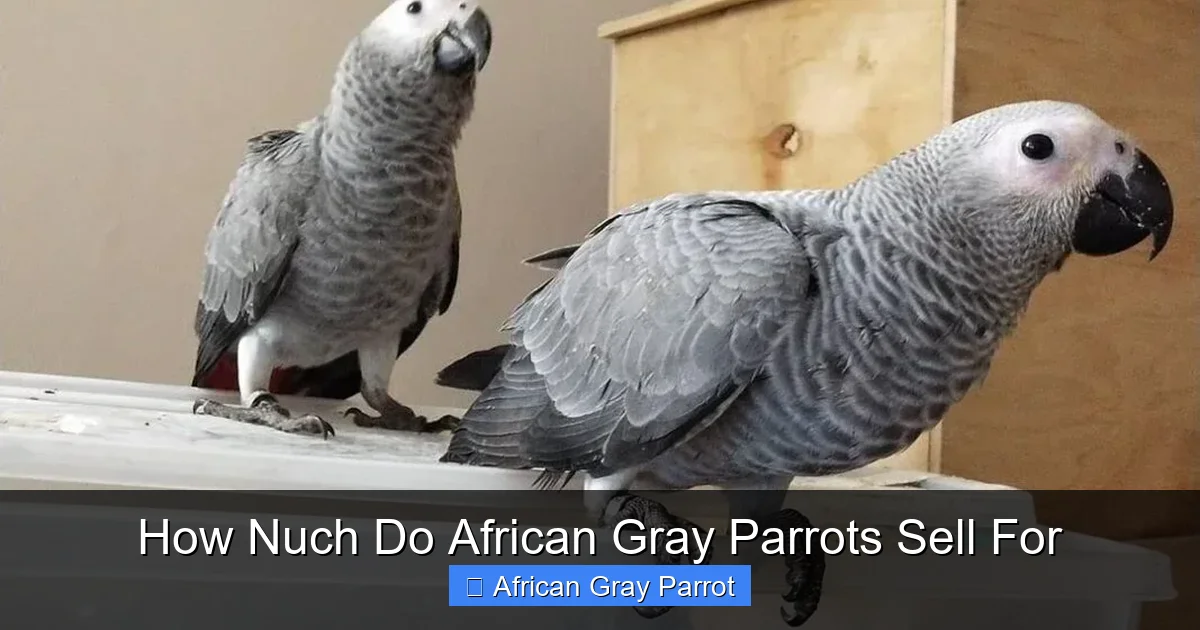
African Gray Parrots typically sell for $1,500 to $4,000 depending on age, training, and breeder reputation. Total first-year costs often exceed $5,000 when you factor in cages, vet care, food, and toys. This guide breaks down every expense so you can budget wisely for your new companion.
So you are thinking about bringing home an African Gray Parrot. Smart choice. These birds are brilliant. They talk. They bond deeply. They live a long time. But before you fall in love with those gray feathers and that bright red tail, you need to know the real cost. Many people ask how nuch do African Gray Parrots sell for. The answer is not a single number. It depends on many things. Let us walk through it together.
I have talked to breeders. I have talked to rescue groups. I have talked to owners. The price tag on the bird is just the start. You need a big cage. You need toys. You need a special diet. You need an avian vet. Those bills stack up fast. This guide will show you every cost. No surprises. Just clear numbers so you can plan.
Key Takeaways
- Baby birds cost more: Hand-fed babies range from $2,500 to $4,000 while older birds sell for $1,500 to $2,500
- Breeder reputation matters: Reputable breeders charge premium prices but provide health guarantees and proper socialization
- Hidden costs add up: Expect $2,000 to $3,000 in first-year expenses beyond the purchase price
- Adoption saves money: Rescue organizations charge $500 to $1,500 and often include vet checks
- Location affects price: Urban areas and regions with few breeders see higher prices due to demand and shipping costs
- Timing impacts cost: Prices peak during holiday seasons and drop slightly in late summer
- Ongoing costs are significant: Budget $1,200 to $2,000 annually for food, vet care, toys, and supplies
Quick Answers to Common Questions
What is the average price of a baby African Gray Parrot?
A hand-fed baby African Gray Parrot typically costs between $2,500 and $4,000 from a reputable breeder, with Congo subspecies at the higher end and Timnehs slightly lower.
How much should I budget for the first year of ownership?
Plan to spend $7,000 to $15,000 in the first year including the bird, cage, vet care, food, toys, and supplies. The purchase price is only about 25% of first-year costs.
Are African Gray Parrots cheaper to adopt than buy?
Yes, adoption fees range from $500 to $1,500 through rescue organizations, which often include initial vet checks, microchipping, and known behavioral history.
What ongoing annual costs should I expect?
Budget $1,200 to $2,000 per year for quality pellets, fresh produce, nuts, routine vet care, toy replacement, and grooming. Emergency vet funds should be separate.
Why do prices vary so much between sellers?
Price differences reflect breeder reputation, health testing, socialization quality, subspecies (Congo vs Timneh), age, training level, and whether the bird comes with health guarantees and lifetime support.
📑 Table of Contents
What Drives The Price Of An African Gray Parrot
Not all African Grays cost the same. A bird from a pet store differs from a bird from a top breeder. A baby differs from an adult. Let us break down the main factors.
Age And Training Level
Baby parrots cost the most. A hand-fed baby African Gray runs $2,500 to $4,000. Why so high? Hand feeding takes weeks of work. The breeder wakes up every few hours. They feed formula by syringe. They socialize the bird daily. That labor adds value. The bird bonds to humans early. It learns to trust. It learns to step up. It learns not to bite hard.
Weaned juveniles cost less. Expect $2,000 to $3,000. They eat on their own. They still need training. But the hard baby work is done.
Adult birds sell for $1,500 to $2,500. Some adults are rehomed. Some are retired breeders. Retired breeders may not be tame. They may not talk. They may fear hands. You pay less but you take on more work.
Breeder Reputation And Quality
A hobby breeder with two pairs charges less. Maybe $1,800 to $2,500. A professional aviary with 20 pairs charges $3,000 to $4,000. The pro breeder tests for diseases. They DNA sex every bird. They vaccinate. They keep perfect records. They offer lifetime support. You pay for peace of mind.
Pet stores often charge $3,500 to $4,500. They have overhead. Rent. Staff. Marketing. The bird may come from a bird mill. It may not be well socialized. Ask for the breeder name. If they will not tell you, walk away.
Subspecies Differences
There are two main types. The Congo African Gray is larger. It has a bright red tail. It costs $2,000 to $4,000. The Timneh African Gray is smaller. It has a maroon tail. It has a horn colored upper beak. It costs $1,500 to $3,000. Timnehs often talk earlier. They can be less nervous. Both make great pets.
Color Mutations
Rare colors cost a fortune. A Red Factor African Gray can sell for $5,000 to $10,000. A Lutino (yellow) can hit $15,000. A Blue mutation goes for $20,000 plus. These are for collectors. Not for first time owners. Stick to the classic gray. You get the same brain. The same heart. For a fraction of the price.
The Real First Year Cost Breakdown
The bird price is just the down payment. Let us tally the real first year total.
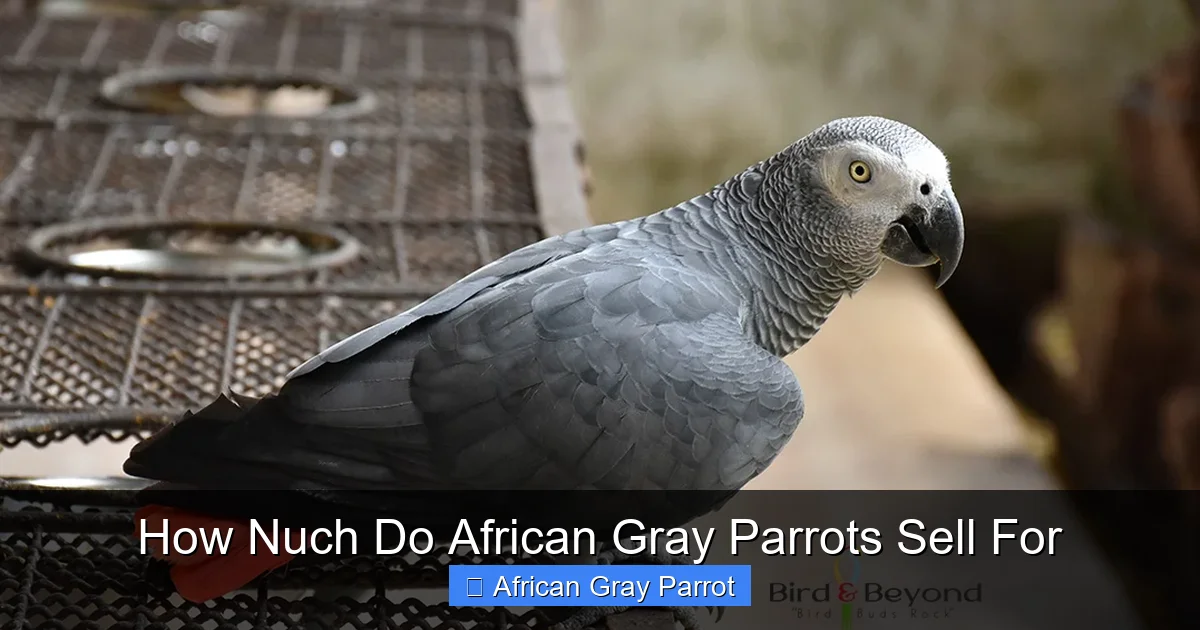
Visual guide about How Nuch Do African Gray Parrots Sell For
Image source: birdandbeyond.com
Housing And Setup
African Grays need big cages. Minimum 36 x 24 x 48 inches. Bar spacing 3/4 to 1 inch. A good powder coated cage costs $400 to $800. Stainless steel cages run $1,500 to $3,000. They last forever. They clean easy. They are worth it if you can swing it.
Perches. Get natural wood. Rope. Cement for nails. Budget $50 to $100. Food bowls. Stainless steel. $30 to $60. Play stand. $150 to $400. Travel carrier. $80 to $150. First aid kit. $40. Scale for weekly weights. $30. Total setup: $800 to $2,500.
Food And Nutrition
Seed only diets kill parrots. Slowly. They need pellets. Fresh vegetables. Some fruit. Healthy nuts. A quality pellet like Roudybush or Harrison’s costs $40 for a 5 pound bag. That lasts one bird 6 to 8 weeks. Figure $300 to $400 per year for pellets.
Fresh produce. Organic preferred. $20 to $40 per week. That is $1,000 to $2,000 per year. Nuts. Almonds. Walnuts. Pistachios. $15 to $25 per week. Another $800 to $1,300. Treats and training rewards. $100 to $200. Total food: $2,200 to $3,900 per year.
Veterinary Care
Find an avian vet before you bring the bird home. Not a dog and cat vet. An avian specialist. First visit. Wellness exam. Blood work. Gram stain. Chlamydia test. PBFD test. Polyoma test. $300 to $600.
Annual checkup. $150 to $300. Emergency fund. You need $2,000 minimum set aside. Parrots hide illness. When you see symptoms, it is urgent. Night vet visits cost $500 to $1,500. Surgeries run $2,000 to $5,000. Pet insurance for birds exists. Nationwide offers it. About $30 to $50 per month. Worth considering.
Toys And Enrichment
African Grays destroy toys. That is their job. A $30 toy lasts two days. You need a constant rotation. Foraging toys. Puzzle toys. Shredding toys. Foot toys. Budget $50 to $100 per month. That is $600 to $1,200 per year. Make your own too. Phone books. Cardboard boxes. Paper cups. Pine cones. Free enrichment works great.
Grooming And Maintenance
Nail trims. Beak trims (rare if diet is right). Wing trims (optional). Avian vet does these. $50 to $100 per visit. Every 3 to 6 months. $200 to $400 per year. Shower perch. $20. Misting bottle. $10. Humidifier for dry climates. $50 to $100. Air purifier. Critical. Parrots have sensitive lungs. $200 to $500 for a good HEPA unit.
First Year Total
Let us add it up. Bird: $2,500. Cage and setup: $1,500. Food: $3,000. Vet: $1,000 (including emergency fund start). Toys: $800. Grooming and air: $500. Grand total: $9,300. Could be $7,000 if you are frugal. Could be $15,000 if you go premium. Plan for $10,000. Be pleasantly surprised if you spend less.
Where To Buy Your African Gray Parrot
Source matters. A lot. It affects price. It affects health. It affects behavior. Here are your main options.
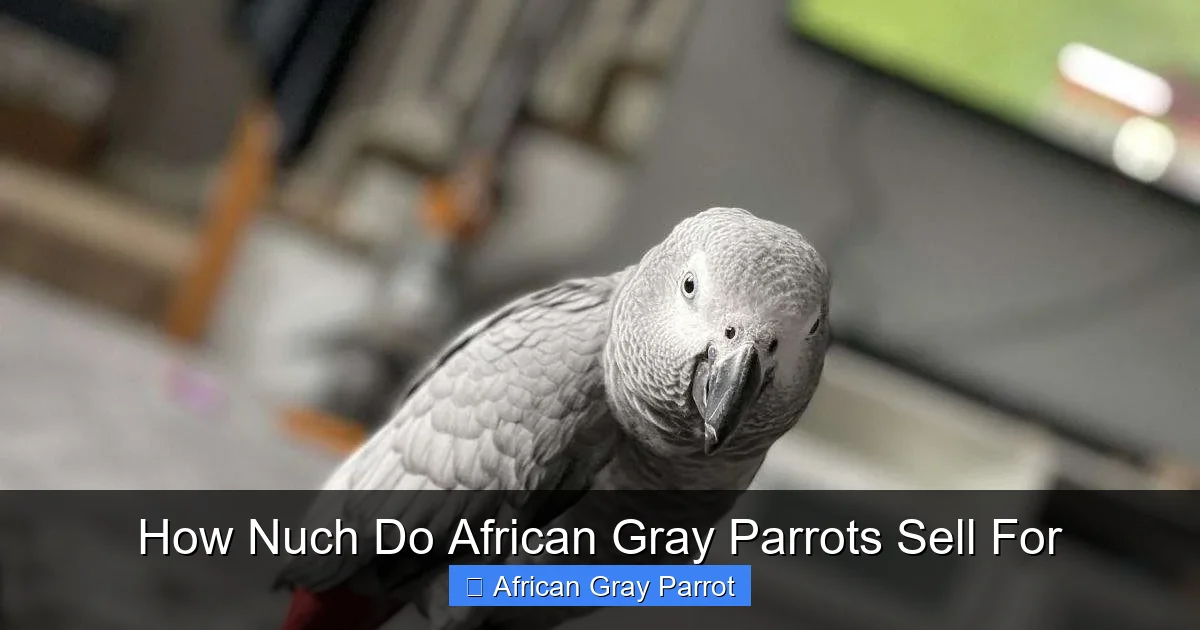
Visual guide about How Nuch Do African Gray Parrots Sell For
Image source: img.birdsnow.com
Reputable Breeders
This is the gold standard. Good breeders let you visit. You see the parents. You see the nursery. You see clean cages. They ask you questions. They want their babies in good homes. They band the babies. Closed bands. Traceable. They provide hatch certificates. They provide diet sheets. They offer mentorship.
Find them through avian vet referrals. Bird club recommendations. Online reviews. The African Gray Parrot Facebook groups. Ask for references. Talk to past buyers. Expect a waitlist. 6 months to 2 years for top breeders. Deposit required. $500 to $1,000. Usually non refundable.
Avian Specialty Stores
Some stores are great. They work with good breeders. They socialize babies daily. They educate buyers. They offer support. Prices are higher. $3,500 to $4,500. But you can see the bird now. No wait. No shipping stress. Ask where the bird came from. Ask to see hatch certificate. Ask about their weaning process.
Bird Fairs And Expos
Bird fairs happen in most states. You meet many breeders in one day. You compare birds. You compare prices. Cash deals happen. But be careful. Impulse buys happen. Stress is high. Disease spreads easy at fairs. Quarantine any fair bird for 45 days minimum. Get vet check immediately.
Rescue And Adoption
This saves money. And saves a life. Rescues charge $500 to $1,500. The bird is vetted. Often microchipped. Often has known history. The rescue screens you hard. Home visit. References. Classes. They want forever homes. You get support. You get a bird that needs you. Many rescue Grays talk. Many are sweet. Some have baggage. Patience required.
Online Marketplaces
BirdBreeders.com. Hoobly. Craigslist. Facebook Marketplace. Prices vary wildly. $800 to $3,000. Scams are rampant. Never wire money. Never use gift cards. Never pay before seeing the bird. Insist on video call. Insist on vet records. Insist on shipping through a pet shipper like Delta Dash or United PetSafe. Better yet, drive there. Meet the seller. See the bird. Trust your gut.
Hidden Costs And Surprises
Nobody tells you about these. Until you live them.
Noise Complaints
African Grays are not screamers like macaws. But they are loud. They mimic microwave beeps. Smoke alarms. Phone rings. Laughing. Crying. Neighbors hear it. Apartments are risky. Condos are risky. HOAs can fine you. Soundproofing a room costs $2,000 to $5,000. White noise machines help. But consider your housing before buying.
Dust And Allergies
African Grays produce powder down. Fine white dust. It coats everything. It triggers asthma. It triggers allergies. You need an air purifier running 24/7. You need to vacuum daily. You need to wipe surfaces daily. You need to shower the bird often. Some owners develop bird fancier’s lung. A serious condition. If you have respiratory issues, think twice.
Destruction
That beak cracks Brazil nuts. It destroys furniture. Baseboards. Door frames. Window sills. Picture frames. Keyboards. Phone chargers. Glasses. Jewelry. You must bird proof. You must supervise. You will replace things. Budget $500 to $1,000 per year for collateral damage.
Travel And Boarding
You cannot leave a Gray alone for a weekend. They need daily interaction. Boarding at avian vet: $30 to $50 per day. In home pet sitter with bird experience: $50 to $100 per day. Vacation costs double. Or you take the bird. Travel carrier. Airline fees. Hotel fees. Health certificates. $300 to $800 per trip.
Lifespan Costs
African Grays live 50 to 70 years. Some hit 80. You are planning for decades. $1,200 to $2,000 per year. That is $60,000 to $140,000 over a lifetime. Inflation will push it higher. You need a will provision. A trust. A designated caregiver. This is not a pet. This is a dependent.
How To Save Money Without Cutting Corners
You can be smart. You can be frugal. You cannot be cheap. Here is how.
Adopt An Adult
Rescue price: $500 to $1,500. You skip the baby price premium. You skip the hand feeding risk. The bird is vetted. The personality is known. “What you see is what you get.” Many adult Grays bond deeply with new owners. Give them time. Give them patience. They will love you.
Buy Used Cages
Stainless steel cages last 50 years. People sell them when birds pass. Check Facebook Marketplace. Craigslist. Bird club classifieds. A $2,500 cage sells for $800 used. Clean it with vinegar and steam. Disinfect with F10SC. It is like new. Inspect welds. Inspect locks. Make sure bars are not bent.
Make Your Own Toys
Toy parts in bulk. ABC Bird Toys. Make Your Own Bird Toys. Drs. Foster and Smith. Buy blocks. Buy beads. Buy leather. Buy chain. Buy stainless skewers. A $50 order makes 20 toys. Compare to $30 each store bought. Rotate weekly. The bird stays busy. You save hundreds.
Grow Your Own Produce
Kale. Chard. Collards. Carrots. Peppers. Herbs. Grow in pots. Grow in yard. Organic. Free. Fresh. The bird loves picking leaves off stems. It is enrichment and nutrition. Saves $500 to $1,000 per year.
Join A Bird Club
Local bird clubs have bulk food orders. 50 pound pellet bags at wholesale. Group vet visits for discounts. Toy making workshops. Experienced mentors. Annual dues $20 to $50. Pays for itself in one food order.
Preventive Vet Care
Annual blood work catches problems early. Early treatment costs 10% of late treatment. A $200 blood panel prevents a $3,000 hospitalization. Weigh weekly. A 10% weight drop means vet visit now. Not tomorrow. Now.
Red Flags When Buying
Protect yourself. Walk away if you see these.
Unweaned Babies
Some sellers push unweaned babies. “Finish hand feeding yourself. Save money.” Do not do it. Hand feeding kills babies. Aspiration. Crop burn. Crop stasis. Bacterial infection. Only experienced hand feeders should do it. No exceptions. A weaned bird eats on its own for two weeks minimum before going home.
No Vet Records
No hatch certificate. No test results. No band. “The vet said it is healthy.” Get it in writing. Or walk away. PBFD and Polyoma are deadly. They spread fast. They kill fast. Testing is not optional.
Pressure Tactics
“Someone else wants it.” “Price goes up tomorrow.” “Deposit today or lose it.” Good breeders do not pressure. They want the right home. They will wait. Scammers pressure. Trust your instincts.
Shipping Only
“I cannot meet. I ship only.” Unless it is a reputable breeder with references and you use a pet shipper, do not buy sight unseen. Photos lie. Videos lie. You need to see the bird breathe. See the feathers. See the poop. See the attitude.
Too Cheap
$500 for a baby African Gray. $800 for a talking adult. It is a scam. Or a sick bird. Or a stolen bird. Or a wild caught bird (illegal since 1992). Market price exists for a reason. If it sounds too good, it is.
Preparing Your Home For Arrival
Do this before the bird comes. Not after.
Bird Room Setup
Choose a room. Not the kitchen. Teflon fumes kill birds. Not a drafty hallway. Not direct sun all day. A family room corner works. The bird wants to be where you are. But needs 12 hours dark quiet sleep. A cage cover helps. A separate sleep cage in a quiet room is better.
Air Quality
Air purifier running before bird arrives. HEPA filter. Carbon filter. No ionizers. No ozone. They hurt bird lungs. Austin Air. Blueair. Rabbit Air. Good brands. One per 500 square feet. Run on high 24/7. Change filters per schedule.
Safe Plants Only
Remove toxic plants. Philodendron. Pothos. Dieffenbachia. Peace lily. Avocado. Many more. Check ASPCA list. Replace with spider plant. Boston fern. Areca palm. Bamboo. African violet. Herbs. Safe and pretty.
Emergency Kit Ready
Styptic powder. Gauze. Vet wrap. Scissors. Towel. Heating pad. Carrier. Vet number. Emergency vet number. Poison control number. Written directions to both. In a bright bag. By the door. Everyone in house knows where.
Family Meeting
Rules before bird arrives. No doors left open. No ceiling fans on when bird out. No candles. No air fresheners. No smoking. No Teflon. No loud sudden movements. Kids sit to hold. Adults supervise always. Consistency keeps bird safe. Consistency keeps bird sane.
Conclusion
So how nuch do African Gray Parrots sell for? The bird costs $1,500 to $4,000. The first year costs $7,000 to $15,000. Each year after costs $1,200 to $2,000. A lifetime costs $60,000 to $140,000. These are real numbers. Not scare tactics. Just truth.
If you have the money. If you have the time. If you have the patience. If you have the love. An African Gray Parrot will change your life. They are funny. They are smart. They are affectionate. They are frustrating. They are messy. They are loud. They are perfect. They are impossible. All at once.
Do your homework. Save your money. Find your breeder or rescue. Prepare your home. Prepare your heart. Then bring home your gray feathered genius. You will never be bored again. You will never be lonely again. You will talk to a bird. And the bird will talk back. That is worth every penny.
Frequently Asked Questions
Can I finance an African Gray Parrot purchase?
Some breeders offer payment plans with a deposit and monthly installments. Pet stores may offer financing through third-party lenders. However, avoid high-interest financing for a living being. It is better to save and pay cash to avoid financial stress that could compromise the bird’s care.
Do male and female African Grays cost different amounts?
Generally no. Reputable breeders DNA sex babies and price them the same. Some unscrupulous sellers may charge more for “proven” talking males or “breeding” females, but sex does not determine pet quality or talking ability in African Grays.
What is the cheapest legitimate way to get an African Gray?
Adoption through a 501(c)(3) parrot rescue is the most affordable legitimate route at $500 to $1,500. You get a vetted bird with known personality and ongoing support. Avoid “cheap” birds from unverified online sources as they often have hidden health or behavioral issues.
How much does it cost to ship an African Gray Parrot?
Professional pet shipping via airline cargo (Delta Dash, United PetSafe, American PetEmbark) costs $300 to $600 depending on distance, crate, and weather restrictions. Ground transport by specialized pet movers runs $1 to $2 per mile. Always use climate-controlled, live-animal approved services.
Are there seasonal price fluctuations for African Grays?
Prices often peak November through December due to holiday demand. Late summer (August-September) may see slight dips as breeders clear space for fall clutches. However, top breeders with waitlists maintain consistent pricing year-round regardless of season.
What financial preparation should I do before buying?
Save the full first-year estimated cost ($10,000+) before purchasing. Establish an emergency vet fund of $2,000 to $5,000. Research avian vet costs in your area. Check if your homeowners or renters insurance covers bird liability. Create a long-term care plan including a designated guardian and financial provision in your will.