
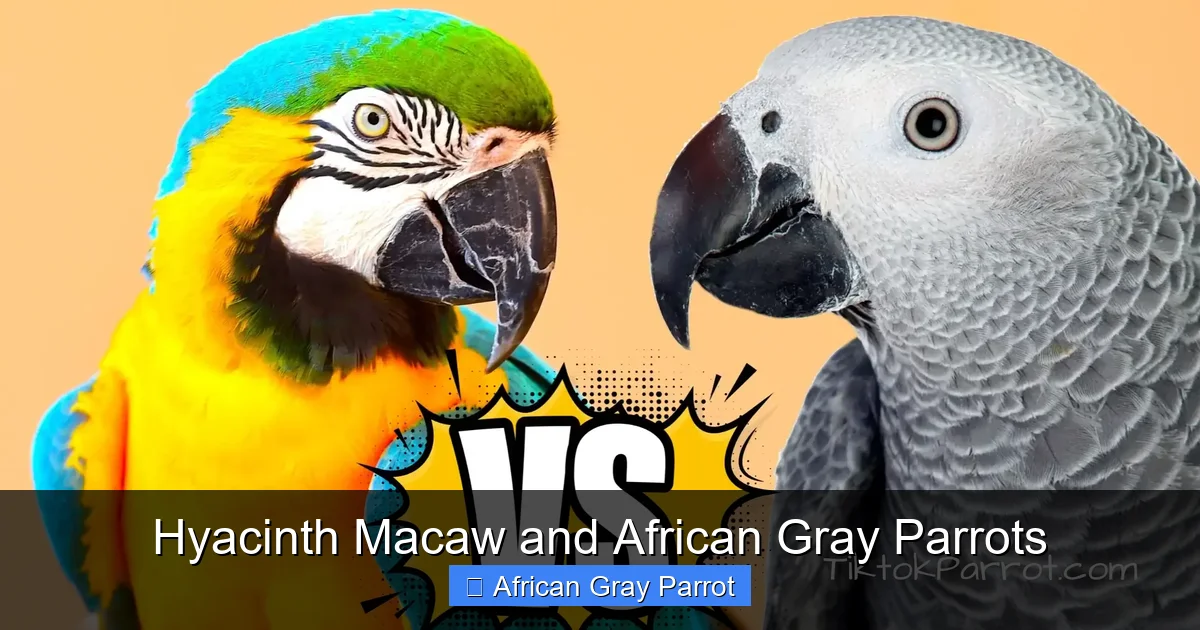
The hyacinth macaw and African gray parrot represent two of the most extraordinary parrots in the world. The hyacinth macaw dazzles with its massive cobalt-blue frame and gentle giant personality, while the African gray parrot amazes with unmatched talking ability and cognitive skills. Both demand serious commitment, specialized diets, and enriched environments to thrive in captivity.
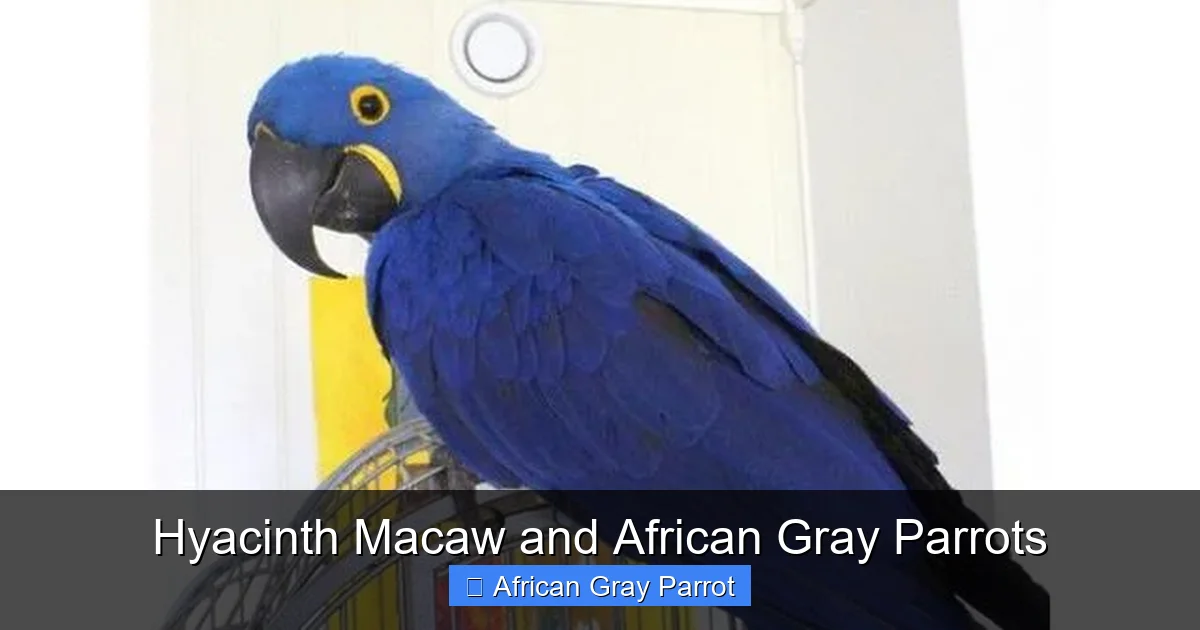
When you walk into a room with a hyacinth macaw, the air changes. This bird commands presence like no other. Its feathers shimmer in deep cobalt blue. Its massive black beak curves with power. Its yellow eye-ring and facial patch glow like gold against midnight plumage. You feel small beside this gentle giant.
Now picture an African gray parrot perched quietly on a stand. At first glance, it seems modest. Gray feathers. Red tail. Black beak. But then it speaks. Perfectly. Your voice. Your phone ringtone. The microwave beep. A joke you told last week. The African gray does not just mimic. It understands context. It solves puzzles. It counts. It argues. Two birds. Two completely different experiences. Both will change your life forever.
Key Takeaways
- Size difference is dramatic: Hyacinth macaws reach 40 inches long with a 4-foot wingspan, while African grays max out at 13 inches.
- Intelligence manifests differently: African grays excel at vocabulary and problem-solving; hyacinth macaws show emotional intelligence and tool use.
- Lifespan commitment is huge: Both species can live 50 to 80 years, requiring multi-generational care planning.
- Dietary needs are specialized: Hyacinth macaws need high-fat palm nuts; African grays require calcium-rich foods to prevent deficiency.
- Noise levels vary greatly: Hyacinth macaws produce ear-splitting calls; African grays are quieter but mimic household sounds constantly.
- Cost reflects rarity and care: Hyacinth macaws cost $10,000 to $15,000; African grays range $2,000 to $4,000 plus lifelong expenses.
- Legal protections affect ownership: Both species face CITES restrictions; hyacinth macaws are Appendix I, African grays Appendix II.
Quick Answers to Common Questions
Which is louder, a hyacinth macaw or African gray parrot?
Hyacinth macaws are significantly louder, reaching 106 decibels comparable to a chainsaw, while African grays are quieter but mimic repetitive household sounds constantly.
Can hyacinth macaws talk like African grays?
Hyacinth macaws can learn 20 to 50 words with raspy voices, but African grays are far superior talkers with vocabularies of 100 to 1,000+ words used in context.
Which bird is more expensive to own long-term?
Hyacinth macaws cost significantly more due to $300-500 monthly food bills, $3,000-8,000 cages, and higher veterinary costs compared to African grays at $100-200 monthly food.
Do both species need UVB lighting?
Yes, both species absolutely require full-spectrum UVB lighting for vitamin D3 synthesis, calcium metabolism, and prevention of metabolic bone disease and hypocalcemia.
Which species is better for a first-time large bird owner?
Neither is recommended for first-time owners, but African grays are slightly more manageable due to smaller size, lower cost, and less destructive beak power.
📑 Table of Contents
- Physical Characteristics That Define Each Species
- Intelligence And Cognitive Abilities Compared
- Personality And Temperament In Daily Life
- Housing And Environmental Requirements
- Nutrition And Dietary Specializations
- Health Concerns And Veterinary Care
- Cost Of Ownership: The Financial Reality
- Conservation Status And Ethical Considerations
- Making Your Decision: Which Bird Fits Your Life
- Conclusion: Two Extraordinary Paths
Physical Characteristics That Define Each Species
The Hyacinth Macaw: Nature’s Blue Masterpiece
The hyacinth macaw holds the title of largest flying parrot in the world. Adults stretch 40 inches from beak tip to tail tip. Their wingspan reaches four feet. They weigh between 2.6 and 3.7 pounds. Every feather displays intense cobalt blue. The color seems to glow from within. Bright yellow skin circles each dark eye. A matching yellow stripe runs along the lower mandible. This yellow pops against the blue like sunlight on ocean water.
Their beak deserves special attention. It is massive. It is black. It curves with incredible power. A hyacinth macaw can crack macadamia nuts effortlessly. It can snap a broomstick in half. It can destroy furniture in minutes. Yet this same beak gently preens a mate’s feathers. It carefully feeds chicks. It takes treats from a trusted hand with surprising delicacy.
Juvenile hyacinth macaws look slightly different. Their tails are shorter. Their beaks show a pale culmen stripe. Their eyes are dark brown, not yellow. They reach full adult plumage around age two. Sexual maturity arrives between seven and ten years. This long maturation period matters for breeding programs and pet development alike.
The African Gray Parrot: Subtle Elegance With Hidden Depth
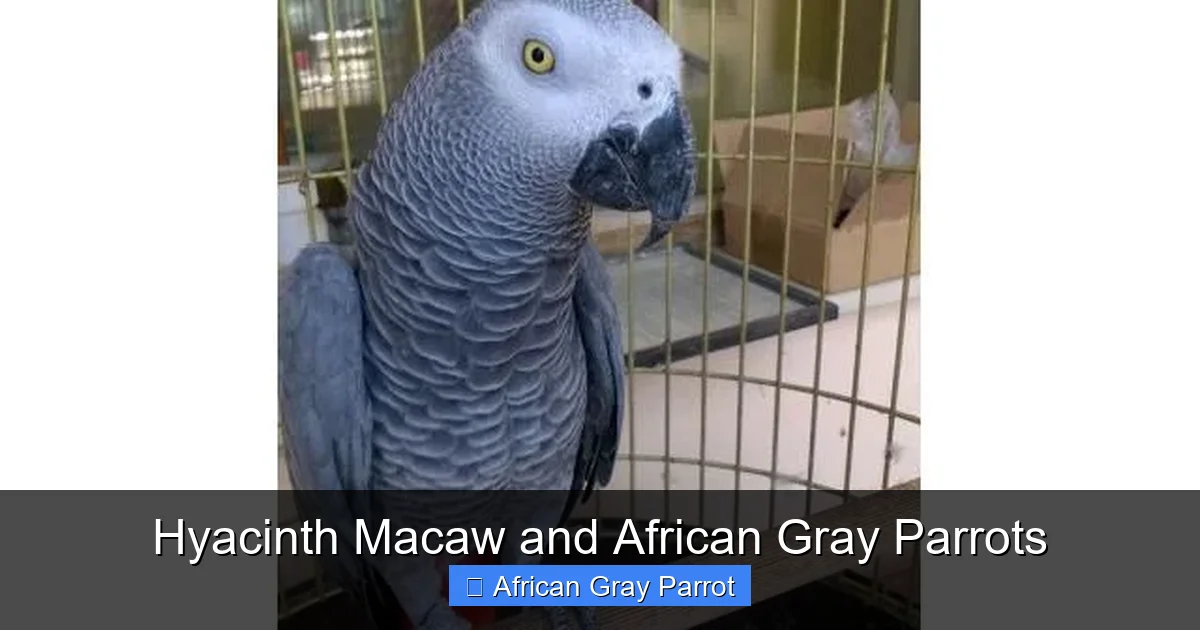
Two subspecies exist. The Congo African gray is larger at 13 inches. It sports bright scarlet tail feathers. Its beak is solid black. The Timneh African gray is smaller at 9 to 11 inches. Its tail shows maroon rather than bright red. Its upper mandible bears a horn-colored patch. Both share the same iconic look. Scalloped gray feathers create a beautiful scaled pattern. White facial skin frames intense pale yellow eyes.
Weight ranges from 14 to 18 ounces for Congos. Timnehs weigh 11 to 14 ounces. Their build is compact. Muscular. Designed for agile flight through dense forest canopy. Their feet are remarkably dexterous. They manipulate objects with near-human precision. They hold food with one foot while eating. They unlock cage latches. They untie knots. This physical capability supports their legendary intelligence.
Young African grays have dark gray eyes. These lighten to pale yellow by age two to three. The scalloped feather pattern is less defined in juveniles. They molt into adult plumage around 18 months. Sexual maturity occurs at three to five years. Earlier than hyacinth macaws. This affects training timelines and behavioral development.
Intelligence And Cognitive Abilities Compared
African Gray Parrots: The Einstein Of The Bird World
Dr. Irene Pepperberg’s work with Alex the African gray changed science forever. Alex learned over 100 words. He understood concepts like same, different, bigger, smaller. He counted objects up to six. He combined words creatively. He apologized when he made mistakes. He asked to go back to his cage when tired. This was not mimicry. This was communication.
Visual guide about Hyacinth Macaw and African Gray Parrots
Image source: classads.co.za
African grays demonstrate reasoning skills rivaling young children. They solve multi-step puzzles. They use tools in captivity. They understand object permanence. They show self-awareness in mirror tests. They grasp the concept of zero. They engage in reciprocal play. They manipulate humans strategically. One African gray learned to say “want nut” only when the researcher wasn’t looking. Then waited. Then tried again. This shows theory of mind.
Vocabulary capacity astounds. Some individuals learn 1,000 plus words. They use words in context. They form sentences. They express preferences. They argue. An African gray might say “no” firmly when offered disliked food. Then request the preferred item by name. They mimic voices perfectly. Phone rings. Alarm clocks. Spouses. Children. Other pets. The accuracy is uncanny.
Hyacinth Macaws: Emotional Intelligence And Problem Solvers
Hyacinth macaws possess a different intelligence. They excel at emotional reading. They sense human moods instantly. They offer comfort during sadness. They celebrate excitement. They mediate conflicts between family members. Their social intelligence evolved for lifelong pair bonds. They coordinate with mates constantly. They raise young together for over a year. This requires complex communication.
Tool use appears in wild populations. Hyacinth macaws use sticks to position nuts. They use leaf fragments to stabilize slippery food. They manipulate objects to reach treats. In captivity, they solve mechanical puzzles. They unlock complex cage mechanisms. They disassemble toys systematically. They learn routines quickly. They anticipate events. A hyacinth macaw knows the sound of its owner’s car. It prepares for dinner at the same time daily.
Language ability exists but differs. Hyacinth macaws learn fewer words. Maybe 20 to 50. Their voices are deeper. Raspy. Less clear. But they use words meaningfully. “Hello” when someone enters. “Bye bye” when leaving. “Love you” during cuddles. “Ouch” when bitten. They communicate needs effectively. They combine vocalizations with body language. A raised crest. Fluffed feathers. Pinned eyes. The message is always clear.
Training Approaches For Each Species
African grays thrive on cognitive challenges. Puzzle toys. Foraging devices. Training sessions teaching new concepts. They need mental stimulation daily. Without it, they develop neurotic behaviors. Feather plucking. Screaming. Aggression. Training should vary. New tricks. New words. New puzzles. Keep their brilliant minds engaged.
Hyacinth macaws respond to relationship-based training. Trust comes first. Respect follows. They learn through observation. They watch their humans. They mimic actions. Positive reinforcement works beautifully. Harsh methods destroy trust permanently. A hyacinth macaw remembers betrayal. Sessions should be short. Fun. End on success. Their attention span is shorter than African grays. But their desire to please a trusted person is immense.
Personality And Temperament In Daily Life
Living With A Hyacinth Macaw: The Gentle Giant Experience
Hyacinth macaws earn their gentle giant reputation. They are typically sweet-natured. Affectionate. They crave physical contact. Head scratches. Cuddles. Being held. They lean into touch like a large dog. Many enjoy being wrapped in blankets. They play gently with trusted humans. They rarely bite without extreme provocation. Their default mode is calm companion.
Visual guide about Hyacinth Macaw and African Gray Parrots
Image source: classads.co.za
But do not mistake gentleness for passivity. Hyacinth macaws have strong opinions. They want what they want. They persist. They manipulate. A hyacinth macaw may gently but firmly move your hand away from something. It may refuse to step up by locking its beak on the cage bar. It may scream until you return to the room. This is not aggression. This is communication. They expect partnership.
Playfulness shines through. They love toys they can destroy. Wood blocks. Pine cones. Phone books. Cardboard boxes. They dismantle things systematically. They enjoy games of peekaboo. They dance to music. They roll on their backs. They hang upside down. Their play style is physical. Whole-body. Joyful. They invite you to join. Refusing hurts their feelings visibly.
Living With An African Gray: The Intense Companion
African grays bond intensely. Often to one person. They become that person’s shadow. They want to be involved in everything. Cooking. Cleaning. Working. Showering. They comment on activities. They offer opinions. They demand inclusion. Exclusion causes distress. They may scream. They may bite. They may pluck feathers. Their emotional neediness is profound.
Sensitivity defines them. They notice everything. A moved picture frame. A new shirt. A changed routine. A stressed human. They react to subtle cues. They mirror emotions. An anxious owner creates an anxious bird. A calm owner creates a calm bird. This emotional sponge quality makes them wonderful companions. But it demands self-awareness from their humans.
Humor emerges unexpectedly. African grays play jokes. They mimic sounds at perfect moments. A sneeze during a quiet meeting. A phone ring when you’re far away. “Hello” when you answer the actual phone. They laugh at their own timing. They understand comedy. They tease other pets. They call the dog. They scold the cat. They imitate family arguments. Then say “knock it off” in your voice.
Social Dynamics With Family And Other Pets
Hyacinth macaws generally accept multiple family members. They form a flock. Each person has a role. Favorite person gets cuddles. Another gets play. Another gets feeding duties. They adapt. They rarely show jealousy. But they protect their chosen person. They may intervene in arguments. They may position themselves between family members. This protective instinct is strong.
African grays often choose one favorite. Others become tolerated. Or ignored. Or tested. The favorite gets full vocabulary. Full affection. Full trust. Others get bites. Or silence. Or mimicry of the favorite’s voice saying “go away.” This one-person tendency can challenge families. Early socialization helps. Multiple handlers from babyhood. But the bond preference remains strong.
Other pets require careful management. Hyacinth macaws ignore cats mostly. They may investigate dogs. Their size commands respect. But their beaks can kill small animals instantly. Never leave unsupervised. African grays may torment cats. They mimic dog barks. They chase feet. They startle easily. Flight responses trigger predator instincts in cats and dogs. Separate spaces are essential.
Housing And Environmental Requirements
Cage Specifications: Size Matters Enormously
Hyacinth macaws need massive housing. Minimum cage size: 6 feet wide, 4 feet deep, 6 feet tall. Bar spacing 1.5 inches. Bar thickness 4mm minimum. Stainless steel preferred. Powder coating gets destroyed. The cage must withstand 2,000 psi bite pressure. Doors need secure locks. These birds escape standard latches. They unscrew bolts. They bend bars. Invest in quality. Custom builds often work best.
African grays need substantial but smaller cages. Minimum: 3 feet wide, 2 feet deep, 4 feet tall. Bar spacing 3/4 to 1 inch. Bar thickness 3mm. Stainless steel or heavy powder coat. Multiple secure locks. African grays are escape artists. They manipulate latches with beaks and feet. They observe. They learn. They wait for opportunity. Check locks daily. Add secondary clips.
Both species need outdoor aviaries when possible. Hyacinth macaws especially benefit. Flight space. Sunlight. Rain bathing. Natural branches. An outdoor aviary of 20 feet long allows real flight. This maintains muscle tone. Respiratory health. Mental well-being. Climate permitting, outdoor time transforms these birds. But security is paramount. Double doors. Predator proofing. Shade areas. Heated shelters for winter.
Perches, Toys, And Enrichment Essentials
Perch variety prevents foot problems. Hyacinth macaws need thick perches. 2 to 3 inches diameter. Natural hardwood branches. Manzanita. Dragonwood. Java wood. Rope perches for sleeping. Cement perches for nail maintenance. Platform perches for resting. Position at varying heights. Avoid sandpaper covers. They cause sores.
African grays need varied diameters too. 1 to 1.5 inches. Natural branches. Rope. Cement. Swings. They use feet constantly. Manipulating toys. Holding food. Climbing. Foot exercise is critical. Arthritis develops without it. Rotate perches monthly. Change positions. New textures. New challenges. This prevents pressure sores.
Toy destruction is a job for hyacinth macaws. They need industrial-strength toys. Hardwood blocks. Thick leather. Large acrylic puzzles. Stainless steel bells. Pine cones by the box. Phone books. Cardboard tubes. They destroy $100 of toys weekly. Budget accordingly. Rotate daily. Novelty prevents boredom. Boredom causes destruction of your home.
African grays need cognitive toys. Foraging puzzles. Puzzle boxes. Treat-dispensing devices. Toys requiring sequences. They solve quickly. Upgrade difficulty constantly. Homemade toys work well. Paper cups with treats inside. Wrapped in paper. Inside a box. With a lid. They enjoy the process. The solution matters less than the activity.
Environmental Conditions: Temperature, Humidity, Light
Hyacinth macaws originate in tropical wetlands. They prefer 75 to 85 degrees Fahrenheit. Humidity 60 to 80 percent. They love misting. Rain simulation. Daily showers. Full spectrum lighting 12 hours daily. UVB essential for vitamin D3 synthesis. Vitamin D3 production. Calcium metabolism. Feather health. Mood regulation. Replace bulbs every six months.
African grays come from equatorial forests. Similar needs. 70 to 80 degrees. Humidity 50 to 70 percent. Regular bathing. Some prefer misting. Others prefer shallow dishes. Others join you in the shower. Full spectrum lighting equally critical. African grays develop hypocalcemia without UVB. Seizures. Weak bones. Poor feather quality. Lighting is not optional. It is survival.
Air quality affects both profoundly. No Teflon. No scented candles. No air fresheners. No smoke. No aerosol sprays. Their respiratory systems are incredibly sensitive. HEPA filters help. Good ventilation essential. Carbon monoxide detectors mandatory. These birds die from fumes that humans barely notice. Protect their air like you protect their food.
Nutrition And Dietary Specializations
The Hyacinth Macaw’s Unique Fat Requirement
Hyacinth macaws evolved eating palm nuts. Specifically acuri and bocaiuva palms. These nuts contain 60 to 70 percent fat. The birds’ digestive systems adapted. They require high-fat diets. Standard parrot pellets fail them. They develop fatty liver disease on low-fat diets. They need 15 to 20 percent dietary fat. Most parrots need 3 to 5 percent. This difference is critical.
Daily diet foundation: high-quality macaw pellets. Supplemented heavily with nuts. Macadamia nuts are ideal. Similar fat profile to palm nuts. Brazil nuts. Walnuts. Pecans. Almonds. 8 to 10 large nuts daily. Fresh fruits and vegetables. Palm fruit oil supplement. Coconut oil. Red palm oil. These provide essential fatty acids. Vitamin E. Antioxidants. Coat health. Immune function.
Calcium needs are moderate. But vitamin D3 is crucial. Without UVB lighting, supplements fail. The bird cannot absorb calcium. Metabolic bone disease follows. Fractures. Deformities. Death. This connects housing and nutrition inseparably. You cannot separate environment from diet. They function as one system.
The African Gray’s Calcium Crisis
African grays face a different nutritional challenge. They are prone to hypocalcemia. Low blood calcium. This causes seizures. Weak bones. Egg binding in females. Feather plucking. Neurological signs. The cause is multifactorial. Poor UVB exposure. Low dietary calcium. High phosphorus foods blocking absorption. Stress increasing demand. It is the number one medical emergency in this species.
Diet must be calcium-rich. Dark leafy greens daily. Kale. Collards. Mustard greens. Turnip greens. Bok choy. Broccoli. Calcium-fortified pellets. Cuttlebone always available. Calcium supplements on soft foods. Vitamin D3 from UVB lighting. Not supplements alone. The bird must synthesize it. This requires proper lighting. Proper temperature. Proper health.
Seeds are dangerous for African grays. High fat. Low calcium. Imbalanced phosphorus. They love them. They will eat only seeds if allowed. This kills them slowly. Pellets should be 70 to 80 percent of diet. Fresh vegetables 20 percent. Fruits 5 percent. Nuts and seeds as training treats only. Few. Small. Controlled. This discipline saves lives.
Feeding Schedules And Food Presentation
Hyacinth macaws eat morning and evening. Large meals. They forage naturally at dawn and dusk. Mimic this. Fresh chop in morning. Pellets available all day. Nuts at specific times. Training treats throughout. Water changed twice daily. Bowls cleaned each feeding. They are messy eaters. Food flies everywhere. Accept it. Plan for it. Floor coverings help.
African grays graze throughout the day. Small amounts frequently. Pellets always available. Fresh chop morning and evening. Removed after two hours. Spoilage risk. Foraging toys filled daily. Hidden treats. This mimics natural behavior. Prevents boredom. Reduces screaming. Engages the mind. Feeding is enrichment. Not just nutrition.
Both species need clean water constantly. Large bowls. Changed frequently. Hyacinth macaws bathe in water bowls. African grays dip food. Both contaminate quickly. Water bottles work but some birds refuse them. Offer both. Monitor intake. Dehydration kills fast. Watch droppings. Urates should be white. Not yellow. Not green. Changes signal problems.
Health Concerns And Veterinary Care
Species-Specific Medical Vulnerabilities
Hyacinth macaws face unique health threats. Proventricular dilatation disease (PDD) strikes fear. Bornavirus related. Causes regurgitation. Weight loss. Neurological signs. Death. No cure. Management only. Testing breeding stock essential. Quarantine new birds 90 days. This disease devastates collections.
Papillomatosis appears in hyacinth macaws. Wart-like growths. Cloaca. Oral cavity. Crop. Herpesvirus suspected. Can become cancerous. Surgical removal helps. Recurrence common. Monitoring lifelong. Breeding birds screened. This affects pet trade availability. Increases cost. Requires informed owners.
African grays battle different demons. Hypocalcemia we discussed. Atherosclerosis is rampant. High cholesterol diets. Sedentary captivity. Birds die suddenly. Heart attacks. Strokes. Prevention: low-fat diet. Exercise. UVB lighting. Regular blood work. Catching early changes everything.
Feather destructive behavior plagues African grays. Plucking. Barbing. Shredding. Medical causes first. Then psychological. Boredom. Anxiety. Attention seeking. Sexual frustration. Sleep deprivation. Treatment is complex. Environmental modification. Behavioral therapy. Sometimes medication. Never punishment. Punishment worsens it dramatically.
Preventive Care And Wellness Monitoring
Annual exams are non-negotiable. Both species hide illness masterfully. By the time you see symptoms, disease is advanced. Blood work. Fecal exams. Radiographs. Weight tracking weekly. Same scale. Same time. Same conditions. Ten percent weight loss is emergency. Ten percent gain is obesity. Both kill.
Beak and nail maintenance differs. Hyacinth macaws often need beak trims. Their beaks grow fast. They don’t wear down enough in captivity. Dremel tool by vet. Never clip. Clipping causes fractures. Pain. Bleeding. African grays usually self-maintain. Provide cement perches. Hard toys. Monitor for overgrowth. It signals liver disease.
Wing trim decisions are personal. Hyacinth macaws are heavy. Flight risk indoors is real. They damage property. They injure themselves. Many owners trim. But flight provides exercise. Mental health. Muscle tone. Compromise: large flight aviary. Supervised indoor flight. Harness training. Make informed choices. Revisit annually.
Emergency Preparedness For Exotic Birds
Find an avian vet before crisis. Not all vets treat birds. Few treat macaws. Even fewer have hyacinth experience. Drive two hours if needed. Establish care when healthy. Know after-hours protocol. Have carrier ready. Towel for restraint. Styptic powder. Heating pad. Emergency fund. $5,000 minimum. Vet bills escalate fast.
Learn emergency signs. Tail bobbing. Open-mouth breathing. Fluffed feathers. Not eating. Not drinking. Sitting on cage bottom. Vomiting. Blood. Seizures. These mean go now. Not tomorrow. Not after work. Birds die waiting. Have a plan. Tell family. Write vet info on cage. Save lives.
Toxicities happen fast. Teflon fumes. Avocado. Chocolate. Caffeine. Alcohol. Onions. Garlic. Fruit pits. Xylitol. Heavy metals. Zinc. Lead. Know the list. Post it. Teach everyone. One mistake kills. Prevention is everything. Curiosity kills parrots. They investigate everything. Assume they will find danger.
Cost Of Ownership: The Financial Reality
Initial Investment: Purchase And Setup
Hyacinth macaw purchase price: $10,000 to $15,000. Sometimes $20,000 for proven breeders. Babies cost more than adults. Hand-raised cost more than parent-raised. But hand-raised bond better. Parent-raised may have behavioral issues. Research breeders extensively. Visit. See parents. Check references. This is not a Craigslist purchase.
African gray purchase price: $2,000 to $4,000. Congo slightly more than Timneh. Hand-raised babies: $3,000 to $4,000. Adults: $1,500 to $2,500. Rescues: $500 to $1,500. But rescues come with baggage. Trauma. Health issues. Behavioral challenges. Rewarding but difficult. Not for first-time owners.
Cage costs shock newcomers. Hyacinth macaw cage: $3,000 to $8,000. Custom stainless steel. African gray cage: $800 to $2,500. Quality powder coat or stainless. Used cages risky. Disease transmission. Structural fatigue. Buy new. Budget for it. It is the bird’s home. Its safety. Its territory. Skimping here causes tragedy.
Initial supplies add up. Perches: $200 to $500. Toys: $300 to $600 initially. Play stands: $300 to $800. Carrier: $100 to $300. Scale: $50. Full spectrum lighting: $200 to $400. Air purifier: $300 to $600. First vet visit: $300 to $500. Total setup: $5,000 to $12,000 beyond bird cost. Plan accordingly.
Ongoing Annual Expenses
Food costs surprise everyone. Hyacinth macaw: $300 to $500 monthly. Nuts alone: $200. Pellets: $80. Fresh produce: $100. Supplements: $50. African gray: $100 to $200 monthly. Pellets: $60. Fresh produce: $80. Treats: $40. Supplements: $30. Quality matters. Cheap food costs more in vet bills.
Toy replacement is constant. Hyacinth macaw: $200 to $400 monthly. They destroy. It is their job. African gray: $50 to $150 monthly. Cognitive toys cost more. But last longer. Rotate. Repair. Make your own. But budget for new. Boredom costs more in destruction. In behavior problems. In health issues.
Veterinary care: $500 to $2,000 annually routine. Emergencies: $2,000 to $10,000+. Pet insurance exists. $30 to $60 monthly. Covers 80 to 90 percent after deductible. Worth it. One surgery pays for years. But read exclusions. Pre-existing conditions. Species limitations. Some exclude parrots entirely.
Hidden Costs And Long-Term Planning
Home modifications add up. Bird-proofing rooms. Replacing flooring. Protecting walls. Covering windows. Removing toxic plants. Replacing cookware. Air purification systems. Humidifiers. Heating for winter. Cooling for summer. Electrical work for lighting. This easily reaches $5,000 to $15,000.
Travel costs. Boarding: $30 to $60 daily per bird. Pet sitters: $50 to $100 daily. You cannot leave them alone. Ever. Vacation planning changes. Spontaneous trips end. Family visits require bird care. This lifestyle cost is invisible but real. Calculate 20 years of boarding. It staggers.
Estate planning is mandatory. Both species outlive owners. Hyacinth macaws: 60 to 80 years. African grays: 50 to 70 years. You must name guardians. Fund trusts. Write care instructions. Identify avian-savvy successors. Without this, birds end up in shelters. Or worse. Responsible ownership plans for death. Yours and theirs.
Conservation Status And Ethical Considerations
Wild Population Realities
Hyacinth macaws are vulnerable. CITES Appendix I. International trade banned. Wild population: 4,300 mature individuals. Habitat loss drives decline. Cattle ranching destroys palm groves. Fire clears land. Trapping for illegal trade persists. Every pet hyacinth macaw should be captive-bred. Documentation essential. Support conservation organizations.
African grays are endangered. CITES Appendix I since 2017. Wild populations collapsed. Ghana lost 99 percent. DRC populations plummeting. Trapping for pet trade devastated them. Habitat loss compounds. Captive breeding now supplies legal trade. But illegal trade continues. Buying wild-caught fuels extinction. Never buy without paperwork.
Both species face climate change threats. Hyacinth macaws need specific palm species. Those palms need specific water cycles. African grays need intact forest canopy. Fragmentation isolates populations. Genetic diversity drops. Disease vulnerability rises. Conservation is complex. It requires international cooperation. Local community involvement. Sustainable economics.
Responsible Acquisition Guidelines
Adopt don’t shop applies here. Rescues overflow with parrots. Hyacinth macaws less common. But they exist. African grays abundant in rescues. Surrendered for screaming. Plucking. Biting. Life changes. These birds deserve homes. They bond deeply with patient adopters. Rescue organizations screen carefully. They match birds to homes. They provide support.
If buying, verify everything. Breeder license. CITES permits. Health guarantees. Parentage records. Hatch certificates. Band numbers. Vet references. Visit the facility. See cleanliness. See parent birds. See babies. Ask hard questions. Good breeders welcome scrutiny. Bad breeders deflect. Walk away from red flags.
Never buy unweaned babies. “Hand-feeding bonds better” is myth. It causes crop burns. Aspiration. Stunting. Behavioral issues. Poor socialization. Professional hand-feeding takes years to master. Let breeders do it. Take babies at 12 to 16 weeks. Fully weaned. Socialized. Confident. This protects the bird. And you.
Advocacy And Conservation Support
Owners become ambassadors. Share knowledge. Correct misconceptions. Discourage impulse buys. Educate about commitment. Support legitimate conservation. World Parrot Trust. Hyacinth Macaw Project. African Gray conservation programs. Donate. Volunteer. Spread awareness. Your birds’ wild cousins need help. You are their voice.
Participate in citizen science. eBird observations. Feather sampling programs. Behavioral studies. Genetic databases. Captive populations hold genetic insurance. Managed breeding preserves diversity. Pet owners contribute data. Every observation matters. Science needs numbers. You provide them.
Vote for conservation. Support politicians protecting wildlife. Oppose habitat destruction. Demand trade enforcement. Fund international treaties. Your voice joins millions. Change happens. Hyacinth macaws increased from 1,500 to 4,300. Conservation works. African grays can recover. But only with sustained effort. Be part of it.
Making Your Decision: Which Bird Fits Your Life
Honest Self-Assessment Questions
Ask yourself hard questions. Do you have 4 to 6 hours daily for direct interaction? Both species need this. Minimum. Can you tolerate screaming? Hyacinth macaws hit 106 decibels. African grays mimic smoke alarms at 3 AM. Can you afford $5,000 to $10,000 annually? For decades? Will your family support this? Spouse? Children? Grandchildren? This bird outlives marriages. Careers. Homes.
Assess your home. Own or rent? Landlord permission? Noise complaints? Space for massive cage? Outdoor aviary possibility? Climate control? Bird-safe kitchen? Other pets manageable? Future moves planned? Parrots hate moving. Stress kills. Stability matters enormously.
Evaluate your personality. Patient? Consistent? Observant? Willing to learn? To change? To put bird needs before convenience? To research endlessly? To find specialists? To handle emergencies calmly? To grieve publicly when they die? Because they will die. And you will grieve. This is the deal.
Hyacinth Macaw Ideal Home Profile
Best for: Experienced large parrot owners. Households with space. Financial stability. Thick skin for noise. Desire for physical affection. Interest in conservation. Willingness to learn specialized nutrition. Ability to provide outdoor access. Long-term life stability. No small children. No fragile elders. Understanding neighbors or acreage.
Worst for: Apartments. First-time bird owners. Tight budgets. Noise-sensitive situations. Frequent travelers. Impulse buyers. Households with cats unsupervised. People wanting talking birds. People wanting low maintenance. Anyone unable to plan 50 years ahead. This bird breaks unprepared people.
African Gray Ideal Home Profile
Best for: Dedicated bird enthusiasts. People fascinated by cognition. Willing to provide mental enrichment daily. Able to manage sensitivity. Comfortable with one-person bond. Home often. Quiet environment preferred. Patient with behavioral complexity. Interested in training. Communicative. Observant. Financially prepared.
Worst for: Chaotic households. Loud families. Frequent visitors. People wanting cuddly birds. First-time owners. Those unable to manage feather plucking risk. Households needing quiet. People traveling often. Anyone expecting a “pet” rather than a companion. This bird demands partnership. Not ownership.
Conclusion: Two Extraordinary Paths
The hyacinth macaw and African gray parrot represent pinnacles of parrot evolution. One embodies physical magnificence. The other cognitive brilliance. Both demand everything you have. Time. Money. Space. Patience. Knowledge. Love. Neither fits casually into a life. Both become the center of a life.
Choosing between them is not about better or worse. It is about match. The hyacinth macaw offers a relationship of gentle power. Of massive presence and surprising tenderness. Of destroying toys and stealing hearts. The African gray offers a relationship of intense communication. Of shared jokes and understood feelings. Of being truly known by another mind.
Whichever path you choose, enter with eyes open. Research never stops. Learning never ends. The birds teach you. Daily. They reveal your patience. Your consistency. Your capacity for selflessness. They make you better. If you let them. If you show up. Every day. For decades. That is the privilege. That is the price. That is the love.
Your life will never be the same. The blue giant or the gray genius. Either way, you gain a family member. A teacher. A mirror. A responsibility. A joy. Choose wisely. Prepare thoroughly. Commit completely. The birds deserve nothing less. And neither do you.
Frequently Asked Questions
How long do hyacinth macaws and African gray parrots live in captivity?
Both species are extremely long-lived. Hyacinth macaws typically live 60 to 80 years in captivity with proper care. African gray parrots live 50 to 70 years. Many outlive their original owners, making estate planning essential for responsible ownership.
What is the biggest dietary difference between these two species?
Hyacinth macaws require a uniquely high-fat diet (15-20% fat) including daily macadamia nuts and palm oils, mimicking their wild palm nut diet. African grays need standard low-fat parrot diets but with high calcium supplementation to prevent hypocalcemia.
Are hyacinth macaws or African grays more likely to bite?
African grays bite more frequently due to fear, sensitivity, and one-person bonding. Hyacinth macaws rarely bite without extreme provocation but can cause severe injury due to 2,000 psi bite force. Both species bite when their needs aren’t met.
Can these species live together in the same household?
They can live in the same household but never in the same cage or unsupervised together. Hyacinth macaws could accidentally kill an African gray. Separate rooms, separate playtimes, and strict supervision are mandatory for safety.
What permits are needed to legally own these birds?
Hyacinth macaws (CITES Appendix I) require federal permits for interstate commerce and documentation proving captive breeding. African grays (CITES Appendix I since 2017) also require CITES permits and captive-bred documentation. State and local laws may impose additional restrictions.
How much daily interaction do these parrots really need?
Both species need a minimum of 4 to 6 hours of direct, focused interaction daily. This includes training, play, foraging, and companionship. Less interaction leads to screaming, feather plucking, aggression, and self-mutilation. They are not decoration. They are dependent companions.