
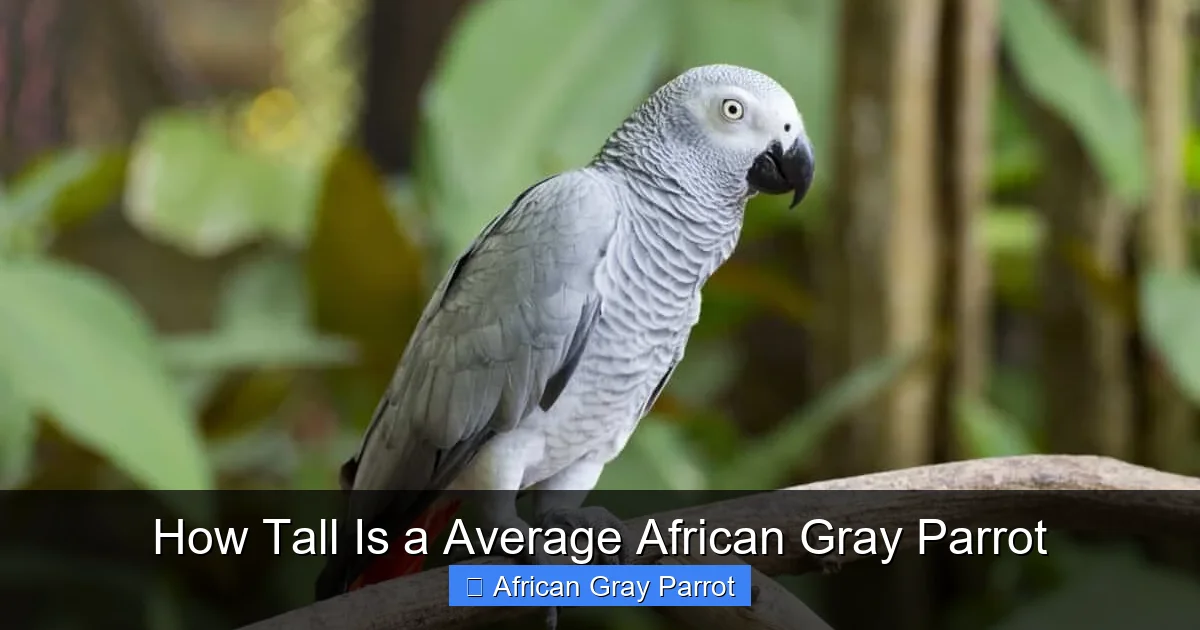
African Gray Parrots typically stand 12 to 14 inches tall from head to tail tip. The Congo subspecies runs larger than the Timneh variety. Proper nutrition and genetics play key roles in reaching full size potential.
If you have ever stood next to an African Gray Parrot, you know they command presence. These birds are not tiny. They are not massive either. They sit right in that sweet spot of medium sized parrots. But exactly how tall is a average African Gray Parrot? The answer depends on a few things. Let us break it down together.
Most people measure parrots from the top of the head to the tip of the tail. For an African Gray, that number usually falls between twelve and fourteen inches. That is roughly the length of a standard ruler. Some birds stretch a bit longer. Some stay a bit shorter. It is helpful to know the range so you can plan cages, perches, and play areas correctly.
Key Takeaways
- Average height: African Gray Parrots measure 12 to 14 inches from beak to tail tip when fully grown.
- Subspecies difference: Congo African Grays are larger at 13 to 14 inches while Timneh African Grays reach 11 to 12 inches.
- Weight range: Healthy adults weigh between 400 and 650 grams depending on subspecies and individual factors.
- Growth timeline: Most birds reach full skeletal size by 12 to 18 months but may fill out until age two or three.
- Wingspan matters: Expect an 18 to 20 inch wingspan which determines cage and flight space requirements.
- Size affects care: Larger birds need bigger cages, more food, and appropriately sized toys and perches.
- Health indicator: Sudden weight changes or stunted growth often signal underlying health issues requiring veterinary attention.
Quick Answers to Common Questions
What is the average height of an African Gray Parrot?
The average African Gray Parrot stands 12 to 14 inches tall from beak to tail tip, with Congo subspecies being larger than Timneh subspecies.
How much does a healthy African Gray Parrot weigh?
Healthy adult African Grays weigh between 400 and 650 grams, with Congos typically 400-650g and Timnehs 300-450g.
At what age do African Grays reach full size?
African Grays reach full skeletal size by 12-18 months but continue filling out with muscle mass until age 2-3 years.
What is the wingspan of an African Gray Parrot?
African Gray Parrots have an 18 to 20 inch wingspan when fully extended, which determines their cage width and flight space needs.
How can I tell if my African Gray is the right weight?
Feel the keel bone – it should be prominent but not sharp, with rounded pectoral muscles on either side. Weigh weekly on a gram scale for accuracy.
📑 Table of Contents
- Understanding the Two Main Subspecies
- Measuring Your Bird the Right Way
- Growth Stages From Hatchling to Adult
- Factors That Influence Final Size
- Cage and Space Requirements Based on Size
- Comparing African Grays to Other Popular Parrots
- Common Size Related Health Concerns
- Practical Tips for Monitoring Your Bird Size
- Frequently Asked Questions About African Gray Size
- Conclusion
Understanding the Two Main Subspecies
Not all African Grays are built the same. There are two recognized subspecies. They look similar at first glance. But size is one of the clearest ways to tell them apart.
Congo African Gray Parrot Size
The Congo African Gray is the larger of the two. These birds typically measure thirteen to fourteen inches in total length. They weigh between four hundred and six hundred fifty grams. Their feathers are a lighter shade of gray. They have a bright red tail. Their beaks are black. If you see a big gray parrot with a fire engine red tail, it is almost certainly a Congo.
Congo Grays originate from a wide range across Central Africa. Countries like Cameroon, Congo, Gabon, and Uganda are home to them. Their larger frame helps them navigate the canopy of dense rainforests. They are strong fliers. Their size gives them momentum in flight.
Timneh African Gray Parrot Size
The Timneh African Gray is noticeably smaller. They usually top out at eleven to twelve inches long. Their weight ranges from three hundred to four hundred fifty grams. That is a significant difference. A Timneh can weigh two hundred grams less than a large Congo. That is like the difference between a baseball and a softball in your hand.
Timnehs have darker charcoal gray feathers. Their tail is a deep maroon color, not bright red. Their upper beak has a horn colored patch. They come from a smaller range in West Africa. Think Guinea, Sierra Leone, Liberia, and Ivory Coast. Their compact size suits the forest edges and secondary growth they prefer.
Why Subspecies Identification Matters
Knowing which subspecies you have changes your care plan. A Congo needs a larger cage. A Timneh can manage with slightly less space but still deserves room to stretch. Food portions differ. Medication dosages differ. Even toy sizes should match the bird. A toy made for a macaw might intimidate a Timneh. A toy made for a conure might be destroyed in seconds by a Congo.
Measuring Your Bird the Right Way
You might want to measure your own bird. It is not as simple as laying a ruler next to them. Birds move. They fluff. They crouch. Here is how to get a decent estimate.
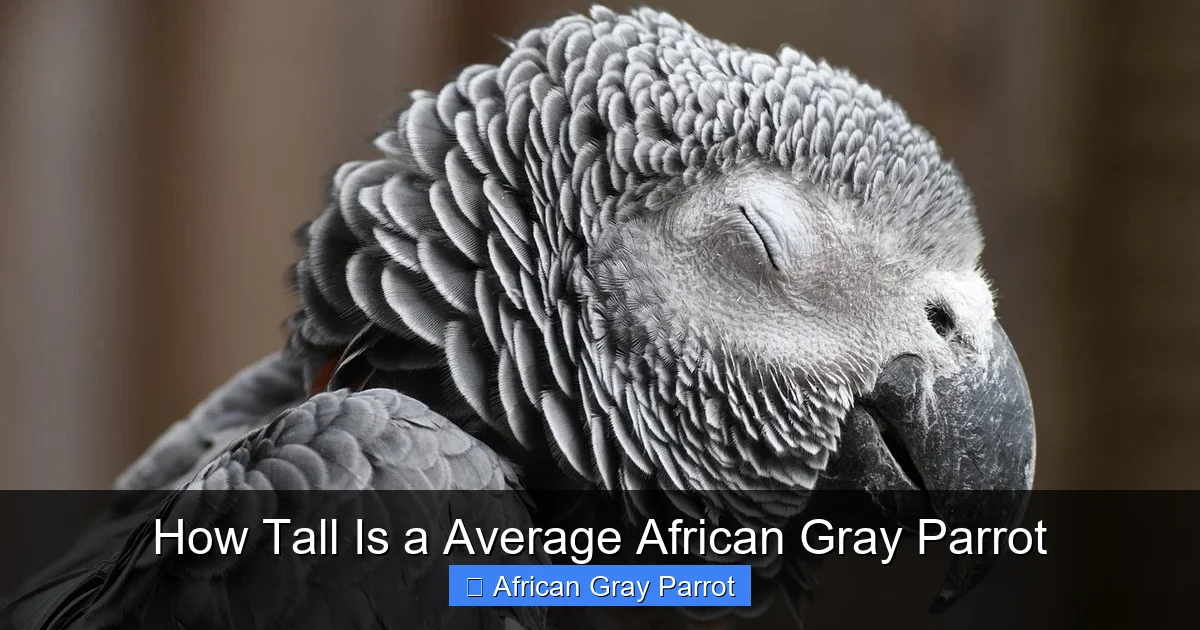
Visual guide about How Tall Is a Average African Gray Parrot
Image source: exoticpethub.com
Length Measurement Tips
Wait until your bird is calm. A relaxed bird stands tall. A scared bird compresses its body. Gently encourage the bird to stand on a flat surface. Use a soft measuring tape. Measure from the tip of the beak to the tip of the longest tail feather. Do not pull the tail straight. Follow the natural curve. Write it down. Do this once a month for juveniles. Do it twice a year for adults.
Weight Is More Important Than Height
Height stays mostly fixed after maturity. Weight changes daily. A digital kitchen scale that measures in grams is essential. Weigh your bird at the same time each morning. Before breakfast is best. Track the numbers. A drop of ten percent body weight is an emergency. A slow creep upward means diet adjustment. Weight tells you more about health than a ruler ever will.
Wingspan Considerations
Wingspan is the distance from wingtip to wingtip with wings fully extended. For African Grays, this is eighteen to twenty inches. You rarely see the full span unless the bird is flying or displaying. But cage width must accommodate at least half that span. Ideally the cage allows full extension without feather damage. Flight cages or aviaries are best. If space is tight, daily out of cage flight time is non negotiable.
Growth Stages From Hatchling to Adult
Baby African Grays grow fast. They hatch naked and blind. They weigh twelve to fifteen grams. By two weeks they have pin feathers. By eight weeks they are fully feathered. By twelve weeks they fledge. But they are not done growing.
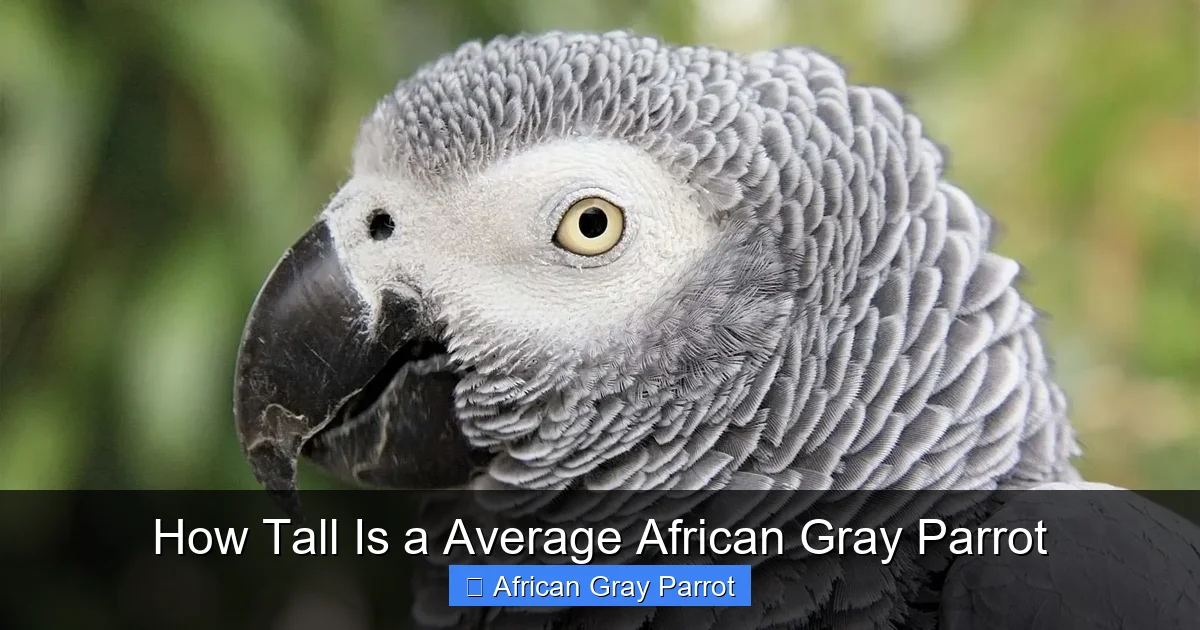
Visual guide about How Tall Is a Average African Gray Parrot
Image source: cdn.britannica.com
The First Year Milestones
Month one to three: Rapid weight gain. Skeletal growth is explosive. Nutrition must be perfect. Hand feeding formula quality determines bone density. Month four to six: Weaning happens. The bird learns to eat solids. Weight may dip slightly. This is normal. Month seven to twelve: The bird reaches near adult size. Feathers mature. The tail grows long. The beak hardens. Personality blossoms.
When Do They Stop Growing
Skeletal growth stops around twelve to eighteen months. The bird will not get longer after that. But muscle mass and fat deposits continue to develop until age two or three. A two year old Congo may weigh four hundred fifty grams. The same bird at three years might hit five hundred fifty grams. Both are healthy. The frame is set. The filling out continues.
Sexual Dimorphism Is Minimal
Male and female African Grays look almost identical. Males may be slightly larger on average. Females may have a slightly narrower head shape. But the overlap is huge. You cannot reliably sex them by size. DNA testing or surgical sexing is the only sure way. Do not guess based on height or weight.
Factors That Influence Final Size
Genetics sets the blueprint. Environment builds the house. Several factors determine where your bird lands in the size range.
Genetics and Bloodlines
Some lines run large. Some run small. If the parents were big, the offspring tend to be big. Reputable breeders track this. They can tell you the average weights of their lines. Wild caught birds vary more. Captive bred lines show more consistency. Ask the breeder for parent weights. It is a fair question.
Nutrition During Development
This is the biggest factor you control. A chick fed a premium hand feeding formula grows stronger bones. A chick fed a cheap formula or diluted mix may have stunted growth. Weaning diet matters too. A variety of pellets, fresh vegetables, fruits, grains, and healthy fats builds a robust body. Seed only diets cause malnutrition. The bird may look full sized but have poor bone density and organ function.
Health and Parasite Load
Chronic illness steals nutrients. Internal parasites like roundworms or giardia rob calories. A bird with a heavy parasite load eats well but stays small. Regular fecal exams catch this. Respiratory infections during growth phases can permanently affect lung capacity and stamina. Preventive care keeps growth on track.
Exercise and Muscle Development
A bird in a small cage with no out time develops poor muscle tone. It may weigh the same as an active bird but feel soft. Flight builds chest muscles. Climbing builds leg strength. Foraging builds coordination. An active bird carries weight differently. It looks more athletic. It handles stress better. Size is not just length. It is condition.
Cage and Space Requirements Based on Size
You cannot change your bird size. You can change the cage. This is where height and wingspan translate into real world decisions.
Minimum Cage Dimensions
For a Congo African Gray, the absolute minimum cage size is thirty six inches wide, twenty four inches deep, and forty eight inches high. Bar spacing should be three quarters of an inch to one inch. For a Timneh, you can go slightly smaller at thirty two by twenty three by forty inches. But bigger is always better. These are minimums for sleeping cages. Daytime cages should be larger.
Perch Diameter and Placement
African Gray feet need variety. The main sleeping perch should be one and a quarter to one and a half inches in diameter for Congos. One to one and a quarter inches for Timnehs. The bird’s toes should wrap around two thirds of the perch. Not meet. Not overlap. Offer natural branches of varying sizes. Rope perches. Platform perches. Foot health depends on this.
Toy Size Safety
Toys made for cockatiels are too small. Toys made for macaws may have parts too large to manipulate. Look for toys labeled for African Grays or large conures to small macaws. The beak is powerful. It can crush hard wood. But the tongue is delicate. Avoid toys with small plastic beads that can be swallowed. Avoid chain links that can trap a toe. Size the toy to the bird.
Flight Space and Exercise Areas
If you have room, a flight cage six feet long changes everything. The bird can actually fly. Not hop. Fly. If not, a bird safe room for supervised flight works. Harness training for outdoor flights is an option. The goal is to let those eighteen to twenty inch wings do what they evolved to do. A bird that flies is a bird that thrives.
Comparing African Grays to Other Popular Parrots
Context helps. Let us see where the African Gray sits in the parrot size spectrum.
African Gray vs Amazon Parrots
Amazons are stockier. They weigh similar or slightly more. But they are shorter in length. An Amazon tail is short and square. An African Gray tail is long and tapered. The Gray looks more elegant. The Amazon looks more muscular. Both need large cages. Both are loud. Both are smart. The Gray talks more clearly. The Amazon sings more.
African Gray vs Cockatoos
Cockatoos are generally larger. Even a Goffin cockatoo is similar in length but heavier. An Umbrella or Moluccan cockatoo dwarfs an African Gray. Cockatoos have crests. Grays do not. Cockatoos produce powder down dust. Grays produce some but less. Cockatoos need more space. Grays need more mental puzzles. Different energy entirely.
African Gray vs Macaws
No contest. A Hahns macaw is similar in length to a Timneh but heavier. A Blue and Gold macaw is twice the length and three times the weight. Macaws need massive cages. Grays fit in large macaw cages with room to spare. Macaw beaks can sever fingers. Gray beaks crush nuts. Both are intelligent. Macaws are more physical. Grays are more cerebral.
African Gray vs Eclectus Parrots
Eclectus are close in size. Similar length. Similar weight. But Eclectus have longer digestive tracts. They need different diets. Higher fiber. Lower fat. They are sexually dimorphic. Males green. Females red. Grays are monomorphic. Both species are quiet compared to macaws. Both talk well. Eclectus are more laid back. Grays are more intense.
Common Size Related Health Concerns
Size gives clues. Changes in size or weight often mean something is wrong.
Obesity in African Grays
This is the number one size related problem. A fat Gray is not a happy Gray. You should feel the keel bone. It should be prominent but not sharp. If you cannot feel it, the bird is overweight. Fat deposits appear on the abdomen, thighs, and under the wings. Obesity leads to fatty liver disease. It leads to atherosclerosis. It shortens lifespan. Cut the seeds. Increase vegetables. Add exercise.
Underweight and Wasting
A bird that loses weight rapidly is sick. Period. Do not wait. Common causes include psittacosis, PDD (Proventricular Dilatation Disease), heavy metal toxicity, and cancer. A bird that eats but loses weight has malabsorption. A bird that stops eating has pain or blockage. Weigh daily. Catch it early. A ten percent drop in a week means vet today.
Stunted Growth in Juveniles
If a baby is not hitting weight milestones, investigate. Poor formula. Wrong temperature. Parasites. Congenital defects. Viral infections like PBFD (Psittacine Beak and Feather Disease) or Polyomavirus. A stunted bird may never reach full potential. Early intervention saves lives. Work with an avian vet who knows pediatric norms.
Feather Plucking and Apparent Size
A plucked bird looks smaller. Feathers add visual bulk. A naked chest makes the bird appear thin. But the body underneath may be normal weight. Plucking is behavioral or medical. It does not change actual size. But it changes how you perceive size. Do not increase food because the bird looks skinny. Check weight. Treat the plucking cause.
Practical Tips for Monitoring Your Bird Size
You do not need fancy equipment. You need consistency.
Create a Growth Chart
Get a notebook. Or a spreadsheet. Record date, weight, length if measurable, and notes. Note diet changes. Note vet visits. Note behavior changes. Patterns emerge over months. You become the expert on your bird. Vets love owners who bring data.
Learn to Body Condition Score
Vets use a scale of one to five or one to nine. One is emaciated. Five or nine is obese. Three or five is ideal. Feel the keel. Feel the pectoral muscles. They should be rounded, not concave, not bulging. Practice on a friend’s bird. Ask your vet to teach you. It takes you through it at a checkup.
Photograph for Reference
Take a photo monthly. Same perch. Same angle. Same lighting. Stand the bird next to a known object. A coffee mug. A ruler. A specific toy. Visual records catch slow changes the eye misses. They also make great memories.
Seasonal Weight Fluctuations
Some birds gain weight in winter. Less activity. More treats. Hormonal changes. Some lose weight in summer. More activity. Breeding season stress. Molting energy demands. Know your bird pattern. A five percent seasonal swing is normal. Ten percent is not.
Frequently Asked Questions About African Gray Size
People ask the same things. Here are the real answers.
Can an African Gray be too small for its age?
Yes. If a six month old Congo weighs three hundred grams, something is wrong. It should be near four hundred. If a year old Timneh is three hundred fifty grams, investigate. Run blood work. Check feces. Review diet. Early catch means better outcome.
Do African Grays shrink with age?
Bone length does not shrink. But older birds lose muscle mass. They may weigh less. They may look smaller because posture changes. Arthritis makes them crouch. Osteoporosis compresses vertebrae. Good nutrition and exercise slow this. Senior wellness exams catch it.
Is there a giant African Gray breed?
No. Some breeders market “large” lines. But they are still within the thirteen to fourteen inch range. Anyone selling “giant” Grays is marketing, not science. Stick to standard subspecies. Health matters more than an extra centimeter.
How does tail length affect total height measurement?
The tail is a huge variable. A bird with a full tail measures two inches longer than one with a broken or molting tail. Measure body length separately sometimes. From beak to base of tail. That number is more stable. Tail feathers grow back. Body size does not change.
Should I worry if my bird is at the low end of the weight range?
Not if the bird is healthy, active, eating well, and the vet is happy. Some birds are naturally petite. A three hundred eighty gram Congo can be perfect. A six hundred gram Congo can be perfect. Condition matters more than the number. The keel tells the truth.
Conclusion
So how tall is a average African Gray Parrot? Twelve to fourteen inches. Congo on the high end. Timneh on the low end. But height is just one number. Weight tells you health. Wingspan tells you space needs. Body condition tells you care quality. Know your subspecies. Track your individual. Feed the best diet you can. Provide room to move. Visit the vet annually. A well cared for African Gray reaches its genetic potential. It lives forty to sixty years. That ruler length of bird becomes decades of companionship. Measure right. Care deep. Enjoy the journey.
Frequently Asked Questions
How tall is a average African Gray Parrot compared to other parrots?
African Grays are medium-sized parrots at 12-14 inches, larger than cockatiels and conures but smaller than Amazons, cockatoos, and macaws. They are similar in length to Eclectus parrots but less stocky.
Does the tail length affect the total height measurement significantly?
Yes, tail feathers add 2-3 inches to total length. A molting or damaged tail can make a bird measure shorter. Body length from beak to tail base is a more consistent measurement.
Can diet affect how tall an African Gray Parrot grows?
Diet cannot change genetic height potential, but poor nutrition during development causes stunted growth, weak bones, and failure to reach full size. Optimal nutrition ensures the bird reaches its genetic maximum.
Is there a size difference between male and female African Grays?
Males may average slightly larger than females, but the overlap is significant. Size cannot reliably determine sex. DNA testing is required for accurate sexing.
What cage size do I need for an average African Gray Parrot?
Minimum cage size is 36x24x48 inches for Congos and 32x23x40 inches for Timnehs, with 3/4 to 1 inch bar spacing. Larger is always better for these active, intelligent birds.
How often should I measure my African Gray Parrot’s height and weight?
Weigh weekly on a gram scale at the same time each morning. Measure length monthly for juveniles under 18 months, then twice yearly for adults. Track trends rather than single measurements.