
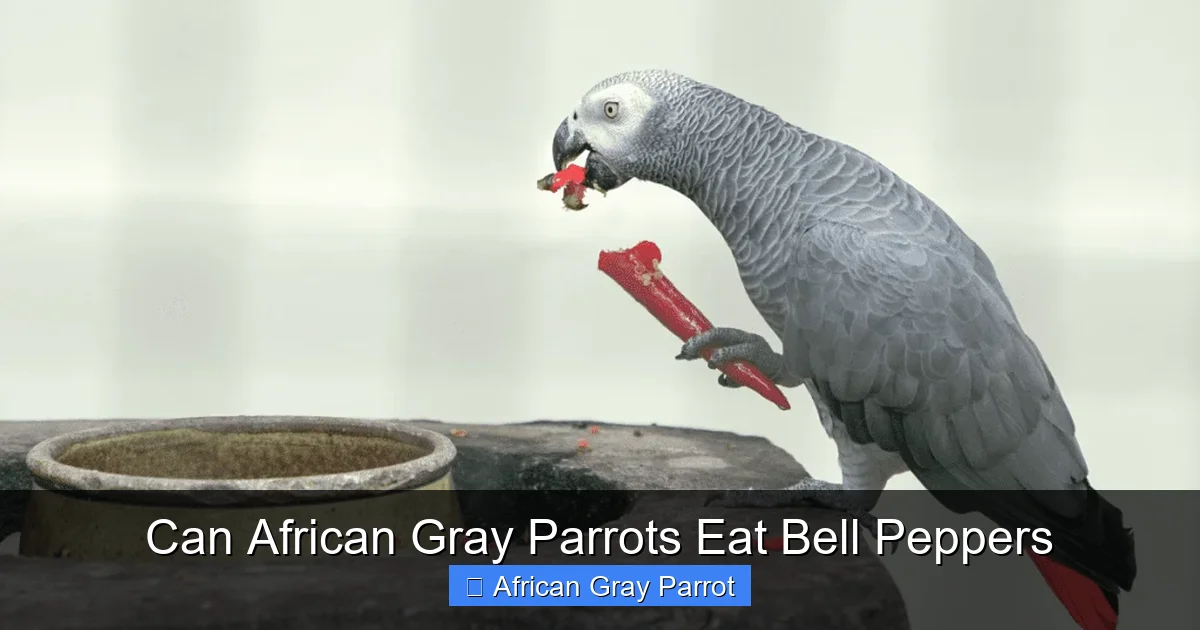
Yes, African Gray Parrots can safely eat bell peppers. These colorful vegetables deliver vitamin C, vitamin A, and antioxidants, but they should be served raw, washed, and in moderation.
Featured image for
Image source: birdybirdybirdy.com
African Gray Parrots are curious eaters, and many owners wonder if bell peppers belong on the menu. The short answer is yes, but there are a few details to keep in mind.
📑 Table of Contents
Are bell peppers safe for African Gray Parrots?
Bell peppers are non‑toxic and nutritious for African Gray Parrots. They contain vitamin C, vitamin A, and antioxidants that support feather health and immune function. Unlike hot peppers, bell peppers have no capsaicin, so they won’t irritate your bird’s digestive tract.
Always choose fresh, organic peppers when possible. Wash them thoroughly to remove pesticide residues. Remove the stem and seeds before serving, as the seeds can be a choking hazard.
The high vitamin C content helps with collagen formation, which keeps beak and feathers strong. Vitamin A supports vision and skin health. Antioxidants reduce oxidative stress from environmental toxins. These nutrients also aid in wound healing and immune response, making bell peppers a smart addition to a balanced diet.
Which colors of bell peppers are best?
All colors—green, red, yellow, and orange—are safe. However, red and orange peppers have higher levels of beta‑carotene and vitamin C than green ones. Rotating colors gives your parrot a broader nutrient profile.

Visual guide about
Image source: atractivopets.com
Example: Offer a small slice of red pepper on Monday, a yellow strip on Wednesday, and a green piece on Friday. This variety keeps meals interesting and nutritionally balanced.
Red peppers provide the most beta‑carotene, which converts to vitamin A in the body. Yellow peppers are rich in lutein, supporting eye health. Green peppers have slightly less sugar, making them a lower‑calorie option for overweight birds.
How should you prepare bell peppers for your parrot?
Can they eat the seeds?
Seeds are not toxic, but they are hard and can cause choking. It’s best to remove them.
Raw vs. cooked
Raw peppers retain the most vitamins. Light steaming is acceptable if your bird prefers softer texture, but avoid adding oil, salt, or spices.
Cut the pepper into bite‑size pieces—about the size of a thumbnail. This makes it easy for the parrot to grasp and reduces waste.
- Wash pepper thoroughly under running water.
- Remove stem, core, and seeds.
- Slice into thumbnail‑size pieces.
- Serve raw or lightly steamed, no seasoning.
Store cut peppers in an airtight container in the fridge for up to three days. Discard any pieces that look slimy or discolored. Offering a fresh piece each day keeps the vitamin content high and prevents boredom.
How much bell pepper can you feed?
Treat bell pepper as a supplement, not a staple. A good rule is one to two small pieces per day, making up no more than 10 % of the total diet. The bulk of nutrition should still come from a high‑quality pellet mix, fresh fruits, and vegetables.
Monitor your bird’s droppings and behavior after introducing a new food. Loose stools or loss of appetite may signal an intolerance.
Young or smaller African Grays may need only a single thumbnail‑size piece, while larger adults can handle two. Always adjust based on your bird’s overall calorie intake and activity level.
Are there any risks or signs of intolerance?
While rare, some parrots may develop mild digestive upset. Watch for watery droppings, vomiting, or feather plucking after a new serving. If symptoms appear, stop offering bell pepper and consult an avian veterinarian.
Also, avoid feeding peppers that have begun to rot or show mold. Spoiled produce can cause serious illness.
True allergies are uncommon, but watch for sneezing, wheezing, or skin irritation after feeding. Keep feeding utensils separate from those used for human food to avoid cross‑contamination with spices or oils.
Conclusion
Bell peppers are a safe, colorful, and vitamin‑rich treat for African Gray Parrots. Choose fresh, washed peppers, remove stems and seeds, serve raw in small pieces, and limit portions to a couple of bites daily. By following these simple steps, you’ll add variety and nutrition to your feathered friend’s diet without risk.