
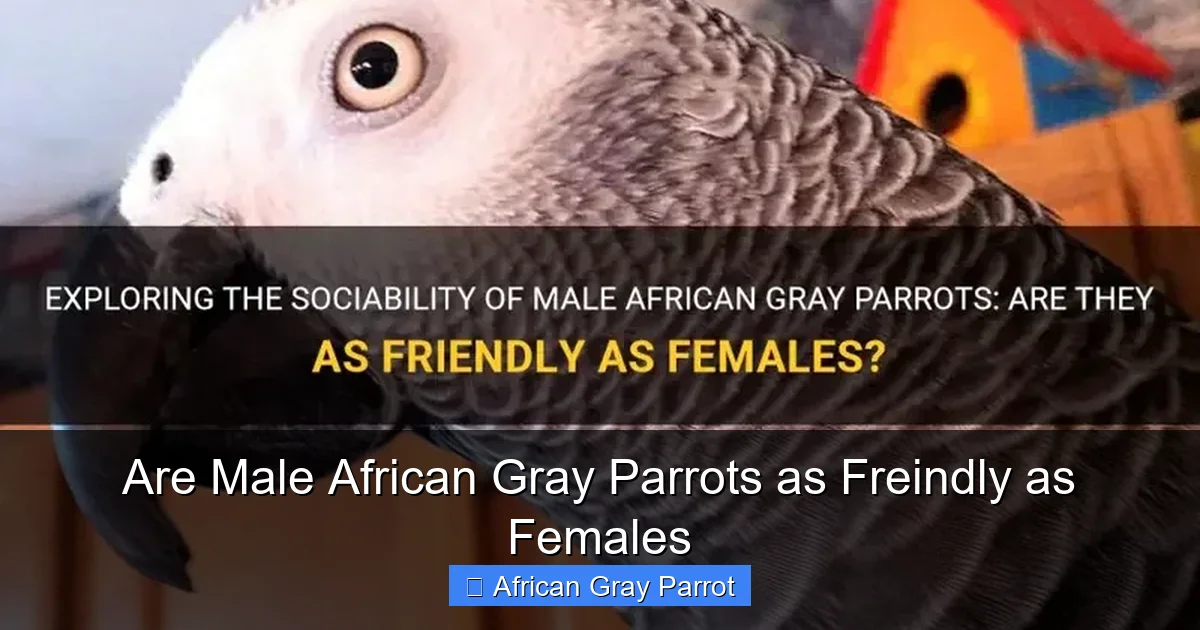
Male and female African Gray Parrots show similar friendliness levels when raised with proper socialization. Individual personality matters far more than gender. Both sexes can become affectionate, talkative companions with consistent training and attention.
Featured image for
Image source: petshun.com
📑 Table of Contents
- Are Male African Gray Parrots as Friendly as Females?
- Does Gender Affect Personality in African Grays?
- What Really Determines Friendliness?
- Do Hormones Change Behavior?
- Are There Any Subtle Differences?
- How to Choose a Friendly African Gray
- Training Tips for Maximum Friendliness
- Common Myths Debunked
- Conclusion
Are Male African Gray Parrots as Friendly as Females?
Many bird lovers ask this question before bringing home an African Gray. The short answer is yes. Gender does not determine friendliness in these intelligent parrots. Both males and females can be equally affectionate, playful, and bonded to their owners. What truly shapes their temperament is early socialization, daily interaction, and the environment you provide.
Does Gender Affect Personality in African Grays?
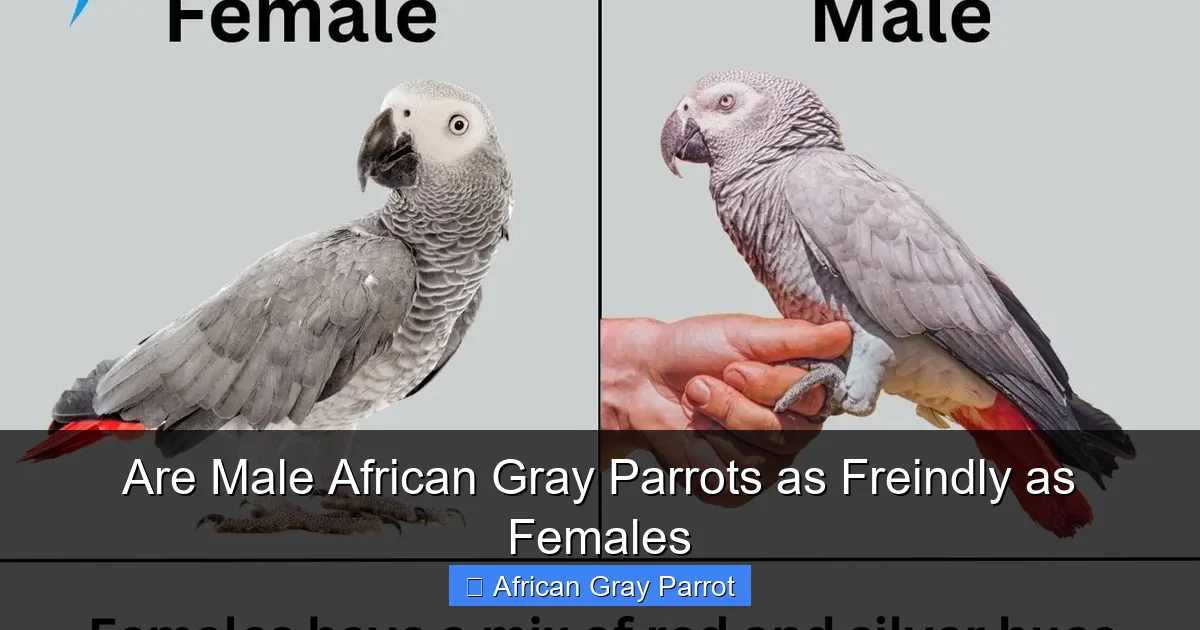
Scientific studies and breeder experience show no consistent personality differences between male and female African Grays. Some owners swear males are cuddlier. Others insist females are more independent. These are anecdotes, not patterns. Each bird has a unique personality shaped by genetics and upbringing.
Visual guide about
Image source: evm8bcf5cz8.exactdn.com
You might hear that males talk more or females are moodier. These claims lack evidence. Talking ability varies by individual, not sex. Mood swings relate to hormones, season, or health — not gender alone. Focus on the bird in front of you, not stereotypes.
What Really Determines Friendliness?
Socialization is the number one factor. A hand-fed baby handled daily by multiple people grows into a confident, friendly adult. This applies to both sexes equally. Birds raised in isolation or with little handling often become fearful or aggressive — regardless of gender.
Daily interaction builds trust. Talk to your parrot. Offer treats from your hand. Let them explore safely outside the cage. Consistency matters more than marathon sessions. Ten minutes twice a day beats one hour once a week.
Environment plays a huge role. A spacious cage, toys that challenge their mind, a healthy diet, and a predictable routine create a secure bird. Secure birds are friendly birds. Stress, boredom, or poor nutrition lead to biting, screaming, or feather plucking.
Do Hormones Change Behavior?
Yes. Both males and females experience hormonal surges, usually in spring. During this time, even the sweetest parrot may become territorial, nippy, or loud. This is temporary. It affects both sexes. Males may regurgitate for toys or people. Females may seek nesting spots. Neither is “meaner.” They are following instincts.
Manage hormonal behavior by limiting daylight to 10-12 hours, avoiding petting on the back or under wings, and removing nest-like spaces. Do not punish hormonal behavior. Redirect with training or foraging toys. Patience gets you through the season.
Are There Any Subtle Differences?
Some experienced owners notice slight trends, but exceptions abound. Males may display more “show-off” behavior — strutting, wing-flipping, or performing for attention. Females may be more focused on exploring cavities or shredding paper. These are tendencies, not rules. Many males are shy. Many females are bold performers.
If you want a talking bird, neither sex guarantees it. Some African Grays never speak. Others mimic everything. Start talking to them early. Repeat words clearly. Reward attempts. Gender does not predict vocabulary size.
How to Choose a Friendly African Gray
Meet the bird before deciding. Spend time with them. Observe how they react to you. A friendly bird will lean toward you, make eye contact, and accept treats. A fearful bird will back away, hiss, or flatten feathers. Trust your read on the individual.
Ask the breeder or rescue about the bird’s history. Was it hand-fed? Parent-raised but handled? How much daily interaction did it get? A well-socialized older bird beats an unsocialized baby every time. Age matters less than experience.
Consider adopting a bonded pair if you work long hours. Two birds keep each other company. They can still bond with you, but they won’t rely on you for all social needs. This works for male-female, male-male, or female-female pairs.
Training Tips for Maximum Friendliness
- Use positive reinforcement only. Clicker training works well.
- Teach “step up” and “step down” first. These build handling confidence.
- Respect body language. Pinned eyes, flared tail, or raised feathers mean “back off.”
- Offer choices. “Want to come out?” Let them decide. Control reduces fear.
- Keep sessions short. Five minutes, three times daily beats 20 minutes once.
Common Myths Debunked
Myth: Males bond to women, females bond to men. Fact: Parrots bond to whoever spends quality time with them. Gender preference is learned, not innate.
Myth: Females are aggressive when nesting. Fact: Only if you provide a nest box or dark cavity. Without one, most females show no nesting aggression.
Myth: You must get a male for talking. Fact: The best talkers on record include both sexes. Alex, the famous research parrot, was male. But many top-talking pets are female.
Conclusion
Male African Gray Parrots are just as friendly as females. Gender is not a predictor of temperament. Socialization, daily interaction, diet, environment, and respect for their body language determine how affectionate your parrot becomes. Choose the individual bird that connects with you. Invest time in training and bonding. That is the real secret to a friendly African Gray — male or female.