
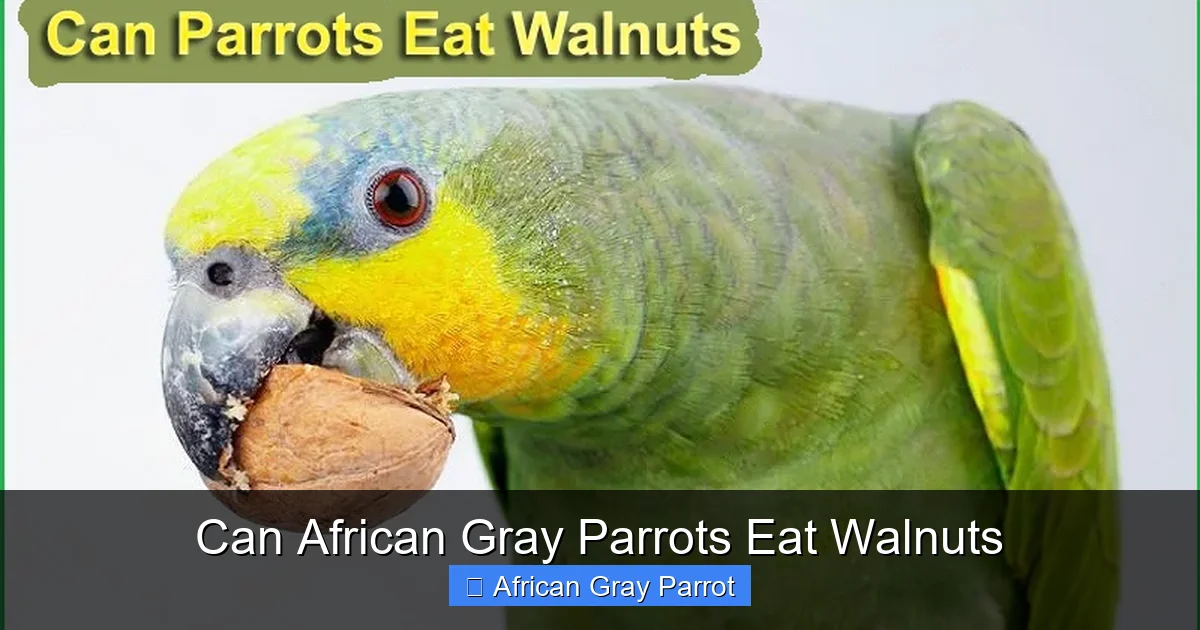
African Gray Parrots can eat walnuts in moderation, but the nuts must be unsalted, unroasted, and shelled. Overfeeding can cause obesity and digestive upset, so offer only a few pieces per week.
Featured image for
Image source: i.postimg.cc
African Gray Parrots are curious eaters, and many owners wonder whether walnuts make a healthy treat. This guide answers the most common questions about feeding walnuts to these intelligent birds.
📑 Table of Contents
Are walnuts safe for African Gray Parrots?
Yes, walnuts are safe when prepared correctly. The nuts must be raw, unsalted, and free of any added oils or flavorings. Remove the hard shell completely, as fragments can cause choking or intestinal blockage. Never give roasted or salted walnuts, because the added sodium and fats are harmful to parrots.
Always inspect each piece for mold. Walnuts stored in damp conditions can develop aflatoxins, which are toxic to birds. Discard any nuts that smell rancid or show discoloration.
What nutritional benefits do walnuts provide?
Walnuts are rich in omega‑3 fatty acids, which support brain function and feather health. They also contain protein, vitamin E, magnesium, and antioxidants that help strengthen the immune system.
Visual guide about
Image source: articles.hepper.com
Because African Gray Parrots have high metabolic rates, the healthy fats in walnuts can be a valuable energy source during molting or periods of increased activity. However, these nutrients are also found in other bird‑safe foods, so walnuts should complement, not dominate, the diet.
How should walnuts be prepared and served?
Step‑by‑step preparation
- Purchase raw, unsalted walnuts from a reputable source.
- Crack the shells and remove every fragment.
- Rinse the kernels under cool water and pat dry.
- Chop into pieces no larger than a pea to prevent choking.
Offer the pieces by hand or place them in a foraging toy. This encourages natural foraging behavior and mental stimulation.
How many walnuts can an African Gray Parrot eat?
A good rule of thumb is one to two small pieces per week for an adult bird. Young or overweight parrots should receive even less. Treat walnuts as an occasional snack, not a daily staple.
Monitor your bird’s weight and droppings after introducing walnuts. If you notice loose stools or rapid weight gain, reduce the portion or stop offering them altogether.
What are the risks of feeding walnuts?
The primary risks are excess fat, potential aflatoxin contamination, and choking hazards from shell fragments. High fat intake can lead to hepatic lipidosis, a serious liver condition common in parrots.
Additionally, some birds may develop a preference for nuts and refuse healthier foods like pellets, vegetables, and fruits. Rotate treats regularly to avoid picky eating habits.
Can walnuts replace other foods in the diet?
No. Walnuts lack essential nutrients such as calcium, vitamin A, and certain amino acids that are abundant in formulated pellets and fresh produce. They should never replace a balanced pelleted diet or a variety of fresh foods.
Use walnuts only as a supplemental treat to add variety and enrichment. A well‑rounded diet ensures your African Gray Parrot stays vibrant, vocal, and healthy.
Conclusion
African Gray Parrots can enjoy walnuts safely when the nuts are raw, unsalted, shelled, and given in very small amounts. The omega‑3 fats and antioxidants provide health perks, but the high calorie content and risk of toxins mean moderation is crucial. Always pair walnut treats with a complete pelleted diet, fresh vegetables, and fruit to keep your feathered companion thriving.