
Key Takeaways
- African Grays are monomorphic: Males and females share identical plumage and physical features, making visual sexing impossible.
- DNA testing is the gold standard: Feather or blood samples provide 99.9% accurate results within days, with minimal stress to your bird.
- Surgical sexing offers instant results: A veterinarian can visually inspect reproductive organs via endoscopy, though it requires anesthesia.
- Behavioral clues are unreliable: While some owners report differences in talking ability or nesting behavior, these vary too much between individuals.
- Age matters for testing: DNA testing works at any age, but surgical sexing is typically done on mature birds over 12 months old.
- Cost varies by method: DNA testing ranges $25-50, while surgical sexing costs $150-300 plus veterinary fees.
- Choose a reputable lab: Use avian-specific laboratories with proven track records for the most reliable DNA results.
Introduction: Why Sexing Your African Gray Matters
You brought home a beautiful African Gray Parrot. Maybe you named him Charlie. Or maybe you named her Coco. But here is the thing. You might be wrong. African Gray Parrots are what scientists call sexually monomorphic. That means males and females look exactly the same. They have the same gray feathers. They have the same red tail. They have the same black beak. You cannot tell the difference just by looking.
Knowing the sex of your bird matters more than you might think. It affects breeding decisions. It helps with behavioral expectations. It guides medical care. Female birds can develop egg binding. They can lay eggs even without a male. Male birds might show different hormonal behaviors. If you plan to pair birds, you need to know you have a true pair. Two males will not produce babies. Two females will lay infertile eggs.
This guide walks you through every reliable method to sex your African Gray. We cover DNA testing. We cover surgical sexing. We discuss behavioral myths. We explain costs. We help you choose the best option for your situation. By the end, you will know exactly how to get a definitive answer.
Understanding African Gray Parrot Biology
Before we dive into methods, let us understand why this is tricky. African Gray Parrots (Psittacus erithacus) belong to a group of birds where sexes look alike. This is common in parrots. Unlike eclectus parrots where males are green and females are red, African Grays show zero visual dimorphism.
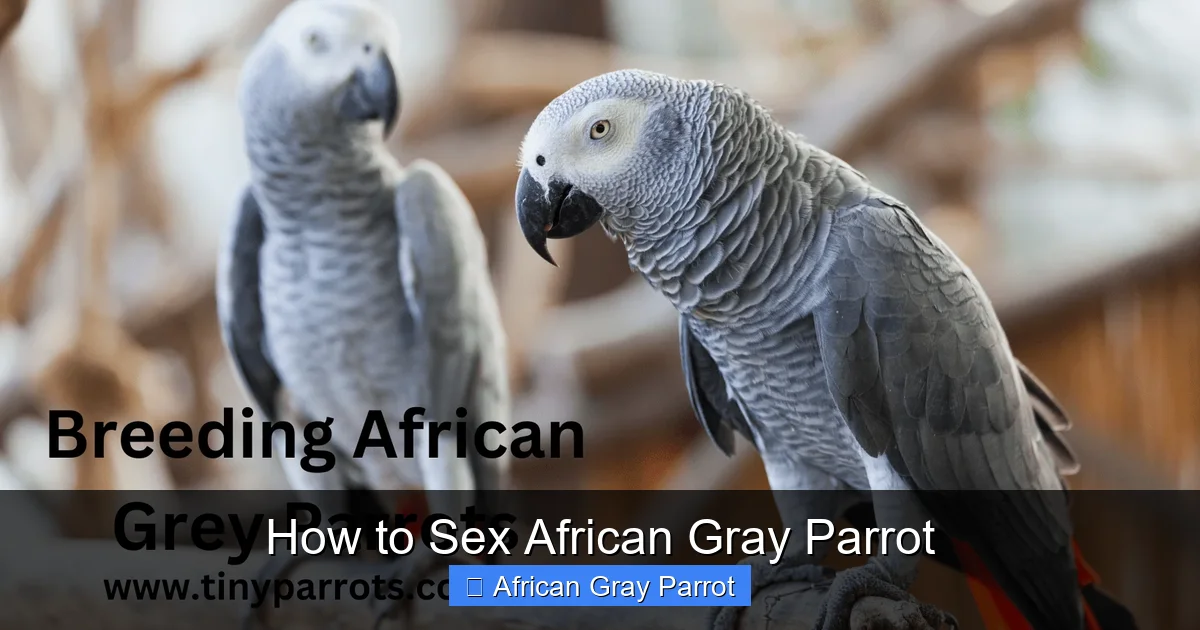
Visual guide about How to Sex African Gray Parrot
Image source: tinyparrots.com
No External Differences
Some old wives tales suggest differences. People say males have larger heads. People say females have rounder eyes. People say the red tail shade differs. None of these are true. Scientific studies confirm no measurable external differences exist. Size varies by individual, not sex. Head shape varies by individual. Eye shape varies by individual. The only way to know for sure is internal examination or genetic testing.
Internal Anatomy Differences
Internally, the differences are clear. Males have two internal testes. These sit near the kidneys. They enlarge during breeding season. Females have only a left ovary and oviduct. The right ovary regresses during development. This is true for most birds. The oviduct is where eggs form and travel. These structures are not visible from outside. They require either surgery or genetic markers to identify.
Subspecies Considerations
Two main subspecies exist. The Congo African Gray (Psittacus erithacus erithacus) is larger. It has a bright red tail. The Timneh African Gray (Psittacus erithacus timneh) is smaller. It has a darker, maroon tail. Both subspecies are monomorphic. Sexing methods work identically for both. The subspecies does not change the approach.
Method 1: DNA Sex Testing – The Gold Standard
DNA testing is the most popular method today. It is non-invasive. It is highly accurate. It works at any age. You can test a baby bird. You can test a 30-year-old bird. The results do not change.
Visual guide about How to Sex African Gray Parrot
Image source: i.ytimg.com
How DNA Sex Testing Works
Birds have a different chromosome system than mammals. Mammales have XY males and XX females. Birds have ZZ males and ZW females. The female determines the sex of the offspring. DNA testing looks for the W chromosome. If the W chromosome is present, the bird is female. If only Z chromosomes are present, the bird is male. Modern labs use PCR (Polymerase Chain Reaction) to amplify the specific gene region. This allows testing from tiny samples.
Sample Types: Feathers vs Blood
You have two main sample options. Both work equally well.
Feather Samples
Feather testing is the least stressful option. You pluck 3-5 fresh chest or body feathers. Do not use molted feathers from the cage floor. Those lack fresh DNA at the base. The feather follicle contains living cells. These cells have the DNA. You must pull the feather cleanly. A clean pull keeps the follicle intact. Cut feathers do not work. The lab needs the root bulb.
- No bleeding
- Minimal stress
- Can be done at home
- Easy to mail
- No vet visit required
Blood Samples
Blood testing uses a tiny drop. The vet clips a toenail slightly too short. Or they prick a vein. They collect one drop on a special card. The card preserves the DNA. This takes seconds. It requires a vet visit. Some owners prefer this because they trust the sample quality.
- Guaranteed fresh DNA
- Vet verifies the bird identity
- Useful if feathers are poor quality
- Can combine with wellness check
Choosing a Reputable Laboratory
Not all labs are equal. Use a lab that specializes in avian testing. Look for these credentials:
- ISO certification or equivalent
- Published accuracy rates above 99.9%
- Fast turnaround (3-5 business days typical)
- Clear sample submission instructions
- Secure online results portal
- Good reviews from avian veterinarians
Popular reputable labs include Avian Biotech, Animal Genetics, and DDC Veterinary. Many avian vets have preferred labs they trust. Ask your vet for a recommendation.
Step-by-Step: Collecting Feather Samples at Home
If you choose feather testing, follow these steps carefully. Bad samples delay results.
Step 1: Prepare Your Materials
You need clean paper envelopes. Not plastic bags. Plastic traps moisture. Moisture degrades DNA. Label each envelope with bird name, species, and date. Have the lab submission form ready. Wash your hands thoroughly. Dry them completely.
Step 2: Restrain Your Bird Safely
Use a towel restraint if your bird is not hand-tame. Wrap the bird gently. Expose only the head and chest. Have a helper if possible. Keep the session under 3 minutes. Watch for overheating signs. Open beak breathing means stop immediately.
Step 3: Pluck the Feathers
Grasp a chest feather close to the skin. Pull firmly and quickly in the direction of growth. You want the root bulb attached. It looks like a tiny white bulb. Repeat for 3-5 feathers. Place each directly into the labeled envelope. Do not touch the root bulbs.
Step 4: Package and Ship
Seal the envelope. Place in a padded mailer. Include the submission form and payment. Ship via trackable service. Avoid shipping on Fridays. Samples sitting over weekend in heat can degrade.
Understanding Your Results
Results typically come via email or secure portal. The report will state Male (ZZ) or Female (ZW). It includes the bird identification you provided. It includes the lab case number. Keep this record. It proves the sex for future sales, breeding, or vet care. Some labs offer a certificate suitable for framing.
Cost and Turnaround Time
DNA testing costs $25-50 per bird. Bulk discounts often exist for 5+ birds. Turnaround is usually 3-5 business days after lab receipt. Rush service may be available for extra fee. Factor in shipping time both ways. Total time is typically 1-2 weeks.
Method 2: Surgical Sexing – Visual Confirmation
Surgical sexing was the standard before DNA testing. It is still used. It provides immediate visual proof. A veterinarian inserts an endoscope. They look directly at the gonads. This requires anesthesia. It carries surgical risks.
How Surgical Sexing Works
The bird goes under gas anesthesia. Isoflurane is standard. The vet makes a tiny incision. Usually on the left side. Between the ribs. They insert a rigid endoscope. The scope has a light and camera. The vet visualizes the reproductive organs. Male testes appear as white, bean-shaped structures. Female ovary appears as a granular, triangular organ. The oviduct may be visible as a thin tube.
When Surgical Sexing Makes Sense
- You need immediate results
- The bird needs anesthesia for another procedure
- You want to assess reproductive health simultaneously
- DNA testing failed (rare but possible)
- You are evaluating a breeding bird for fertility issues
Risks and Considerations
Surgical sexing carries risks. Anesthesia always has risk. Birds have unique respiratory systems. They are sensitive to stress. Complications include:
- Anesthetic reaction or death (very low with modern protocols)
- Air sac infection
- Bleeding
- Organ damage
- Stress-induced illness
Only an experienced avian veterinarian should perform this. Ask how many they have done. Ask about their mortality rate. It should be near zero for healthy birds.
Cost and Recovery
Surgical sexing costs $150-300 plus anesthesia and monitoring fees. Total often $300-500. The bird goes home same day usually. Recovery is quick. Most birds act normal within 24 hours. Pain medication is standard. Antibiotics may be prescribed.
Method 3: Behavioral and Physical Clues – The Unreliable Indicators
Many owners swear they can tell by behavior. Some breeders claim accuracy. Science does not support this. But the behaviors are interesting. They can suggest a probability. They cannot confirm sex.
Common Behavioral Myths
Talking Ability
Myth: Males talk better. Reality: Both sexes talk equally well. Individual variation is huge. Some females are champion talkers. Some males never say a word. Talking depends on personality, environment, and training. Not sex.
Head Shape and Size
Myth: Males have blockier heads. Females have narrower heads. Reality: No statistical difference exists. Head shape varies by individual genetics. Nutrition affects feather condition which changes apparent head shape.
Pelvic Bone Width
Myth: Females have wider pelvic bones for egg laying. Reality: You cannot reliably feel this on a live bird. The difference is millimeters. Muscle and fat obscure it. Even experienced vets cannot sex this way accurately.
Personality Differences
Myth: Males are more aggressive. Females are cuddlier. Or vice versa. Reality: Hormonal cycles affect both sexes. Individual personality dominates. Hand-raising method matters more. Socialization matters more.
Behaviors That May Suggest Female
These behaviors occur in females. But not all females show them. And males can mimic some.
- Egg laying (obviously definitive if it happens)
- Nesting behavior: shredding paper, seeking dark corners
- Regurgitating for owners during breeding season
- Wing drooping and tail lifting when petted on back
- Territorial cage aggression during spring
Behaviors That May Suggest Male
- Masturbation on toys or perches (females do this too)
- Loud, complex vocalizations during breeding season
- Feeding regurgitation to perceived mate
- Wing flipping displays
- Head bobbing with eye pinning
Important: These behaviors overlap significantly. Do not rely on them. Use them only as weak supporting evidence while waiting for DNA results.
Method 4: Endoscopic Gender Determination – A Middle Ground
Some vets offer a less invasive endoscopic check. This uses a flexible scope. It goes through the cloaca. Or through a tiny incision. It visualizes the gonads. It requires light sedation. Not full anesthesia. It is faster than full surgical sexing. But it still carries risk. And it requires specialized equipment and skill.
Pros and Cons
Pros: Immediate results. Less invasive than surgical. Can check organ health.
Cons: Still requires sedation. Still carries infection risk. Requires highly skilled vet. More expensive than DNA. Not widely available.
Comparing All Methods: Decision Matrix
Use this comparison to choose your method.
| Factor | DNA Feather | DNA Blood | Surgical | Endoscopic |
|---|---|---|---|---|
| Accuracy | 99.9% | 99.9% | 100% | 100% |
| Invasiveness | Minimal | Minor | Surgical | Minor surgical |
| Anesthesia | No | No | Yes | Light sedation |
| Stress Level | Low | Low-Medium | High | Medium |
| Cost | $25-50 | $25-50 + vet | $300-500 | $200-400 |
| Turnaround | 1-2 weeks | 1-2 weeks | Immediate | Immediate |
| Age Limit | Any age | Any age | >12 months | >6 months |
| Health Info | No | No | Yes | Yes |
For most pet owners, DNA feather testing wins. Best balance of accuracy, cost, and stress.
Special Situations and Considerations
Baby Birds (Chicks)
You can DNA sex chicks at any age. Even day-old chicks. Feather samples work once feathers have blood supply. Pin feathers (blood feathers) work well. Do not pull pin feathers yourself. Let a vet do it. Or wait for juvenile feathers. Blood sample from toenail clip works on any age chick. Many breeders sex entire clutches before selling.
Older Birds
DNA works at any age. Surgical sexing is harder on seniors. Anesthesia risk increases with age. Organ visualization may be difficult if bird is obese. DNA is safest for seniors.
Breeding Pairs
If you are setting up a breeding pair, test both birds. Do not assume. Same-sex pairs form strong bonds. They mimic breeding behavior. Two females will both lay eggs. You get a nest full of infertile eggs. Two males will not produce eggs. Testing prevents wasted years.
Rescue Birds with Unknown History
Rescues often come with guessed sexes. Previous owners may have guessed wrong. DNA test immediately. It informs medical care. It informs housing. It prevents accidental breeding if you have other birds.
Legal and CITES Considerations
African Grays are CITES Appendix I. International trade is banned. Domestic breeding requires permits in many countries. Sex documentation helps with permits. It proves captive breeding. It helps with pet insurance. Keep your DNA certificate with your bird’s papers.
Step-by-Step Decision Guide
Follow this flowchart logic to choose your method.
Question 1: Do you need results today?
Yes → Surgical or endoscopic (if available and bird healthy). No → Go to Question 2.
Question 2: Is the bird a baby under 6 months?
Yes → DNA feather or blood. No → Go to Question 3.
Question 3: Is the bird a senior (over 15 years) or has health issues?
Yes → DNA feather (least stress). No → Go to Question 4.
Question 4: Do you want the absolute cheapest option?
Yes → DNA feather at home. No → Go to Question 5.
Question 5: Does the bird need a wellness exam anyway?
Yes → Ask vet for blood DNA during exam. Or discuss surgical if other procedure needed. No → DNA feather at home.
Working with Your Avian Veterinarian
Your vet is your partner. Involve them even if you do at-home DNA testing.
When to Consult Your Vet
- Before surgical sexing (mandatory)
- If bird shows illness signs
- For blood sample collection
- To interpret behavioral concerns
- For breeding health screening
- If DNA results seem wrong (extremely rare)
Questions to Ask Your Vet
- Which lab do you recommend for DNA testing?
- Do you offer in-clinic blood collection for DNA?
- What is your experience with surgical sexing?
- What anesthesia protocol do you use?
- Can you check reproductive health during surgical sexing?
- What are the costs for each option at your clinic?
Troubleshooting Common Issues
Problem: Lab Rejects Feather Sample
Cause: Feathers too old. Molted feathers used. Roots damaged. Envelope was plastic. Sample contaminated.
Solution: Resubmit with fresh plucked feathers. Use paper envelope. Follow instructions exactly. Most labs resubmit free or discounted.
Problem: Results Seem Wrong
Cause: Sample mix-up. Lab error (extremely rare). Chimerism (extremely rare genetic condition).
Solution: Retest with new sample. Use blood sample collected by vet. Different lab. Cost is low for peace of mind.
Problem: Bird Stressed by Feather Plucking
Cause: Poor restraint. Too many feathers. Bird already anxious.
Solution: Use blood sample at vet next time. Or train bird to accept handling. Use calming supplements before. Keep session very short.
Problem: Surgical Complication
Cause: Anesthetic reaction. Infection. Bleeding.
Solution: Emergency vet care. This is why surgical sexing should only be done by specialists with full monitoring.
Cost-Saving Tips
- Test multiple birds at once for bulk discount
- Ask breeder if parents were tested (proves chick sex by genetics)
- Combine blood DNA with annual wellness blood panel
- Check if avian club offers group testing rates
- Use feather testing – no vet visit fee
- Ship samples yourself – avoid vet markup on shipping
What to Do After You Know the Sex
You have the results. Now what?
Update Records
Write it on the cage tag. Update microchip registry. Update vet records. Update insurance. Update CITES paperwork if applicable.
Adjust Care if Female
- Provide calcium supplement during breeding season
- Monitor for egg laying signs
- Have emergency vet plan for egg binding
- Avoid petting back and tail base (stimulates hormones)
- Limit daylight hours to 10-12 to suppress breeding
Adjust Care if Male
- Monitor for hormonal aggression
- Provide appropriate outlets for mating behaviors
- Do not encourage regurgitation feeding
- Limit daylight hours to 10-12 to suppress hormones
If You Have Multiple Birds
Separate opposite sexes if not breeding. Same-sex pairs usually coexist well. But personality matters more than sex. Introduce slowly regardless. For multiple birds, especially if you plan to keep them long-term, consider building an African Gray Parrot aviary.
Frequently Asked Questions About the Process
Can I sex my bird by looking at the iris color?
No. Iris color changes with age in both sexes. Juveniles have dark eyes. Adults develop pale yellow irises. This happens around 12-18 months. It indicates age, not sex.
Does the red tail shade indicate sex?
No. Tail color varies by individual and subspecies. Congo Grays have bright red. Timnehs have maroon. Nutrition affects feather quality. Nothing correlates with sex.
Can a vet sex by feeling the pelvis?
Not reliably. The difference is 1-2 millimeters. Muscle tone, fat, and bird tension affect feel. Even experts get it wrong 30-40% of the time. Do not pay for this service.
Is DNA testing ever wrong?
Error rate is 0.1% or less. Errors come from sample mix-ups, not the test itself. Using a vet-collected blood sample eliminates mix-up risk.
How old must a bird be for DNA testing?
Any age. Day-old chicks can be tested via blood. Feather testing works once feathers have blood supply (pin feathers). Juvenile feathers work fine.
Will plucking feathers hurt my bird?
Brief discomfort. Like pulling a hair. Done quickly, most birds barely react. Pin feathers (blood feathers) hurt more and bleed. Never pluck pin feathers yourself.
Can I use a dropped feather from the cage?
No. Molted feathers lack the living root cells. The DNA degrades quickly. You must pluck fresh feathers with root bulbs attached.
Does the test work for Timneh African Grays?
Yes. The ZW chromosome system is identical across all parrots. The test works for all parrot species.
Conclusion: Certainty Brings Better Care
Knowing your African Gray’s sex is not about curiosity. It is about responsible care. Females face egg binding risks. Males face hormonal aggression. Both need tailored management. Breeding pairs need verified compatibility. DNA testing gives you certainty for the price of a nice toy. It takes two weeks. It causes minimal stress. It lasts a lifetime.
If you have not tested your bird yet, order a kit today. Pluck five feathers. Mail them. Wait for the email. Then you will know. Charlie or Coco. He or she. The mystery ends. The better care begins.
Your African Gray deserves care based on facts, not guesses. Science gives you the facts. Use them.